E71t-1 vs E71t-gs Wire: Which One Should You Buy?
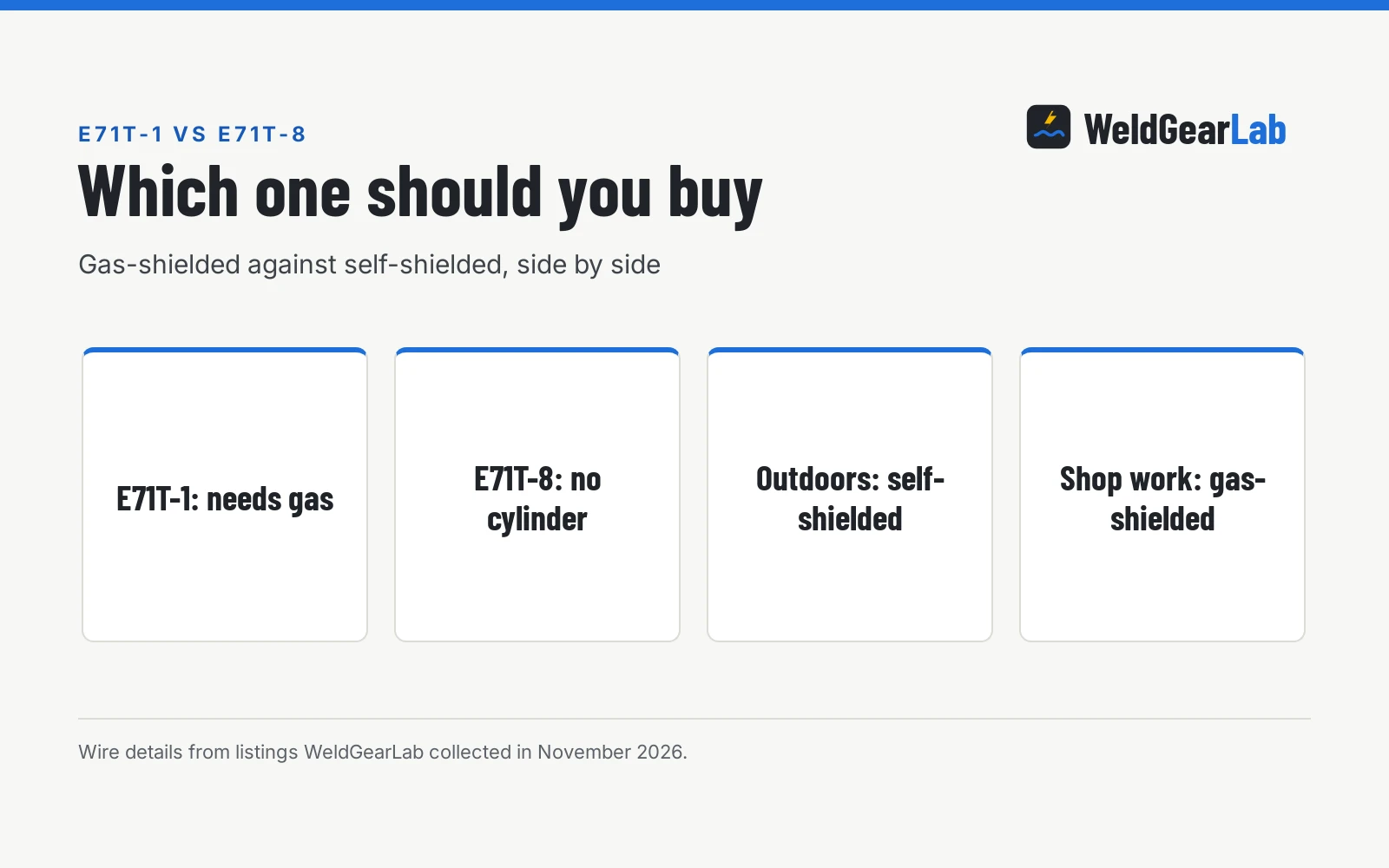
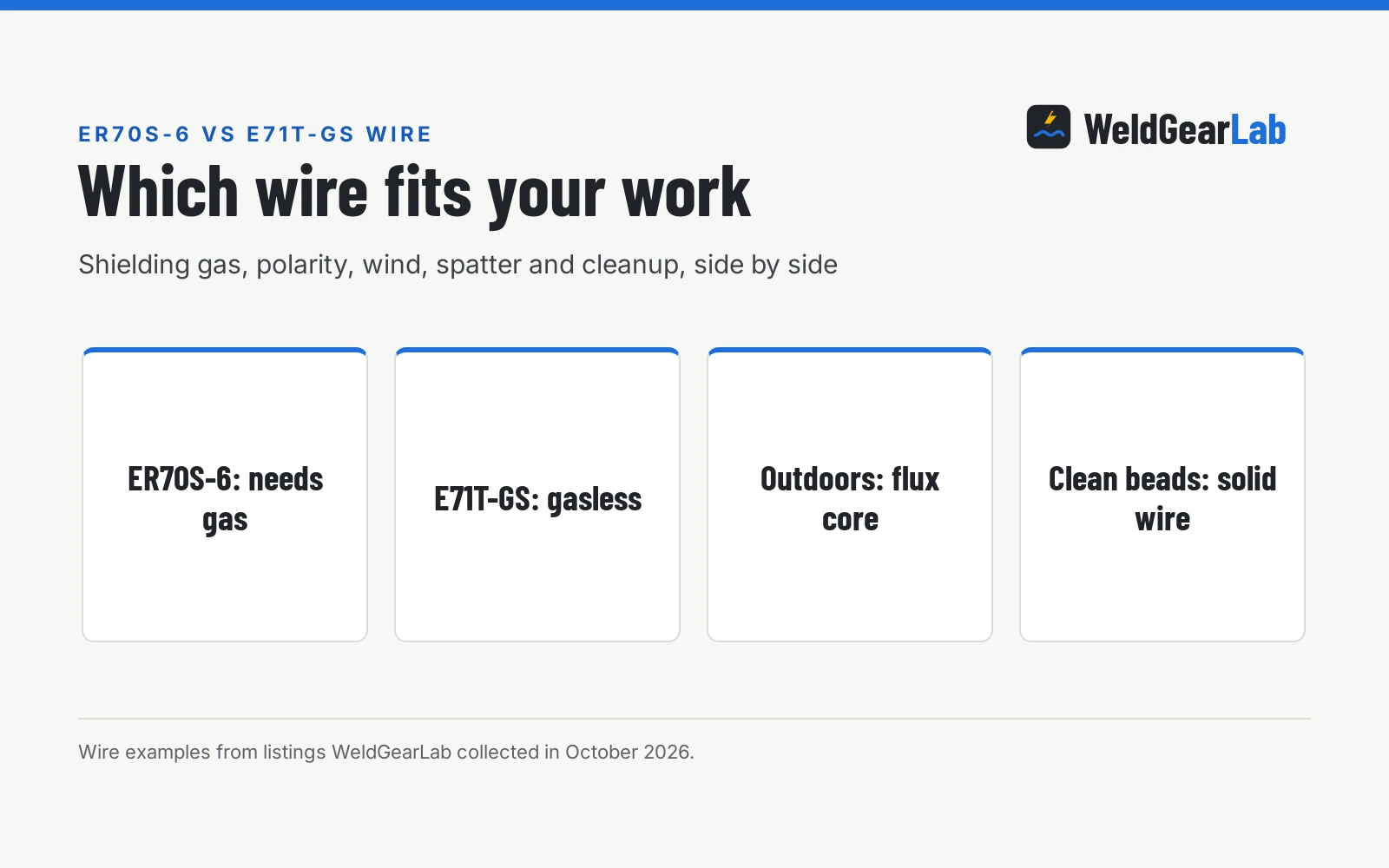
E71T-1 needs shielding gas from a cylinder while E71T-GS shields itself with flux, and that difference decides wind, cleanup and setup.

On this page
Top picks at a glance
As an Amazon Associate I earn from qualifying purchases.
- 1
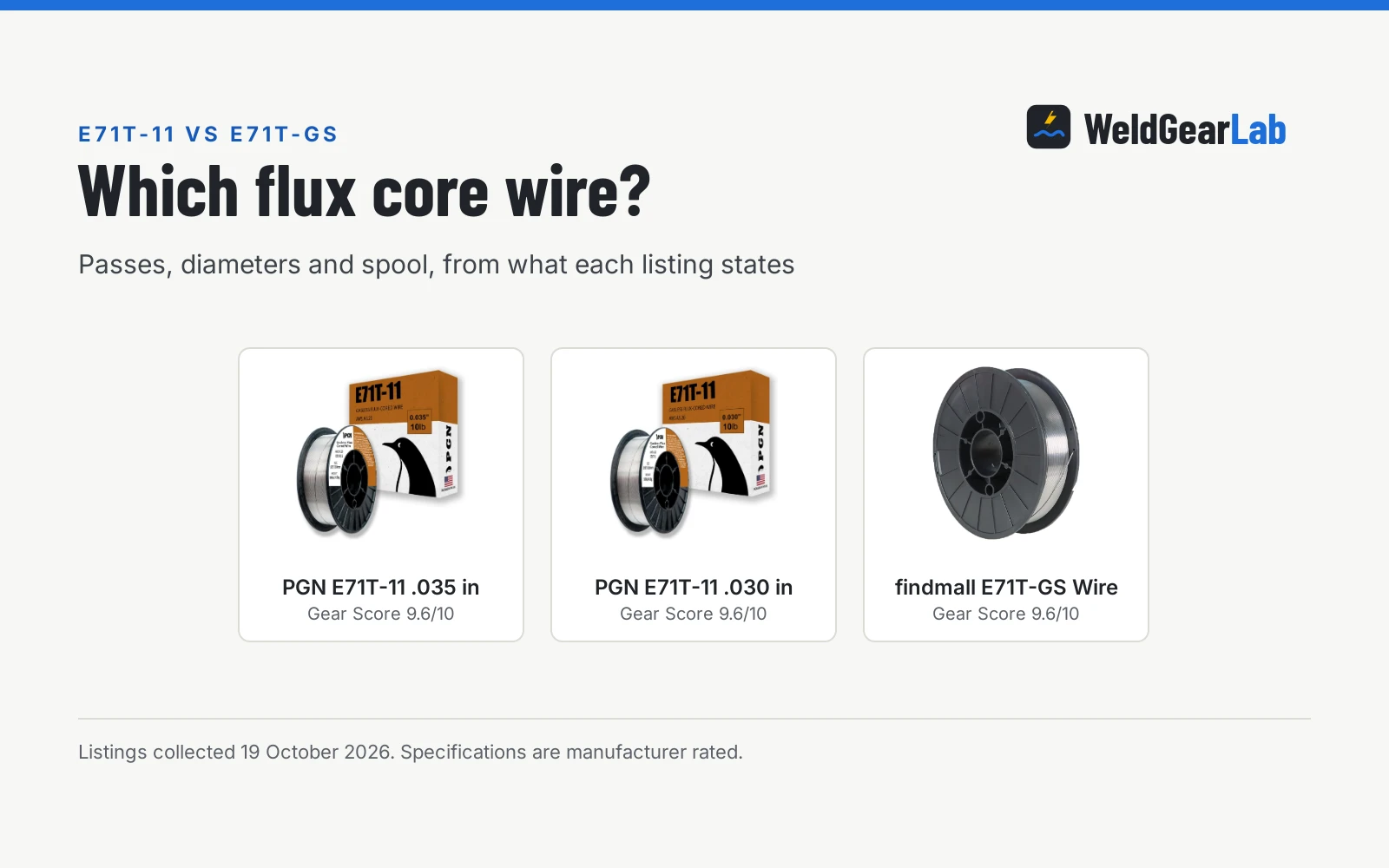
 PGN E71T-11 .035" Gasless Flux Core Welding Wire9.6/10View on Amazon
- 2
 PGN E71T-11 .030" Gasless Flux Core Welding Wire9.6/10View on Amazon
- 3
 findmall E71T-GS Gasless-Flux Core Wire Welding Wire 0.045In9.6/10View on Amazon
- 4
 ARCCAPTAIN Flux Core Welding Wire E71T-GS .035" 2LB x 3 MildView on Amazon
- 5
 .040" Flux Core Welding WireView on Amazon
- 6
 findmall E71T-GS Gasless-Flux Core Wire Welding wire 0.035InView on Amazon
- 7
 HZXVOGEN Gasless Flux Core MIG Welding WireView on Amazon
- 8
 ATLASWELDER Flux Core Welding WireView on Amazon
- 9
 View on Amazon
A fence post cracked at the base, a trailer deck needs a patch, or a cracked bracket on farm equipment has to go back together outside, where the wind never sits still. The wire in the gun decides whether that repair holds or turns into another trip back to the shop. E71T-1 vs E71T-GS wire comes down to shielding gas. E71T-1 needs gas from a cylinder, while E71T-GS shields itself with flux, so the gasless wire keeps working outdoors where wind would blow gas shielding away.
Other welders and gear to compare
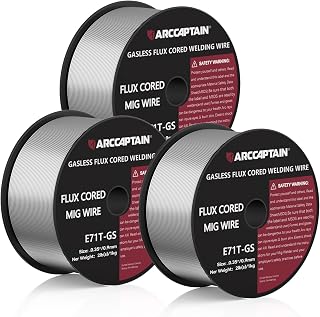 ARCCAPTAIN Flux Core Welding Wire E71T-GS .035" 2LB x 3 MildCheck price on Amazon
 .040" Flux Core Welding WireCheck price on Amazon
 findmall E71T-GS Gasless-Flux Core Wire Welding wire 0.035InCheck price on Amazon
 HZXVOGEN Gasless Flux Core MIG Welding WireCheck price on Amazon
 ATLASWELDER Flux Core Welding WireCheck price on Amazon
This guide links to our product roundups, where WeldGearLab gets a commission on purchases made through links on this page, and your price stays the same. Read our affiliate disclosure.
E71T-1 vs E71T-GS Wire: The Difference in One Paragraph
Molten steel reacts with oxygen and nitrogen in the air, which makes a porous, weak weld. E71T-1 is a dual shielded flux cored wire: the flux inside the wire and shielding gas from a cylinder protect the puddle together. E71T-GS is a self shielded flux core wire: the flux inside the wire burns to make its own shielding gas and leaves a layer of slag on the bead. No cylinder, no hose, no regulator on the gasless side.
Side by side
| Blue Demon E71T-1 | Harukiku E71T-GS | findmall E71T-GS | |
|---|---|---|---|
| Shielding | Shielding gas from a cylinder | No gas, flux shields the weld | No gas, flux core wire |
| Wire diameter | .035 inch | .040 inch | 0.035 inch |
| Spool | 11 lb spool | 2 lb spool, 2-pack | 10 lb spool, 8 inch |
| Positions | All position | All positions, single-pass and multi-pass | Not stated |
| Typical work | Hulls, storage tanks, structural steel | Farm, fence, vehicle repairs | Industrial maintenance, shipbuilding, farm equipment |
| Fumes | Very low fume | Not stated | Not stated |
| Slag and spatter | Good slag removal, stable arc | Less spatter, clean bead | Not stated |
| Polarity | DCEP | Not stated | Not stated |
Polarity follows the wire: always follow the polarity printed on your wire’s label and in the machine’s manual. The Blue Demon E71T-1 wire states DCEP, and the two E71T-GS wires here state no polarity, so check the label on the spool you buy.
When E71T-1 is the better choice
- Shop work with a cylinder on hand. Gas shielding plus flux gives a steadier arc and less smoke than gasless wire on indoor jobs.
- Structural steel and hull work. Typical applications are butt and fillet welding of hulls and storage tanks, and structural steel.
- Low fume and a stable arc. The wire gives very low fume, a stable arc and good slag removal.
- Visible work that needs a clean finish. Gas shielding keeps the bead cleaner, with less spatter to grind off before paint.
Check the MIG welding amperage chart for the amperage range that suits the wire diameter you run.
When E71T-GS is the better choice
- Outdoor work in wind. Fence posts, gates, trailers and farm equipment in a field. The Harukiku wire is listed as ideal for windy conditions, where wind would blow away traditional shielding gas.
- No cylinder to haul. You avoid buying or renting a cylinder and regulator, and there is nothing to refill. The flux inside the wire makes its own shield.
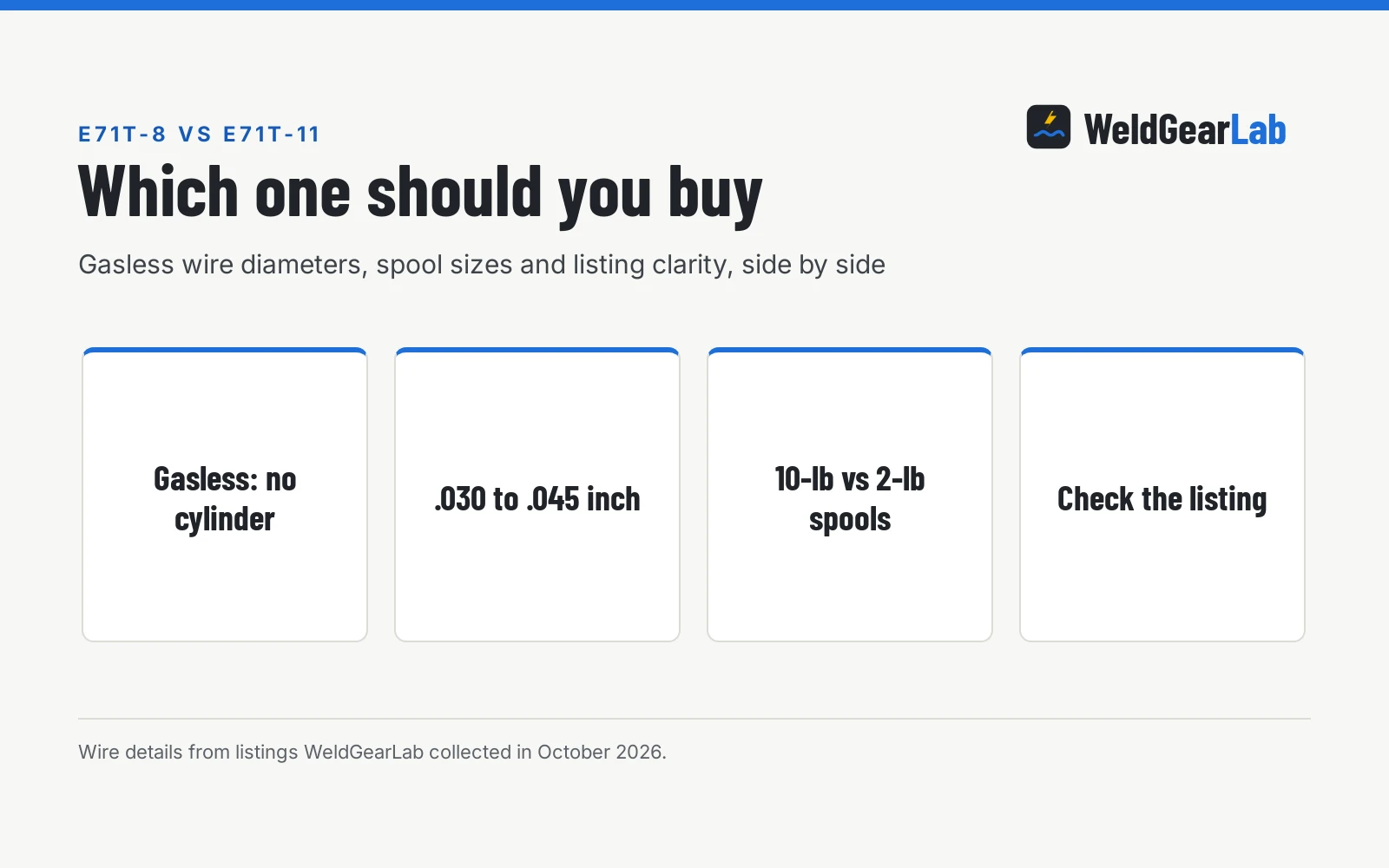
- Spool sizes for quick repairs and longer runs. The Harukiku wire comes as 2 lb spools in a 2-pack, and the findmall wire comes as a 10 lb spool on an 8 inch spool.
- Farm, fence and vehicle repairs. The Harukiku wire is for farm and fence work and vehicle repairs, and the findmall wire is for industrial maintenance, shipbuilding and farm equipment.
See the WeldGearLab best flux core welder guide for gasless machines built for outdoor and farm repairs, and the flux core welding wire sizes guide for the diameters these wires come in.
How to tell what your machine runs
Not every wire feed welder runs gas. A machine set up for E71T-1 needs a gas inlet, a hose and a regulator, plus a cylinder. A gasless setup needs none of those, and the wire feeds straight from the spool. Check the wire diameter your machine runs: the Blue Demon and findmall wires are .035 inch, while the Harukiku wire is .040 inch. Match the diameter to the drive rolls and the contact tip the machine takes.
- Gas inlet and hose. If the machine has a gas inlet and a hose in the box, it can run gas shielded wire. Flux only machines have neither.
- Wire diameter. The wires here are .035 inch and .040 inch. Diameter decides the drive rolls and contact tip, not whether the machine runs gas: a machine with no gas inlet runs gasless wire whatever the diameter.
- Polarity. The Blue Demon E71T-1 wire states DCEP. Set the polarity the wire calls for, and check the machine manual when you change wire.
Which gas for E71T-1 on steel
E71T-1 needs shielding gas from a cylinder, and the gas has to suit the wire. The Blue Demon wire is gas shielded and requires shielding gas, but the gas mix is not stated. Check the gas the wire maker calls for, and the gas your machine manual recommends, before you buy a cylinder.
Can one machine do both?
Yes, when the machine runs both gas and gasless wire. A dual mode machine runs E71T-GS outdoors and E71T-1 indoors, with a polarity change between wires. See the WeldGearLab best welder for beginners guide and the how to choose a MIG welder guide for machines that run both kinds of wire.
Flux core smoke and slag. Flux core makes more smoke and fumes than gas MIG, and hot slag can flick off when you chip it. Weld with good ventilation or outdoors with your head out of the plume, wear safety glasses under the helmet when chipping, and clear dry grass and anything flammable from the area. Keep gas cylinders upright and chained.
FAQ for welders
Is E71T-GS as strong as E71T-1?
Not in the same way. The Blue Demon E71T-1 wire is listed for structural steel and hull work, while the Harukiku E71T-GS wire is listed for farm, fence and vehicle repairs. E71T-1 is the structural wire of the two, and E71T-GS is the general repair wire. For structural or load bearing work, have a certified welder do or inspect it.
Can I use E71T-GS wire in a MIG welder?
Usually, if the machine runs flux core wire and you set the polarity the wire calls for. E71T-GS needs no gas, so no cylinder or regulator is involved. Check the machine manual for the wire diameters it takes.
Can I use E71T-1 wire without gas?
No. E71T-1 is a dual shielded wire that requires shielding gas from a cylinder. Without gas, the puddle has no full shield, and the weld comes out porous and weak. Use E71T-GS when no cylinder is on hand.
What is the difference between .035 inch and .040 inch wire?
The number is the wire diameter. The Blue Demon and findmall wires here are .035 inch, and the Harukiku wire is .040 inch. Match the diameter to the drive rolls and contact tip, and check the machine manual for the diameters it takes.
Which wire is better for welding outside?
E71T-GS, because it needs no shielding gas. Wind blows gas shielding away, while the flux inside an E71T-GS wire makes its own shield. The Harukiku wire is ideal for windy conditions, farm work and fence work.
Related: how to choose a MIG welder, best flux core welder, best welder for beginners, and the MIG welders hub. Also see why a MIG welder spatters.