Blasting Media Types and Uses
Blasting media types differ by hardness, shape and grit, and the right one depends on the metal, the finish and the job on the bench.

On this page
Top picks at a glance
As an Amazon Associate I earn from qualifying purchases.
- 1
 Aluminum Oxide - 50 lbs. or 22. 69 kg.9.7/10View on Amazon
- 2
 TITGGI 80 Grit Aluminum Oxide Blast Media9.6/10View on Amazon
- 3
 Aluminum Oxide 14 LBS 100 GRIT Medium to Fine Sand9.6/10View on Amazon
- 4
 #12 Glass Beads - (10 LBS or 4.54 kg)9.6/10View on Amazon
A rusted bracket, a painted fender and a mill scale covered plate all need the surface stripped before paint, and the media in the blast cabinet decides how fast that stripping goes and what finish it leaves. Blasting media types come down to how the grain works: angular aluminum oxide cuts and etches, while round glass beads clean and peen without changing tolerances. This guide explains each type, its grit and its weight, then shows media that cover rust, paint, mill scale and finishing work.
This guide links to our product roundups, where WeldGearLab gets a commission on purchases made through links on this page, and your price stays the same. Read our affiliate disclosure.
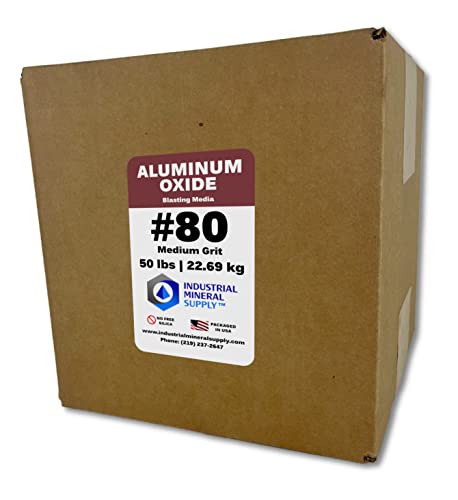
Aluminum Oxide - 50 lbs. or 22. 69 kg.
A 50-pound bag of brown fused aluminum oxide in 80 grit, with high density angular shapes for rust, paint and mill scale removal.
Pros
- 50-pound bag, the largest size here
- 80 grit medium for rust, paint and mill scale
- High density angular shapes for cutting and etching
- Can be used wet or dry
Cons
- 50 pounds is heavy to carry and store
- No bucket, so storage is on the buyer
- 80 grit only, so finer prep needs another media
- Bulk bag suits a cabinet, not a one-off job
TITGGI 80 Grit Aluminum Oxide Blast Media
A 12-pound bucket of brown fused aluminum oxide in 80 grit, rated 9 on the Mohs scale, for rust, paint and mill scale removal.
Pros
- Hardness 9 on the Mohs scale, just below diamond
- Lasts 10 times longer than silica, per the maker
- No free silica, and 100% recycled media
- White bucket for carrying and storage
Cons
- 12 pounds runs out faster than a bulk bag
- 80 grit is medium, so fine finishing needs another media
- No warranty term is stated
- Bucket only, with no larger size in this listing
Aluminum Oxide 14 LBS 100 GRIT Medium to Fine Sand
A 14-pound bucket of aluminum oxide in 100 grit, medium to fine, for mill scale, paint and surface preparation on steel, aluminum and wood.
Pros
- 100 grit medium to fine for finer prep
- Hardness 9 on the Mohs scale
- Can be used wet or dry
- Sturdy plastic bucket for carrying and use
Cons
- 14 pounds is a small quantity for a busy cabinet
- 100 grit cuts slower than 80 grit on heavy rust
- Large packaging is the cost-effective buy, so the small bucket costs more per pound
- No finer or coarser grit in this listing
#12 Glass Beads - (10 LBS or 4.54 kg)
A 10-pound bag of round glass beads in 140-230 mesh, extra fine, for cleaning, finishing and peening metal parts.
Pros
- Round beads clean without changing tolerances
- Peens the surface and blends machine marks
- No free silica, and the beads recycle many times
- Cleans at a 45 to 60 degree nozzle angle
Cons
- Extra fine beads do not cut heavy rust
- 10 pounds is a small quantity for a busy cabinet
- No warranty term is stated
- Beads only, so a cabinet or gun is a separate buy
Blasting media types: the short answer
Aluminum oxide is the workhorse: brown fused aluminum oxide at 9 on the Mohs scale, in 80 and 100 grit, that cuts rust, paint and mill scale and etches glass, granite, marble, ceramic and steel. Glass beads are the finisher: round beads at 140-230 mesh that clean and peen without changing tolerances or leaving ferrous residue. The TITGGI oxide (on Amazon) and the glass beads state no free silica, the oxide media here can be used wet or dry, and the glass beads recycle many times.
Side by side
| Media | Grit | Weight | Best for | |
|---|---|---|---|---|
| Industrial Mineral 50-lb Aluminum Oxide | Aluminum oxide | 80 grit | 50 pounds | Rust, paint and mill scale |
| TITGGI 80-Grit Aluminum Oxide | Aluminum oxide | 80 grit | 12 pounds | Rust, paint and mill scale |
| HDURCIR 100-Grit Aluminum Oxide | Aluminum oxide | 100 grit | 14 pounds | Finer prep and etching |
| Industrial Mineral #12 Glass Beads | Glass beads | 140-230 mesh | 10 pounds | Peening and finishing |
The table shows the range: aluminum oxide in 80 and 100 grit for cutting, glass beads at 140-230 mesh for peening. Weight runs 10 to 50 pounds, so a small bucket suits a weekend job and a 50-pound bag suits a cabinet that runs often.
Aluminum oxide: the cutting media
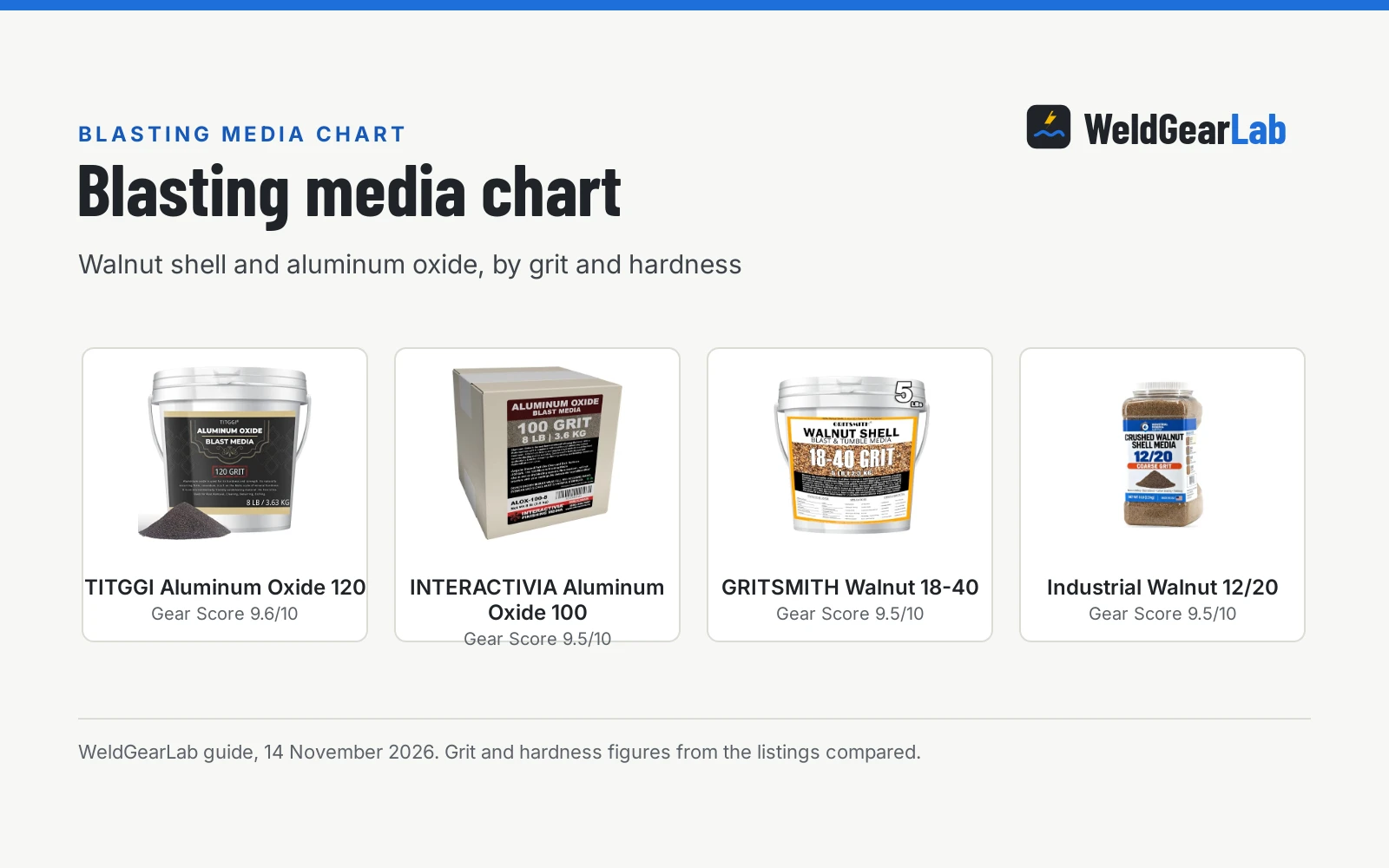
Aluminum oxide is the cutting media here. Brown fused aluminum oxide is rated 9 on the Mohs scale, just below diamond, and its angular grains cut and etch glass, granite, marble, ceramic and steel. The 80 grit media strip rust and paint, remove mill scale and prepare metal for painting, coating or refinishing. The 100 grit media suit finer prep: surface preparation of stainless steel, aluminum and wood, and etching glass. The TITGGI maker says its media lasts 10 times longer than silica and has a longer cycle life than most blast media. The oxide media here can be used wet or dry, and the TITGGI media is 100% recycled.
Glass beads: the finishing media
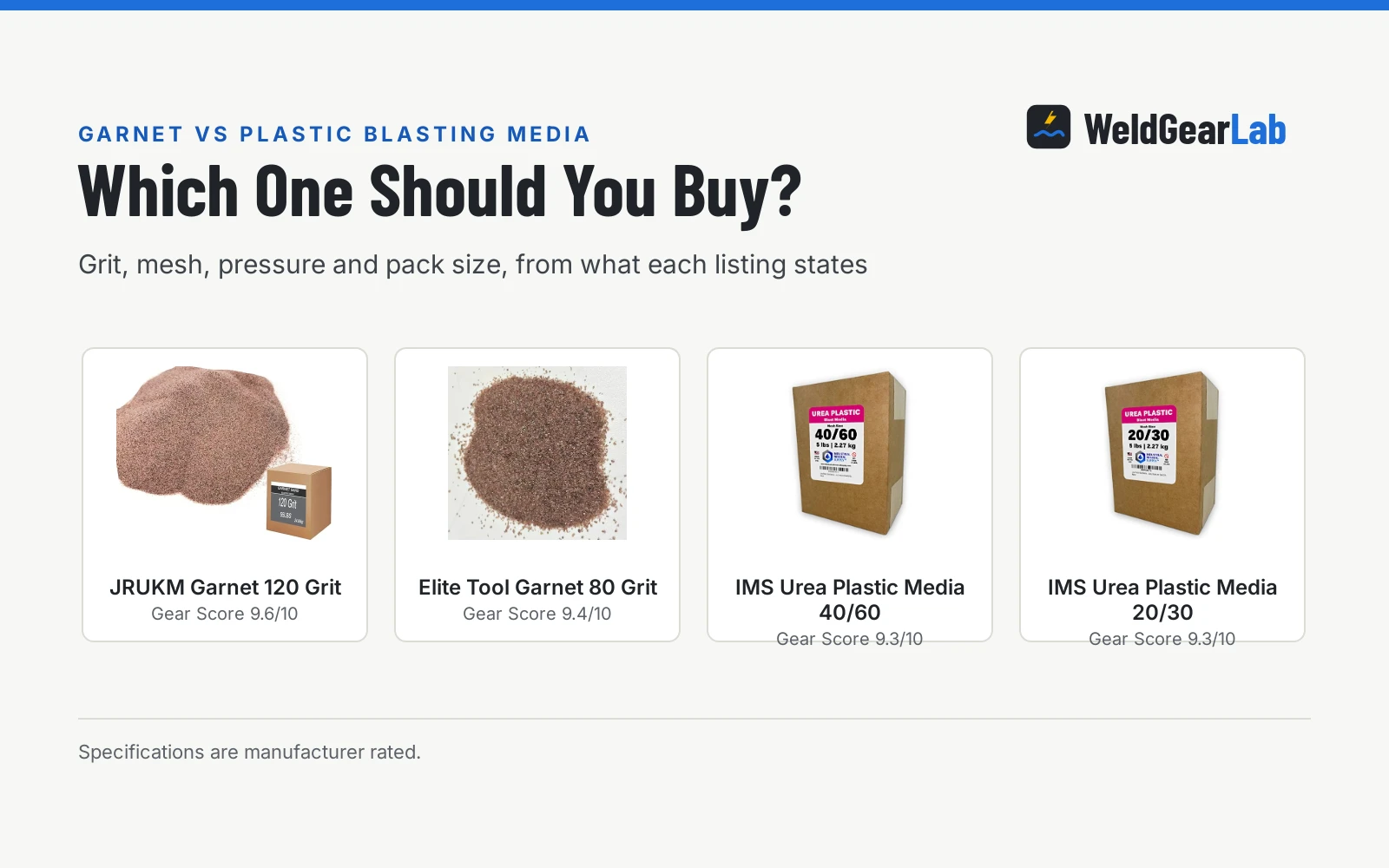
Glass beads are the finishing media. Round beads at 140-230 mesh clean and prep metal parts without changing tolerances or imparting ferrous pollutants. They blend machine marks, seal pores and peen the surface, which reduces the tensile stress in metal parts and increases the fatigue limit. The beads contain no free silica, recycle many times and clean efficiently at a 45 to 60 degree nozzle angle.
Match grit to the job
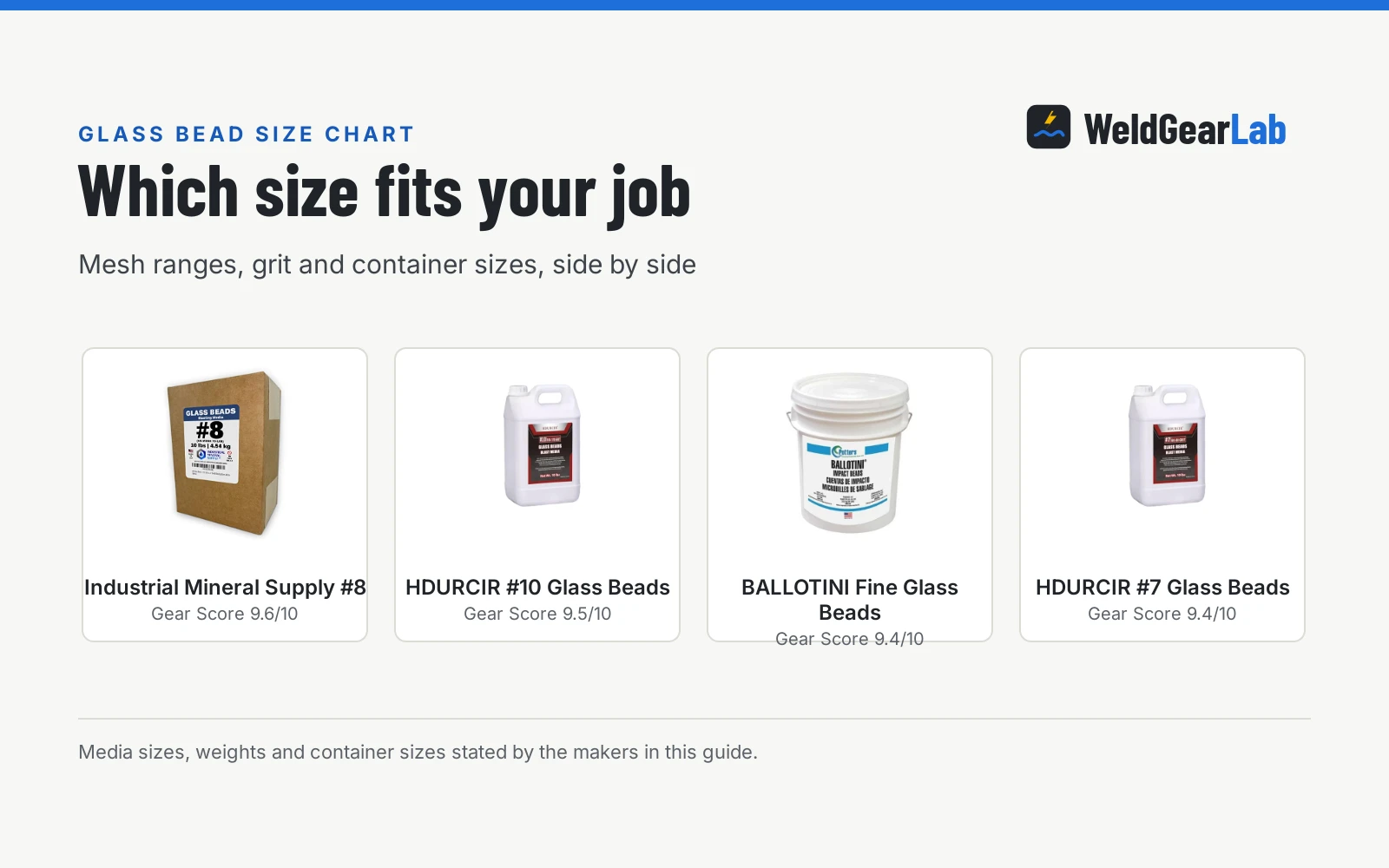
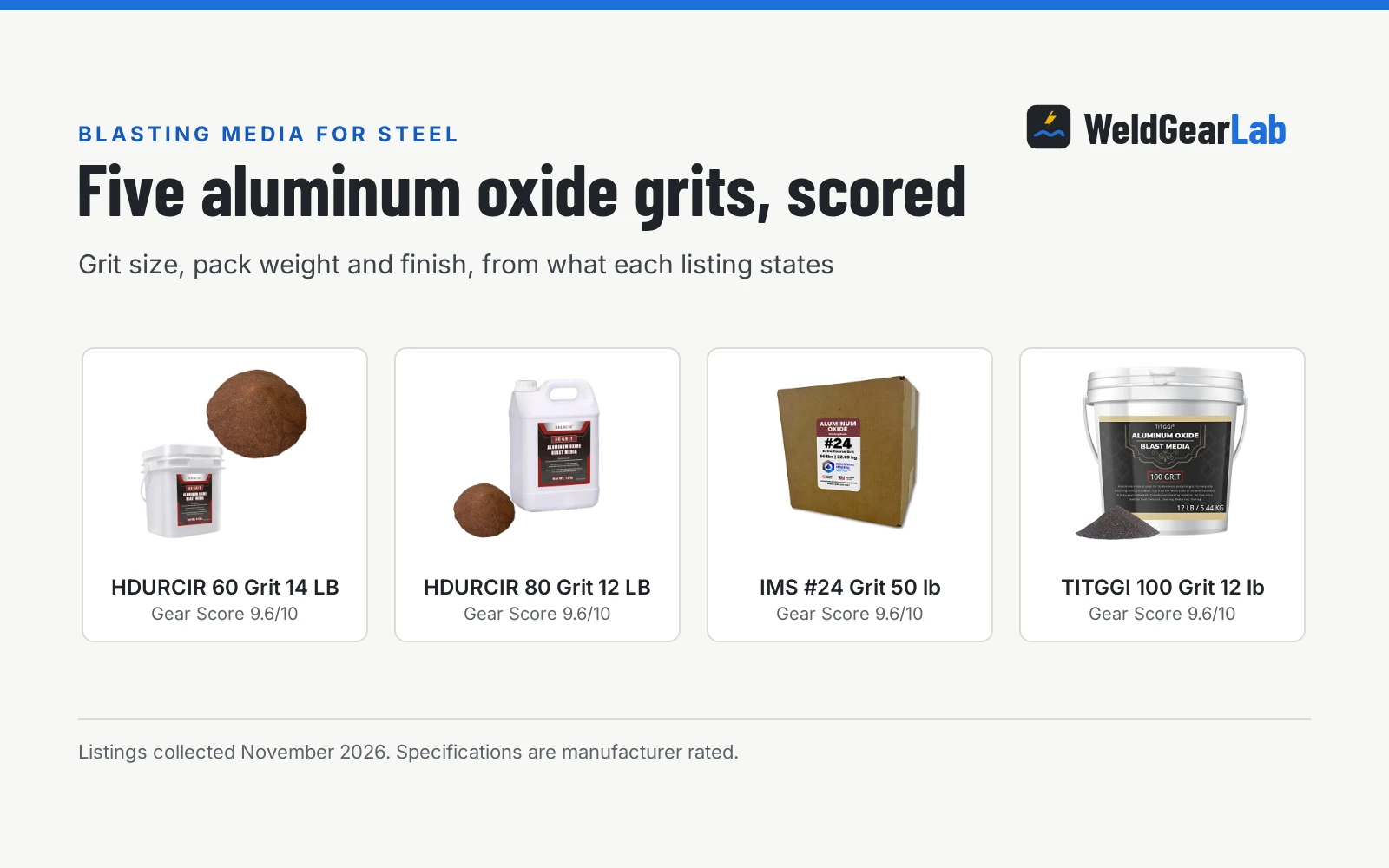
Match the grit to the job, not the other way round. 80 grit suits rust, paint and mill scale on steel. 100 grit suits finer prep and etching, where the finish matters more than the cut. 140-230 mesh glass beads suit finishing and peening, where the part must keep its tolerances. Weight follows the same logic: a 12 or 14 pound bucket suits a small cabinet and a weekend job, while a 50-pound bag suits a cabinet that runs often.
The four media
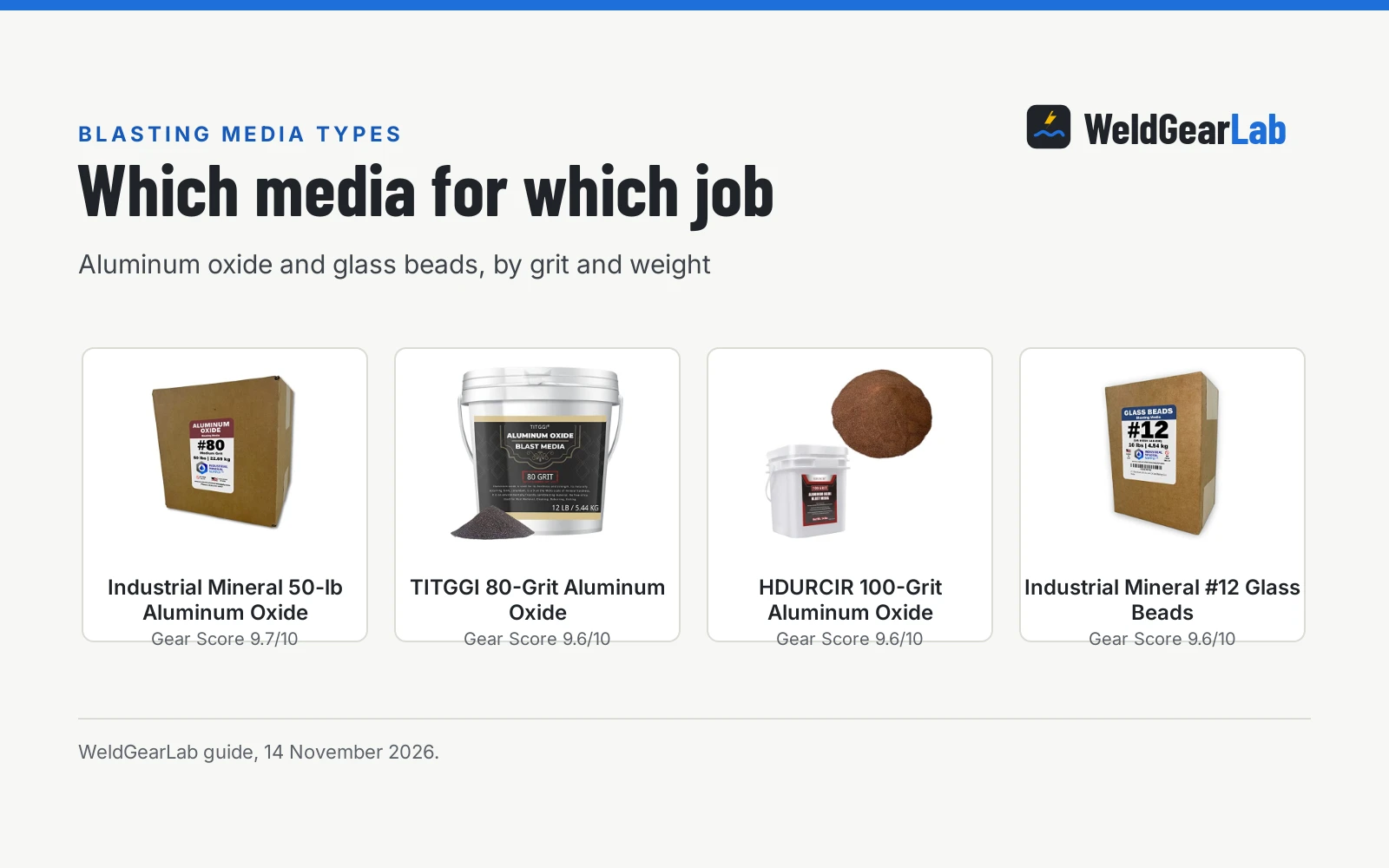
The gear below covers the range in this guide: aluminum oxide in 80 and 100 grit for cutting, and glass beads at 140-230 mesh for finishing.
Sandblasting dust and silica. Sandblasting needs a supplied-air or rated respirator, and no silica sand: the TITGGI oxide and the glass beads state no free silica, and the TITGGI maker says its aluminum oxide lasts 10 times longer than silica. Wear eye and hearing protection, work with ventilation or outdoors, and keep bystanders away from the blast area. See the OSHA welding overview.
FAQ for welders
What is the best blasting media for rust?
Aluminum oxide in 80 grit: it is rated 9 on the Mohs scale and the maker lists rust and paint removal and mill scale removal. Glass beads clean without changing tolerances, but they do not cut rust the way angular oxide does.
Can aluminum oxide be used wet or dry?
Yes: the aluminum oxide media here can be used wet or dry, and the glass beads can be recycled many times. Keep the bucket sealed between jobs and store the media dry.
What grit should I use for paint removal?
80 grit aluminum oxide: the maker lists paint removal and mill scale removal for the 80 grit media, while 100 grit suits finer prep and etching. Match the grit to the finish you need, not just the rust you see.
Are glass beads safe for metal parts?
They clean and prep metal parts without changing tolerances or imparting ferrous pollutants, and they blend machine marks and seal pores. They also peen the surface, which reduces tensile stress and increases the fatigue limit. Wear a supplied-air or rated respirator when blasting.
How long does aluminum oxide media last?
The TITGGI maker says its media lasts 10 times longer than silica and has a longer cycle life than most blast media, and it can be used wet or dry. The glass beads can be recycled many times. Store media dry and keep the bucket sealed between jobs.
Related: best blasting media, glass bead vs aluminum oxide blasting media, garnet vs aluminum oxide blasting media, and the metal fab tools hub.