Best Blasting Media (2026): 5 Aluminum Oxide Picks
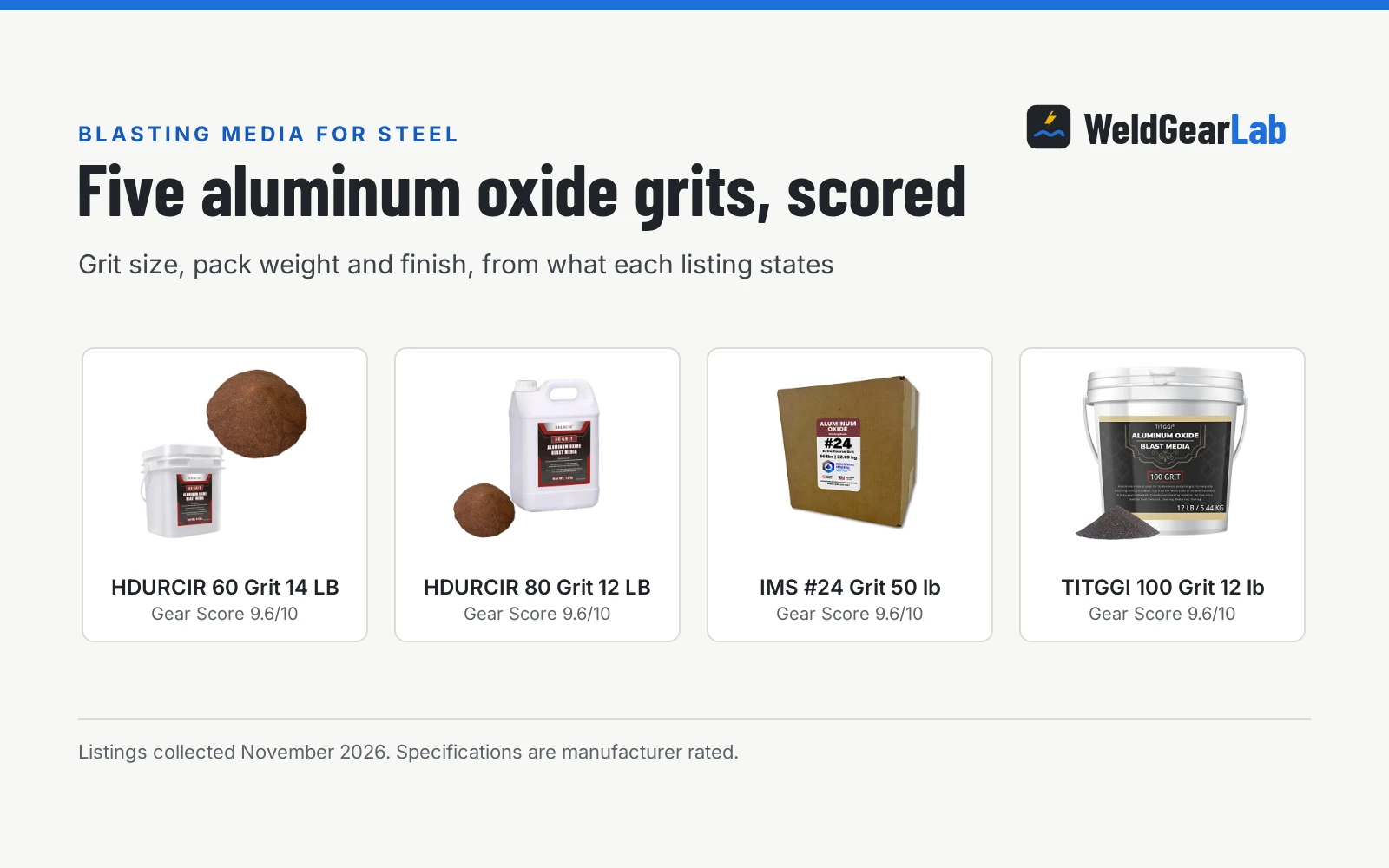
Five aluminum oxide blasting media for the shop, compared on grit, weight, hardness, silica content and packaging.

On this page
Top picks at a glance
As an Amazon Associate I earn from qualifying purchases.
- 1
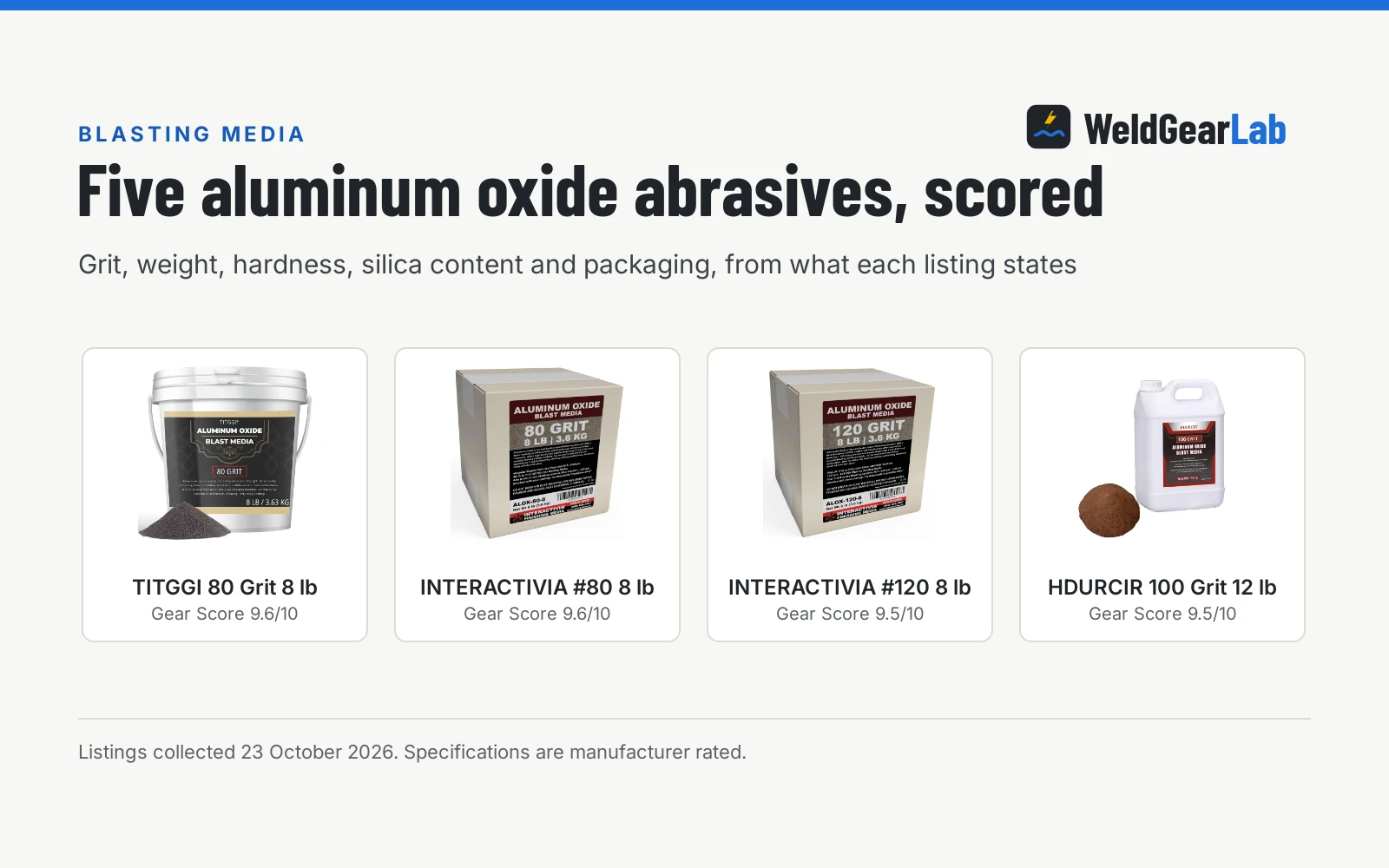
 Best OverallTITGGI 80 Grit 8 lb9.6/10View on Amazon
- 2
 Best Medium GritINTERACTIVIA #80 8 lb9.6/10View on Amazon
- 3
 Best Fine GritINTERACTIVIA #120 8 lb9.5/10View on Amazon
- 4
 Most MediaHDURCIR 100 Grit 12 lb9.5/10View on Amazon
Stripping rust, paint or mill scale comes down to the media in the gun. Too soft and it dusts away without cutting; too coarse and it chews the surface you meant to save. This guide to the best blasting media compares five aluminum oxide abrasives on what each listing states: grit, weight, hardness, silica content and packaging. Every pick here is the same mineral, so the differences that matter are the ones the listings document: how coarse the grit is, how much you get, and what the maker actually states about safety.
WeldGearLab gets a commission on purchases made through links on this page, and your price stays the same.
Quick picks
- Best Overall TITGGI 80 Grit 8 lb: Stated Mohs 9 hardness, no free silica, 8 lb in a bucket. Check price on Amazon
- Best Medium Grit INTERACTIVIA #80 8 lb: Stated SG 3.9, no crystalline silica, made in Canada. Check price on Amazon
- Best Fine Grit INTERACTIVIA #120 8 lb: Fine 120 grit with the same no-silica listing as the 80. Check price on Amazon
- Most Media HDURCIR 100 Grit 12 lb: 12 lb, the largest weight here, 100 grit in a bucket. Check price on Amazon

80 Grit Aluminum Oxide Blast Media
An 80 grit brown fused aluminum oxide in an 8 lb bucket, with a stated Mohs 9 hardness and no free silica. The most completely specified media here.
Pros
- States Mohs 9 hardness, just below diamond per the listing
- No free silica stated, and 100% recycled material
- 8 lb in a sturdy bucket for easy carrying, no carton to leak
- Lists rust, paint and mill scale removal as uses
Cons
- 8 lb is the smallest weight here, so heavy users will reorder sooner
- No warranty term in the listing
- Brown color may tint light workpieces
- Single grit; no fine option in this listing for finish work
#80 Aluminum Oxide - 8 LBS
A #80 medium aluminum oxide, 8 lb, with stated specific gravity 3.9 and no detectable crystalline silica. The spec-sheet pick for cabinet work.
Pros
- States specific gravity 3.9 and bulk density 115 to 125 lb per cubic foot
- No detectable crystalline silica stated
- Sharp angular grit described as highly reusable
- Made in Canada, per the listing
Cons
- 8 lb is the smallest weight here
- No Mohs hardness stated
- No warranty term in the listing
- Bag packaging not described as resealable
#120 Aluminum Oxide - 8 LBS
A #120 fine aluminum oxide, 8 lb, with the same no-silica listing and Canadian origin as the #80.
Pros
- Fine #120 grit for smoother finishes than the #80
- No detectable crystalline silica stated
- Same stated density figures as the #80
- Made in Canada, per the listing
Cons
- Fine grit cuts slower on heavy rust, so keep an 80 grit around for stripping
- 8 lb is the smallest weight here
- No Mohs hardness stated, unlike three of the other picks
- No warranty term in the listing
Aluminum Oxide 12 LBS 100 GRIT Medium to Fine Sand
A 100 grit aluminum oxide in a 12 lb bucket, the largest weight here, with a stated Mohs 9 hardness and wet-or-dry use. The bulk buy for frequent blasters.
Pros
- 12 lb, the largest weight here, in a sturdy plastic bucket
- States Mohs 9 hardness
- Lists stainless steel, aluminum, wood and glass as uses
- Can be used wet or dry, per the listing
Cons
- No silica statement in the listing, which costs it safety points
- No warranty term in the listing
- 100 grit sits between the 80 and 120, not a direct substitute for either
- Brand is less documented than the others here

Aluminum Oxide - 10 LBS
A #80 aluminum oxide, 10 lb, with a stated Mohs 9 hardness for wet or dry blasting. A straightforward mid-weight option with a thin listing.
Pros
- 10 lb, more than the 8 lb picks
- States Mohs 9 hardness
- Angular particles for deburring, cleaning, etching and finishing
- Can be used wet or dry, per the listing
Cons
- No silica statement in the listing
- No warranty term in the listing
- Generic brand with a thin listing
- No packaging detail beyond the weight
Other welders and gear to compare
 LE LEMATEC Soda Blasting MediaCheck price on Amazon
 Glass Bead Media for SandblastingCheck price on Amazon
Spec sheet comparison
| Model | Gear Score | Grit | Weight | Mohs Hardness | Silica | Packaging | Warranty |
|---|---|---|---|---|---|---|---|
| TITGGI 80 Grit 8 lb | 9.6/10 | 80 | 8 lb | 9 | No free silica | Bucket | Not stated |
| INTERACTIVIA #80 8 lb | 9.6/10 | 80 | 8 lb | Not stated | No detectable silica | Not stated | Not stated |
| INTERACTIVIA #120 8 lb | 9.5/10 | 120 | 8 lb | Not stated | No detectable silica | Not stated | Not stated |
| HDURCIR 100 Grit 12 lb | 9.5/10 | 100 | 12 lb | 9 | Not stated | Bucket | Not stated |
| Generic #80 10 lb | 9.4/10 | 80 | 10 lb | 9 | Not stated | Not stated | Not stated |
These numbers are the manufacturer’s ratings exactly as each listing gives them, recorded on 22 October 2026. Where a listing does not state a figure, the table says so rather than guessing.
The machines
Five aluminum oxide abrasives, ranked from the most completely documented to the simplest listing. The ranking rewards stated specs, clear safety statements, usable weight and truly honest packaging.
Why aluminum oxide
Every pick here is aluminum oxide, and that is no accident. The listings describe a hard, sharp, angular grit that cuts rust, paint and mill scale without breaking down quickly. Compared with silica sand, which the listings say this media outlasts tenfold, aluminum oxide is reusable and does not carry the same silica dust concern when the maker states it. Glass beads peen rather than cut, and steel shot needs a bigger setup; for a cabinet or a siphon gun, aluminum oxide is the default for a reason.
Buying guide: best blasting media for the shop
Grit size
Grit here runs from 80 to 120. The 80 grit picks cut aggressively for rust, paint and mill scale, while the 120 grit INTERACTIVIA suits finer finish work where a coarser grit would scar the surface. The 100 grit HDURCIR sits between the two. Match the grit to the job: start coarse for stripping, finish fine for prep before coating. All five picks are aluminum oxide, so the grit number is the main variable; a lower number means a coarser, faster-cutting particle. If you only buy one, the 80 grit covers the most common rust and paint jobs.
Hardness
Three listings state a Mohs 9 hardness, just below diamond per the TITGGI listing. Hard media fractures slower and stays sharp longer, which is why the listings claim ten times the life of silica. The two INTERACTIVIA listings do not state a Mohs figure, instead giving specific gravity 3.9 and bulk density of 115 to 125 lb per cubic foot. High density means the particles hit harder at the same air pressure, which helps on stubborn mill scale. When a listing gives you density figures, you can compare cutting power without guessing.
Weight and packaging
Weights run from 8 lb to 12 lb. The 12 lb HDURCIR gives the most media per purchase, while the 8 lb picks suit a small cabinet or occasional use. Two listings pack the media in a bucket, which carries and pours better than a carton; the TITGGI listing specifically calls out its bucket as protection against damage and leaking. The others do not describe their packaging, so plan on a sealed container of your own. Media goes further than it looks because aluminum oxide is reusable; the 8 lb bags last through many cabinet sessions when you sieve and recycle.
Silica content
Crystalline silica dust is the main health concern with blasting. Three listings address it directly: the INTERACTIVIA pair states no detectable crystalline silica, and TITGGI states no free silica with 100% recycled content. The other two make no statement. If dust control matters in your shop, favor a listing that states it. A stated no-silica claim also tells you the maker has actually had the media analyzed, which is a quality signal beyond the health angle.
Reusing media
Aluminum oxide earns its keep by lasting. The listings describe it as highly reusable, with one claiming ten times the life of silica sand. In practice that means sieving the used media to remove fines and debris, then pouring it back in the hopper. Fines are the powder that no longer cuts; when the cutting slows even with fresh pressure, it is time for new media. A bucket with a lid keeps the working stock dry between sessions, since damp media clumps and stops flowing.
Wet or dry
Three listings say the media works wet or dry. Wet blasting suppresses dust, which helps with the silica concern above. Check your gun’s compatibility before switching; not every siphon gun feeds wet media well.
Use as directed. Blast with ventilation or dust extraction, wear a respirator rated for fine dust, and keep bystanders clear of the stream. Never point the gun at skin; the stream can inject media. Store media dry so it flows freely, and dispose of spent media per local rules. A lid on the bucket keeps moisture out between sessions.
Before You Strike an Arc
- Confirm the grit suits the surface; try it on a scrap piece before the workpiece.
- Check that the media flows dry and free; damp media clogs the gun.
- Verify dust extraction or ventilation is running before you pull the trigger.
- Wear a respirator rated for fine dust, plus eye and skin protection.
- Keep the work area clear of flammables; the dust can be combustible.
FAQ for welders
What grit blasting media should I use?
Use 80 grit for aggressive stripping of rust, paint and mill scale, and 120 grit for finer finish work. The 100 grit pick splits the difference. Match the grit to how much material you need to remove, and step down to a finer grit for the final pass before paint. All five picks here are aluminum oxide, so you are choosing grit, not chemistry.
Is aluminum oxide blasting media reusable?
Yes, per the listings. The INTERACTIVIA listings describe the grit as highly reusable, and TITGGI claims ten times the life of silica. Sieve out the fines and reuse until cutting slows. The angular shape is what does the work, so once the particles round off, cutting efficiency drops even though the media looks the same.
Does blasting media contain silica?
Three listings here state no detectable crystalline silica or no free silica. The other two make no statement. If this matters to you, choose a listing that states it.
Can I use blasting media wet or dry?
Three listings state wet or dry use. Wet blasting keeps dust down, which is a real advantage in a small shop without extraction. Confirm your gun handles wet feed before you try it, and dry the work afterward to prevent flash rust on bare steel.
How much blasting media do I need?
It depends on the job size and how often you blast. The picks come in 8, 10 and 12 lb quantities; a small cabinet job starts with the 8 lb bags, while frequent use favors the 12 lb bucket. Reusing the media stretches each purchase, since aluminum oxide survives many cycles. Start with one bag, see how far it goes in your cabinet, then stock up on the size that matches your pace.
Related: laser cleaning machine vs sandblaster, best flap disc for rust removal, best wire brush for rust removal, best angle grinder for beginners and the metal fab tools hub.
Scoring, line by line
Each media is scored on performance, build, value, safety and warranty, with the weights published on the site’s How We Pick page. Performance weighs the stated grit, hardness and the uses each listing names. Three listings state no detectable crystalline silica or no free silica, so those three score on safety; the other two make no silica statement and score zero there. Value favors the larger weights and the listings that document the most. No listing states a warranty term, so warranty scores zero across the board.
| Product | Gear Score | Perf. /35 | Build /25 | Value /25 | Safety /10 | Warranty /5 |
|---|---|---|---|---|---|---|
| TITGGI 80 Grit 8 lb | 9.6 | 29 | 21 | 20 | 7 | 0 |
| INTERACTIVIA #80 8 lb | 9.6 | 29 | 20 | 20 | 7 | 0 |
| INTERACTIVIA #120 8 lb | 9.5 | 28 | 20 | 20 | 7 | 0 |
| HDURCIR 100 Grit 12 lb | 9.5 | 28 | 20 | 22 | 0 | 0 |
| Generic #80 10 lb | 9.4 | 27 | 19 | 21 | 0 | 0 |
Displayed scores fall between 9.2 and 9.8: the weighted point total is mapped onto that band in a straight line, so earning more points always lifts the score.