Glass Bead vs Aluminum Oxide Blasting Media: Which One Should You Buy?
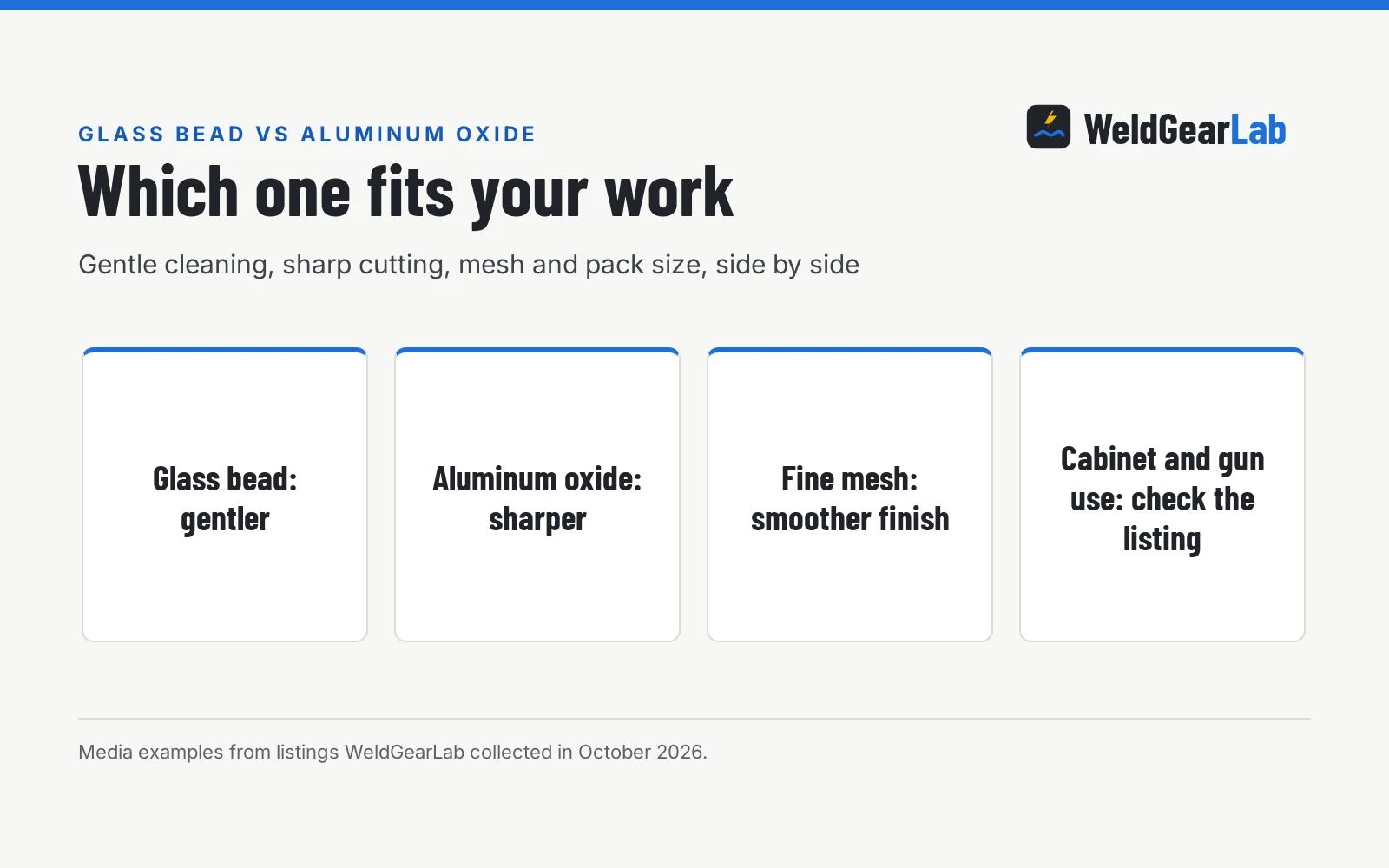
Glass bead media cleans and finishes with round beads, while aluminum oxide media cuts and strips with angular grains, and the right pick depends on the finish the part needs.

On this page
Top picks at a glance
As an Amazon Associate I earn from qualifying purchases.
- 1
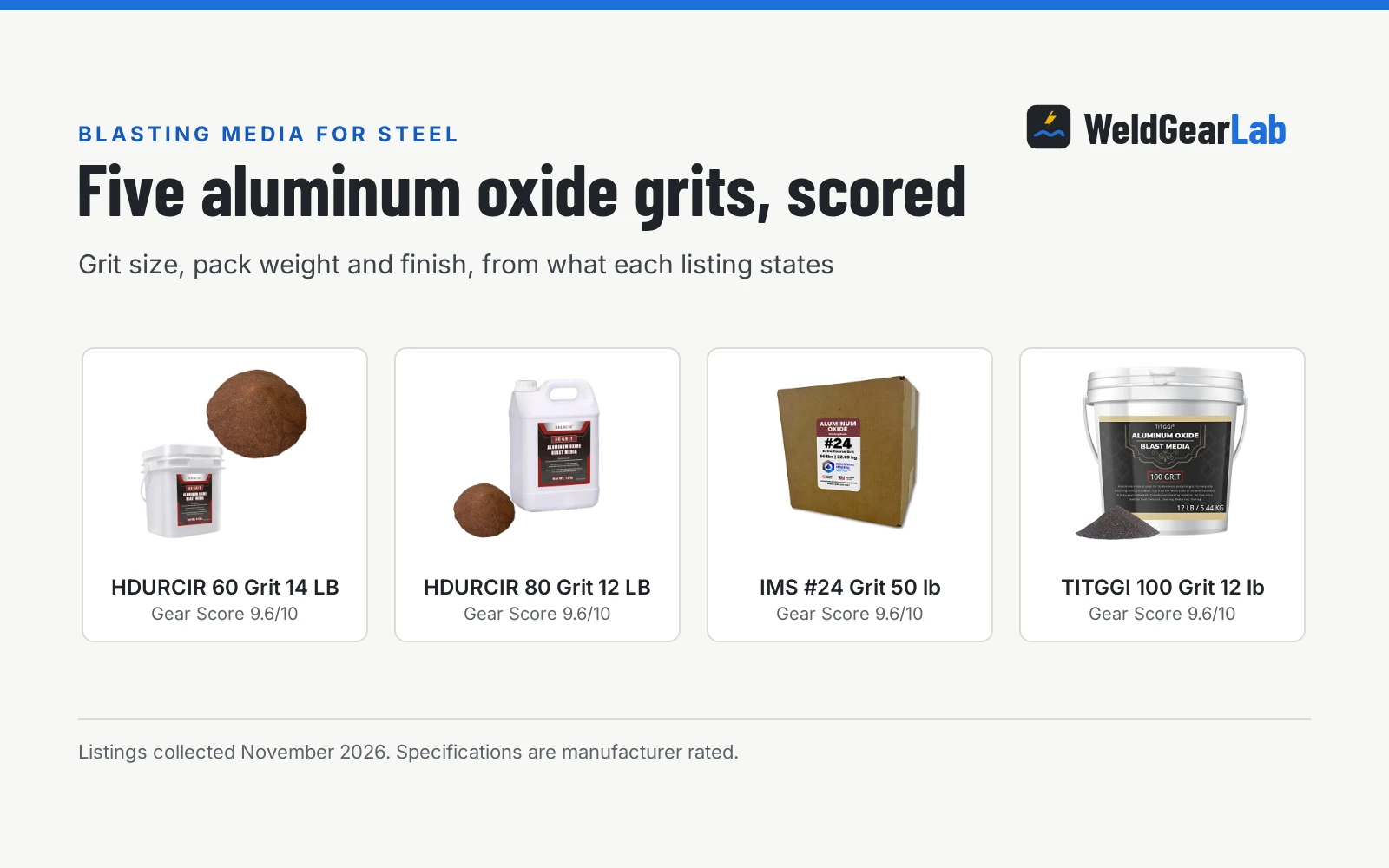
 Aluminum Oxide 14 LBS 60 GRIT Medium to Fine Sand Blasting9.6/10View on Amazon
- 2
 #7 Glass BeadsView on Amazon
- 3
 #8 Glass BeadsView on Amazon
- 4
 #13 Glass BeadsView on Amazon
- 5
 Glass Bead Media for SandblastingView on Amazon
- 6
 #10 Glass BeadsView on Amazon
- 7
 Blast MediaView on Amazon
A part comes off a machine with scale, old paint or grime clinging to the surface, and the bench job is to strip it clean without ruining the shape underneath. Glass bead vs aluminum oxide blasting media is the choice between a gentler cleaning action and a sharper cutting action, and the right pick depends on the finish the part needs when the blasting stops.
Other welders and gear to compare
 #7 Glass BeadsCheck price on Amazon
 #8 Glass BeadsCheck price on Amazon
 #13 Glass BeadsCheck price on Amazon
 Glass Bead Media for SandblastingCheck price on Amazon
 #10 Glass BeadsCheck price on Amazon
 Blast MediaCheck price on Amazon
This guide links to our product roundups, where WeldGearLab gets a commission on purchases made through links on this page, and your price stays the same. Read our affiliate disclosure.
The difference in one paragraph
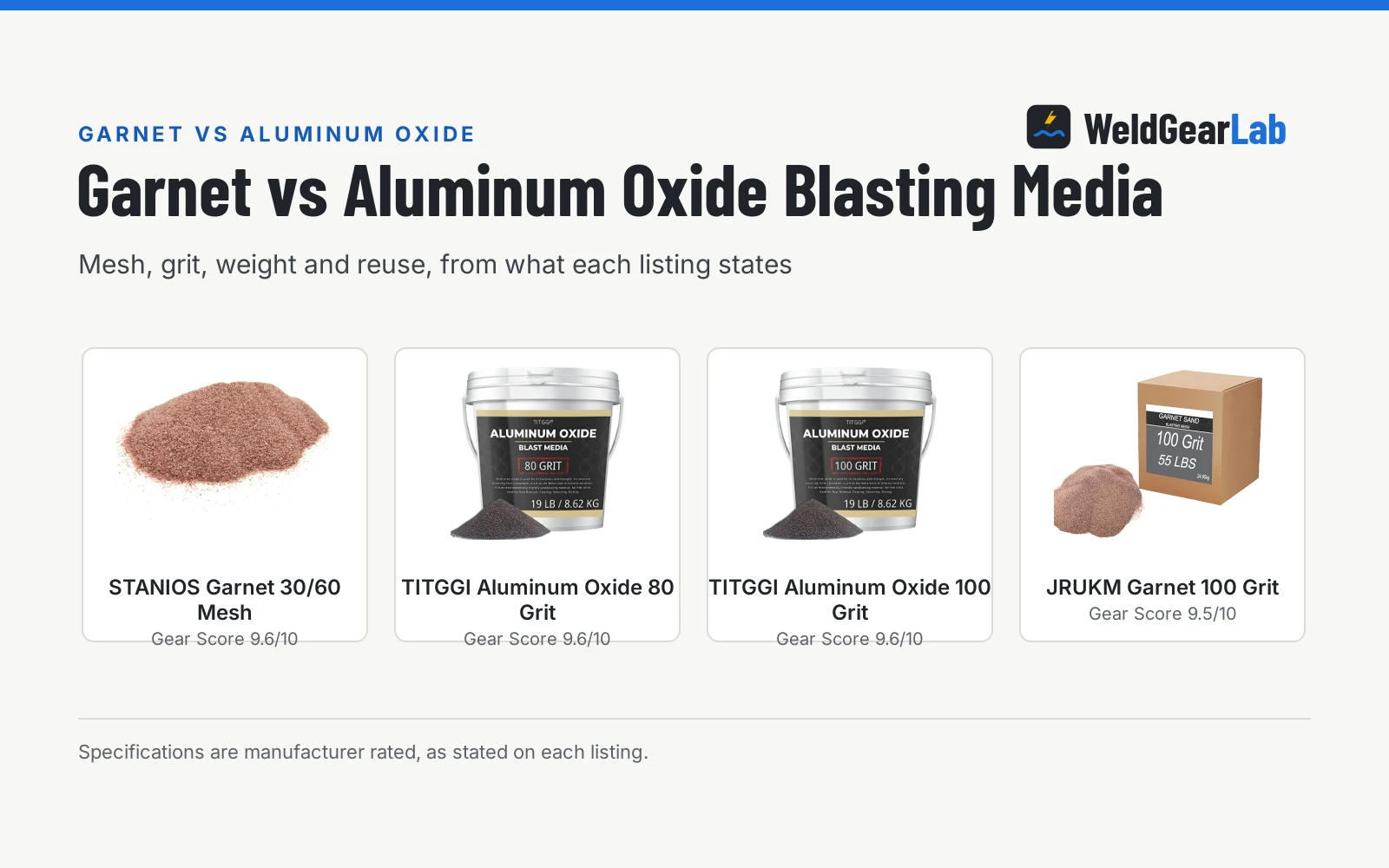
Glass bead media is made of round beads that peen the surface as they strike it, which cleans and finishes with less cutting than angular media. Aluminum oxide media is made of angular grains that cut into the surface, which tends to strip material faster and leaves a rougher, etched finish for coating. In short, bead media suits cleaning and finishing work, while oxide media suits stripping and surface prep where a rougher profile helps a coating grip.
Glass bead vs aluminum oxide blasting media side by side
| Glass bead | Aluminum oxide | Shop note | |
|---|---|---|---|
| Shape | Round beads | Angular grains | Round media peens and cleans; angular media cuts |
| Surface finish | Smoother, satin finish | Rougher, etched finish | Pick bead for parts that must stay smooth |
| Cutting action | Gentler removal | Sharper, faster removal | Bead suits cleaning; oxide suits stripping |
| Reuse | A listed glass bead pick states reusable | Reuse varies by listing; check the listing | Reuse depends on the listing |
| Work it suits | Cleaning, finishing and rust removal | Heavy stripping and surface prep | Rust removal is stated by a listed glass bead pick, not by every listing |
| Mesh range in these listings | 60-80 Mesh, 80-100 Mesh and 200~240Mesh | Check the mesh on the listing | Finer mesh generally gives a finer finish |
The table compares the media types in general terms. The listing details below come from the glass bead listings in this guide, since those listings state mesh, pack weight and cabinet or gun use. Aluminum oxide is compared in general terms in the table, so check the listing for the exact media before ordering.
When glass bead is the better choice
- Cleaning and finishing. The Tribos listing states its media is for rust removal and surface finishing, and the INTERACTIVIA #8 listing states small beads for cleaning and finishing.
- Finishing visible parts. Bead media leaves a smoother, satin look that suits parts that stay visible after the work.
- Delicate base metals. The INTERACTIVIA listings name Aluminum, Brass and Plastic as compatible material, which fits softer metals and plastic parts.
- Work that needs a gentle touch. Fine bead media suits cleaning and finishing rather than heavy stripping.
When aluminum oxide is the better choice
- Heavy stripping. Angular grains cut through scale, old coating and rust faster than round beads.
- Surface prep for coating. The rougher profile left by oxide media can give paint and coating more grip.
- Hard, thick scale. Where bead media cuts slowly, oxide media tends to do the removal work faster.
- Parts where finish roughness is welcome. When the next step is coating rather than a show finish, the etched surface can be a benefit, not a flaw.
Glass bead listings: what each one states
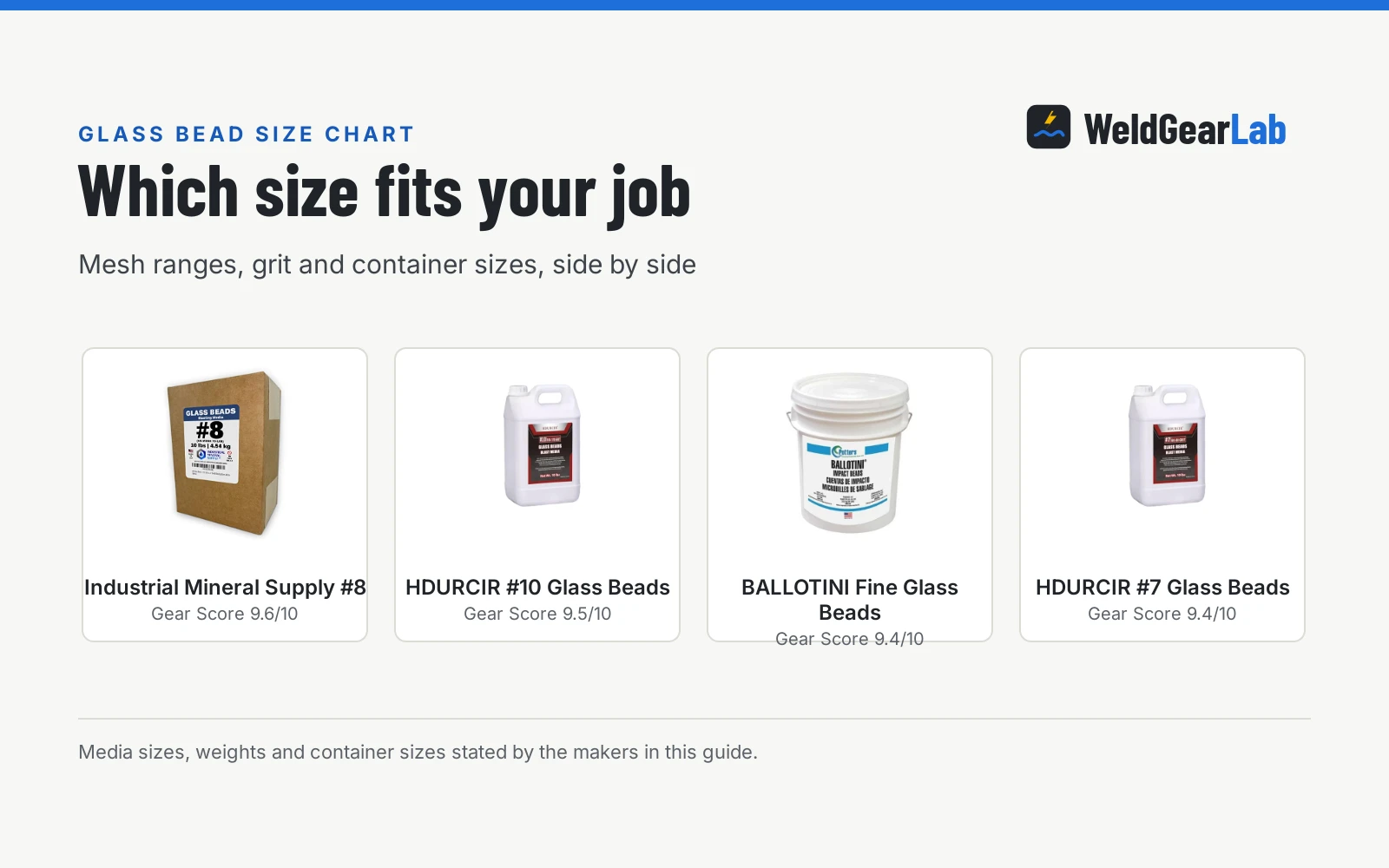
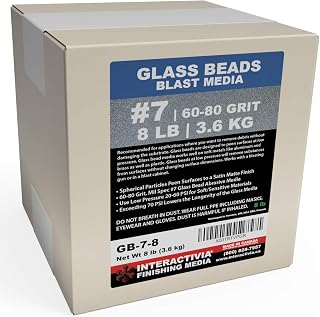
The INTERACTIVIA #7 Glass Beads listing states 8 lb or 3.6 kg, Medium, 60-80 Mesh or Grit, for sand blasting. Its spec table lists Item Weight as 8 ounces, which does not agree with the title weight, so the title figure is the one to trust here.
The INTERACTIVIA #8 Glass Beads listing states 8 lb or 3.6 kg, Fine, 80-100 Mesh or Grit, for blast cabinets or sand blasting guns, with small beads for cleaning and finishing. Its spec table lists Material Type as Aluminum while the title and Grit Material Type name Glass, another case where the title and grit material agree and the spec table entry does not.
The HDURCIR #7 Glass Beads listing states 10 lb (4.5 kg), Medium, 60-80 Mesh (Grit), for blast cabinets or sand blasting guns. Its bullets state Weight: 12LB and Size: 120 Grit, which do not agree with the title on weight or mesh, so a reader should confirm the pack size and grit with the seller before ordering.
The Tribos Glass Bead Media listing states 8LB, Non-Silica, Reusable, for rust removal and surface finishing, with mesh option #13(200~240Mesh). Its spec table lists Item Weight as 8.6 pounds and Package Dimensions as 8.62 x 7.44 x 6.14 inches, while its Included Components entry names Glass bead blasting media (8 lb), so the pack weight in the title and components entry differs from the spec table weight.
How to pick mesh and pack size
Spec tables in the glass bead listings also list Grit Number 80 and Grit Number 120, so check whether a listing quotes a mesh range or a grit number before ordering. The listings name Medium 60-80 Mesh, Fine 80-100 Mesh, and 200~240Mesh: the INTERACTIVIA #7 listing states Medium 60-80 Mesh for sand blasting, the INTERACTIVIA #8 listing states Fine 80-100 Mesh for blast cabinets or sand blasting guns with small beads for cleaning and finishing, and the Tribos listing states mesh option 200~240Mesh for rust removal and surface finishing. Pack size sets how much media is on hand for a job: the listings here state 8 lb or 3.6 kg, 10 lb (4.5 kg), and 8LB packs in their titles, while the HDURCIR bullets state 12LB, so confirm the pack size with the seller before ordering. Always check that the mesh and media type suit the cabinet or gun in use, and check the listing for reuse claims before assuming media can go back through the cabinet.
Blasting throws dust and rebounding media around the work area, so work with ventilation, wear the eye, face and respiratory protection the cabinet or gun manual calls for, and keep the blast stream away from skin and from parts that must not be abraded. Clear the area of anything that could be damaged by stray media, and follow the cabinet or gun manual for loading and use.
FAQ for welders
Can glass bead media be used on aluminum, brass and plastic?
The INTERACTIVIA listings name Aluminum, Brass and Plastic as compatible material, so those listings support use on those materials. Other listings do not state compatible material, so check the listing for the exact media before blasting a soft or plastic part.
What mesh size suits a smoother finish?
Finer mesh generally gives a finer finish. In these listings, 80-100 Mesh is the fine option, 60-80 Mesh is the medium option, and 200~240Mesh is the finest option named, so move toward finer mesh when the part must stay smooth.
Is glass bead media reusable?
The Tribos listing states Reusable, so that media is presented as reusable. The other listings in this guide do not state reuse, so reuse is not stated for them, and a reader should not assume it.
Does glass bead media contain silica?
The Tribos listing states Non-Silica, so that listing answers the question for its own media. The other listings do not state silica content, so silica content is not stated for them.
When does aluminum oxide make more sense than glass bead?
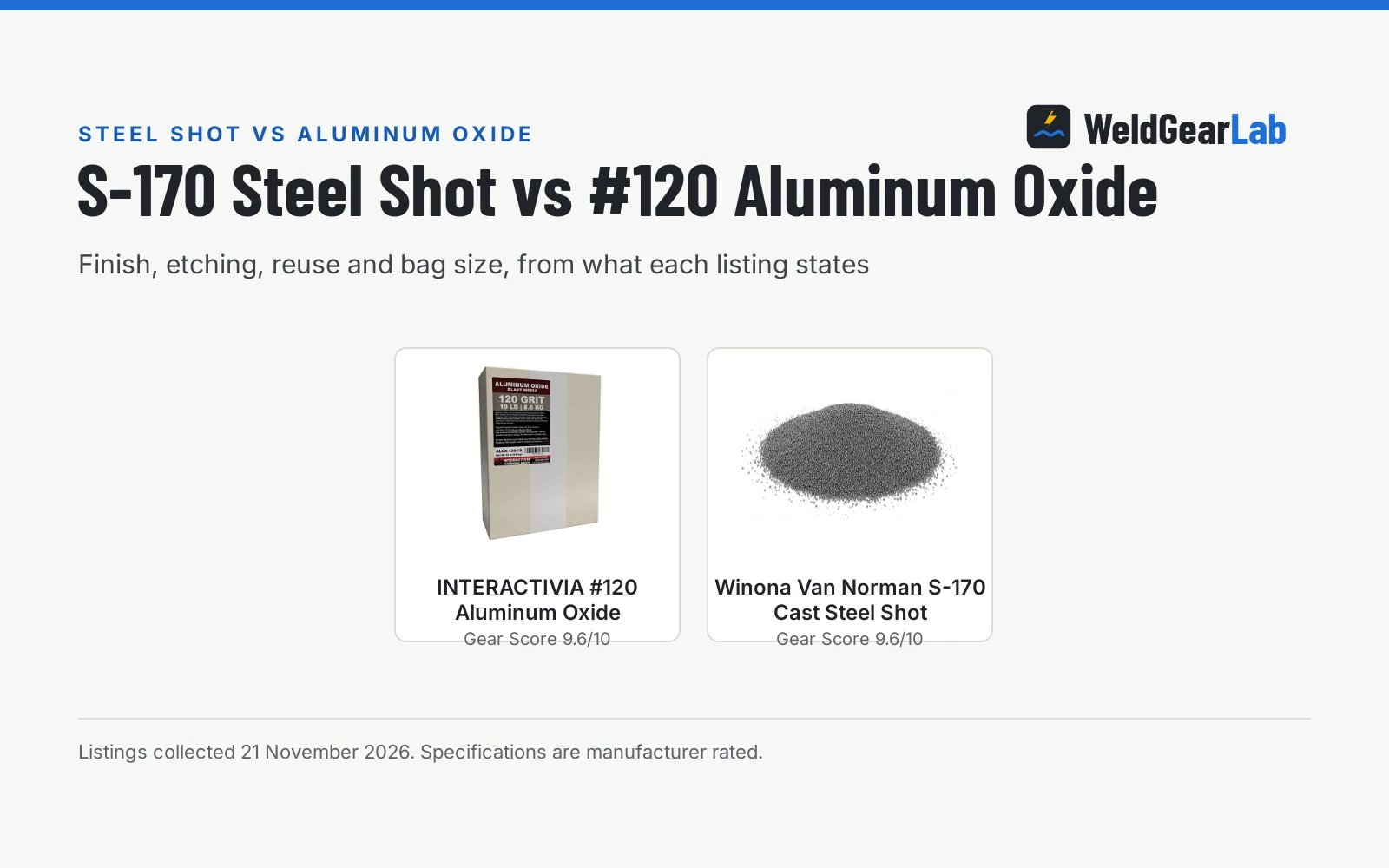
Aluminum oxide makes more sense when the job is heavy stripping or surface prep for coating, where a rougher profile helps. Glass bead makes more sense when cleaning and finishing matter more than removal speed, and when the part must keep a smooth surface.
Related: best blasting media and laser cleaning machine vs sandblaster.