Best Belt Sander (2026)
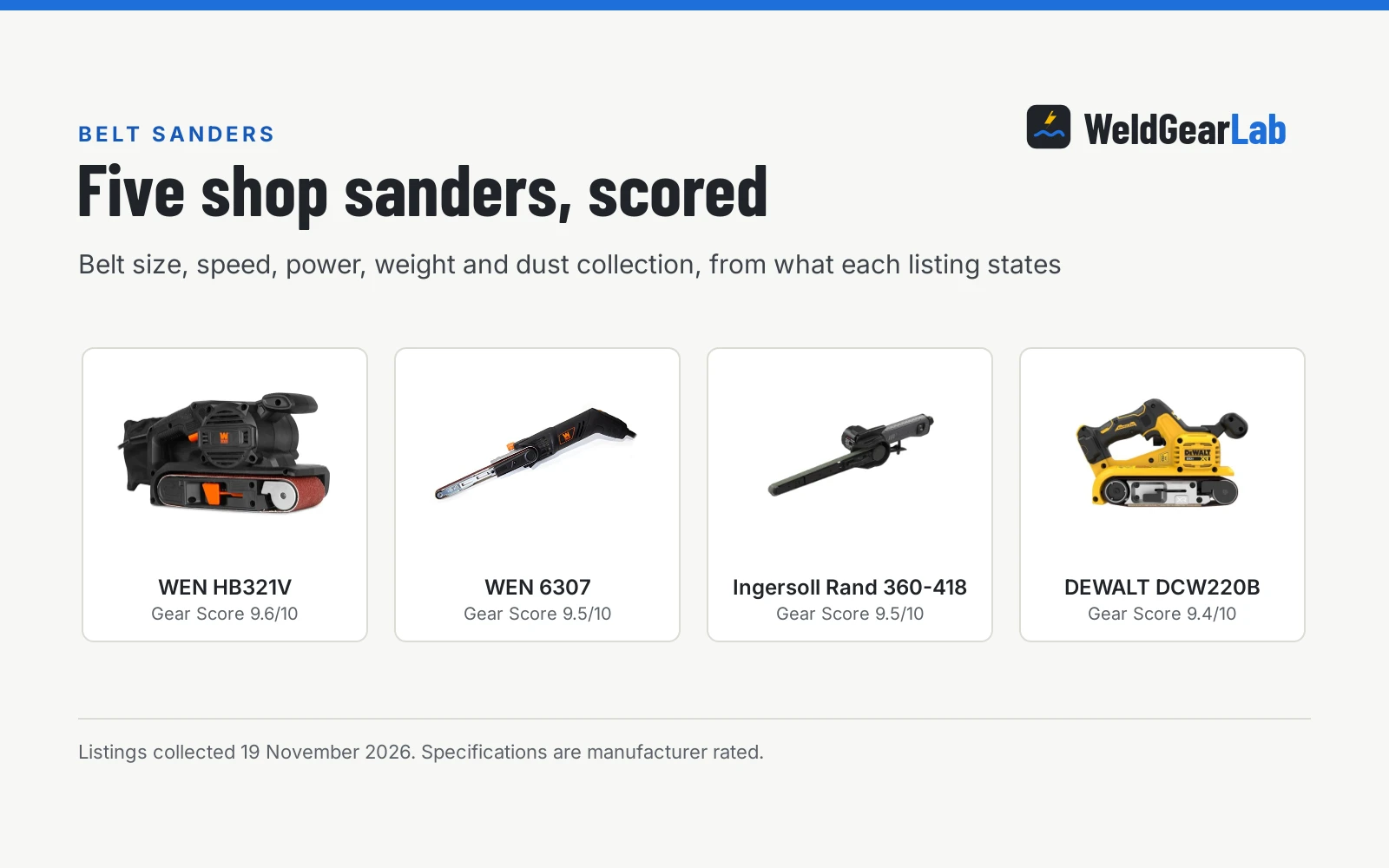
Five belt sanders for the shop, compared by belt size, speed, power, weight, dust collection and warranty.

On this page
Top picks at a glance
As an Amazon Associate I earn from qualifying purchases.
- 1
 Best OverallWEN HB321V9.6/10View on Amazon
- 2
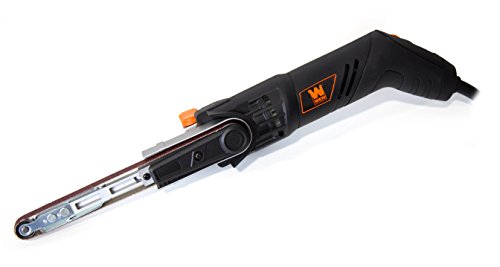 Best Detail SanderWEN 63079.5/10View on Amazon
- 3
 Best Air SanderIngersoll Rand 360-4189.5/10View on Amazon
- 4
 Best CordlessDEWALT DCW220B9.4/10View on Amazon
A weld bead stands proud of the joint, a knife bevel needs a clean edge, and a board edge needs knocking back before it fits. Each job wants the same tool: a belt that cuts fast, stays on track and leaves a surface ready for the next step. The best belt sander for the job depends on belt size, speed and power, so this guide compares the picks on belt size, speed, power, weight, dust collection and warranty.
WeldGearLab gets a commission on purchases made through links on this page, and your price stays the same. Read our affiliate disclosure.
Quick picks
- Best Overall WEN HB321V: 7.5 amp motor, 620 to 1200 fpm, a 3 by 21 inch belt, a lock-on switch and a 2 year warranty. Check price on Amazon
- Best Detail Sander WEN 6307: A 1/2 by 18 inch belt at 1080 to 1800 fpm that pivots for tight spots, with 3 belts and a 2 year warranty. Check price on Amazon
- Best Air Sander Ingersoll Rand 360-418: 0.6 hp air motor at 20,000 rpm and 4,700 sfpm, with belts in 60, 80 and 100 grit and a 1 year warranty. Check price on Amazon
- Best Cordless DEWALT DCW220B: Brushless 20V MAX cordless with a 25-speed dial and dust collection up to 95% with the AirLock system. Check price on Amazon
The machines
WEN 7.5-Amp 3-by-21-Inch Variable Speed Handheld
A 7.5 amp handheld belt sander with a 3 by 21 inch belt, variable speed from 620 to 1200 fpm, a lock-on switch and a detachable dust bag.
Pros
- 7.5 amp variable speed motor, 620 to 1200 fpm
- 3 by 21 inch belt covers large flat surfaces fast
- Lock-on switch for continuous sanding without holding the trigger
- Detachable dust bag and a 1-1/4 inch dust port, with a 2 year warranty
Cons
- 6.4 lb, the heaviest pick here
- Only an 80-grit belt is included, so finer grits are a separate buy
- Corded, so the cord trails behind the work
- A 3 by 21 inch belt is wide for narrow edges and tight spots
WEN 6307 Variable Speed Detailing File Sander
A variable speed detailing file sander with a 1/2 by 18 inch belt, auto-tracking, tool-free belt changes and a dust port attachment.
Pros
- 1/2 by 18 inch belt reaches tight spots and edges
- Variable speed from 1080 to 1800 fpm
- Auto-tracking belt needs no tensioning or adjustments
- 3 abrasive belts and a dust port included, with a 2 year warranty
Cons
- Narrow belt is slow on large flat panels
- No dust bag, only a dust port attachment
- Built for detail work, not for flattening tabletops
- No lock-on switch, so the trigger needs a constant grip
Ingersoll Rand 360-418 1/2" x 18" Air Belt Sander
A compact right-angle air belt sander with a 0.6 hp motor, 20,000 rpm and 4,700 sfpm, with belts in 60, 80 and 100 grit.
Pros
- 0.6 hp air motor at 20,000 rpm and 4,700 sfpm
- Right-angle head and articulating arm reach tight spaces
- Belts in 60, 80 and 100 grit included, plus a hex wrench
- Lightweight 2.40 lb composite housing for long sessions
Cons
- Air compressor not included
- Needs an air supply, so it is tied to the shop airline
- 1/2 by 18 inch belt is narrow for large flat work
- 1 year warranty, shorter than the 2 year picks
DEWALT 20V MAX* Belt Sander, Cordless, Brushless
A cordless brushless 20V MAX belt sander, tool only, with a variable speed trigger, a 25-speed selection dial and an overmolded auxiliary handle.
Pros
- Brushless motor on the 20V MAX platform
- 25-speed selection dial for precise speed control
- Overmolded auxiliary handle for 2-handed operation
- Wireless tool control pairs with a compatible vacuum or dust extractor
Cons
- Tool only; battery and charger are not included
- Dust collection AirLock is sold separately
- No dust bag included; dust collection needs the AirLock system
- No warranty term is stated

SKIL 6 Amp 3"x18" Belt Sander with Pressure
A 6.0 amp belt sander with a 3 by 18 inch belt, pressure control, micro-filtration and auto track belt alignment.
Pros
- Pressure control warns when too much pressure is applied
- 6.0 amp motor for wood surfaces
- Micro-filtration captures fine dust particles
- Flush edge sanding reaches right up to the edge
Cons
- No warranty term is stated
- 5.51 lb, heavier than the detailing picks
- Vacuum hose is not included
- No lock-on switch is stated
Other welders and gear to compare
 WEN Benchtop Belt and Disc Sander with 1 x 30 in. Belt and 5Check price on Amazon
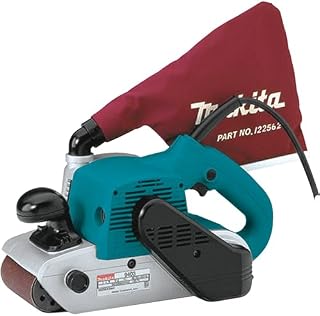 Makita 9403 4" x 24" Belt SanderCheck price on Amazon
 Metabo HPT Belt SanderCheck price on Amazon
 Makita 9903 3" x 21" Belt SanderCheck price on Amazon
 CRAFTSMAN Electric 7 Amp Belt SanderCheck price on Amazon
Spec sheet comparison
| Model | Gear Score | Belt size | Speed | Power | Weight | Dust collection | Warranty |
|---|---|---|---|---|---|---|---|
| WEN HB321V | 9.6/10 | 3 x 21 in | 620 to 1200 fpm | 7.5 amp | 6.4 lb | Dust bag, 1-1/4 in port | 2 years |
| WEN 6307 | 9.5/10 | 1/2 x 18 in | 1080 to 1800 fpm | Not stated | 2.4 lb | Dust port | 2 years |
| Ingersoll Rand 360-418 | 9.5/10 | 1/2 x 18 in | 4,700 sfpm | 0.6 hp air | 2.40 lb | Not stated | 1 year |
| DEWALT DCW220B | 9.4/10 | Not stated | Variable, 25-speed dial | 20V MAX cordless | 1.0 lb | Up to 95% with AirLock | Not stated |
| SKIL 7510-01 | 9.4/10 | 3 x 18 in | Not stated | 6.0 amp | 5.51 lb | Micro-filtration, vacuum compatible | Not stated |
These numbers are the manufacturer’s ratings exactly as each listing gives them, recorded on 19 November 2026.
Buying guide: the best belt sander for your shop
Belt size
Belt size sets the job. The narrow 1/2 by 18 inch belts on the detailing sander and the air sander reach edges, bevels and tight spots. The 3 by 18 inch belts on the SKIL and the DEWALT cover more surface, and the 3 by 21 inch belt on the big WEN covers the most ground on flat panels.
Belt speed
Speed is stated in feet per minute on the corded picks: the big WEN runs 620 to 1200 fpm and the detailing sander 1080 to 1800 fpm. The air sander states 4,700 sfpm at 20,000 rpm. The DEWALT lists a 25-speed selection dial instead of a belt speed in feet per minute.
Power: corded, cordless or air
The big WEN runs on a 7.5 amp motor and the SKIL on 6.0 amp, both corded. The DEWALT runs on the 20V MAX platform, tool only, so it needs batteries from that platform. The air sander runs on a 0.6 hp air motor and needs a compressor, which is not included. Match the power to the shop: corded for the bench, cordless for work away from an outlet, air for a shop that already runs airlines.
Dust collection
Sanding makes dust, and each pick handles it differently. The big WEN includes a detachable dust bag and a 1-1/4 inch dust port. The detailing sander includes a dust port attachment. The SKIL uses micro-filtration and fits standard 1-1/4 inch vacuum hoses. The DEWALT claims up to 95% dust collection efficiency with the AirLock system, sold separately.
Changing the belt
Belt changes should be quick, since grit changes happen mid-job. The big WEN uses a quick-release belt tension lever, and the detailing sander, the air sander and the DEWALT state tool-free belt changes. The air sander also has a tool-free articulating arm for tight spaces. Check the belt size before ordering spares: 1/2 by 18 inch, 3 by 18 inch and 3 by 21 inch belts are not interchangeable.
Before You Strike an Arc
- Check the power first: the air sander needs a compressor, the cordless pick needs 20V MAX batteries, and the corded picks need an outlet.
- Count the belts in the box: the detailing sander includes 3 abrasive belts, the air sander includes belts in 60, 80 and 100 grit, and the big WEN includes an 80-grit belt.
- Check the dust setup: the big WEN has a detachable dust bag, the detailing sander a dust port attachment, and the DEWALT needs the AirLock system, sold separately.
- Wear eye and face protection, clamp the work, keep guards in place, and keep gloves away from the moving belt.
FAQ for welders
How do you use a belt sander?
Clamp the work, hold the sander with both hands, and let the belt do the cutting without pressing down hard. Keep the sander moving so the belt does not dig in one spot, and work with the grain on wood. The SKIL pick adds pressure control that warns when too much pressure is applied.
How do you clean a belt sander?
Unplug the sander or disconnect the air supply first, then brush dust from the belt, the platen and the dust port. Empty the dust bag or the vacuum hose after the job. A clogged belt cuts slower, so swap in a fresh belt when the grit stops cutting.
How do you change the belt on a belt sander?
Release the tension lever or the quick-release system, slide the old belt off, and fit the new belt in the same direction. The big WEN uses a quick-release belt tension lever, and the detailing sander, the air sander and the DEWALT state tool-free belt changes. Check the belt size on the listing before ordering spares.
Which belt sander suits knife making?
A narrow belt suits bevels and edges: the detailing sander and the air sander both run a 1/2 by 18 inch belt, and the air sander adds a right-angle head and an articulating arm for tight spaces. The wide 3 by 21 inch belt suits flat panels, not bevels. For knife work, the narrow picks are the ones to look at first.
Related: belt grinder vs belt sander, the best forge burner kit for knife making, our knife casting hub and our angle grinder safety notes.
Scoring, line by line
Each sander is scored out of 10 on performance, build, value, safety listing and warranty, with the weights published on our How We Pick page. No listing here states a safety listing, so every sander scores zero on that criterion; the ranking comes from the other four.
| Product | Gear Score | Perf. /35 | Build /25 | Value /25 | Safety /10 | Warranty /5 |
|---|---|---|---|---|---|---|
| WEN HB321V | 9.6 | 30 | 21 | 21 | 0 | 3 |
| WEN 6307 | 9.5 | 29 | 20 | 21 | 0 | 3 |
| Ingersoll Rand 360-418 | 9.5 | 30 | 21 | 20 | 0 | 2 |
| DEWALT DCW220B | 9.4 | 30 | 21 | 18 | 0 | 0 |
| SKIL 7510-01 | 9.4 | 28 | 20 | 20 | 0 | 0 |
Displayed scores fall between 9.2 and 9.8: the weighted point total is mapped onto that band in a straight line, so earning more points always lifts the score.