Belt Grinder vs Belt Sander: Which One Should You Buy?
A belt grinder shapes and deburrs metal on the bench, while a belt sander finishes surfaces; how the three listings here compare on belt size, power and speed control.

On this page
Top picks at a glance
As an Amazon Associate I earn from qualifying purchases.
- 1
 VEVOR Belt Grinder Sander9.5/10View on Amazon
- 2
 WEN Benchtop Belt and Disc Sander with 4 x 36 in. Belt9.4/10View on Amazon
- 3
 SI FANG Mini Electric Belt Sander Knife-Sharpener Small Bench9.4/10View on Amazon
- 4
 VEVOR Belt Grinder Sander with VFDView on Amazon
- 5
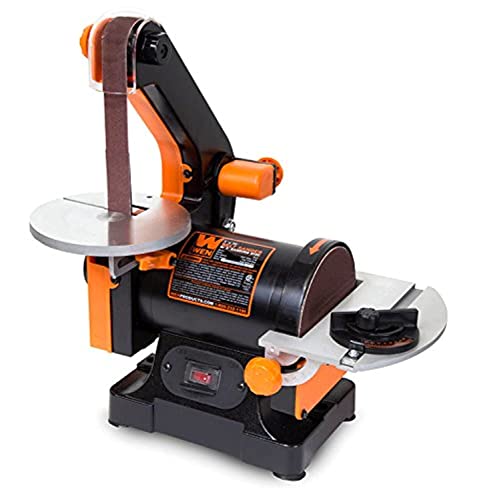 WEN Benchtop Belt and Disc Sander with 1 x 30 in. Belt and 5View on Amazon
- 6
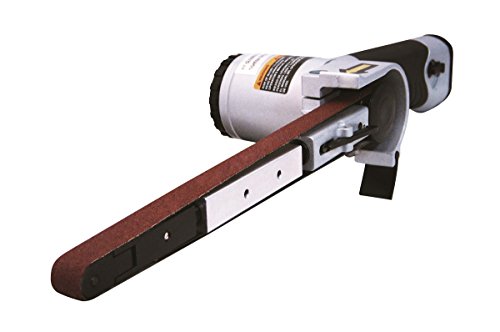 Astro Pneumatic 3037 Air Belt SanderView on Amazon
- 7
 Belt Sander Professional with Vertical and Horizontal SupportView on Amazon
- 8
 Belt Grinder SanderView on Amazon
- 9
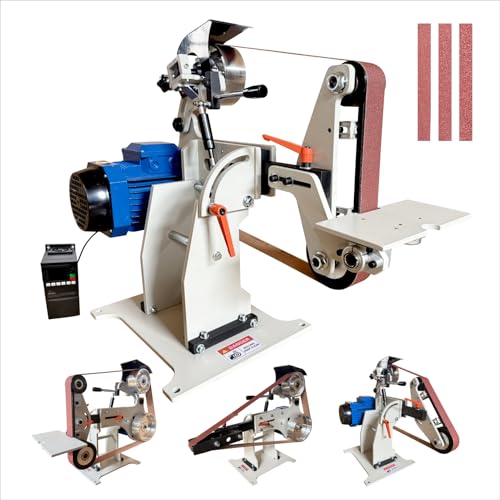 JLD Professional Belt Grinder SanderView on Amazon
A belt grinder vs belt sander choice comes down to the job on the bench: a grinder removes metal and shapes it, while a sander smooths and finishes a surface. In the listings here, the grinder side is a stationary bench machine built for metalwork, and the sander side is a cordless handheld machine and a compact bench machine for sanding and light sharpening. Pick the grinder for shaping and deburring metal on the bench, and pick a sander for finishing work and surfaces, with small grinding work covered by the Blissthrill example.
Other welders and gear to compare
 VEVOR Belt Grinder Sander with VFDCheck price on Amazon
 WEN Benchtop Belt and Disc Sander with 1 x 30 in. Belt and 5Check price on Amazon
 Astro Pneumatic 3037 Air Belt SanderCheck price on Amazon
 Belt Sander Professional with Vertical and Horizontal SupportCheck price on Amazon
 Belt Grinder SanderCheck price on Amazon
 JLD Professional Belt Grinder SanderCheck price on Amazon
This guide links to our product roundups, where WeldGearLab gets a commission on purchases made through links on this page, and your price stays the same. Read our affiliate disclosure.
The difference in one paragraph
A belt grinder runs a long abrasive belt over a platen or wheel to cut metal, shape an edge and take off burrs. A belt sander runs a similar belt for a different purpose: smoothing wood, metal or other surfaces and blending a finish, although the Blissthrill listing also states heavy grinding. The VEVOR listing below calls its machine a belt grinder sander because it covers grinding, polishing and deburring on the bench, while the DEWALT and Blissthrill listings describe sanders for finishing and small sharpening work.
Side by side
| Belt grinder | Belt sander | Notes | |
|---|---|---|---|
| Typical job | Grinding, shaping and deburring metal | Sanding and finishing surfaces, with small grinding work | Bench machine, not handheld |
| Example machines | VEVOR 72 by 2 in bench machine | DEWALT 20V MAX cordless; Blissthrill mini bench machine | One bench machine against two sanders |
| Belt size stated | 72 to 82 by 2 in | 330 mm by 30 mm (Blissthrill); not stated (DEWALT) | Check the DEWALT listing for belt size |
| Motor stated | 1500W motor at 2900 rpm | 20V MAX brushless (DEWALT); 775 motor, 4000 to 9000 rpm, no wattage stated (Blissthrill) | Maker figures, not measured here |
| Speed control | VFD stepless regulation | 25-speed selection dial (DEWALT); 7 speeds (Blissthrill) | Stated control, not a speed figure |
| Work position | Vertical and horizontal | Handheld cordless (DEWALT); bench mini (Blissthrill) | Position follows the machine type |
| Belts included | Three 72 by 2 in belts, 100, 180 and 240 grit | Blissthrill belts at 330 mm by 30 mm, with wheels and disc papers included; DEWALT belt size and included belts not stated | Grits stated only for the VEVOR |
| Dust collection stated | Not stated | Up to 95% with AirLock, sold separately (DEWALT); not stated (Blissthrill) | AirLock sold separately for the DEWALT |
| Weight stated | 184.53 pounds | 1.0 pound in the spec table (DEWALT); 3.8 pounds in the spec table (Blissthrill) | Spec table figure for the DEWALT |
Figures are as stated on each listing. Where a listing gives more than one figure for the same measurement, this guide uses the bullet figure and says so in the gear section.
When a belt grinder is the better choice
- Shaping and deburring metal. The VEVOR example states grinding, polishing and deburring of metals, with three grinding modes: circular, arc and flat.
- Knife work on the bench. The VEVOR listing names knife sharpening, includes three grinding moulds and three belts, and works vertical or horizontal.
- Long belts and variable speed. The VEVOR example takes 72 to 82 by 2 in belts with a VFD for stepless speed regulation and a stated belt line speed of 32 m/min.
- A dedicated metal station. At 184.53 pounds with stated dimensions of 35.24 by 15.75 by 25.98 in, the VEVOR example is a bench machine, not a tool to carry to the work.
When a belt sander is the better choice
- Finishing large surfaces. The DEWALT example is a cordless handheld sander for sanding applications, with a variable speed trigger and a 25-speed selection dial.
- Dust control on the job. The DEWALT listing states up to 95% dust collection efficiency with its AirLock compatible system, while the AirLock itself is sold separately.
- Small sharpening and craft work. The Blissthrill mini sander states knife sharpening, woodworking, metal working and jewelry work, with seven speeds and forward and reverse rotation.
- Tight spaces. The Blissthrill bullet figure gives 6.5 by 3.8 by 4.3 in, and the DEWALT is a handheld cordless tool, so neither needs a dedicated bench station like the VEVOR example.
Belt grinder vs belt sander: the gear examples, ranked
The three listings, in the order this guide ranks them, show how far apart the two sides sit. First, the VEVOR belt grinder sander: the listing states a 1500W motor running at 2900 rpm, a VFD with stepless speed regulation, three grinding modes, vertical and horizontal use, and three included 72 by 2 in belts in 100, 180 and 240 grit, plus three grinding moulds. It is the only example here built around metal grinding and deburring at bench scale, and its stated weight of 184.53 pounds marks it as a fixed station.
Second, the DEWALT 20V MAX belt sander, model DCW220B: the listing states a brushless motor, a variable speed trigger with a 25-speed selection dial, a quick-release tool-free belt change system, an overmolded auxiliary handle for two-handed operation, and wireless tool control for pairing with a compatible vacuum or dust extractor. It is sold as tool only, and the listing claims up to 22% more power, and 16.7% more sanding surface area than the Milwaukee 2832-20, stated as maker comparisons. No belt size is stated for this sander, and the spec table lists its weight as 1.0 pound, which reads as a bare spec figure rather than a working weight.
Third, the Blissthrill mini belt sander: the listing states an upgraded 775 motor running from 4000 to 9000 rpm, seven speeds, forward and reverse rotation, a 304 stainless steel build, and four shock-absorbing rubber pads. The listing gives three different dimension sets, and the bullet figure of 6.5 by 3.8 by 4.3 in is the one used here. Belts are stated at 330 mm by 30 mm, with disc papers and wheels stated as included, so it suits small sharpening and craft work rather than large surface sanding.
Sparks and dust. Belt grinding throws sparks and dust, and sanding fills the air with fine dust. Work with ventilation, keep flammable material clear of the bench, wear eye protection, and check the manual for the machine before changing belts or adjusting tracking. See our metal fab tools hub for related guides.
FAQ for welders
Can a belt sander grind metal?
A sander can touch up metal where the listing names metal working, as the Blissthrill listing does, while the DEWALT listing covers sanding applications generally without naming metal specifically. Heavy shaping, edge grinding and deburring are the stated job of the VEVOR grinder example, not of either sander example.
Can one machine do both jobs?
Partly. The VEVOR listing calls its machine a belt grinder sander and states grinding, polishing and deburring modes on the bench. It does not replace a handheld sander for large flat surfaces, since it is a 184.53 pound bench machine.
Which example suits knife sharpening?
Two examples state knife sharpening: the VEVOR, with three grinding moulds and belts in 100, 180 and 240 grit, and the Blissthrill mini sander, with seven speeds and forward and reverse rotation. The DEWALT listing does not state knife sharpening.
What belt sizes do the examples take?
The VEVOR example takes 72 to 82 by 2 in belts, and includes three 72 by 2 in belts. The Blissthrill example states belts at 330 mm by 30 mm, while the DEWALT example states no belt size in its listing, so check the DEWALT listing itself before ordering belts for it.
Does the DEWALT sander need a battery?
The DEWALT listing sells the sander as tool only on the 20V MAX platform, with no battery or charger stated as included. Check what battery and charger are already in the shop before ordering, and note that its AirLock dust system is sold separately.
Related: best belt grinder for knife making, best belt grinder for welders, best sanding belt for grinding, sanding belt vs sanding disc, and the metal fab tools hub.