Anvil Weight Guide for Blacksmithing
Anvil weight affects how steady the anvil sits under the hammer; this guide explains what 66 lb, 86 lb and 100 lb anvils suit and how to read the weight a maker states.

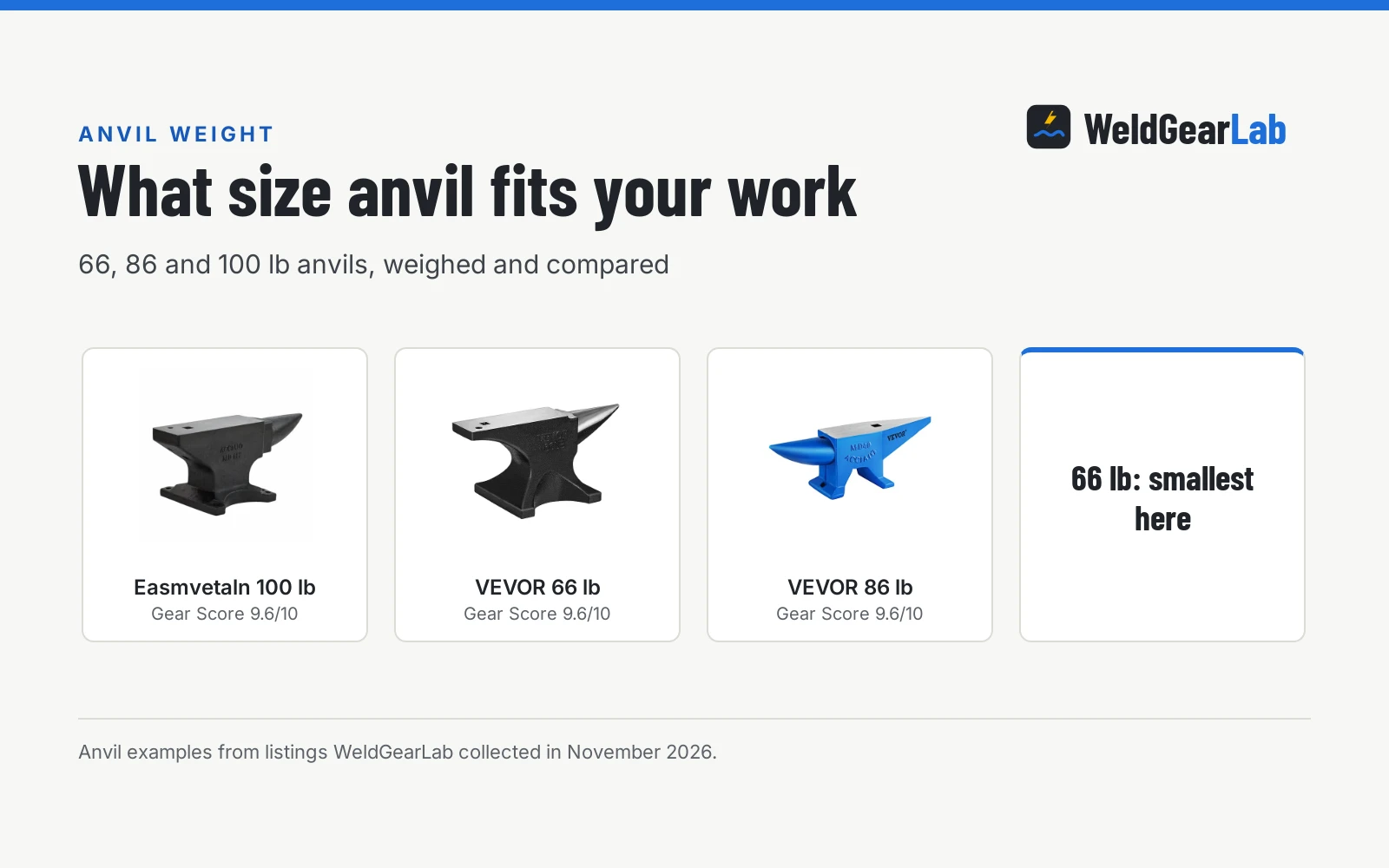
On this page
Top picks at a glance
As an Amazon Associate I earn from qualifying purchases.
- 1
 Easmvetaln Cast Iron Anvil,100Lbs Single Horn9.6/10View on Amazon
- 2
 VEVOR Single Horn Anvil 66 lbs Cast Steel Anvil9.6/10View on Amazon
- 3
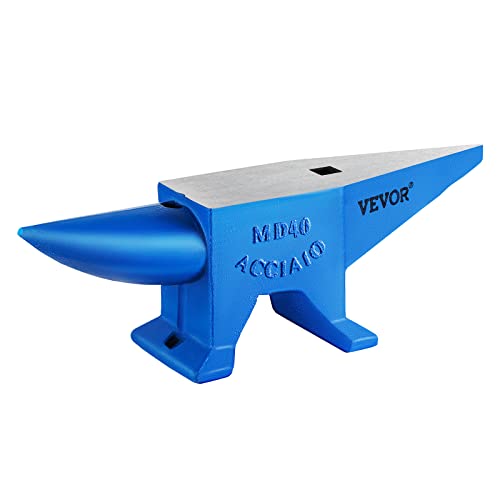 VEVOR Single Horn Anvil 86Lbs Steel Anvil9.6/10View on Amazon
An anvil earns its keep by mass: a heavier anvil moves less under the hammer and puts more of each blow into the metal, while a lighter anvil moves more and wastes more of the strike. Anvil weight is a figure to settle before you buy, because it affects what stock you can forge efficiently and how much the anvil moves on your bench. This guide explains what the common weights suit, how to read the weight a maker states, and which anvil here fits home blacksmithing.
This guide links to our product roundups, where WeldGearLab gets a commission on purchases made through links on this page, and your price stays the same. Read our affiliate disclosure.
Easmvetaln Cast Iron Anvil,100Lbs Single Horn
A 100 lb anvil with 55HRC hardness, a rebound rate over 70%, and a 12.01 x 4.02 inch work surface.
Pros
- 100 lb of cast steel with a stable base for hammer work
- 55HRC hardness for deformation resistance
- Rebound rate over 70% after each strike
- 12.01 x 4.02 inch work surface with round and square holes
Cons
- 100 lb is the heaviest anvil here to move
- No warranty term is stated
- 20.08 inch length needs a wide bench or stand
- Single horn only, with no flat horn face
VEVOR Single Horn Anvil 66 lbs Cast Steel Anvil
A 66 lb cast steel anvil with 50HRC hardness, round and square holes, and a large countertop.
Pros
- 66 lb of cast steel with 50HRC hardness
- Round and square holes for punching and shaping
- Large countertop and stable base
- Round horn for bending and shaping metal
Cons
- 66 lb is the smallest weight here, with the least mass for heavy forging
- Single horn only, with no flat horn face
- Cast steel, where the 86 lb VEVOR is drop-forged steel
- No warranty term is stated
VEVOR Single Horn Anvil 86Lbs Steel Anvil
An 86 lb drop-forged steel anvil with a round horn and a flat horn, a hardy hole, and a polished surface.
Pros
- Drop-forged high-grade steel that withstands heavy blows
- Round horn and flat horn for bending and shaping
- Hardy hole for accessories, punching and bending
- Fully polished surface with a spray coating against oxidation
Cons
- Heavier to move than the 66 lb anvil
- 24 inch length needs a long bench or stand
- No warranty term is stated
- Less mass than the 100 lb anvil for heavy forging
Anvil Weight and What It Affects
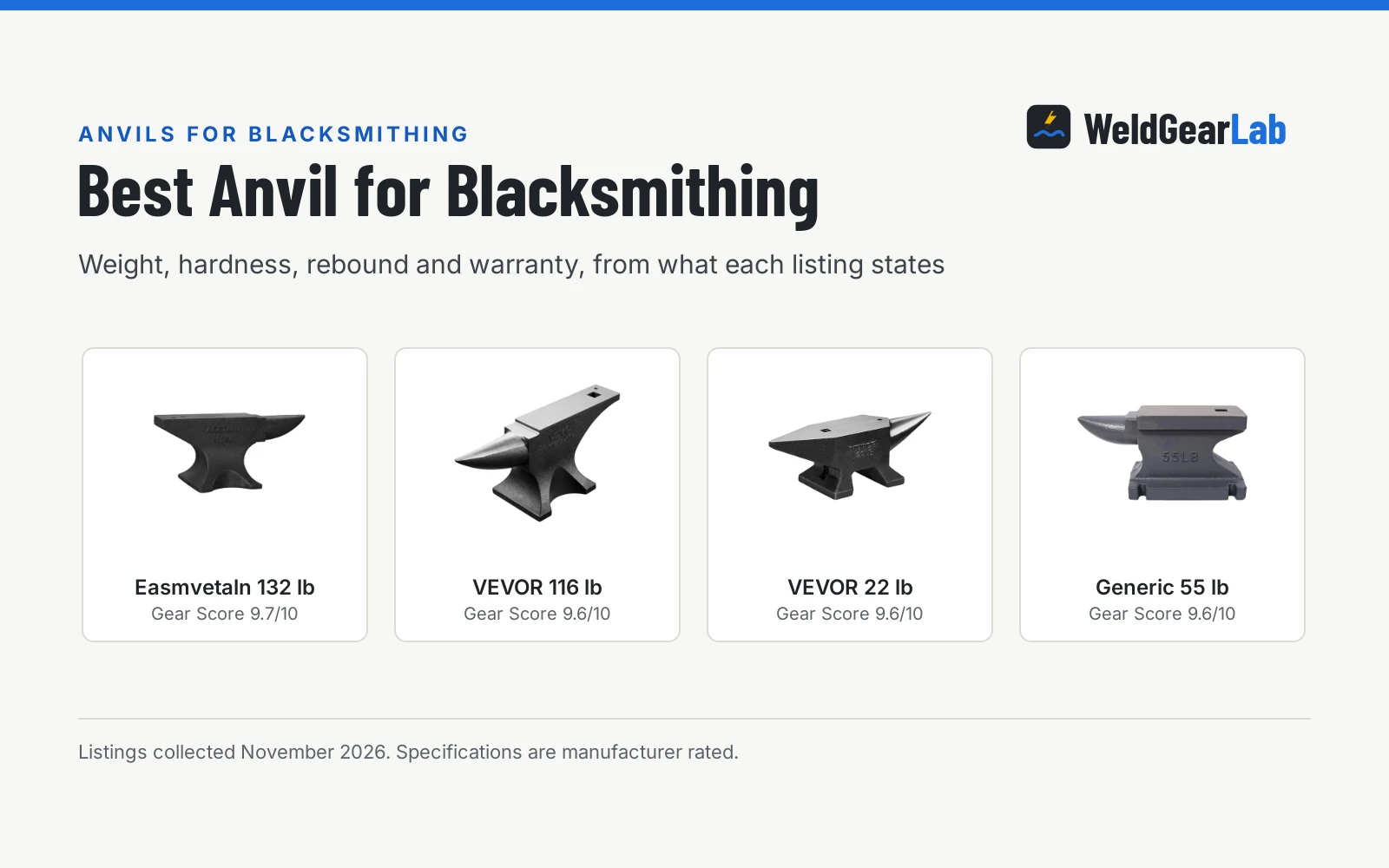
Anvil weight is the weight of the anvil itself, stated in pounds on the listing. The heavier the anvil, the more mass sits behind the face, so the face moves less under the hammer and the work takes the blow. The three anvils in this guide weigh 66 lb, 86 lb and 100 lb. The 66 lb anvil is listed for cutting, shaping and trimming metal, the 86 lb anvil for forging and forming metal, and the 100 lb anvil for shaping, bending and twisting. Read the weight in the title and the description together, since the two can disagree; when they do, ask the seller before ordering. The best anvil for blacksmithing guide compares anvils across the same weights.
Side by Side
| Anvil | Weight | Material | Hardness | Work surface |
|---|---|---|---|---|
| Easmvetaln 100 lb | 100 lb | Cast steel | 55HRC | 12.01 x 4.02 in |
| VEVOR 66 lb | 66 lb | Cast steel | 50HRC | Not stated |
| VEVOR 86 lb | 86 lb | Drop-forged steel | Not stated | Not stated |
Read weight down the table: the 66 lb anvil is the smallest weight here, the 100 lb anvil is the heaviest, and the 86 lb anvil sits between them. Hardness is stated on the 66 lb and 100 lb anvils, at 50HRC and 55HRC. The 100 lb anvil states a work surface size, 12.01 x 4.02 inches; the other two state no work surface size.
The Anvils for Home Blacksmithing
The anvils below cover trimming, shaping, forging and forming work at three weights. Pick the weight that matches the stock and hammer you use.
How to Pick the Weight
Start from the stock, not the anvil. The 66 lb anvil is listed by the maker for cutting, shaping and trimming metal. The 86 lb anvil is drop-forged steel with a round horn and a flat horn, listed for forging and forming metal. The 100 lb anvil states 55HRC hardness and a rebound rate over 70%, and is listed for shaping, bending and twisting. Then check the face: the 100 lb anvil states a 12.01 x 4.02 inch work surface, while the 66 lb and 86 lb anvils list no work surface size, so measure your bench against the anvil you pick. A forge heats the stock before it meets the anvil; the propane forge temperature guide covers the heat to expect.
Forge Safety in Brief
An anvil is only half the setup: the forge that heats the stock needs outdoors or strong ventilation, a carbon monoxide alarm, and a fire extinguisher nearby, and a lit forge is never left alone. Wear eye and face protection, clamp the work, and keep guards in place on grinders and saws. See the OSHA machine guarding rules and the CPSC carbon monoxide guidance before you set up a forge.
FAQ for welders
How heavy should an anvil be for home blacksmithing?
It depends on the stock you forge. The anvils in this guide weigh 66 lb, 86 lb and 100 lb: the 66 lb anvil is listed for cutting, shaping and trimming metal, the 86 lb anvil for forging and forming metal, and the 100 lb anvil for shaping, bending and twisting. Match the weight to your stock and hammer, secure the anvil on a bench or stand, and check the weight in both the title and the description before ordering.
Does a heavier anvil forge better than a lighter one?
More mass behind the face means the face moves less under the hammer, so more of the blow goes into the metal. The 100 lb anvil here is the heaviest, and it also states the highest hardness at 55HRC and a rebound rate over 70%. A lighter anvil still forges well on small stock, so match the weight to the work rather than buying the heaviest anvil by default.
What does anvil hardness (HRC) mean?
Hardness is stated as HRC, a scale the makers use for the anvil face. The 66 lb anvil states 50HRC, and the 100 lb anvil states 55HRC, which its listing ties to deformation resistance. The 86 lb anvil states no hardness figure, so compare it on weight and build instead.
What is anvil rebound?
Rebound is how much the hammer bounces back from the anvil face after a strike. The 100 lb anvil states a rebound rate of over 70% for its forging surface. The other two anvils state no rebound rate, so rebound is only a stated figure on the 100 lb anvil here.
Do I need to bolt an anvil to a bench?
The 100 lb anvil can be clamped or bolted onto a workbench to keep it stable. The 66 lb anvil states a large countertop and stable base, and the 86 lb anvil states a solid base that keeps it sturdy. Whichever anvil you pick, set it on a bench that fits its size and keeps it from moving while you work.
Related: best tongs for blacksmithing, types of blacksmith hammers, best blacksmith hammers, and the blacksmithing hub.