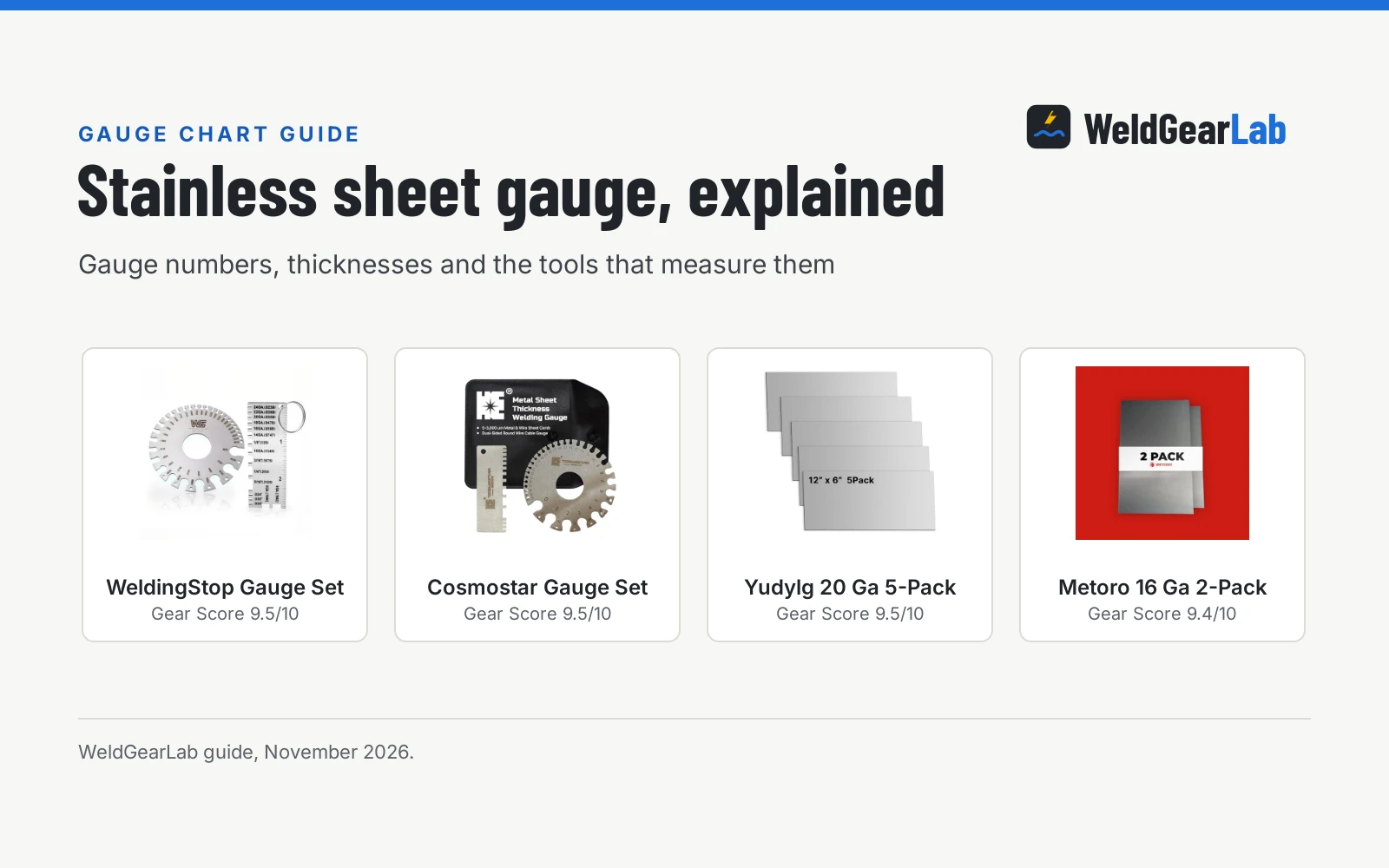
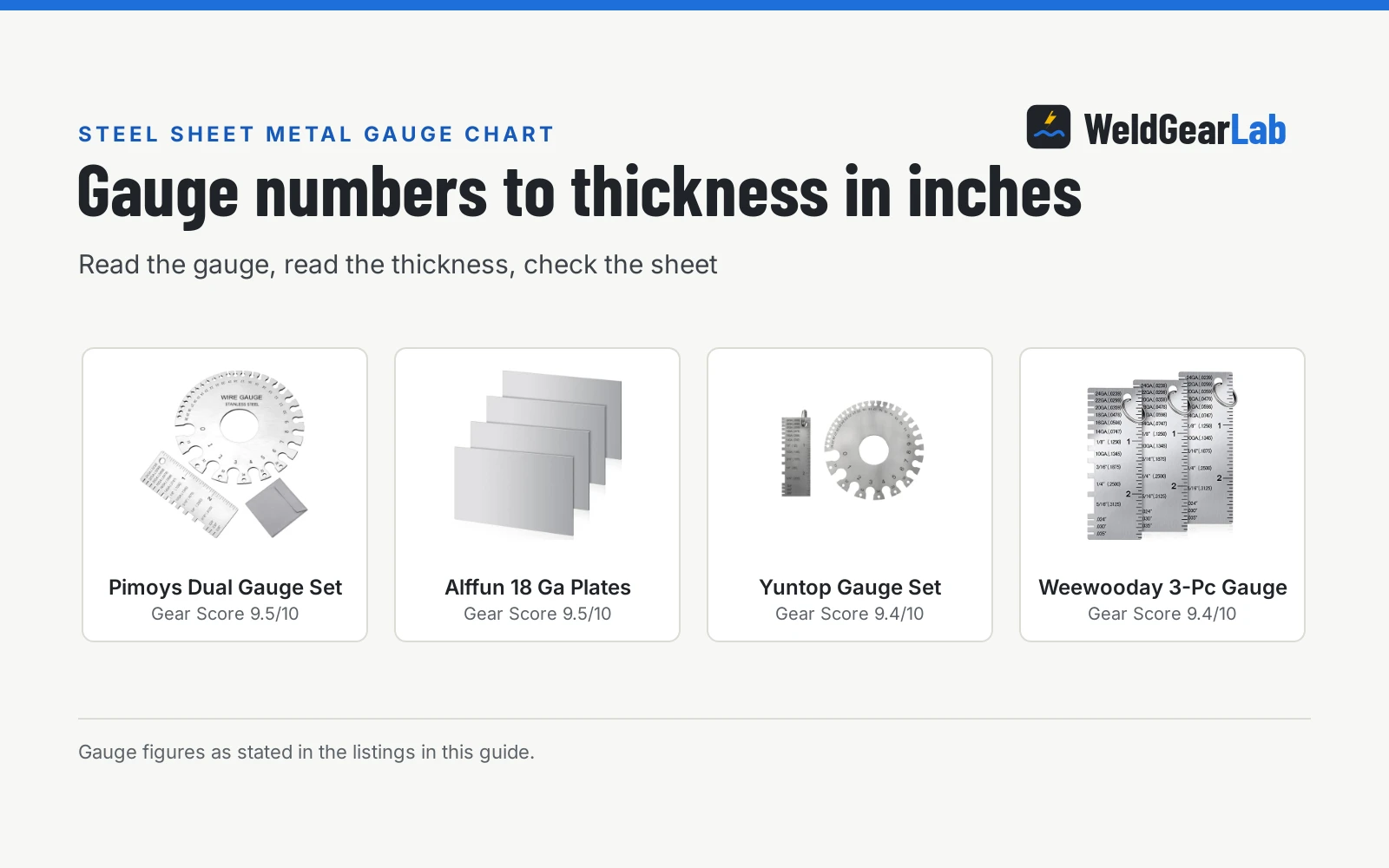
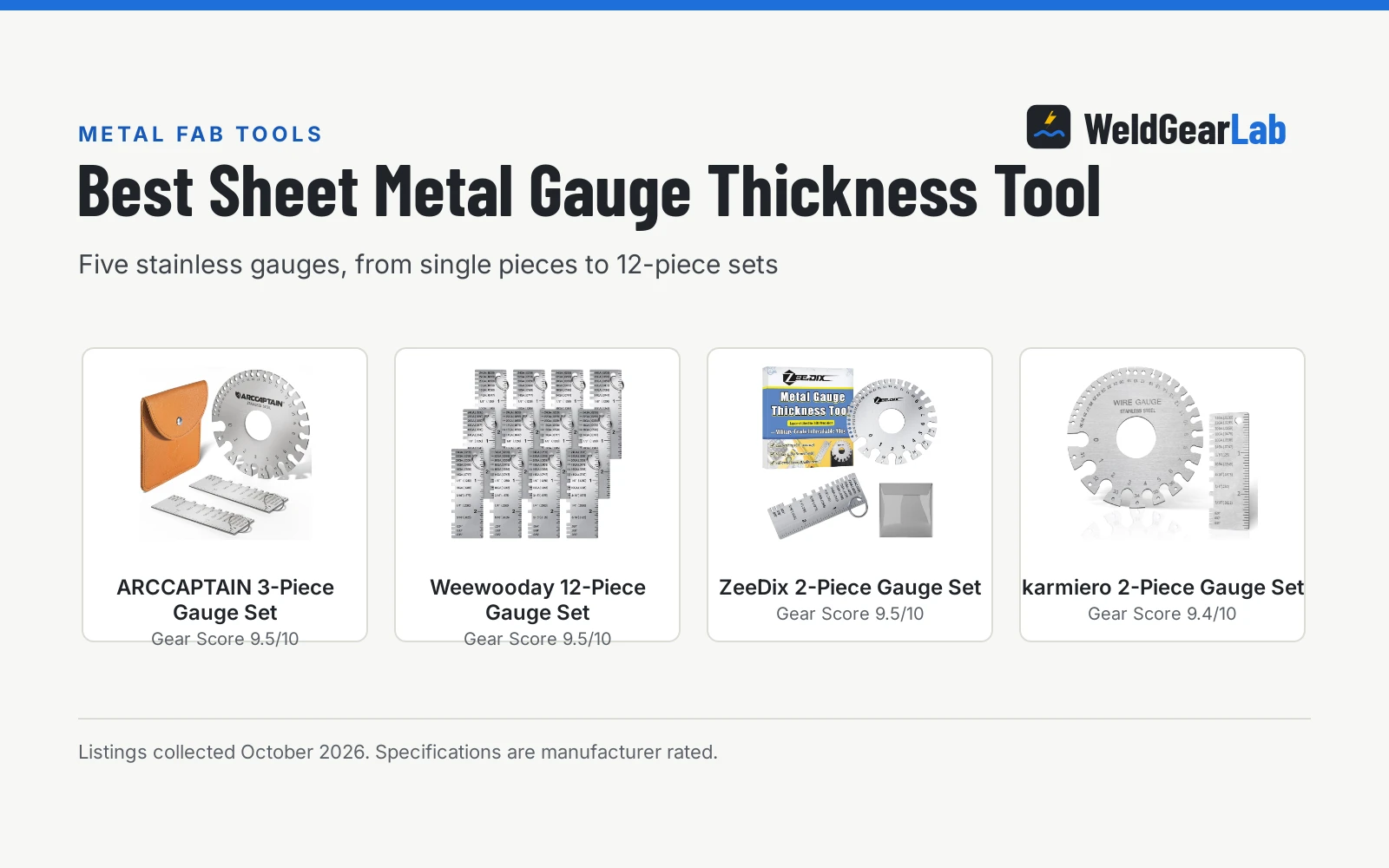
Aluminum Sheet Metal Gauge Chart: Thickness Guide
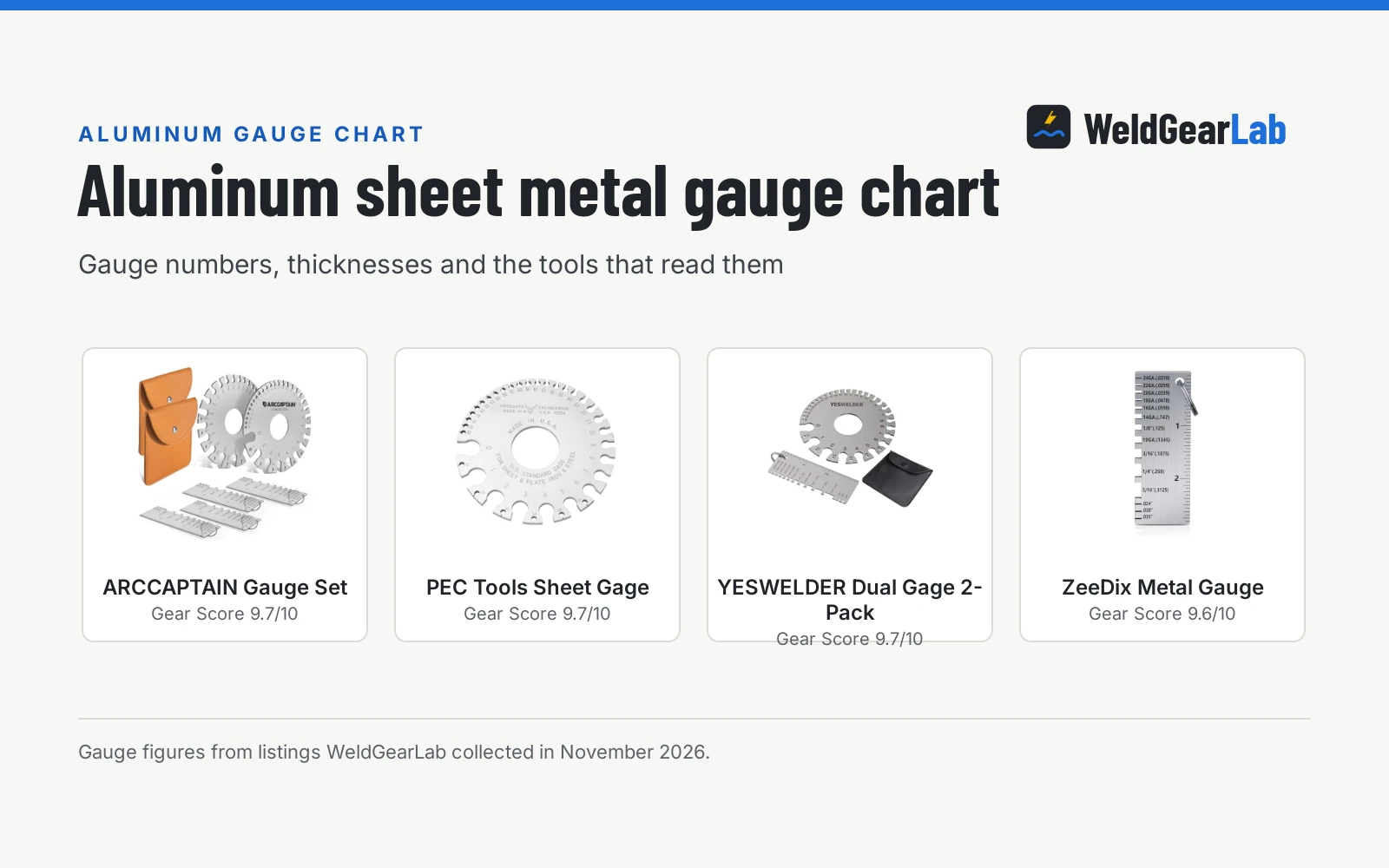
The widest gauge tools here read 0 to 36, higher means thinner, and a gauge tool reads the number off the sheet so you can match it to the thickness on that metal.

On this page
Top picks at a glance
As an Amazon Associate I earn from qualifying purchases.
- 1
 ARCCAPTAIN Metal Gauge Thickness Tool9.7/10View on Amazon
- 2
 PEC Tools Sheet Metal & Wire Gage9.7/10View on Amazon
- 3
 YESWELDER Round Dual Sided Metal Sheet Gage9.7/10View on Amazon
- 4
 ZeeDix Portable Metal Sheet Thickness Gauge9.6/10View on Amazon
A patch panel, a bracket or a skin for a trailer all start the same way: a sheet that needs to match the metal already on the job, and the aluminum sheet metal gauge chart is how you read that match. The chart lists the gauge numbers these tools read and the one thickness range a listing states, and the gauge tools below read the number straight off the sheet. Match the number on the same metal and the thickness matches, but the size and shape still have to fit the job.
This guide links to our product roundups, where WeldGearLab gets a commission on purchases made through links on this page, and your price stays the same. Read our affiliate disclosure.
ARCCAPTAIN Metal Gauge Thickness Tool
A 6-piece set with 2 round dual-sided gauges and 4 rectangular thickness tools in stainless steel, reading 0 to 36 with a leather storage bag.
Pros
- Reads 0 to 36, the widest range stated here
- 6 pieces: 2 round dual-sided gauges and 4 rectangular tools
- Stainless steel with anti-rust and anti-corrosion properties, per the listing
- Leather storage bag included
Cons
- No warranty term is stated
- No stated weight or dimensions
- Laser calibration claim cannot be checked from the listing
- No stated decimal sizes on the tool
PEC Tools Sheet Metal & Wire Gage
A US Standard 0-36 sheet metal and wire gage in hardened steel with a satin chrome finish, decimal sizes on the back and a protective sleeve.
Pros
- Reads 0 to 36, US Standard for uncoated sheet and plate iron and steel
- Hardened steel with satin chrome finish
- Clear decimal sizes on the back side
- Made in USA, from a maker with over 60 years of experience, per the listing
Cons
- No warranty term is stated
- One gage, no extra piece or set
- No stated weight or dimensions
- Steel only: marked for sheet and plate iron and steel, not aluminum
YESWELDER Round Dual Sided Metal Sheet Gage
A 2-piece set with a round dual-sided wire gage and a rectangular sheet thickness gauge in stainless steel, with a leather package.
Pros
- 2 pieces cover wire and sheet in one set
- Stainless steel with anti-rust and anti-corrosion properties, per the listing
- Leather packaging for protection and carrying
- Compact and light at 0.1 lb, per the spec table
Cons
- No gauge range is stated
- No warranty term is stated
- The easy-to-use bullet describes pressing teeth to trace a shape, which is a contour gage job, not a thickness reading
ZeeDix Portable Metal Sheet Thickness Gauge
A rectangular stainless steel thickness gauge at 2.83 by 1 in, with a clear scale reading 24GA from .0239 in to .035 in.
Pros
- States a 24GA range from .0239 in to .035 in
- Clear scale for easy reading, per the listing
- Small at 2.83 by 1 in, with a keychain design
- Stainless steel, durable and not easy to wear, per the listing
Cons
- Narrowest stated range here, around 24 gauge only
- No warranty term is stated
- Rectangular gauge only, no extra piece or round gage
- Must be kept dry or away from water to avoid rust, per the listing
Aluminum sheet metal gauge chart
The chart is short because the listings state few conversions: 2 of these tools state a range of 0 to 36, and the one thickness range a listing states is 24GA at .0239 in to .035 in, from ZeeDix, with no listing here stating an aluminum conversion. Higher gauge numbers mean thinner sheet, so a high number is a light sheet and a low number is a heavy one. Read the number off the sheet with a gauge tool, then match it to the thickness the job calls for on that metal.
| Gauge | Thickness stated | Where it comes from |
|---|---|---|
| 0 to 36 | Range on the tool, no per-gauge figures stated | ARCCAPTAIN and PEC Tools |
| 24GA | .0239 in to .035 in | ZeeDix |
How gauge numbers work
Gauge is a count, not a measurement: the number names a slot on the tool, and the slot that fits the sheet gives the number. Two sheets with the same gauge number can still differ in thickness when the metal differs, because gauge scales are set per metal: the PEC gage is marked US Standard 0-36 for uncoated sheet and plate iron and steel, so read aluminum on a tool that states aluminum or read the decimal thickness instead. Measure uncoated metal, since paint or coating adds thickness the gauge will read as metal. Keep the gauge dry and the slots clean, since rust and grit change the fit: ZeeDix warns to keep its gauge dry or away from water when not in use.
Compare the gauges
| Gear Score | Range | Pieces | Material | |
|---|---|---|---|---|
| ARCCAPTAIN Gauge Set | 9.7/10 | 0-36 | 6 | Stainless steel |
| PEC Tools Sheet Gage | 9.7/10 | 0-36 | 1 | Hardened steel |
| YESWELDER Dual Gage 2-Pack | 9.7/10 | Not stated | 2 | Stainless steel |
| ZeeDix Metal Gauge | 9.6/10 | 24GA | 1 | Stainless steel |
Each gauge here is stainless or hardened steel, and each reads by slot fit rather than a dial or display.
Gauges for reading the chart on the bench
Reading a gauge number off a sheet takes a gauge tool, not a ruler, so the gauges below cover that measurement: round dual-sided sets for the bench and the pocket, a rectangular gauge for the toolbox, and a US Standard gage for uncoated sheet and plate.
How to use a sheet metal gauge
- Start clean. Wipe the sheet edge and the gauge slots, and measure uncoated metal so paint or coating does not add to the reading.
- Find the snug slot. Slide the sheet edge into the slots until one fits snug without force. That slot’s number is the gauge.
- Read the decimal too. PEC Tools shows clear decimal sizes on the back side, so note the decimal next to the gauge number when the job calls for a thickness, not just a number.
- Check more than one spot. Measure the edge in more than one place when the sheet looks uneven or worn, since a thin spot reads a higher gauge than the rest.
FAQ for welders
What thickness is 24 gauge aluminum?
No listing here states the thickness of 24 gauge aluminum. ZeeDix states 24GA at .0239 in to .035 in for its gauge, so measure the sheet with a gauge and match the number on the same metal rather than guessing from the gauge number alone.
Is a higher gauge number thicker or thinner?
Thinner. Gauge numbers climb as the sheet gets lighter, so a high number is a thin sheet and a low number is a heavy one. ARCCAPTAIN and PEC Tools state a range of 0 to 36, with 0 at the heavy end.
Are steel and aluminum gauges the same?
No. Gauge scales are set per metal, so a number that means one thickness in steel means another in aluminum. The PEC gage is marked US Standard 0-36 for uncoated sheet and plate iron and steel, so use a tool that states aluminum or read the decimal thickness when the metal changes.
How do you measure sheet metal thickness?
Slide the sheet edge into the slots of a gauge tool until one fits snug, then read the number on that slot and the decimal size on the back, as PEC Tools states for its gage. Measure uncoated metal and keep the gauge dry so rust does not change the fit.
What gauge range do these tools read?
ARCCAPTAIN and PEC Tools state a range of 0 to 36. ZeeDix states 24GA at .0239 in to .035 in, and YESWELDER states no range, so check the listing when the job needs a number outside the usual range.
Related: stainless sheet metal gauge chart, steel sheet metal gauge chart, best sheet metal gauge thickness tool, best tin snips for sheet metal, and the metal fab tools hub.