Wired vs Wireless TIG Foot Pedal: Which One Should You Buy?
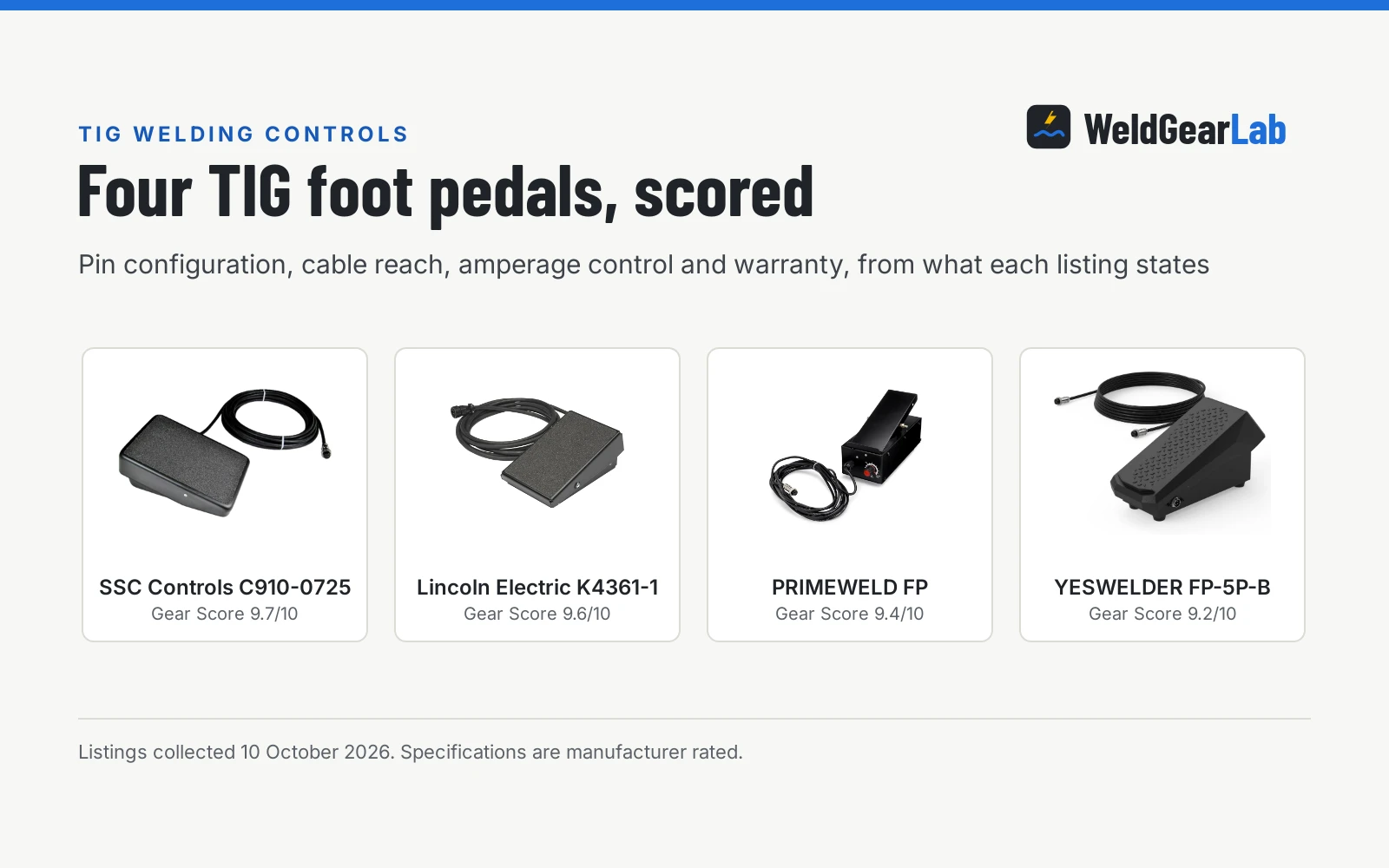
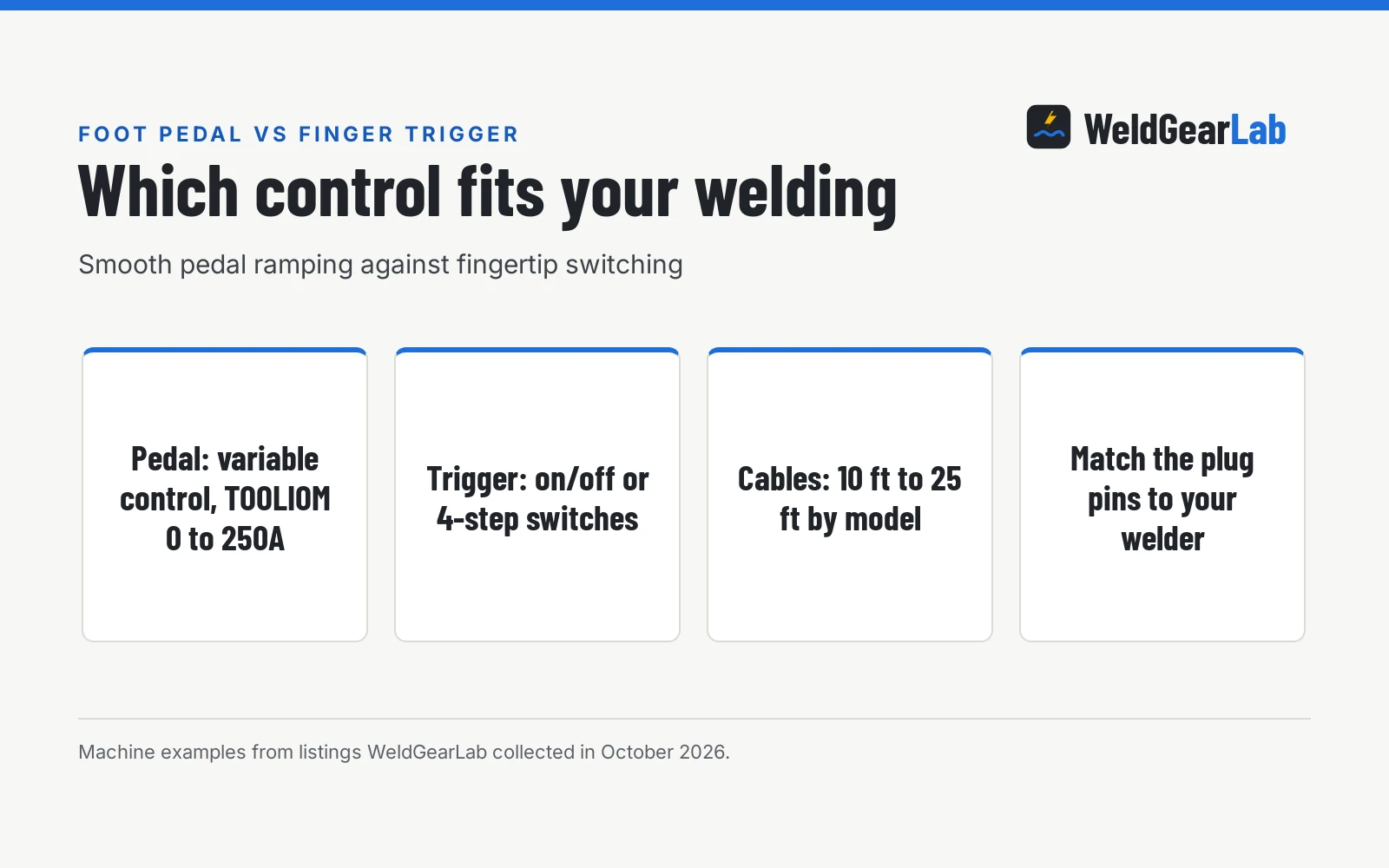
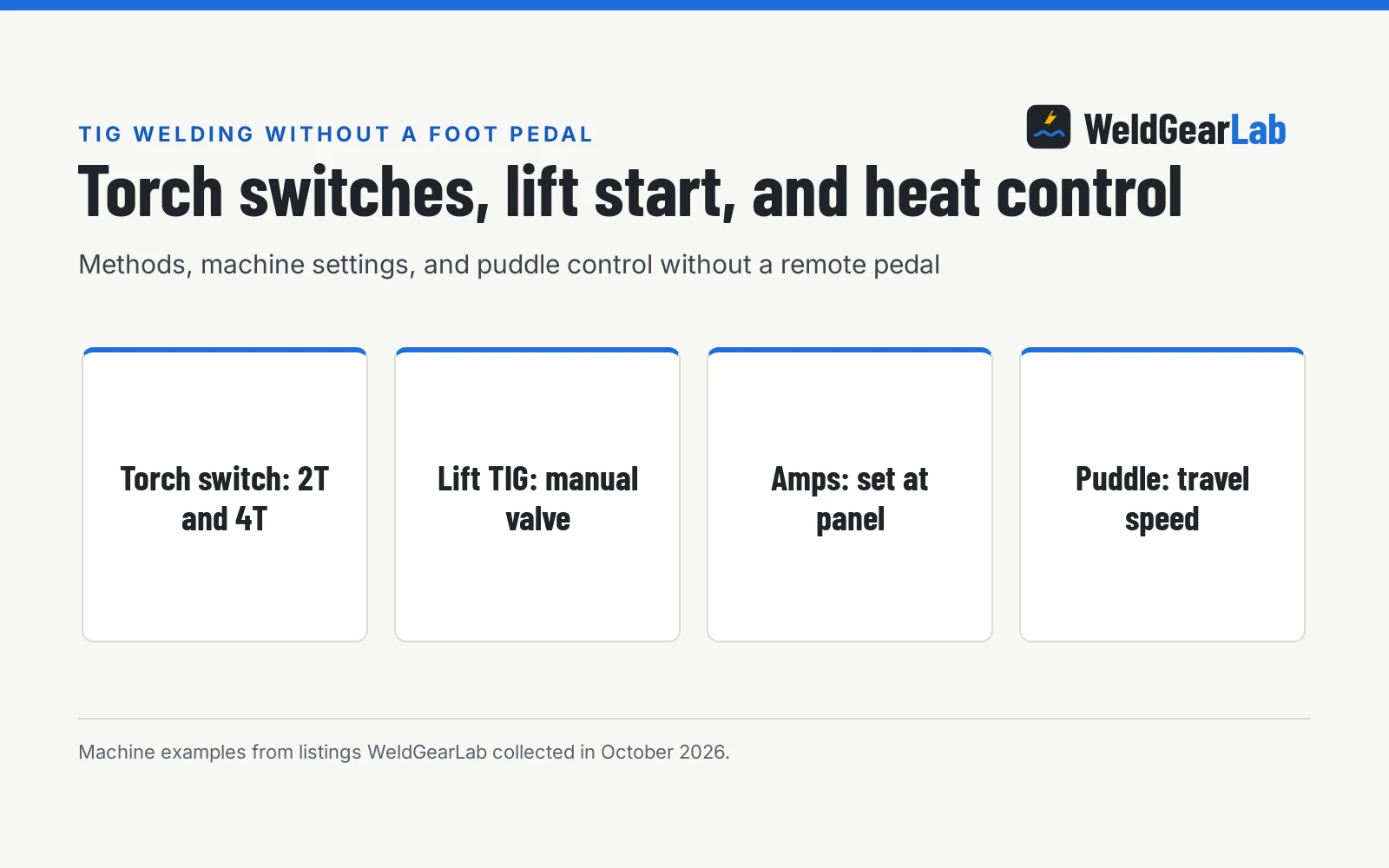
Wired and wireless TIG foot pedals both vary amperage by foot, but differ on connection, reliability and compatibility; four wired pedals with stated pin, cable and fit.

On this page
Top picks at a glance
As an Amazon Associate I earn from qualifying purchases.
- 1
 C910-0725 TIG Foot Pedal9.7/10View on Amazon
- 2
 Lincoln Electric Foot Pedal for TIG Torch9.6/10View on Amazon
- 3
 YESWELDER TIG Welding Foot Pedal Amp Control Pedal Compatible9.2/10View on Amazon
- 4
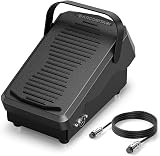 ARCCAPTAIN TIG Welding Foot PedalView on Amazon
- 5
 B.W.P Remote Amperage Controller Foot Pedal 2 pins and 3 pinsView on Amazon
- 6
 ANDELI 10-in-1 Aluminum TIG Welder with Foot PedalView on Amazon
- 7
 PRIMEWELD Foot Pedal for Plasma Cutter Welder Amp Control 5View on Amazon
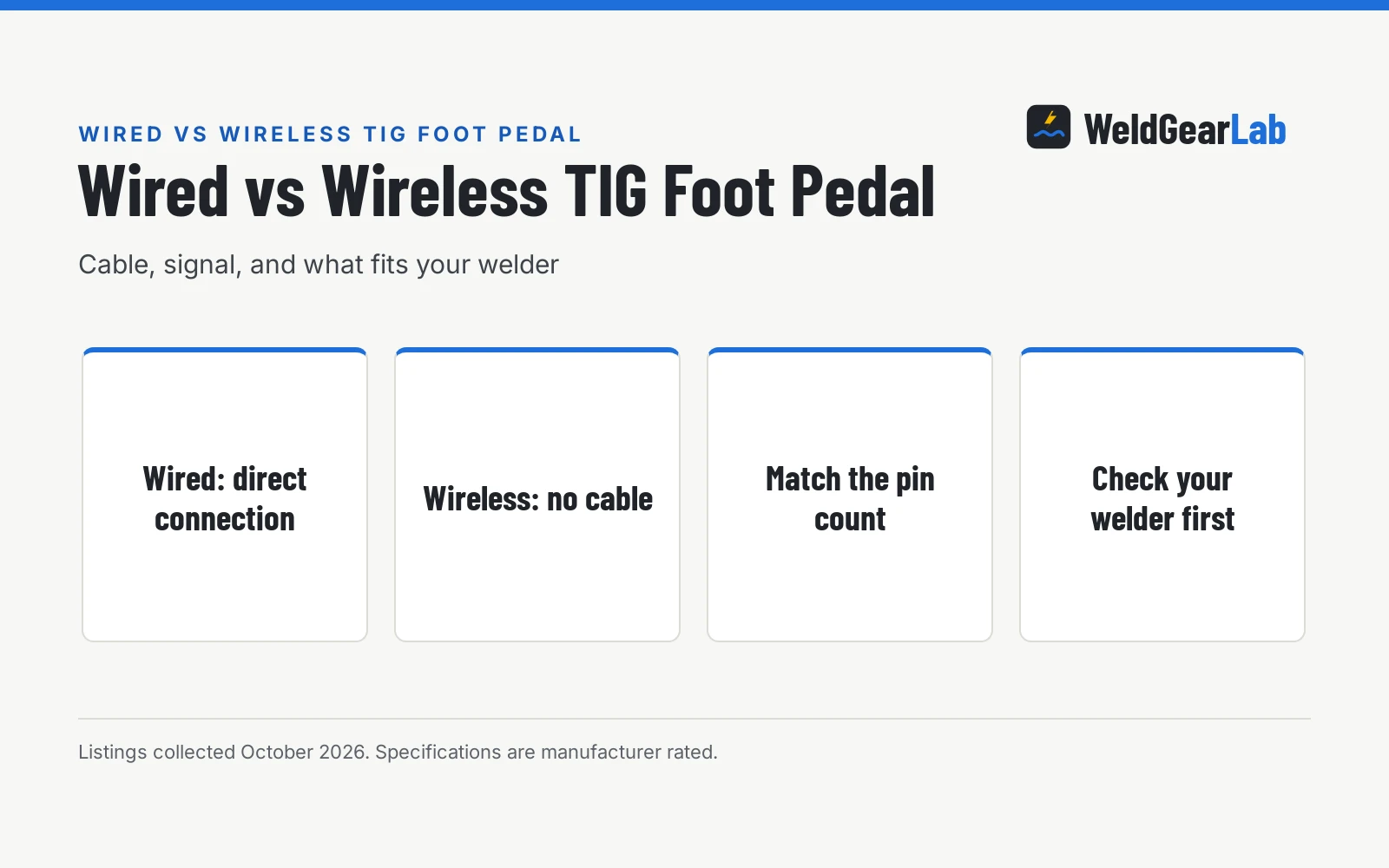
Wired vs wireless TIG foot pedal: a wired pedal connects straight to the welder with a cable and multi-pin plug, while a wireless pedal talks to a receiver with no cable at all. Wired wins on simplicity and reliability; wireless wins on freedom of movement. The right pick depends on your welder’s remote socket and how much you hate cables underfoot. Note: all four listings in this guide are wired pedals, so the wireless side is discussed without listing figures.
Other welders and gear to compare
 YESWELDER TIG Welding Foot Pedal Amp Control Pedal CompatibleCheck price on Amazon
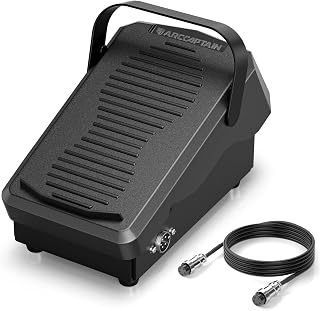 ARCCAPTAIN TIG Welding Foot PedalCheck price on Amazon
 B.W.P Remote Amperage Controller Foot Pedal 2 pins and 3 pinsCheck price on Amazon
 ANDELI 10-in-1 Aluminum TIG Welder with Foot PedalCheck price on Amazon
 PRIMEWELD Foot Pedal for Plasma Cutter Welder Amp Control 5Check price on Amazon
WeldGearLab gets a commission on purchases made through links on this page, and your price stays the same.
Wired vs wireless tig foot pedal: the difference in one paragraph
Both types do the same job: press to start the arc and raise amperage, ease off to taper down, release to stop. A wired pedal carries that signal through a cable into a pin-matched socket on the welder; the listed cables run 16 to 25 ft. A wireless pedal sends it over a radio link to a receiver plugged into that same socket, which means the pedal needs its own battery or charge and the pair must speak the same protocol.
Side by side
| Aspect | Wired foot pedal | Wireless foot pedal | Listing basis |
|---|---|---|---|
| Connection | Cable with a multi-pin plug | Radio link to a receiver | Wired stated; wireless general |
| Power | Draws from the welder | Needs its own battery or charge | Wired stated; wireless general |
| Signal reliability | Direct wire, no interference | Can suffer interference in a busy shop | General |
| Compatibility | Must match pin count and brand | Must match brand and protocol | Wired stated; wireless general |
| Latency | Immediate | Usually immediate, varies by unit | General |
| Shop use | Cable can snag on the floor | No cable to trip over or melt | General |
| What the listings cover | All four pedals here are wired | Wireless side is general guidance | Stated |
When wired is the better choice
- Reliable signal. A cable does not drop out or run flat, and it resists interference from other shop equipment far better than a radio link.
- No charging. The pedal draws from the welder, so it is ready whenever the machine is.
- Wide compatibility. Third-party wired pedals like the NOVA Miller replacement cover dozens of Miller and Hobart models by pin and receptacle.
When wireless is the better choice
- No cable underfoot. Nothing to snag on the workbench, trip over, or lay across hot metal.
- Freedom of position. Handy when you weld far from the machine or move around a large fabrication.
- Cleaner setup. One less cable to route, coil and store at the end of the day.
The trade is batteries and pairing: a wireless pedal needs charging and must match your welder’s brand and protocol.
The gear in this guide
The four pedals below are wired pedals, ranked by build, compatibility and stated detail.
1. SSC Controls C810-1425
The SSC is the build pick: a steel-case 14-pin pedal with a 25-ft cable for Miller and Hobart TIG welders, stated to replace the RFCS-14 HD and RFCS-14. The listing states it is made in the USA and certified to CSA and UL standards, the only stated certifications of the four. It weighs a listed 5.5 pounds. Press to activate the gas contactor and raise amperage; release to turn off and start afterflow.
2. NOVA Miller 14-pin
The NOVA Miller is the compatibility pick: a 14-pin pedal with a 25-ft cable stated to work with any Miller TIG welder that has a 14-pin remote receptacle, plus Hobart models, replacing the RFCS-14, 043554, RFCS-14 HD and 194744. The listing names dozens of Dynasty, Maxstar, SyncroWave and XMT models, and states it is not for Everlast welders. The case is stated as stainless steel, and it controls both amperage and the gas contactor.
3. TOOLIOM 5-pin
The TOOLIOM is the range pick: a 5-pin pedal with a 16 ft cable and a stated 0 to 250 amp control range, with a 10k ohm potentiometer and a non-slip surface. The listing states compatibility with the TOOLIOM TIG 200TP Pro, TIG 200TP ACDC Pro, 220TP PRO and MCT520, plus the Sunstac SS-250P ACDC. The case is stated as plastic and the listed weight is 5.85 pounds. Step to activate and raise amperage, release to decrease and turn off.
4. NOVA AHP 7-pin
The NOVA AHP is the specialist pick: a 7-pin pedal with a 25-ft cable for AHP welders, stated to fit 2015 and newer AlphaTIG 200X models, the AlphaTIG 203Xi and 225Xi, and the AlphaMIG 190MP. The listing is explicit about what does not fit: 2013 to 2014 AlphaTIG 200X models are not compatible. The case is stated as aluminum and the listed weight is 6 pounds. Check your welder’s year before ordering, since pin and wiring changed.
How to match the pin to your welder
The pin count is the whole compatibility story. The TOOLIOM states 5 pins for TOOLIOM and Sunstac machines, the NOVA AHP states 7 pins for AHP, and the NOVA Miller and SSC state 14 pins for Miller and Hobart. Count the pins on your welder’s remote receptacle and match the brand: a 14-pin Miller pedal will not help a 5-pin machine, and the NOVA Miller listing warns it is not for Everlast welders. See the TIG welders hub for machine guides.
FAQ for welders
Do wireless TIG foot pedals work with any welder?
No. Like wired pedals, a wireless pedal must match your welder’s brand and protocol through its receiver. Check the pedal’s stated fit list before buying.
Can I use the TOOLIOM pedal on a Miller welder?
No. The TOOLIOM states a 5-pin plug for TOOLIOM and Sunstac machines, while Miller TIG welders use 14-pin remotes. The NOVA Miller and SSC pedals state 14-pin plugs for Miller and Hobart.
Why does the NOVA AHP not fit a 2013 AlphaTIG 200X?
The listing states it fits 2015 and newer AlphaTIG 200X models only, and that 2013 to 2014 models are not compatible. Match your welder’s model year to the stated fit list.
What does the SSC certification mean?
The SSC listing states certification to CSA and UL standards, which are third-party safety listings. None of the other three pedals states a certification.
How long are the cables?
The TOOLIOM states a 16 ft cable; the NOVA AHP, NOVA Miller and SSC each state a 25-ft cable. Longer cable suits larger shops, but it is also more cable to manage.
Related: AC TIG vs DC TIG welder, best TIG rod for thin sheet metal, and the welders hub.