What Do Welding Helmets Provide Protection From
A welding helmet guards the face and eyes from arc light, ultraviolet and infrared rays, sparks, spatter and hot slag, while fumes and the rest of the body still need other protection.

On this page
Top picks at a glance
As an Amazon Associate I earn from qualifying purchases.
- 1
 3M Half Facepiece Reusable Respirator Assembly Kit 62919.6/10View on Amazon
- 23M Half Facepiece Reusable Respirator Assembly Kit 63919.6/10View on Amazon
- 3
 GVS SPR457 Elipse P100 Dust Half Mask Respirator with9.7/10View on Amazon
Strike an arc on a trailer frame or a fence post and the helmet is the gear between the eyes and a light that can burn them. What do welding helmets provide protection from? Arc light, the ultraviolet and infrared rays the arc gives off, sparks and spatter, hot slag, and the chips and sparks thrown off by grinding and cutting. A helmet guards the face and eyes, and the rest of the body still needs gloves, sleeves and clean air.
This guide links to our product roundups, where WeldGearLab gets a commission on purchases made through links on this page, and your price stays the same. Read our affiliate disclosure.
what do welding helmets provide protection from
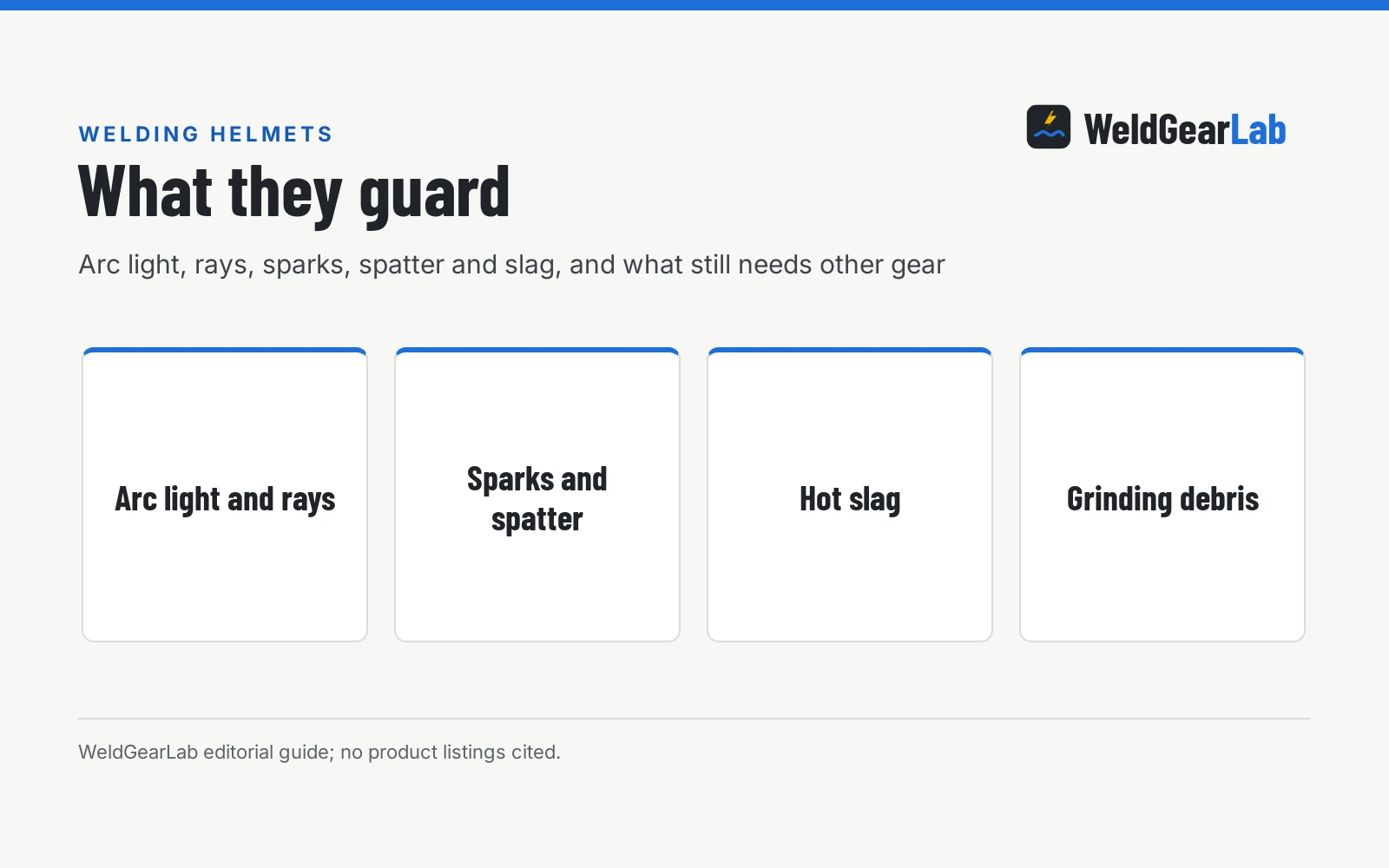
A welding helmet is a shell with a dark lens, worn in front of the face while the arc is live. The shell blocks the light and the heat of the arc from the face, and the lens cuts the glare so the puddle stays visible. The same shell turns aside sparks, spatter and hot chips, and it keeps grinding debris out of the eyes. What it does not do is clean the air: fumes and smoke pass around the shell, so ventilation and a respirator still matter. The table below sets out each hazard, what the helmet does about it, and what still needs other gear.
Side by side
| Hazard | What the helmet does | What still needs other gear | |
|---|---|---|---|
| Arc light | The lens cuts the glare so the eyes stay behind dark glass | A darker shade if the arc looks too bright through the lens | |
| Ultraviolet and infrared rays | The lens filters the rays the arc gives off | Long sleeves and gloves for skin | |
| Sparks and spatter | The shell turns sparks and hot spatter away from the face | A leather jacket and gloves for arms and hands | |
| Hot slag | The shell shields the face while chipping slag off a bead | Safety glasses under the helmet | |
| Fumes and smoke | The helmet does not filter fumes from the air | Ventilation and a respirator for welding fume | |
| Grinding debris | The shell blocks chips and sparks from the face | Safety glasses and a face shield for heavy grinding |
Read the table from the hazard outward: the helmet covers the face and eyes, and every row that names other gear is a gap the helmet leaves open. A helmet on its own is not full protection, and the sections below walk through each row in turn.
Arc light and the rays you cannot see
The arc gives off light far brighter than daylight, plus ultraviolet and infrared rays that the eye cannot see. Staring at a bare arc hurts the eyes, and the skin of the face and neck burns under the rays the same way it burns under strong sun. The lens in the helmet cuts the glare and filters the rays, so the eyes stay behind dark glass while the arc is live. Keep the lens down before striking the arc, and lift it only when the arc is out. A cracked lens needs swapping for a fresh one, since a crack can let arc light through, and a badly scratched lens needs swapping too when it blurs the view of the puddle.
Sparks, spatter and hot slag
Stick and flux core welding throw sparks and spatter, and a bead can spit hot metal while it cools. The shell of the helmet turns that spray away from the face, and the curved shape of the shell helps hot bits slide off instead of landing on skin. Chipping slag off a bead throws sharp chips at the face, and the shell takes those hits too. Keep the helmet down while chipping, and wear safety glasses under it, since a chip can slip past the edge of the shell.
Fumes and smoke: what the helmet does not do
A welding helmet is not a respirator, and the shell leaves gaps at the sides and under the chin where air flows in. Fumes from the arc and from paint, zinc coating or oil on the metal pass through those gaps, so the helmet gives no cover against breathing them in. Weld with the head out of the plume, work with the doors open or a fan moving air across the bench, and wear a respirator rated for welding fume when the job calls for it. Galvanized steel and painted metal give off fumes that need extra care, so check the coating before striking an arc and follow the guidance in the machine manual.
Grinding, cutting and chipping
An auto-darkening helmet with a grind setting can cover the face for light grinding and cutting, since the setting holds the lens light while the grinder runs. The shell blocks sparks and chips from the wheel, though dust and fine particles can still drift in around the edges. Safety glasses still belong under the helmet for this work, since a chip can reach the eyes from the side. For heavy grinding, a full face shield over the glasses gives wider cover than the helmet alone.
What else to wear with the helmet
The helmet covers the face and eyes, and the rest of the body needs its own gear. Leather gloves guard the hands from heat and spatter, and a flame resistant jacket or leather sleeves guard the arms and chest. A welding cap guards the ears and the top of the head from sparks that land from above, and leather boots guard the feet from hot metal dropped on the floor. Long sleeves matter even on a short job, since the rays from the arc reach bare skin near the arc.
Arc flash, fumes and fire. Keep flammable material clear of the bench, keep a fire extinguisher within reach, and weld with good ventilation or outdoors with the head out of the plume. Chain gas cylinders upright. See the OSHA welding overview.
FAQ for welders
Does a welding helmet protect the eyes from ultraviolet light?
Yes, the lens filters the ultraviolet rays the arc gives off, and the shell blocks the rays from reaching the face. Keep the lens in front of the eyes for the full arc, and check the lens for cracks that could let arc light through, and swap a badly scratched lens that blurs the view.
Does a welding helmet protect against welding fumes?
No, the shell leaves gaps where air flows in, so fumes reach the nose and mouth. Weld with the head out of the plume, keep air moving across the bench, and wear a respirator rated for welding fume when the job calls for it.
Can I wear safety glasses under a welding helmet?
Yes, and it is good practice for chipping slag and for grinding, since a chip can slip past the edge of the shell. Pick glasses that sit flat under the helmet without pushing it off the face.
Do I need a welding helmet for grinding?
An auto-darkening helmet with a grind setting works for light grinding, and the shell blocks sparks and chips from the face. Safety glasses still belong under it, and a full face shield gives wider cover for heavy grinding.
What shade should I use for welding?
Follow the shade chart in the helmet manual, since the right shade depends on the process and the current. If the arc looks too bright through the lens, stop and move to a darker shade before striking the next arc.
Related: welding safety gear, best welding helmet for beginners, best auto-darkening welding helmet, auto-darkening vs fixed-shade helmet, best safety glasses for welding, and the welding helmets hub. Also see our best welding helmet for MIG welding and best welding helmet for flux core.