Two Sensor vs Four Sensor Welding Helmet: Which One Should You Buy?
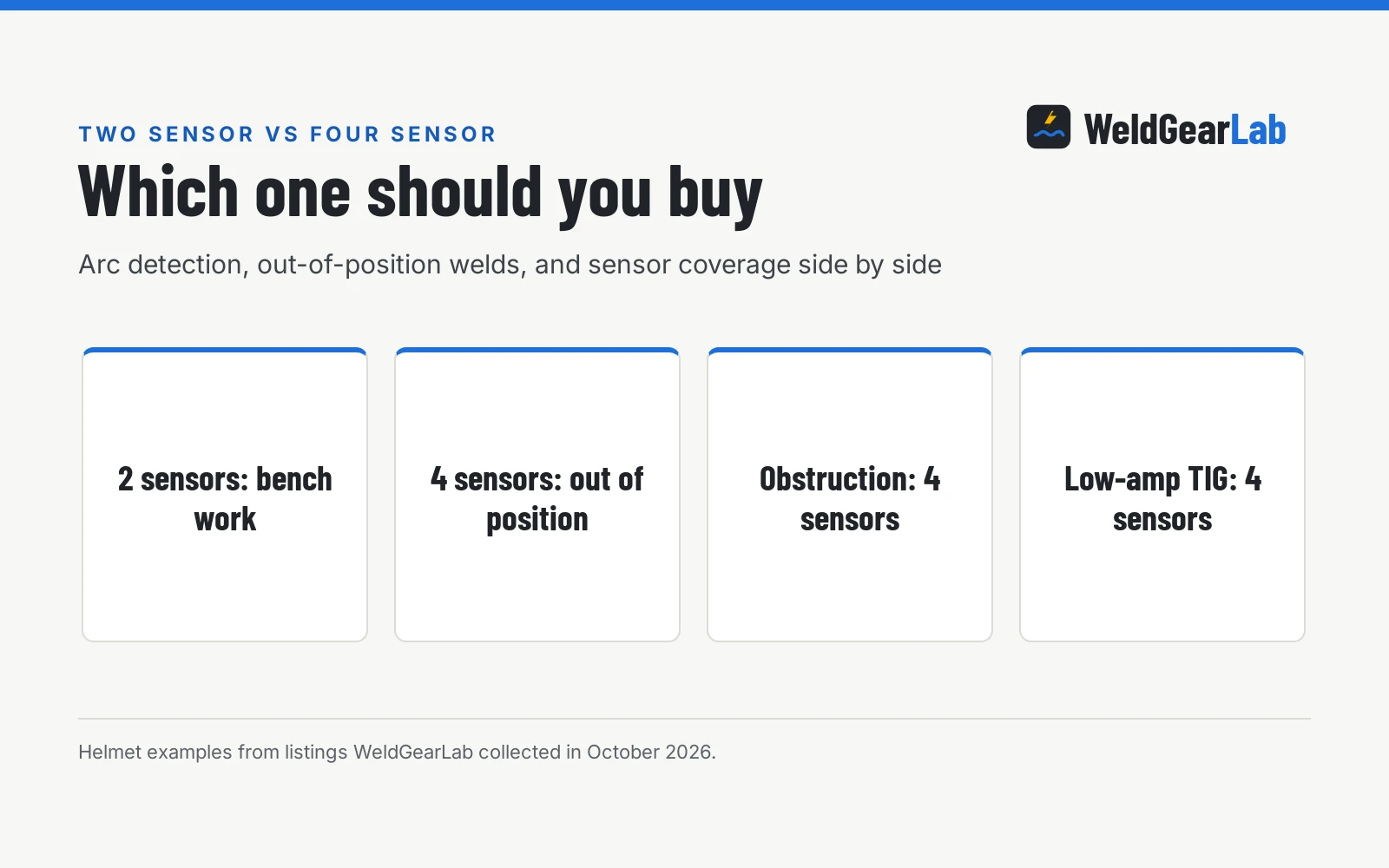
Two sensor and four sensor auto-darkening welding helmets differ in arc detection reliability, obstruction resistance, and overall performance in tight shop spots.

Auto-darkening and passive welding helmets. We compare shade range, viewing area, arc sensors, switching speed, optical class and stated ANSI Z87.1 or CSA Z94.3 ratings.
Two sensor and four sensor auto-darkening welding helmets differ in arc detection reliability, obstruction resistance, and overall performance in tight shop spots.
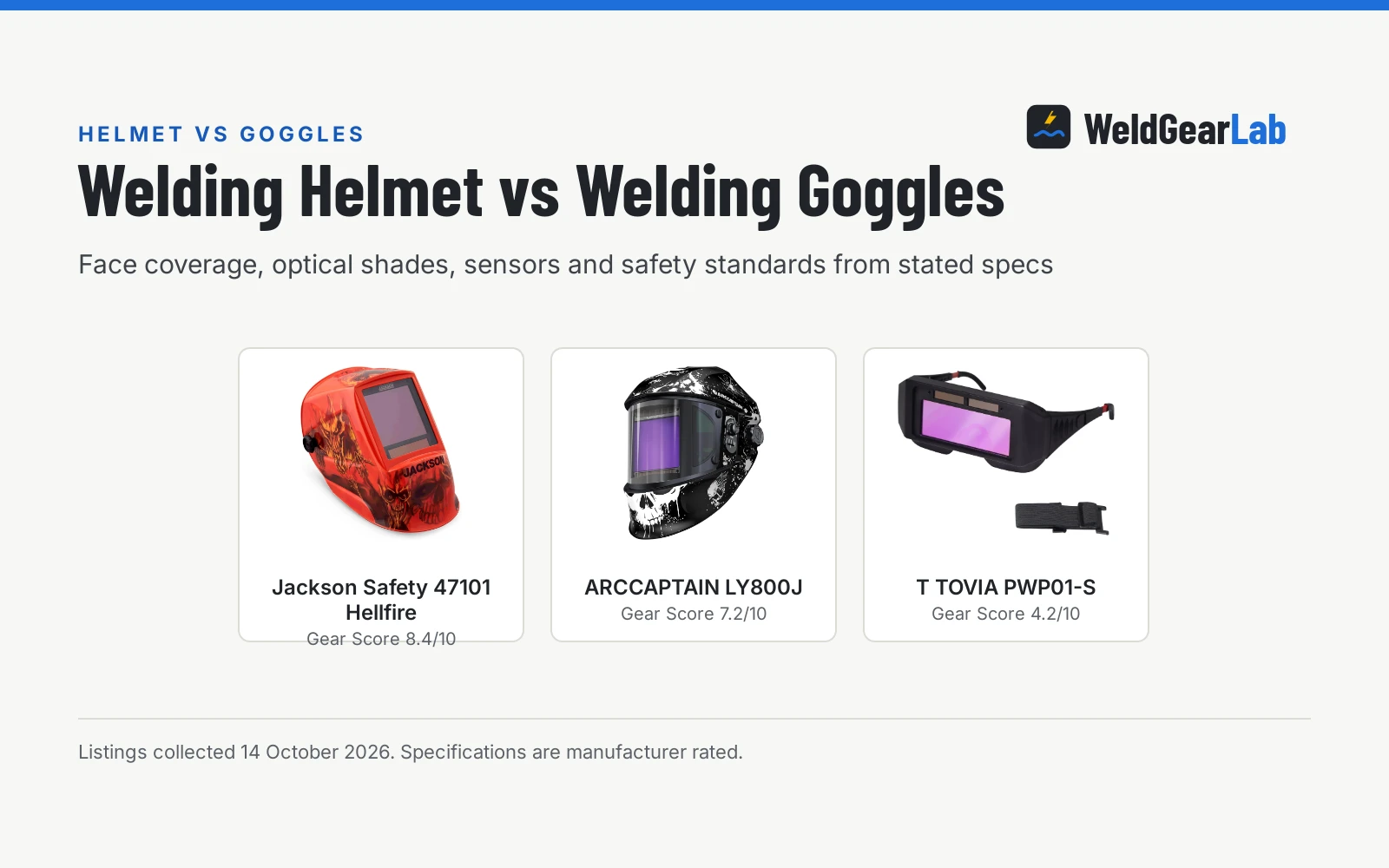
Welding helmets provide full facial shielding against arc radiation and spatter, while welding goggles offer compact eye protection for light cutting and tight clearance…
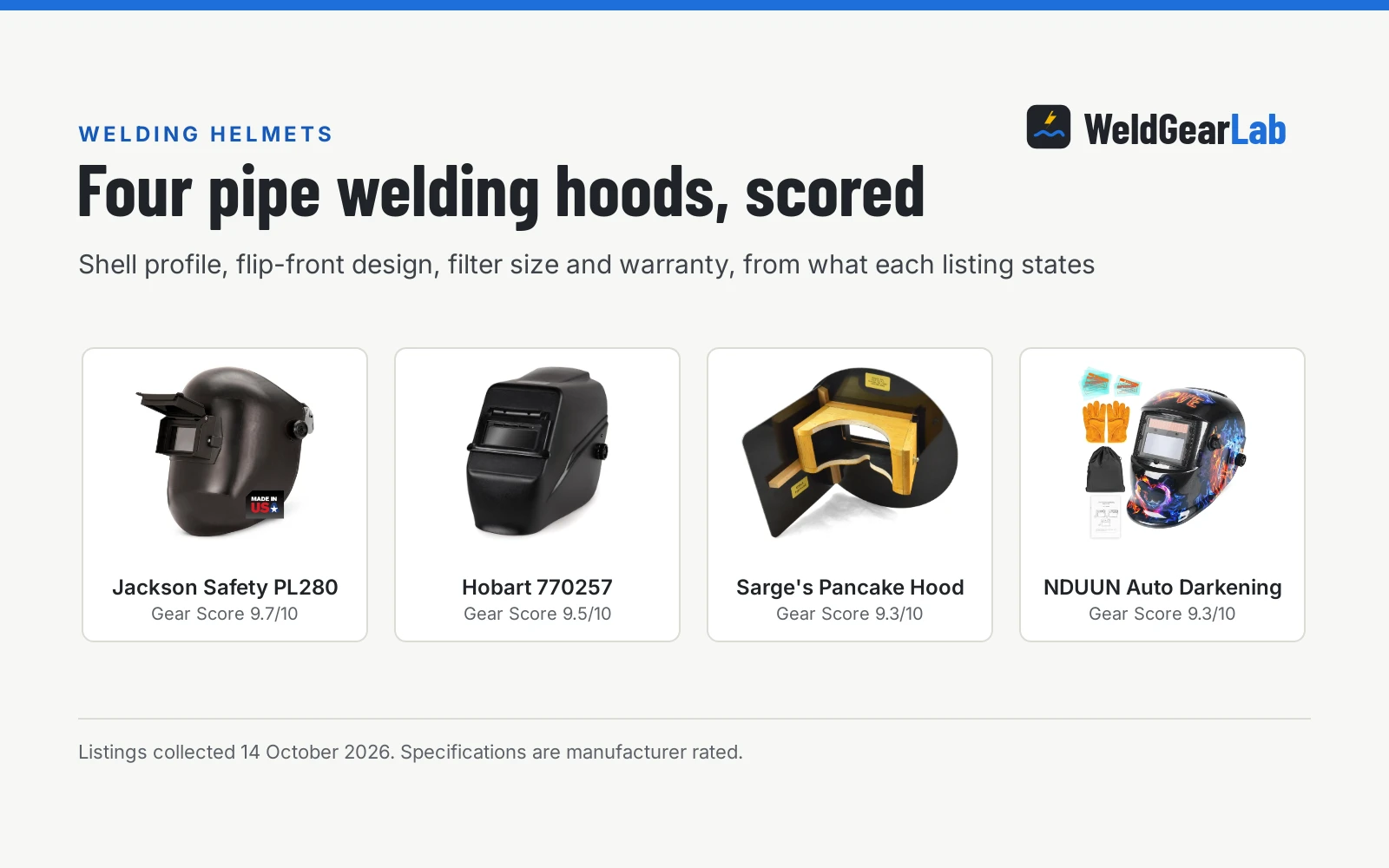
Four pipeline welding helmets compared on shell profile, flip-front design, filter shade, impact standards, weight, and the warranty each listing states.
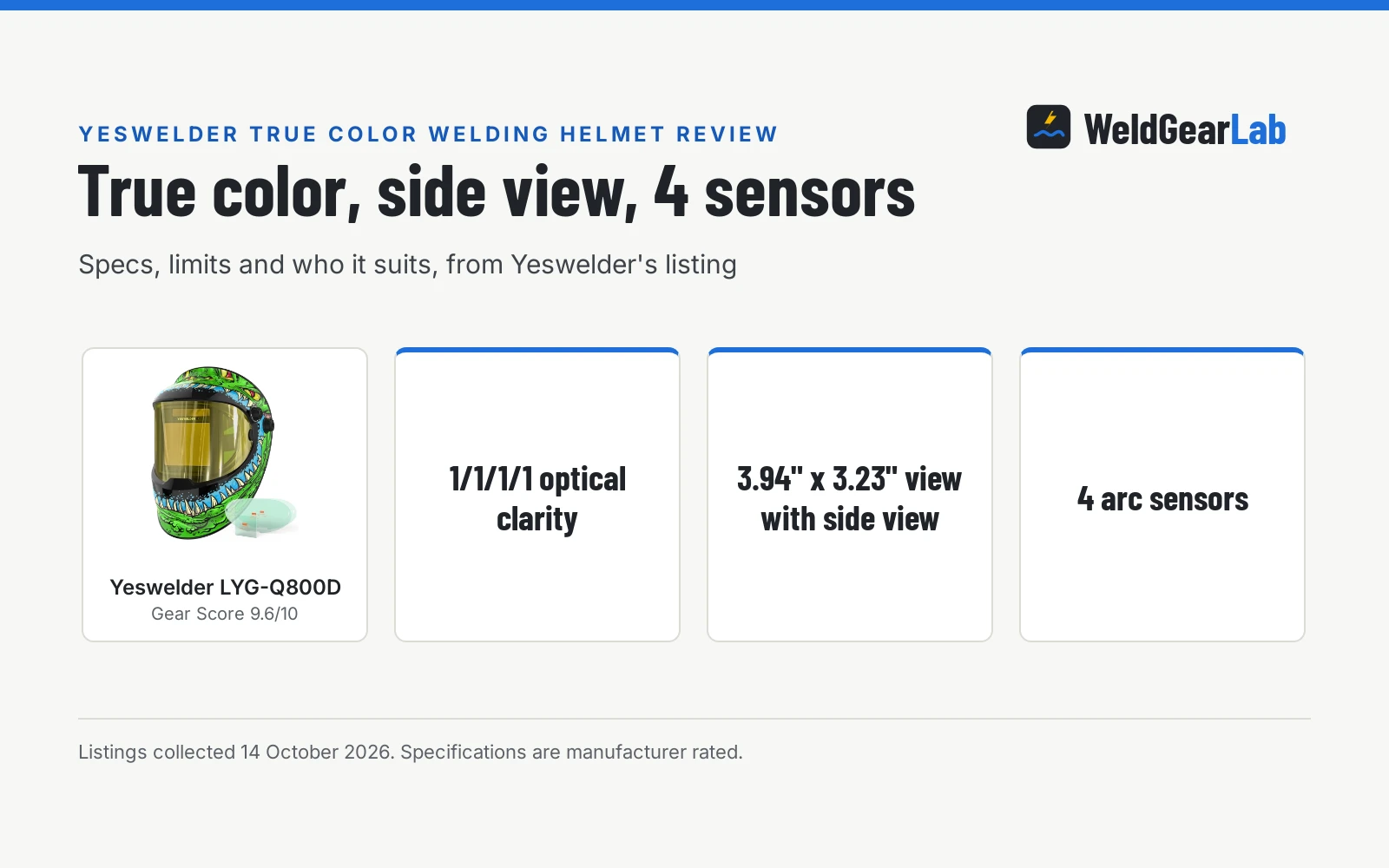
A Yeswelder true color welding helmet review from the listing: a hood with 1/1/1/1 optical clarity, DIN5 side views and 4 arc sensors, with…
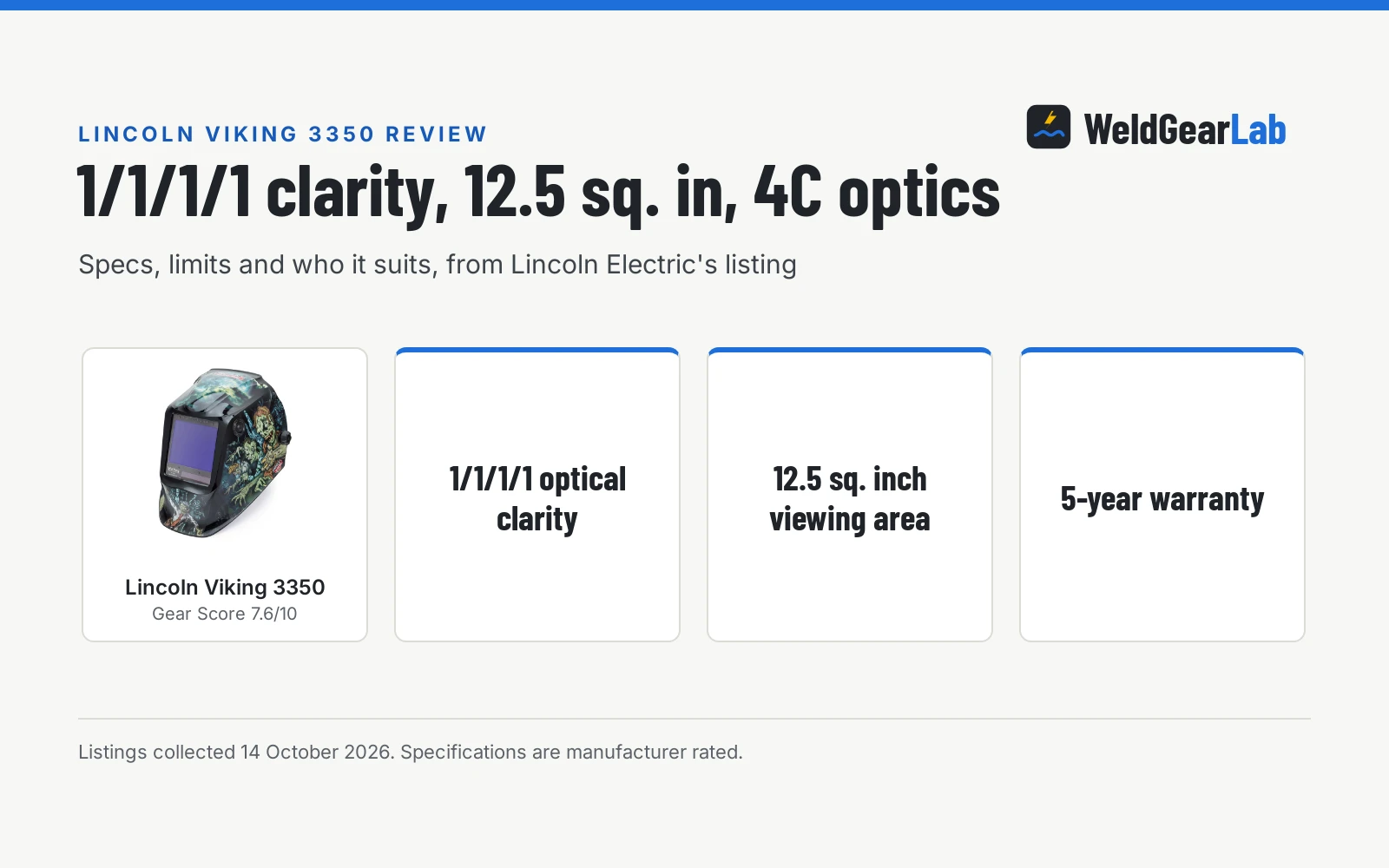
A Lincoln Viking 3350 review from the listing: an auto-darkening welding helmet with 4C lens tech, 1/1/1/1 clarity, gaps, and who it suits.
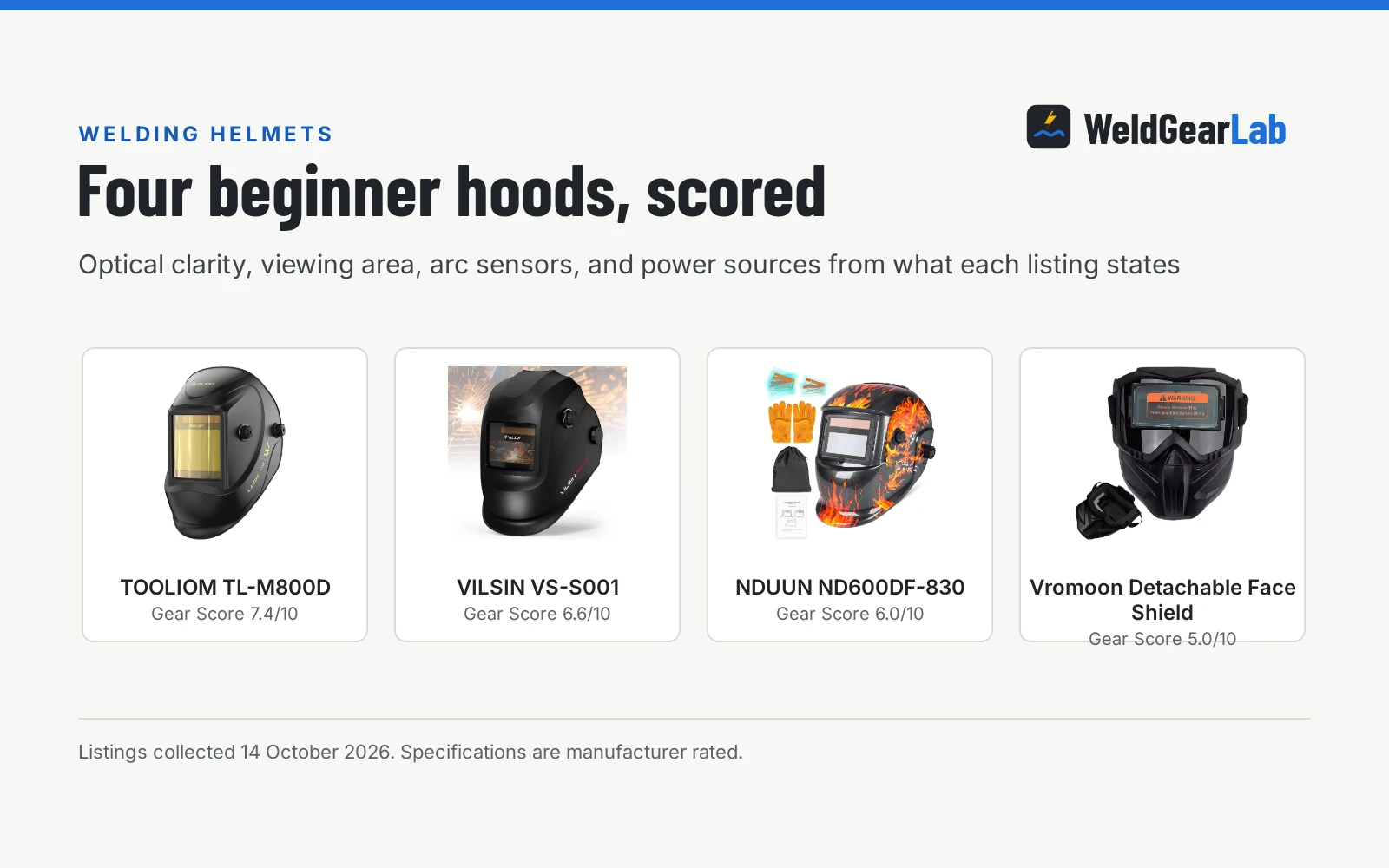
Four auto-darkening welding helmets for beginners, compared on optical clarity, viewing area, arc sensors, delay settings, power supply, and stated safety ratings.
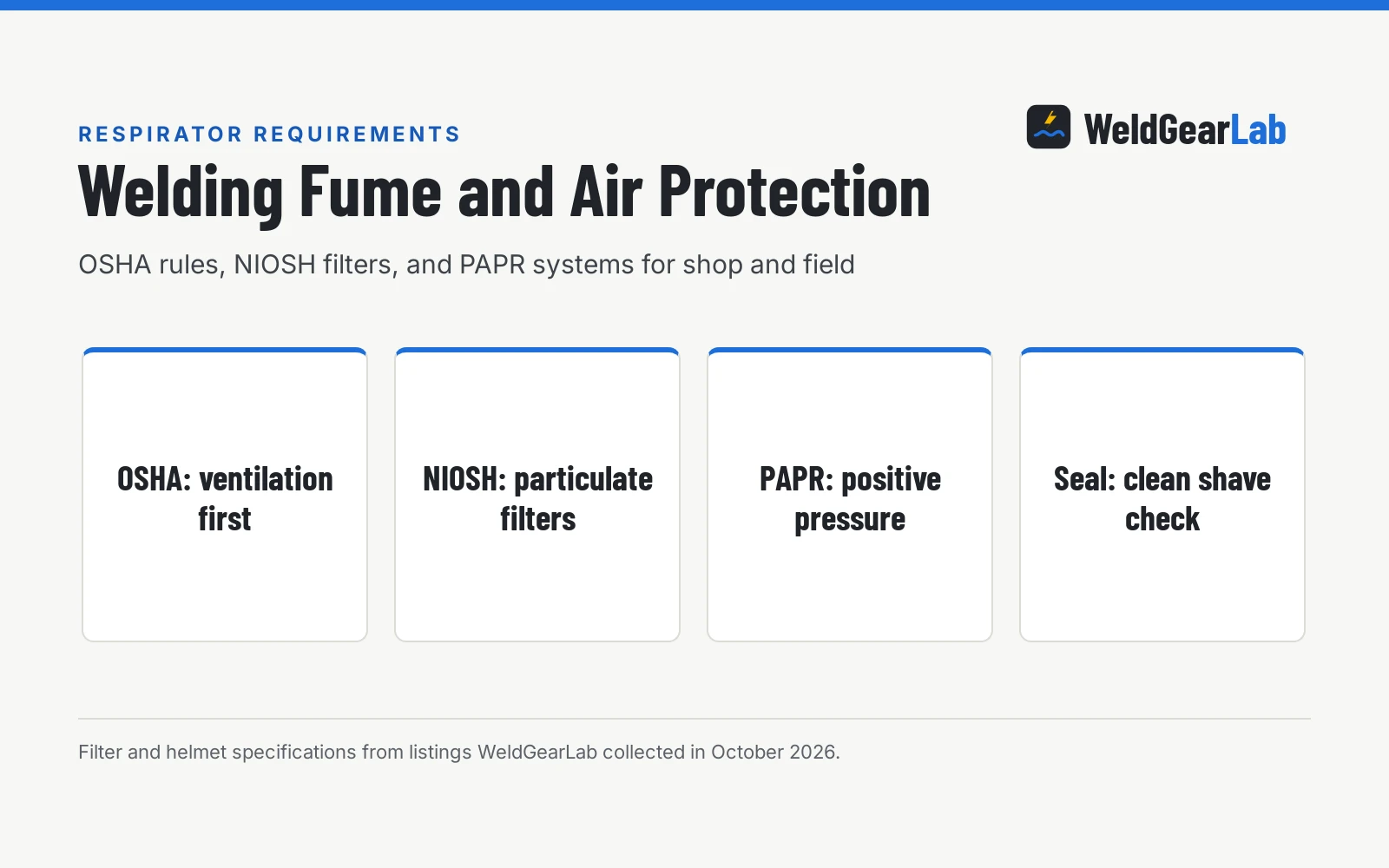
How OSHA rules, NIOSH particulate filters, and PAPR systems define respirator requirements for welding, and how to select proper protection for your shop.
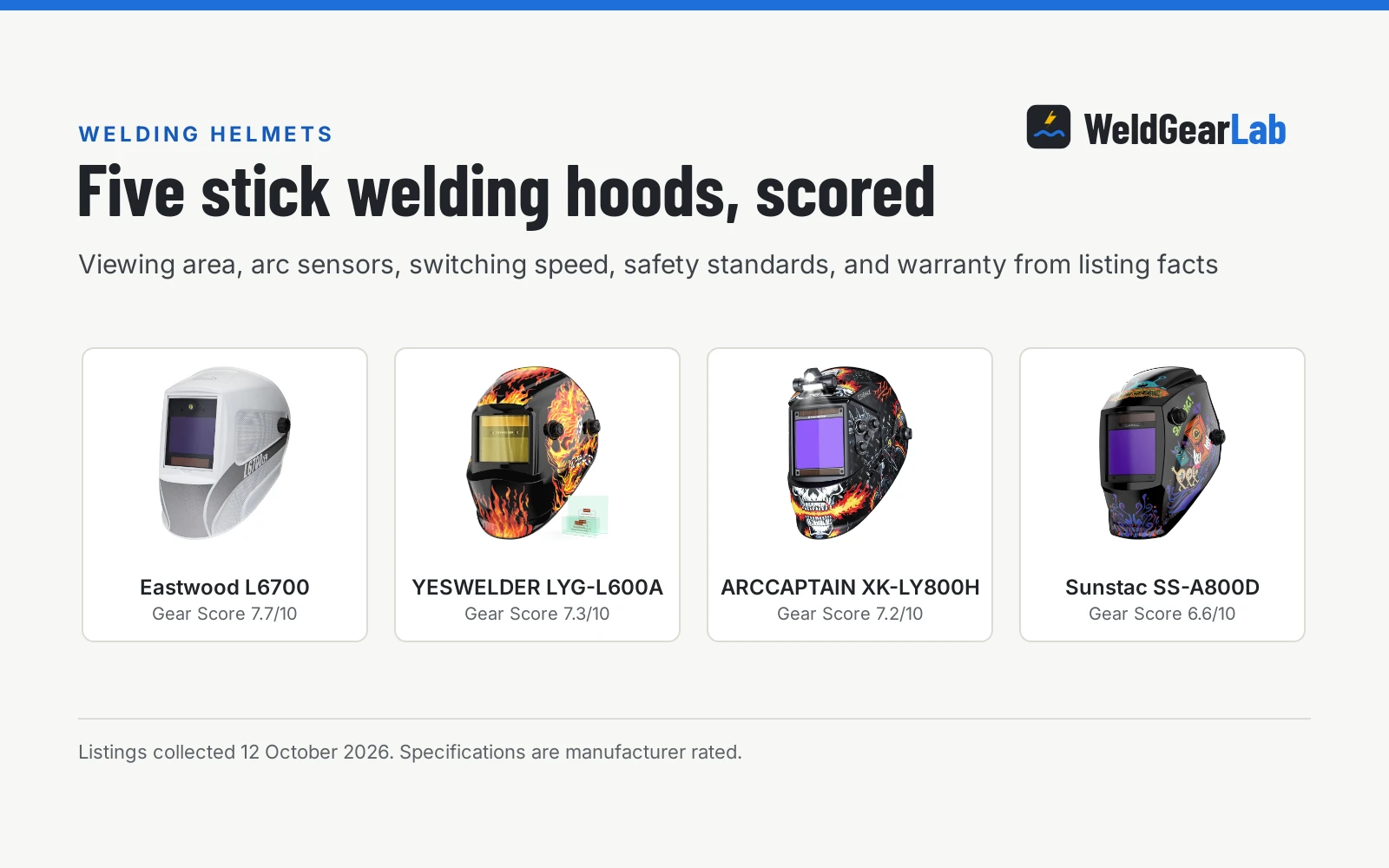
Five auto-darkening hoods for stick welding, compared on viewing area, arc sensors, switching speed, shade ranges, stated safety certifications, and warranty.
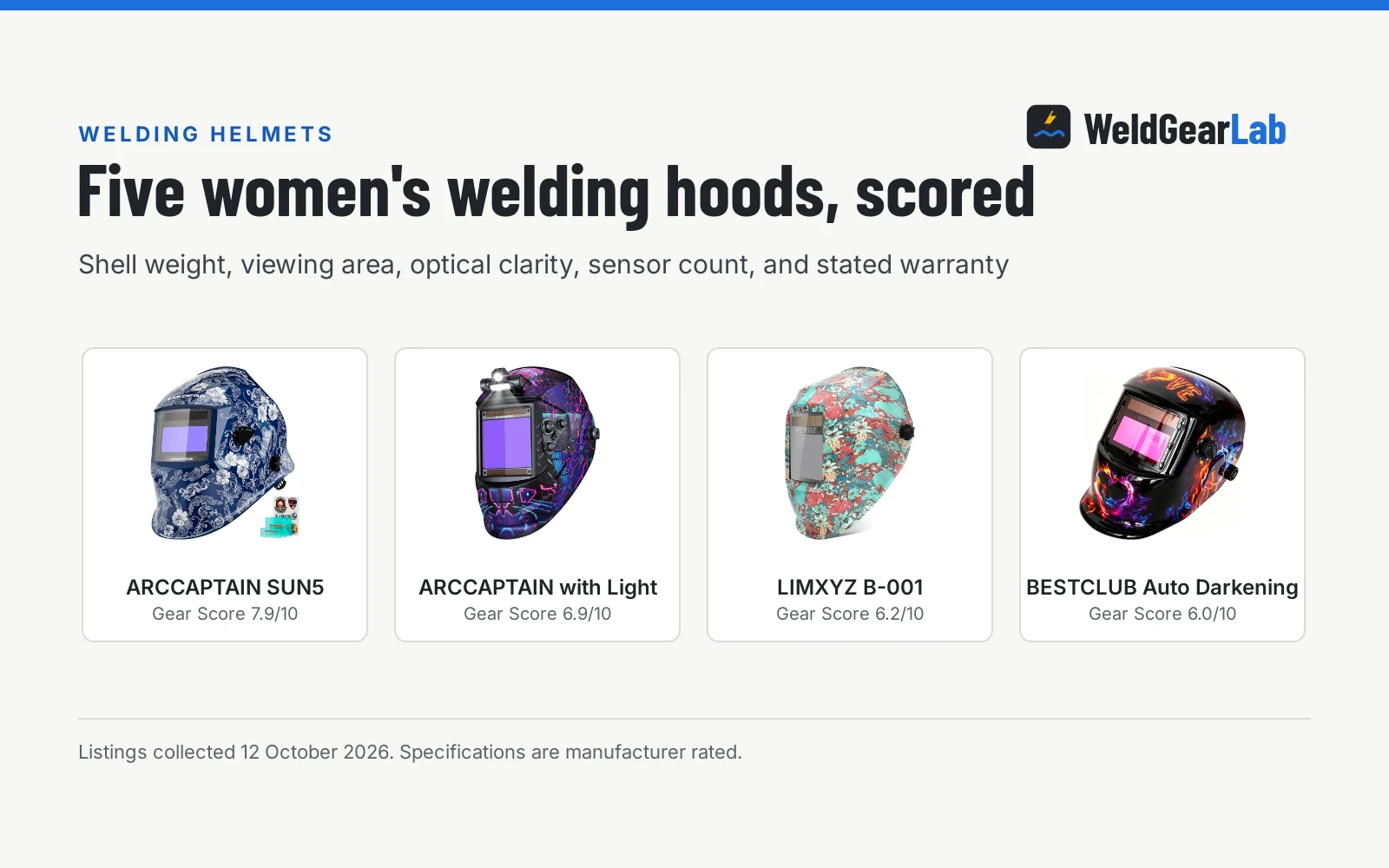
Five auto-darkening welding helmets for women, compared on shell weight, viewing area, sensor count, optical clarity, headgear adjustability, and stated warranty.
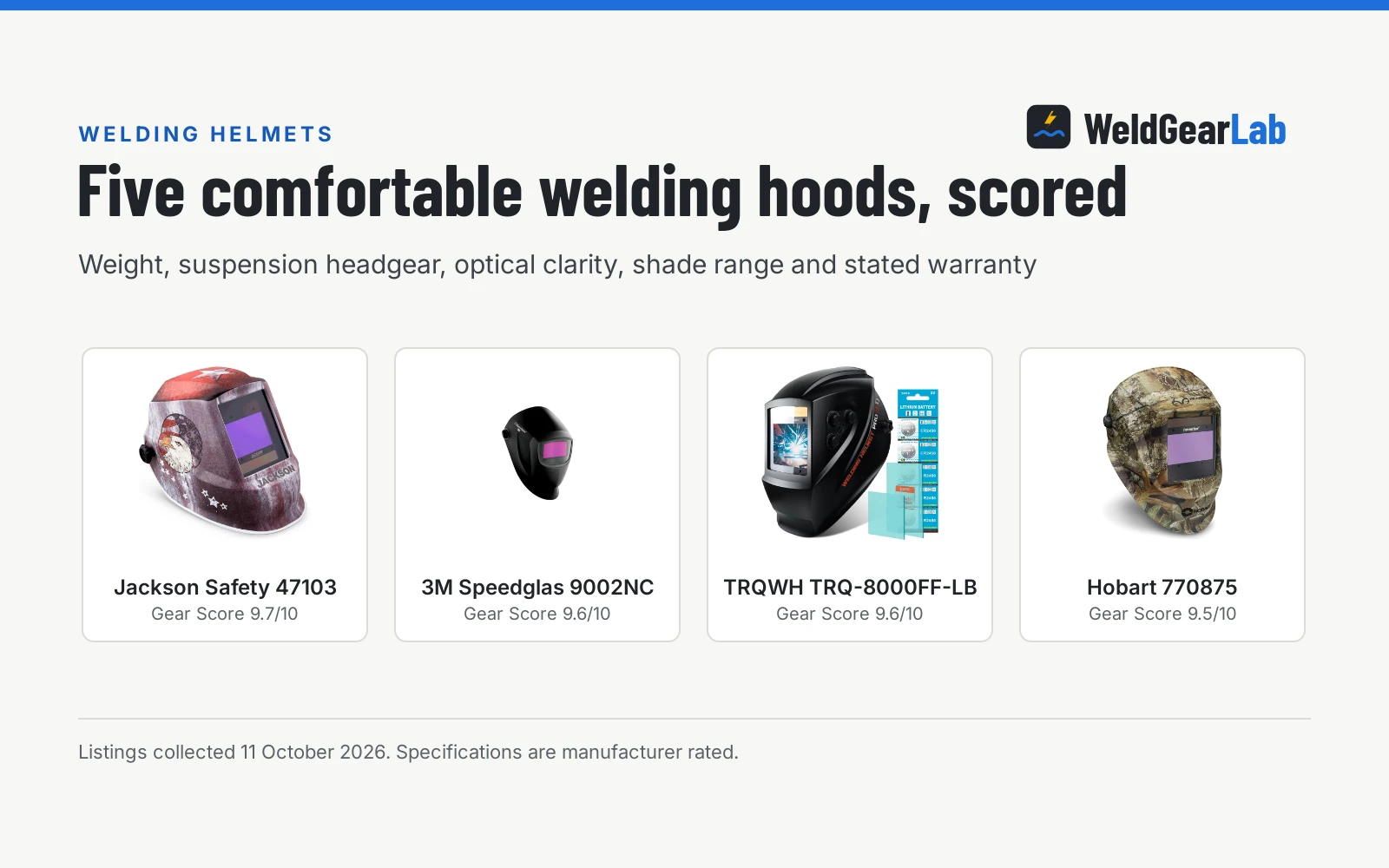
Five comfortable welding helmets compared on shell weight, suspension headgear adjustability, optical clarity, shade range, and stated warranty terms.