Passive vs Auto Darkening Welding Helmet: Which One Should You Buy?
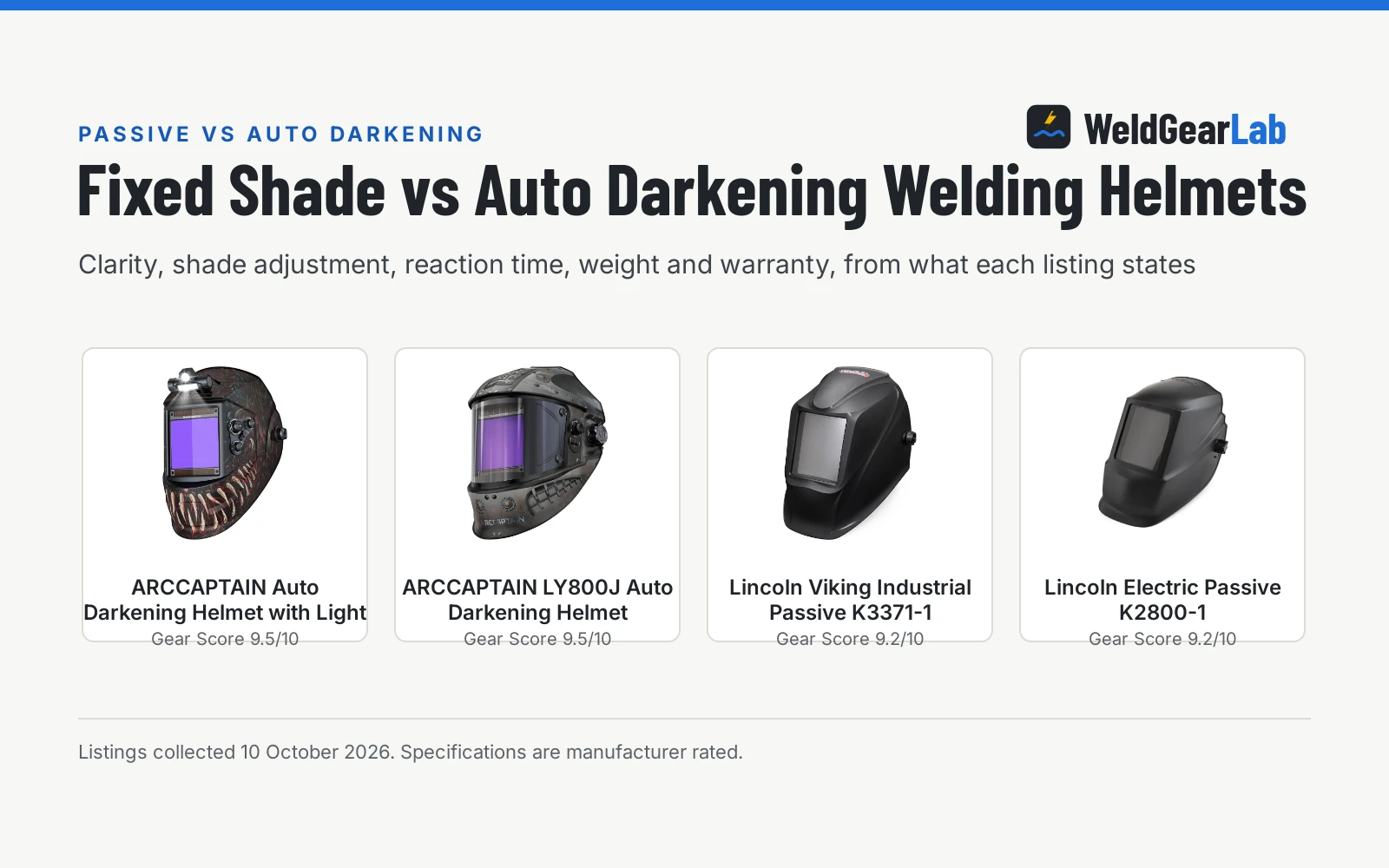
Here is how passive and auto darkening welding helmets compare on optical clarity, shade control, reaction speed, weight, safety ratings and warranty terms.

Auto-darkening and passive welding helmets. We compare shade range, viewing area, arc sensors, switching speed, optical class and stated ANSI Z87.1 or CSA Z94.3 ratings.
Here is how passive and auto darkening welding helmets compare on optical clarity, shade control, reaction speed, weight, safety ratings and warranty terms.
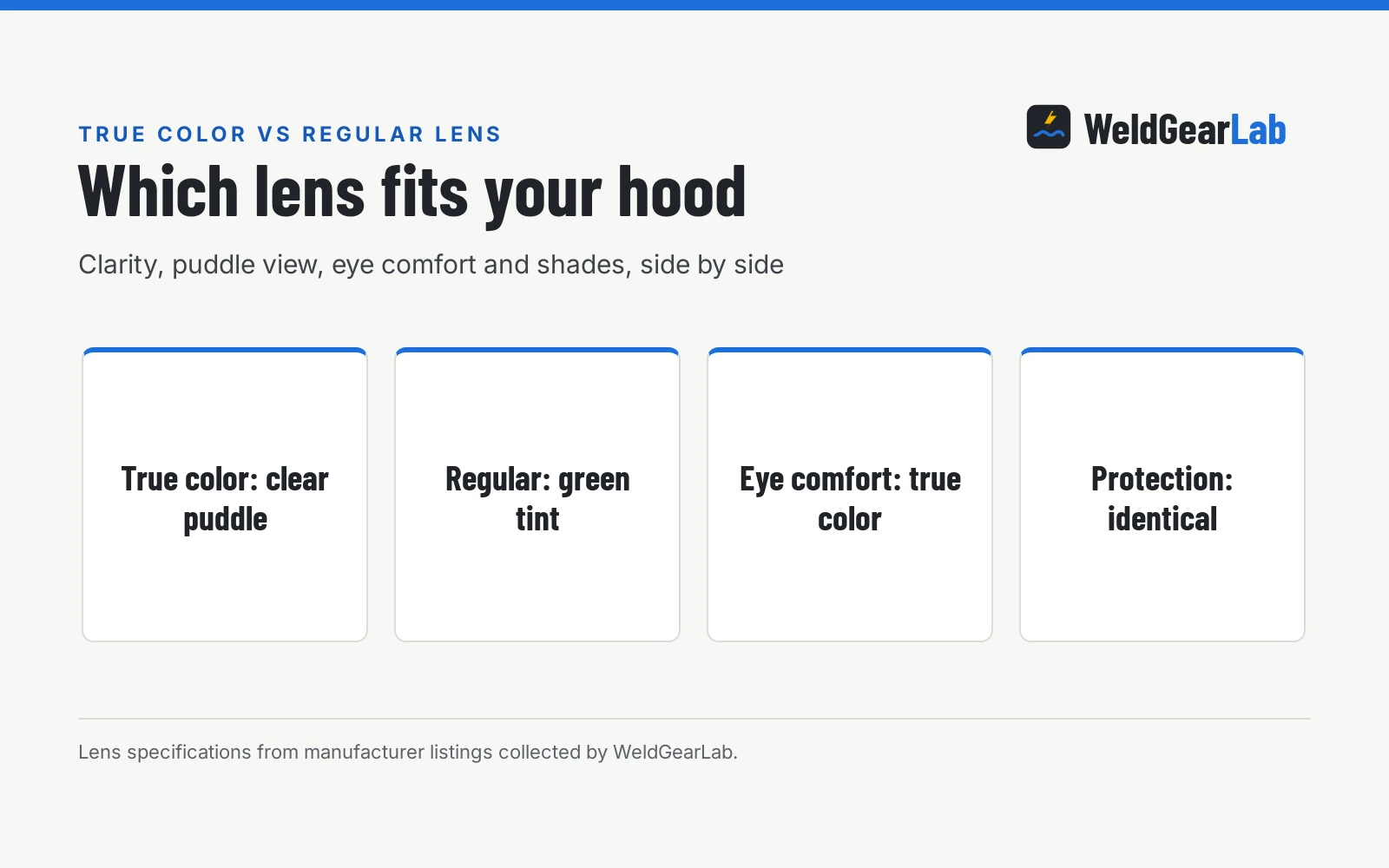
True color and regular green welding lenses protect eyes equally well, but true color delivers a clearer view of the weld puddle with realistic…
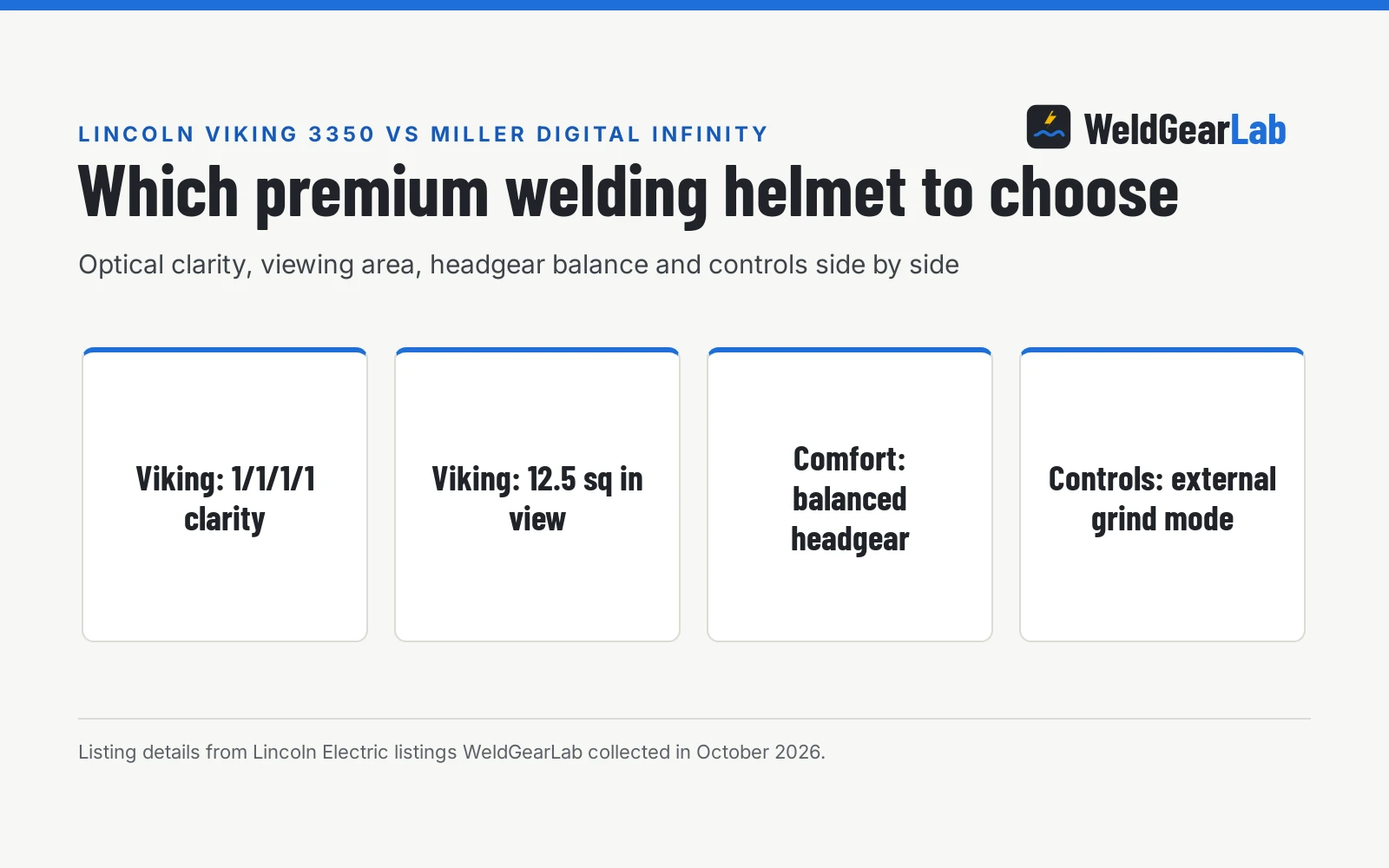
Lincoln Viking 3350 and Miller Digital Infinity compared on optical clarity, viewing size, headgear comfort, grind mode and warranty coverage for shop welders.
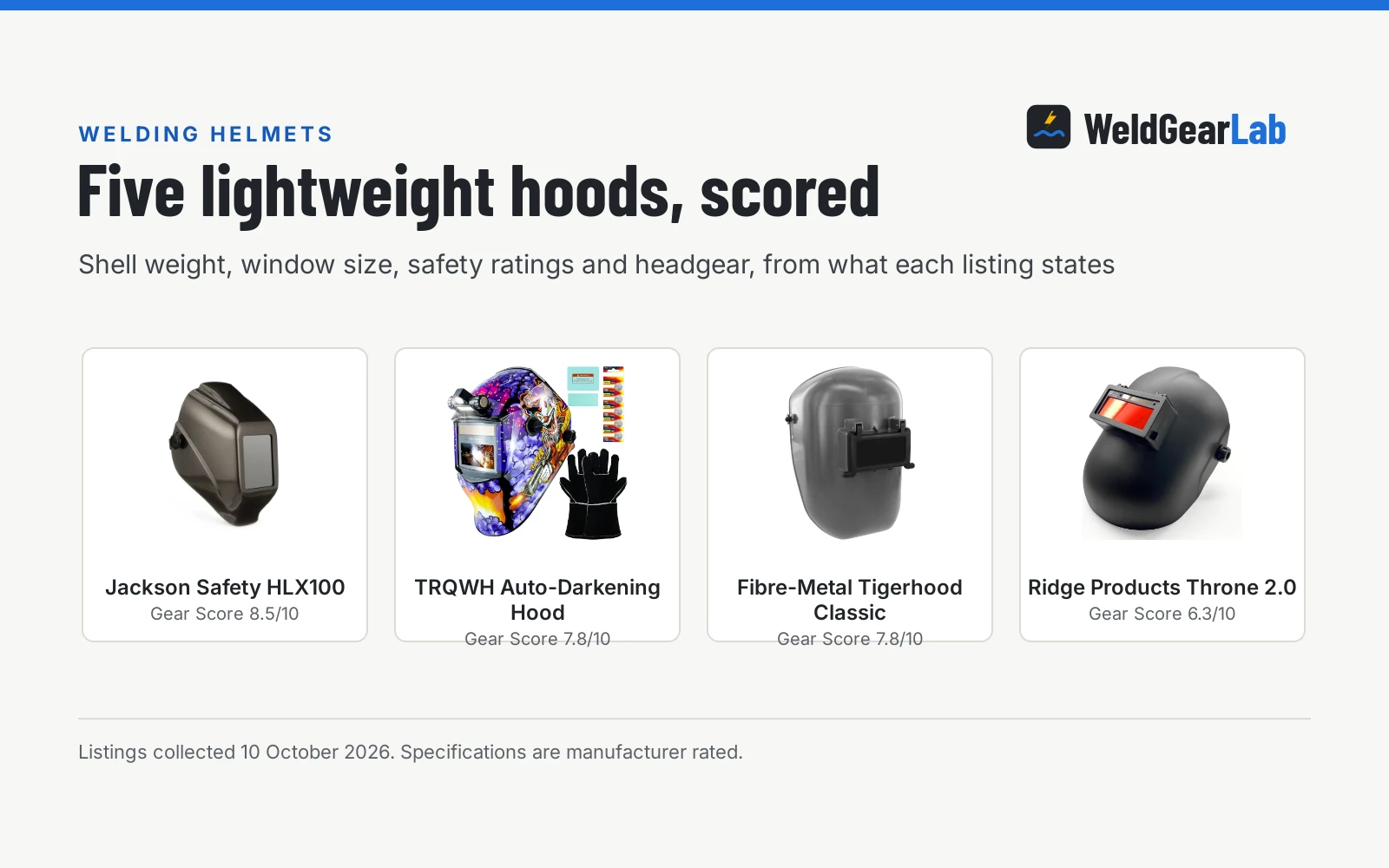
Five lightweight welding helmets compared on shell weight, viewing window, filter options, headgear comfort, and the safety standards each listing states.
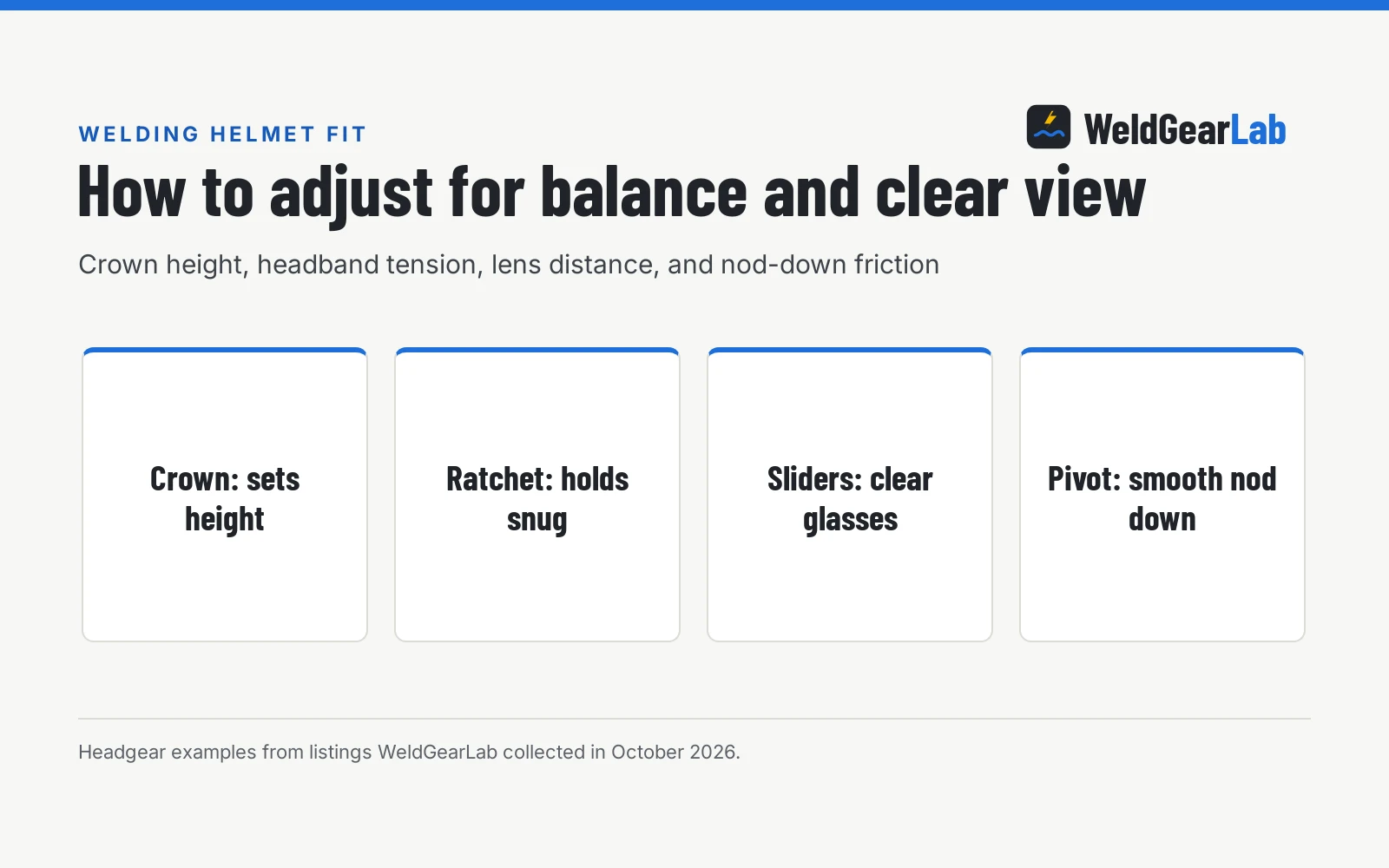
Adjusting welding helmet headgear involves setting the top crown strap for height, the rear ratchet for tension, side sliders for eye relief, and pivot…
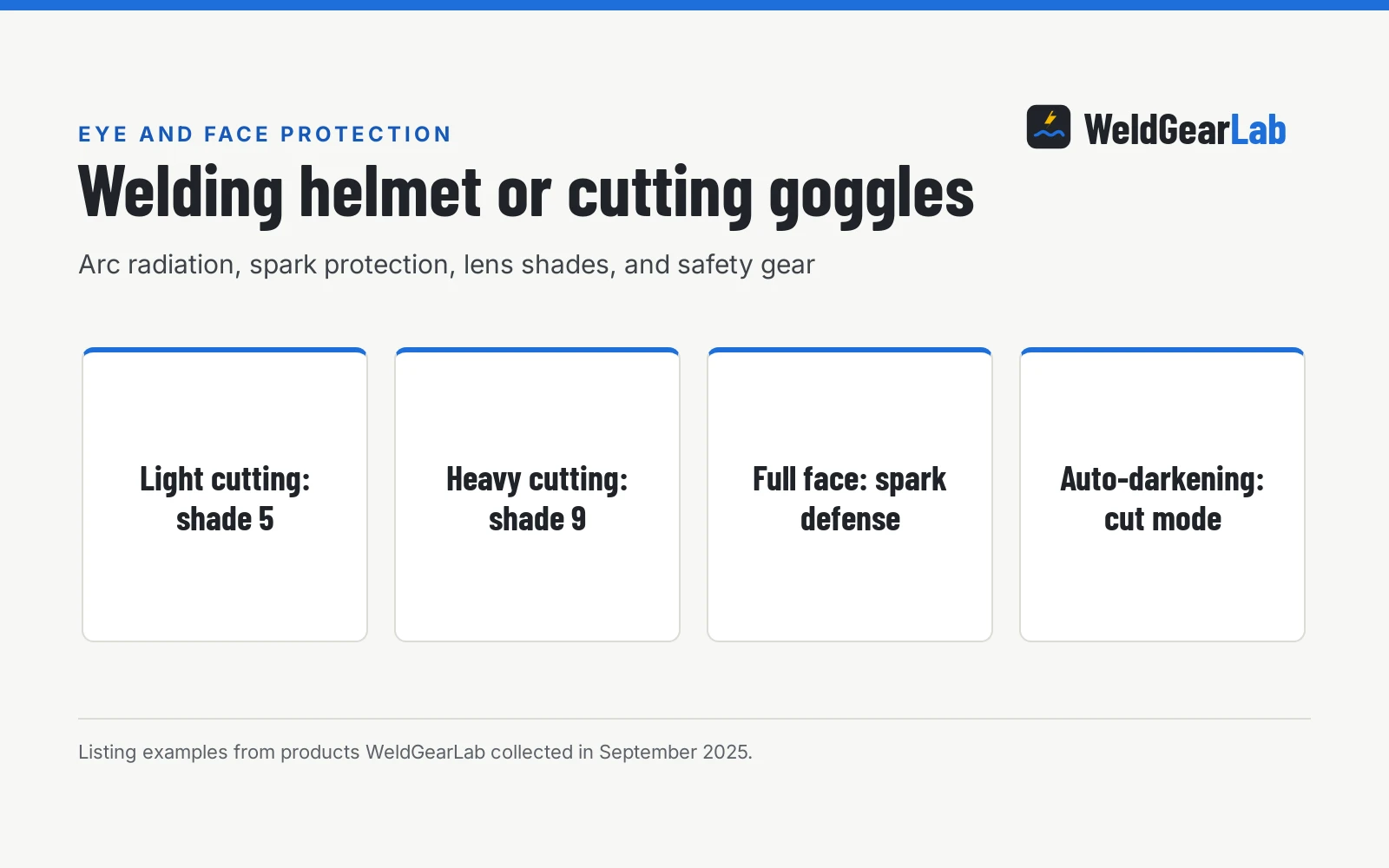
A welding helmet is not always mandatory for low-amperage plasma cutting, but full face protection or a hood with cut mode is essential against…
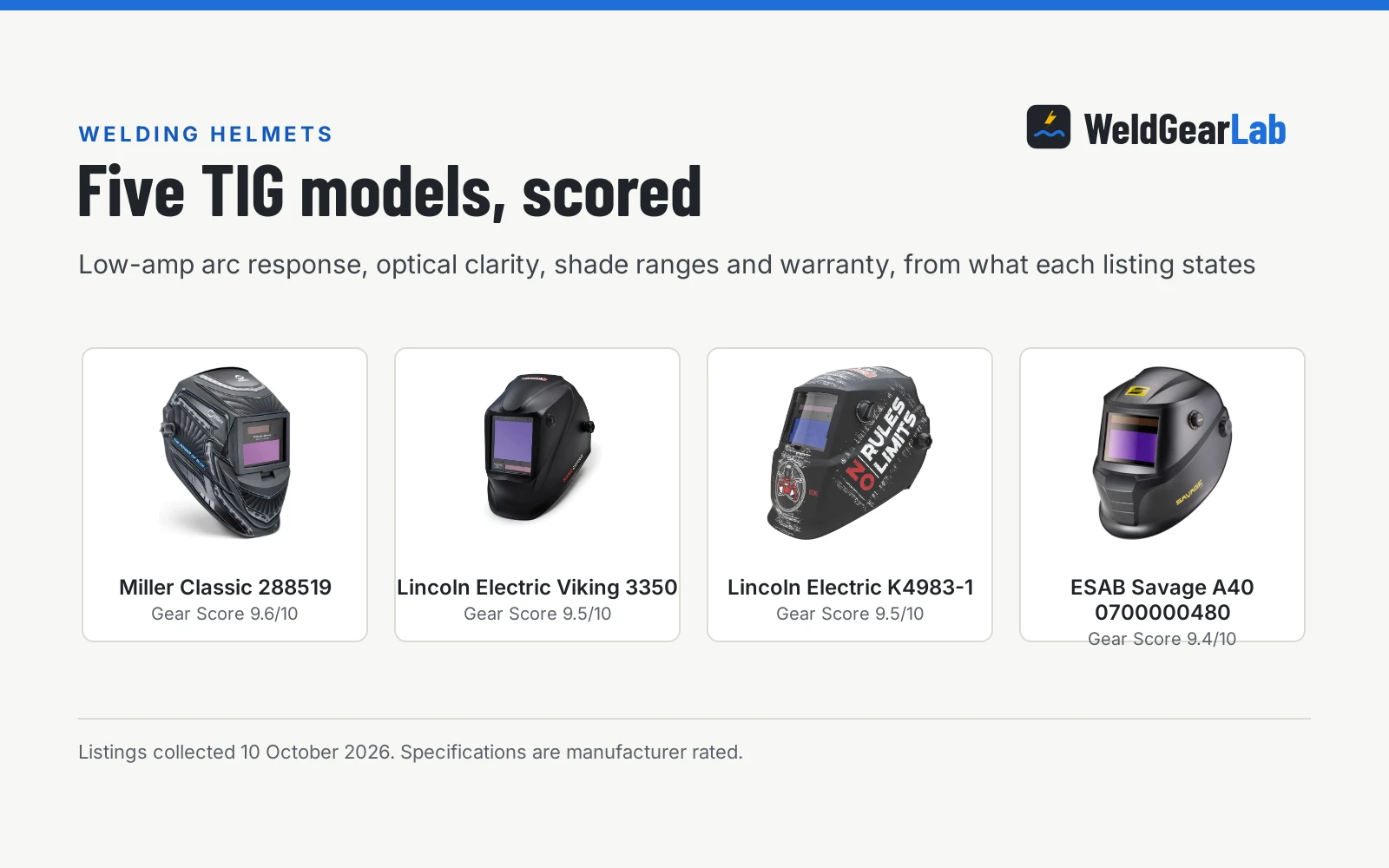
Four auto-darkening welding helmets and a pair of welding goggles for TIG welding, compared on low-amp arc response, optical clarity, viewing area, safety standards,…
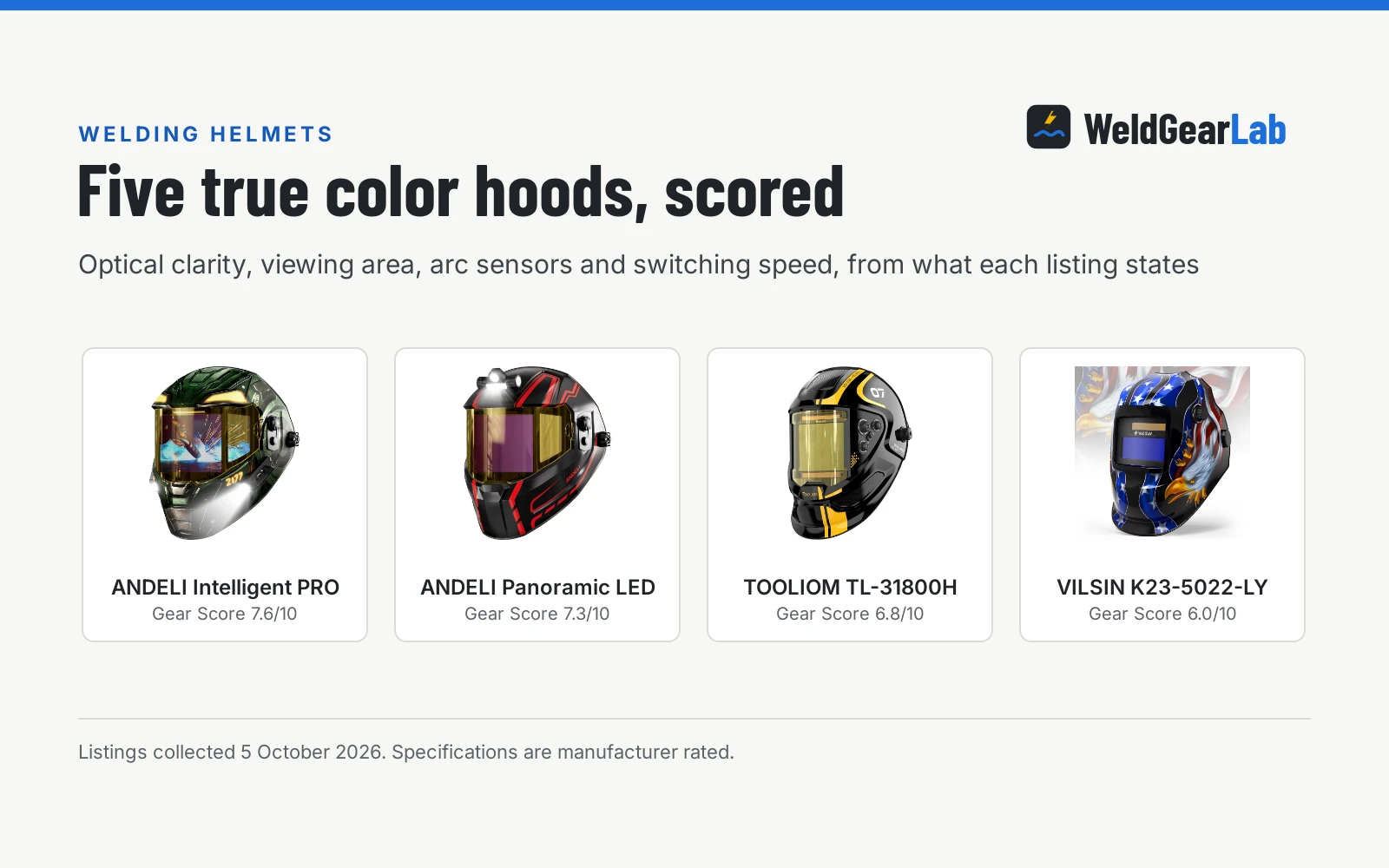
Five true color auto-darkening welding helmets compared on optical clarity, viewing area, arc sensors, switching speed, and stated listing specifications.
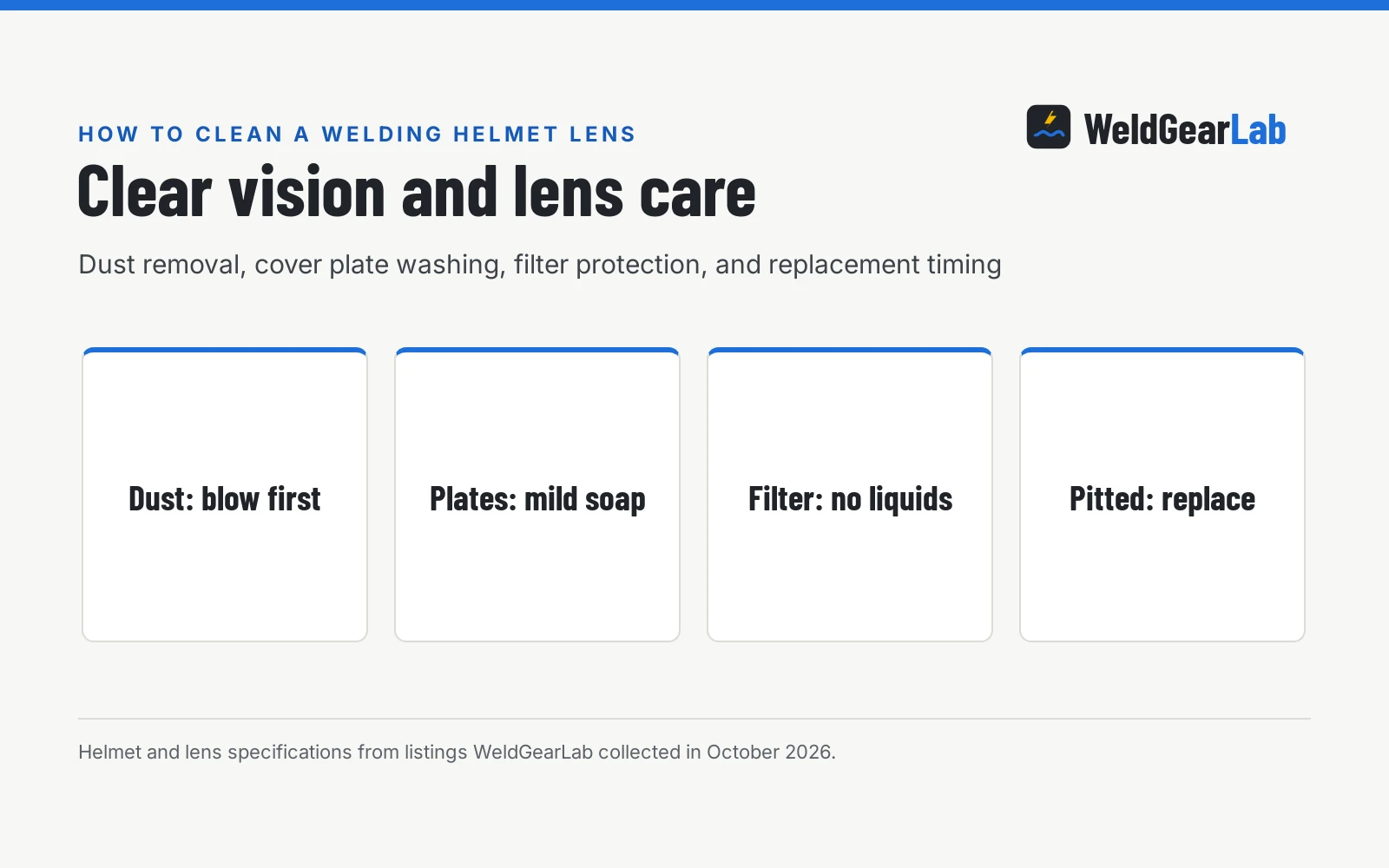
Learn how to clean a welding helmet lens safely, wash clear cover plates, protect sensitive auto-darkening filters, and replace a scratched welding lens.
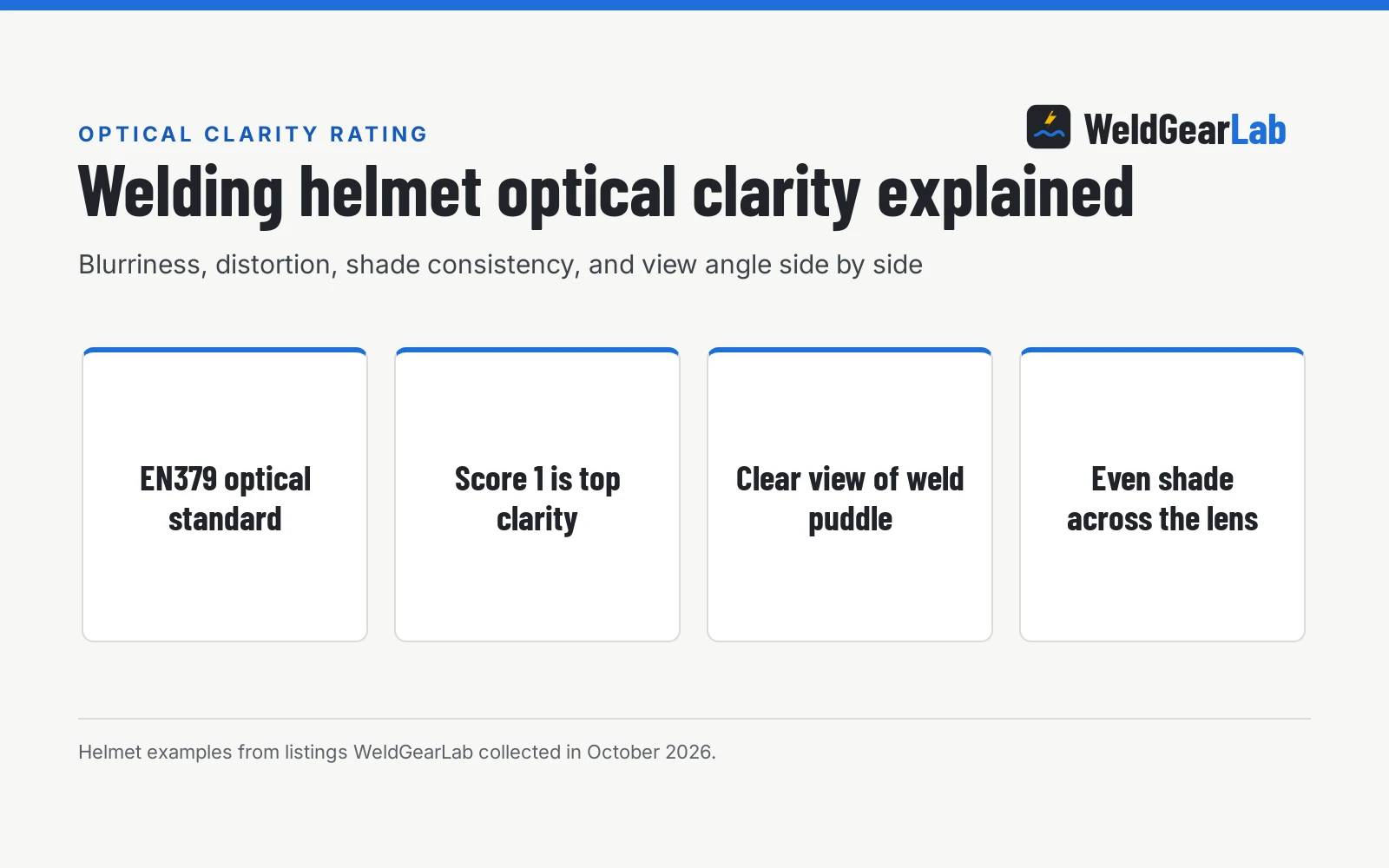
Optical clarity ratings explain how clearly an auto-darkening welding helmet lens shows the puddle by scoring blurriness, distortion, shade consistency, and view angle.