Types of Metal Clamps for Fabrication
Bar clamps and locking C-clamps explained for welding and metal fabrication, with jaw openings, throat depths and force ratings compared across the scored picks in this guide.

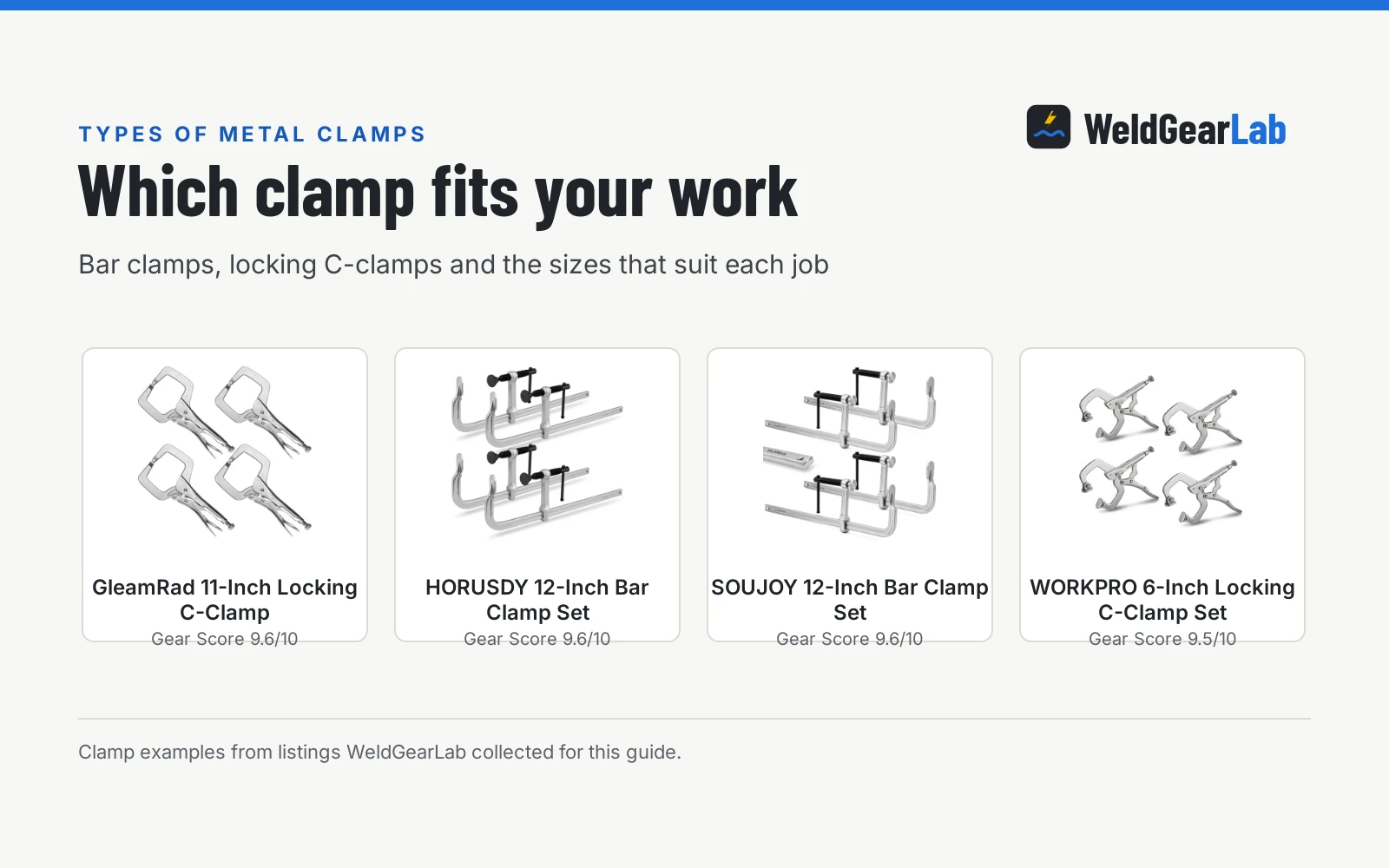
On this page
Top picks at a glance
As an Amazon Associate I earn from qualifying purchases.
- 1
 GleamRad 11-Inch Locking C-Clamp Pliers9.6/10View on Amazon
- 2
 HORUSDY 4-Pack 12-Inch Bar Clamp Set9.6/10View on Amazon
- 3
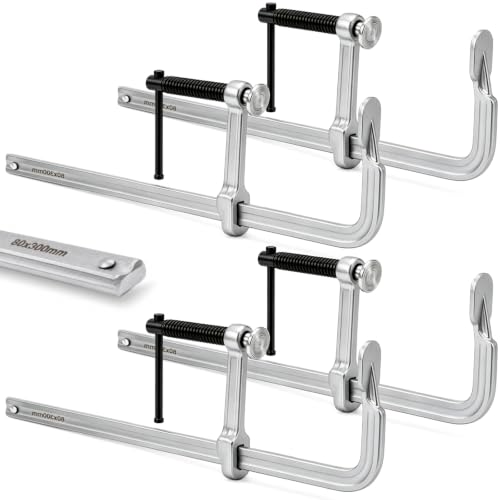 SOUJOY 4 Pack Bar Clamp for Welding9.6/10View on Amazon
- 4
 WORKPRO 4-Piece 6" Locking C-Clamp with Swivel9.5/10View on Amazon
Metal clamps hold the work still while you fit, tack and weld, and the right type depends on the shape of the joint and how much force the job needs. Types of metal clamps for fabrication fall into a few clear families: bar clamps that span a frame, locking C-clamps that bite and hold, and quick clamps that set fast on light work. This guide explains each family and scores the shop clamps in this guide for welding and metalwork.
This guide links to our product roundups, where WeldGearLab gets a commission on purchases made through links on this page, and your price stays the same. Read our affiliate disclosure.
GleamRad 11-Inch Locking C-Clamp Pliers
An 11-inch locking C-clamp with a 900 lb grip, built for tack welds and frames where the jaws must stay locked.
Pros
- 900 lb clamping force, the strongest grip in this guide
- Heat-treated alloy steel frame with a nickel-plated finish that resists rust
- Knurled screw dials in jaw pressure with gloves on and repeats the same grip
- Four clamps in the set cover all four corners of a frame at once
Cons
- Regular tips have no swivel pads, so they can mark soft or finished work
- 3-1/2 inch jaw opening is smaller than the 12-inch bar clamps here
- No stated warranty term
- A 4-pack covers four corners, so a long frame needs another set
HORUSDY 4-Pack 12-Inch Bar Clamp Set
A 12-inch bar clamp set with a 450 lb rating and a 360° swivel pad, built for frames, panels and glue-ups.
Pros
- 450 lb holding capacity across wood, metal, plastic and composite
- 12-inch jaw opening with a 3.15-inch throat depth for wide panels
- Drop-forged steel bar with a hardened acme-thread screw
- 360° swivel pad and anti-slip handle for precise pressure control
Cons
- 450 lb, less than the 900 lb grip of the locking C-clamp here
- 12-inch bar is long for tight bench corners
- 3.15-inch throat still leaves deep panels out of reach
- Smooth-turn screw adjusts precisely but slower than a quick-release trigger
SOUJOY 4 Pack Bar Clamp for Welding
A 12-inch bar clamp set rated at 450 lb that reverses into a spreader for pushing joints apart.
Pros
- 450 lb load limit for welding, woodworking and metalworking
- 12-inch jaw opening with a 3-inch throat depth
- Removable end-stop lets the sliding arm reverse into a spreader
- Drop-forged steel frame with a nickel-plated coating against corrosion
Cons
- 450 lb, less than the 900 lb grip of the locking C-clamp here
- 3-inch throat depth is the shallowest of the bar clamps here
- Spreader mode needs the end-stop removed and the arm reversed
- Four clamps per pack, so a wide panel needs another set
WORKPRO 4-Piece 6" Locking C-Clamp with Swivel
A 6-inch locking C-clamp set with swivel pads, built for small parts and tack welds where the surface matters.
Pros
- Carbon steel jaw and chrome-vanadium arm for heavy-duty use
- Adjustable screw lock with a quick-release trigger for fast sizing
- Swivel pads adjust to the work surface and protect the finish
- Serrated jaw holds firm during riveting, welding and grinding
Cons
- 6-inch size is the smallest clamp here, so it fits small work only
- Serrated jaws can mark soft metal
- No stated warranty term
- Four clamps in the set, so a four-corner frame uses the whole set
Types of metal clamps at a glance
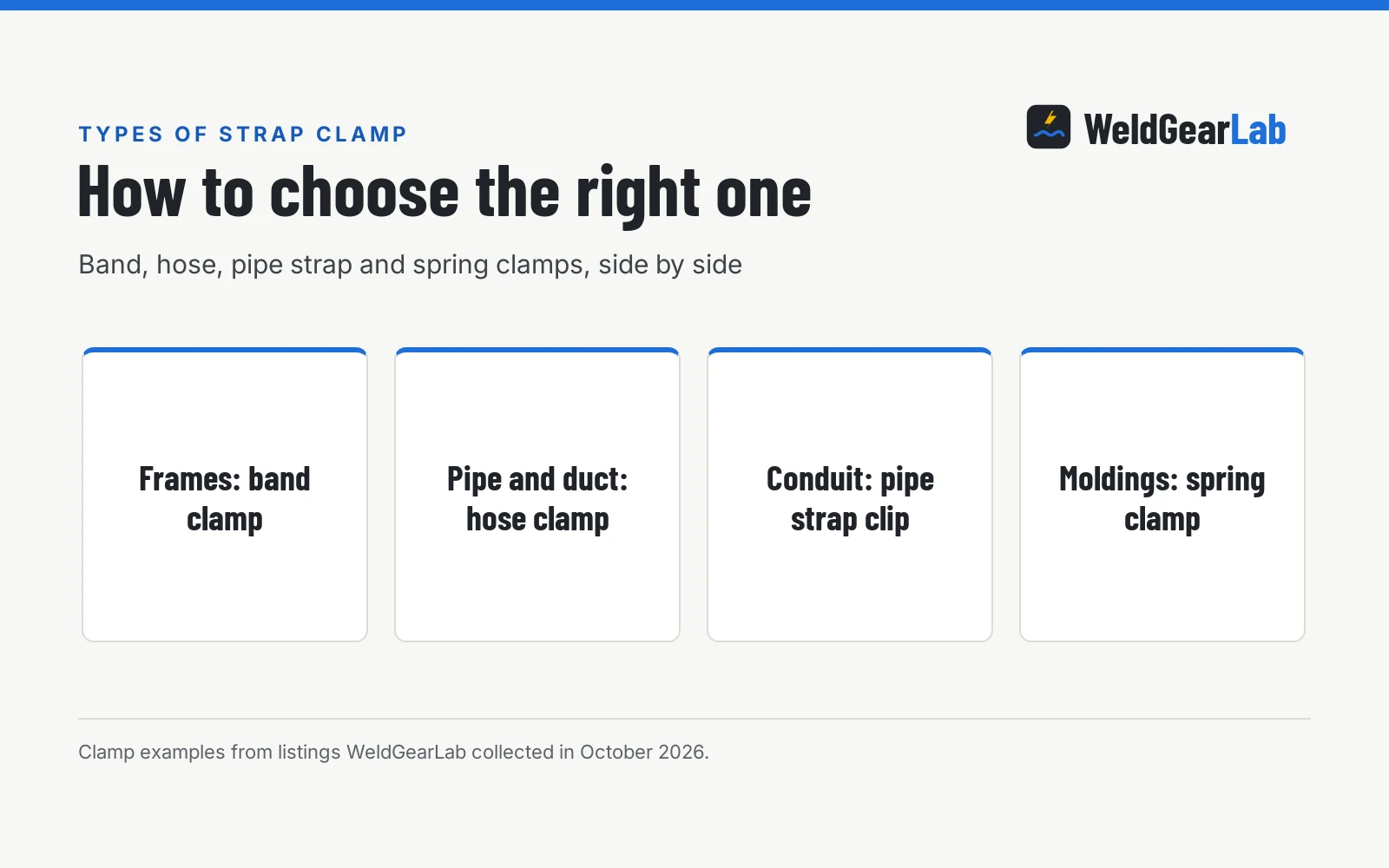
A bar clamp, often called an F-clamp, has a long steel bar with a fixed jaw at the end and a sliding jaw that locks anywhere along it. The sliding jaw moves by hand, then a screw handle tightens it, which suits frames and panels where the span is long. A locking C-clamp works the other way: pliers jaws close on the work and a screw dial sets the grip, then the handles lock until the trigger releases them. The lock holds with no hand on the tool, which suits tack welding, where the clamp must stay put.
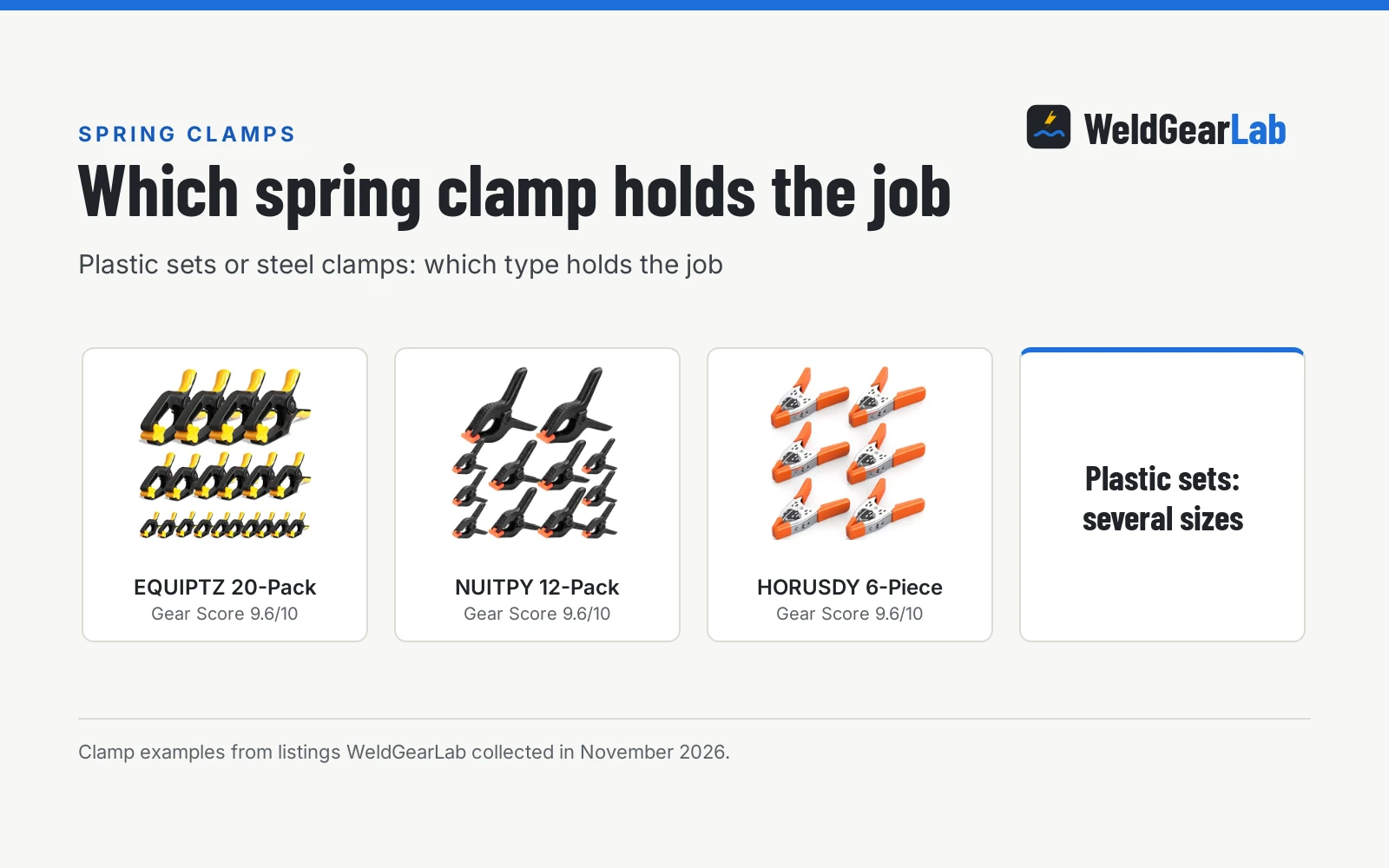
Quick clamps and spring clamps close with a trigger or a spring and suit light holding, while toggle clamps bolt to a fixture and press the same spot every time. The clamps in this guide are bar clamps and locking C-clamps, the families a home fab shop reaches for most.
Side by side
The scored picks sit side by side below, with the jaw opening, throat depth and clamping force the listings state.
| GleamRad 11-Inch Locking C-Clamp | HORUSDY 12-Inch Bar Clamp Set | SOUJOY 12-Inch Bar Clamp Set | WORKPRO 6-Inch Locking C-Clamp Set | |
|---|---|---|---|---|
| Type | Locking C-clamp | Bar clamp | Bar clamp | Locking C-clamp |
| Jaw opening | 3-1/2 in | 12 in | 12 in | 6 in |
| Throat depth | 2-3/8 in | 3.15 in | 3 in | Not stated |
| Clamping force | 900 lb | 450 lb | 450 lb | Not stated |
| Pack | 4 clamps | 4 clamps | 4 clamps | 4 clamps |
| Frame | Heat-treated alloy steel | Drop-forged steel | Drop-forged steel | Carbon steel jaw, Cr-V arm |
| Pads | No swivel pads | 360° swivel pad | Non-marring pads | Swivel pads |
| Spreader mode | Not stated | Not stated | Yes, arm reverses | Not stated |
The clamps in this guide
Each clamp below holds metal for fit-up and tack welding, the step where a joint either stays square or drifts out of line.
When a bar clamp is the better choice
Bar clamps suit long spans and flat panels, where the bar reaches across the work and the sliding jaw meets the part.
- Frames and panels. A 12-inch bar spans a frame corner or a cabinet side, and the sliding jaw sets anywhere along the bar.
- Glue-ups and tack welds on flat stock. The 450 lb rating on both bar clamps here is the makers’ stated limit for holding a panel flat while the joint sets.
- Spreader work. The SOUJOY bar clamp (on Amazon) reverses into a spreader, which pushes a joint apart instead of pulling it together.
- Long reach. A 3.15-inch throat on the HORUSDY bar clamp reaches further than the 3-inch throat on the SOUJOY.
The best welding clamps for fabrication roundup scores more bar clamps the same way.
When a locking C-clamp is the better choice
Locking C-clamps suit small, awkward parts, where a bar clamp cannot reach and the grip must stay locked with no hand on the tool.
- Tack welding. The jaws lock on a plate or a tube and stay locked while the torch runs, which frees both hands for the weld.
- Odd shapes. The GleamRad clamp has regular tips with no swivel pads, so the tips bite onto odd-shaped parts where padded jaws will not fit.
- Strong grip in a small frame. The GleamRad clamp is rated at 900 lb of clamping force on an 11-inch frame, the strongest grip in this guide.
- Surface protection. The WORKPRO clamp (on Amazon) has swivel pads that adjust to the shape of the work and protect soft metal.
The bar clamp vs C-clamp for welding comparison covers the same choice in more depth.
How to match the clamp to the work
Start with the jaw opening: the widest part the clamp must close around. The bar clamps here open to 12 inches, the WORKPRO locking clamp opens to 6 inches, and the GleamRad clamp opens to the smallest jaw here.
Then check the throat depth, which sets how far from the edge the clamp can reach. A 3.15-inch throat reaches deeper than a 3-inch throat.
Then check the rated force: the bar clamps here are rated at 450 lb and the GleamRad locking clamp at 900 lb. The WORKPRO listing claims a strong clamping force but states no rating. Clamp the work before striking an arc, and wear eye protection when grinding or chipping near a fresh weld.
For more options, see our metal fab tools guides.
FAQ for welders
What is the difference between a bar clamp and a C-clamp?
A bar clamp has a long bar and a sliding jaw, so it spans wide frames and panels, while a locking C-clamp has pliers jaws that close on a small part and lock in place. The bar clamps here open to 12 inches, the WORKPRO locking clamp to 6 inches, and the GleamRad locking clamp to 3-1/2 inches.
How much clamping force does tack welding need?
It depends on the size of the joint and the weight of the parts. The maker ratings here give a starting point: 450 lb on the bar clamps and 900 lb on the GleamRad locking clamp.
Can a bar clamp work as a spreader?
Yes, when the clamp is built for it. The SOUJOY bar clamp has a removable end-stop, so the sliding arm reverses and the clamp pushes a joint apart instead of pulling it together. The other bar clamp here states no spreader mode.
Do locking C-clamps damage the work surface?
They can, when the jaws bite bare metal. The WORKPRO clamp has swivel pads that spread the grip and protect the surface, while the GleamRad clamp has regular tips with no swivel pads.
What size clamp fits a welding table?
Match the jaw opening to the thickest part the clamp must close around, and the throat depth to how far from the edge it must reach.
Related: types of welding clamps, quick clamp vs C-clamp for welding, light duty vs heavy duty welding clamps, and the best quick clamps for metal.