Types of Welding Clamps: Which Clamp Fits Your Work
A practical guide to the types of welding clamps used in metal fabrication, explaining how each style holds joint fit-ups, resists heat, and prevents distortion.

On this page
Top picks at a glance
As an Amazon Associate I earn from qualifying purchases.
- 1
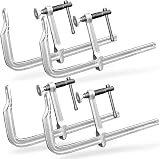 Heavy-Duty 12-Inch F-Clamps9.7/10View on Amazon
- 2
 JMIATRY 4PCS Welding F Clamps 6 Inches Heavy Duty Steel Bar9.7/10View on Amazon
- 3
 QWORK 10" Flat Jaw Locking Clamp9.6/10View on Amazon
- 4
 HORUSDY 4PCS Heavy-Duty Bar ClampsView on Amazon
- 5
 Pony Jorgensen 2650 5-Inch C-ClampView on Amazon
- 6
 POWERTEC 4PK Toggle ClampView on Amazon
- 7
 MAXPOWER 24-inch F ClampView on Amazon
- 8
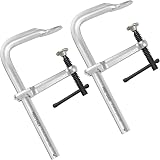 MAXPOWER 8-inch F ClampView on Amazon
- 9
 MAXPOWER 4-pieces Heavy Duty F Clamp 12-inchView on Amazon
When you set steel on the welding table to build a frame, repair an implement, or tack sheet metal, the weld bead is only as straight as your joint setup. Heat pulls steel as the puddle cools, and holding parts by hand invites misalignment, burn-through, and warped assemblies. Understanding the different types of welding clamps helps you lock down your stock, hold true right angles, and keep gaps tight before striking an arc. The primary types of welding clamps include standard C-clamps, locking C-clamp pliers, sliding arm F-clamps, corner angle clamps, magnetic positioners, and pipe chain clamps. Each design addresses specific metal fabrication challenges, from brute holding power against thermal draw to rapid repositioning across repeated tack welds.
Other welders and gear to compare
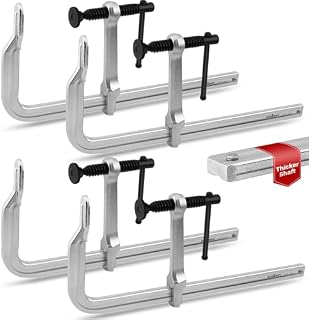 HORUSDY 4PCS Heavy-Duty Bar ClampsCheck price on Amazon
 Pony Jorgensen 2650 5-Inch C-ClampCheck price on Amazon
 POWERTEC 4PK Toggle ClampCheck price on Amazon
 MAXPOWER 24-inch F ClampCheck price on Amazon
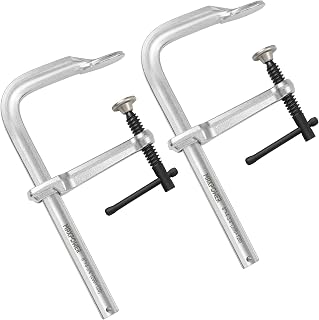 MAXPOWER 8-inch F ClampCheck price on Amazon
 MAXPOWER 4-pieces Heavy Duty F Clamp 12-inchCheck price on Amazon
This guide links to our product roundups, where WeldGearLab gets a commission on purchases made through links on this page, and your price stays the same. Read our affiliate disclosure.
Types of welding clamps and how they work
Every clamp style balances key trade-offs on the fabrication bench: mechanical clamping force, reach over the workpiece, and setup speed. Heavy cast or forged clamps exert immense screw pressure to flatten bowed plate and fight thermal contraction, but turning a threaded spindle takes time. Fast-acting locking pliers snap into place instantly for rapid tacking, yet lack the throat depth to secure the center of wide panels. Fixturing clamps lock parts square at perpendicular corners, while magnetic holders offer unobstructed access around open joints without mechanical jaws getting in the path of your welding torch. Choosing the right tool keeps your hands clear of arc heat and spatter while preserving joint geometry.
Side by side
| Clamp Type | Best Joint Fit-Up | Holding Force | Adjustment Speed | Main Strength |
|---|---|---|---|---|
| C-Clamp | Heavy butt and lap joints | Very high mechanical force | Slow threaded spindle | Rigid hold against warping |
| Locking Clamp Pliers | Quick tacks and sheet metal | Moderate mechanical grip | Fast trigger release lever | Rapid placement and removal |
| F-Clamp (Sliding Arm) | Wide plates and deep reach joints | High mechanical force | Fast sliding arm positioning | Deep throat depth and wide span |
| Corner Angle Clamp | Perpendicular corner and T-joints | Moderate to high force | Moderate spindle adjustment | Maintains true square alignment |
| Magnetic Positioner | Temporary tacking and layout | Low to moderate hold | Instant placement | No mechanical obstruction at the seam |
| Pipe Chain Clamp | Cylindrical tubing and pipe butt joints | Even radial clamping force | Moderate tensioning | Aligns curved round stock evenly |
Clamping force must always match the thickness of your steel and the anticipated weld shrinkage. Heavy structural sections demand rigid mechanical clamping to prevent angular distortion, whereas thin sheet metal requires broad contact pads to avoid denting the surface. Keep threaded spindles lubricated with anti-spatter spray or choose copper-plated screws so stray spatter beads do not ruin the threads.
When heavy C-clamps are the right pick
- Heavy plate and structural steel. Thick stock generates strong shrinkage forces that overpower lighter tools, making rigid forged steel or ductile iron bodies essential.
- Straightening warped fit-ups. Screw spindles provide the mechanical advantage needed to pull uneven surfaces flat against a welding bench or backing bar before tacking.
- High heat tolerance. All-metal construction withstands radiant arc heat and slag without melting springs, plastic knobs, or internal ratchets.
- Grounding connections. Heavy C-clamp frames provide dependable mechanical contact when securing a work ground lead near the weld joint.
Heavy C-clamps remain the backbone of fabrication shops because their simple threaded design generates unmatched clamping pressure. A standard C-clamp features a rigid frame shaped like the letter C, an anvil base, and a threaded steel spindle with a swivel pad. The swivel pad adjusts to slightly out-of-square surfaces, ensuring solid contact. Copper-plated spindles prevent molten spatter from sticking to the threads, which keeps the screw turning smoothly across months of heavy use. When working on dedicated tables, our guide on welding tables and carts explains how clamping surfaces support these heavy tools during assembly.
When locking clamp pliers are the better choice
- Repetitive tack welding. The over-center toggle mechanism locks onto stock with a quick squeeze and pops free with a trigger lever, speeding up assembly lines.
- Sheet metal and auto body panels. Broad flat jaws or swiveling pads clamp thin steel without puncturing or creasing the sheet.
- Confined spaces. Compact handles and deep U-shaped throat openings reach around tubing, channel flanges, and structural lips where screw handles cannot rotate.
- Temporary alignment. Holding overlapping seams steady while applying tack welds along an extended butt joint.
Locking clamp pliers combine the adjustable grip of locking pliers with specialized welding jaw profiles. Common variants include wide-mouth sheet metal clamps, deep-throat locking C-clamps, and fork-jaw clamps that straddle a joint to allow puddle access between the contact points. You adjust the screw in the handle until the jaws grip the metal firmly as the lever cams over center. For fast assembly work, see our roundup of quick clamps for welding for tools built specifically for production fabrication.
F-clamps and sliding arm bar clamps for deep reach
Sliding arm F-clamps, also called bar clamps or speed clamps, solve the throat depth and span limitations of standard C-clamps. An F-clamp consists of a sturdy steel spine rail, a fixed upper jaw, and a sliding lower arm equipped with a threaded spindle.
- Deep throat access. Long sliding arms reach far past the outer edge of wide plate assemblies, holding internal ribs and stiffeners securely.
- Rapid span adjustment. Sliding the moveable jaw directly against the metal eliminates tedious spindle cranking when switching between thick and thin workpieces.
- Bench fixturing integration. Specialized welding F-clamps feature removable swivel heads or drop-in pins designed to seat inside standard tabletop tooling holes.
Fab shops rely on heavy-duty F-clamps when building large frames, box sections, and chassis assemblies where C-clamp throats fall short. Combining these clamps with a slotted or perforated work surface creates a modular hold-down system; read our comparison of fixture table vs steel plate welding table options to see how tabletop designs change clamping efficiency.
Angle and corner clamps for square fit-ups
Holding mating pieces of tubing or angle iron perpendicular to each other is notoriously difficult with standard clamps. Corner and angle clamps feature precision-machined reference surfaces that hold joint components firmly at right angles.
- Mitered tube and box frames. Miters draw out of square as weld beads shrink on the outer corner; rigid corner jaws maintain true right angles throughout the cooling cycle.
- T-joints and corner butt joints. Open-frame corner clamps provide clear torch access to the inside root and outside seam without removing the tool.
- Dissimilar material thicknesses. Independent spindle adjustments or swiveling clamping blocks clamp workpieces of differing gauges simultaneously into square alignment.
Using dedicated corner clamps prevents the frustrating cycle of squaring, tacking, checking, and grinding distorted joints. For detailed model evaluations, our guide to angle clamps for welding covers dedicated fixturing tools that keep frames square under heat.
Magnetic clamps and specialty pipe fit-up tools
Magnetic welding positioners and specialty pipe clamps complete the fabricator’s holding arsenal. Magnetic clamps use permanent magnets encased in durable steel housings to hold ferrous stock at preset angles, including right angles and miter positions. They shine during the initial layout phase because they require no mechanical clearance around the seam, allowing you to position parts and place tack welds rapidly. However, strong magnetic fields can cause arc blow when welding too close to the magnet, particularly when running direct current processes. Our guide on how to use welding magnets details setup techniques to avoid arc deflection.
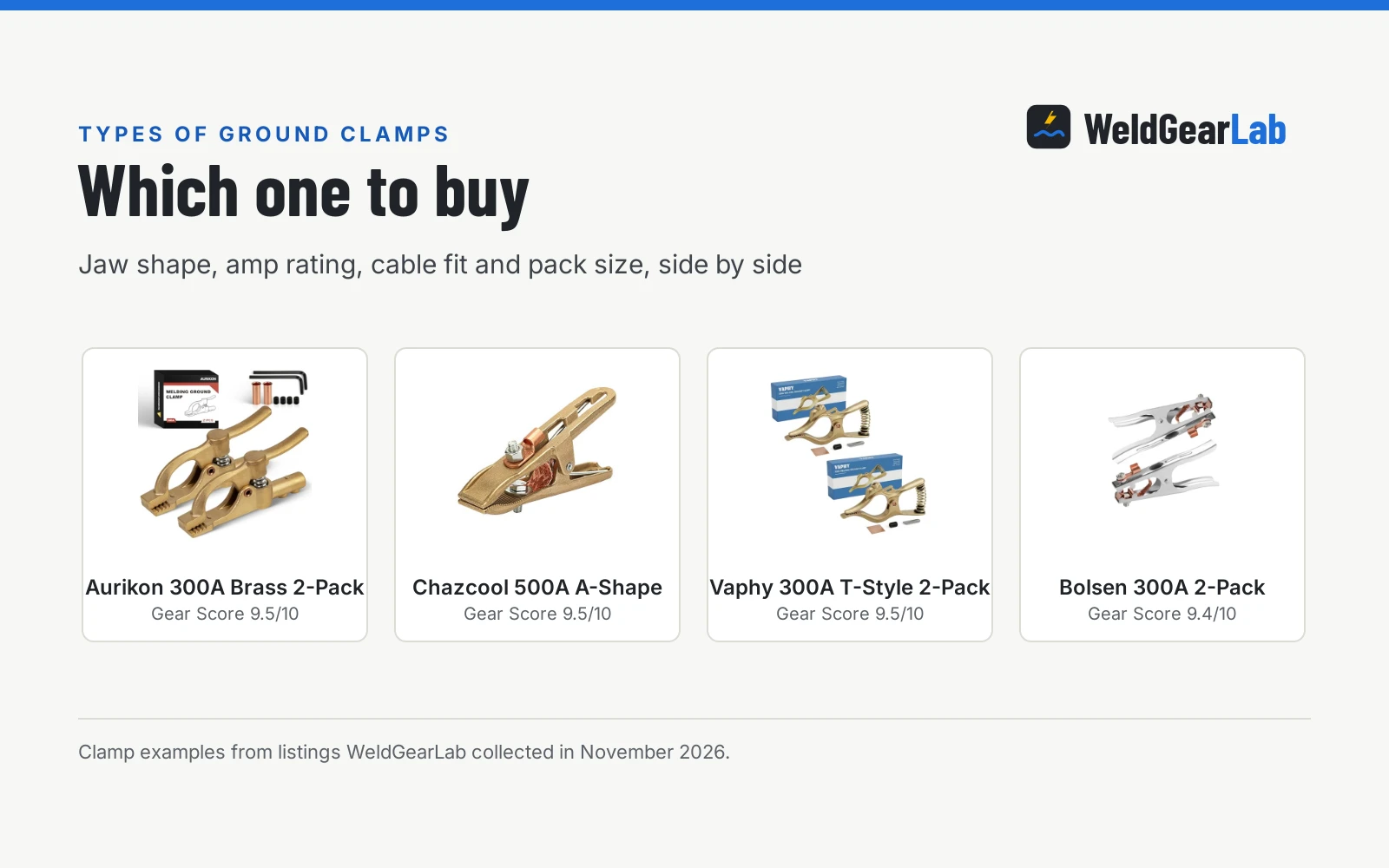
For round stock, cylindrical pipe, and tubular railings, mechanical pipe clamps and chain clamps wrap around the circumference to pull mating bevels into concentric alignment. These tools ensure uniform root gaps around pipe butt joints, preventing mismatch between pipe walls. Additionally, securing a dedicated welding ground clamp directly to your workpiece or clamping fixture prevents electrical arcing across your precision clamp threads, which can pit bearing surfaces and freeze threaded spindles.
Safety around hot metal and mechanical pinch points. Clamps absorb intense heat from the weld puddle and retain high temperatures long after the arc extinguishes. Always wear leather welding gauntlets when adjusting clamps on warm assemblies to prevent severe contact burns. Inspect toggle clamps and lever-release tools carefully; high-pressure springs can snap shut unexpectedly, creating sharp pinch hazards for unprotected fingers. Furthermore, never loosen clamps while a heavy assembly is suspended or under internal bending stress, as sudden release can propel steel stock across the shop floor. For complete personal protection recommendations, review our welding safety gear checklist before tackling large fabrication builds.
FAQ for welders
Why do welding clamps feature copper-plated spindles?
Welding spatter bonds readily to raw steel threads, creating stubborn burrs that jam clamp spindles. Copper plating sheds molten spatter because spatter droplets cannot easily fuse to the copper surface. This coating keeps threads spinning smoothly without requiring frequent wire brushing or grinding.
Can woodworking clamps be used for welding projects?
Woodworking clamps should generally be kept away from the welding table because their components cannot tolerate high temperatures. Wooden handles, plastic release triggers, and lightweight cast aluminum frames soften, melt, or fracture when exposed to radiant arc heat and hot slag. Dedicated metal fabrication clamps use all-steel construction, ductile iron bodies, and heat-resistant pads specifically designed to handle shop heat.
Why do fabrication shops keep multiple clamp styles on hand?
No individual clamp design can accommodate every joint configuration encountered during metal fabrication. Deep frames require the extended reach of sliding bar clamps, while repetitive assemblies move faster with quick-release locking pliers. Combining different styles ensures you can secure flat seams, right-angle corners, and round tubing without compromising joint alignment.
How do welding clamps help prevent heat distortion?
Weld puddles expand when molten and contract significantly as the metal solidifies, creating powerful shrinking forces that twist unsecured stock. Clamping workpieces securely against rigid backing bars or heavy tables physically restrains the metal during thermal cooling. This mechanical restraint forces the weld deposit to yield internally, leaving the completed assembly straight and true.
Can magnetic positioners replace mechanical welding clamps?
Magnets excel at quick layout and temporary holding while placing light tack welds, but they cannot replace mechanical clamps. Magnetic tools lack the mechanical compressive force needed to flatten warped plate or pull tight joint fit-ups together. After tacks are established, mechanical clamps should be applied to secure the assembly against intense shrinkage stress during final passes.
Related: angle clamps for welding, quick clamps for welding, welding ground clamp, and welding tables and carts.