Tubing Notcher vs Tubing Cutter: Which One Should You Buy?
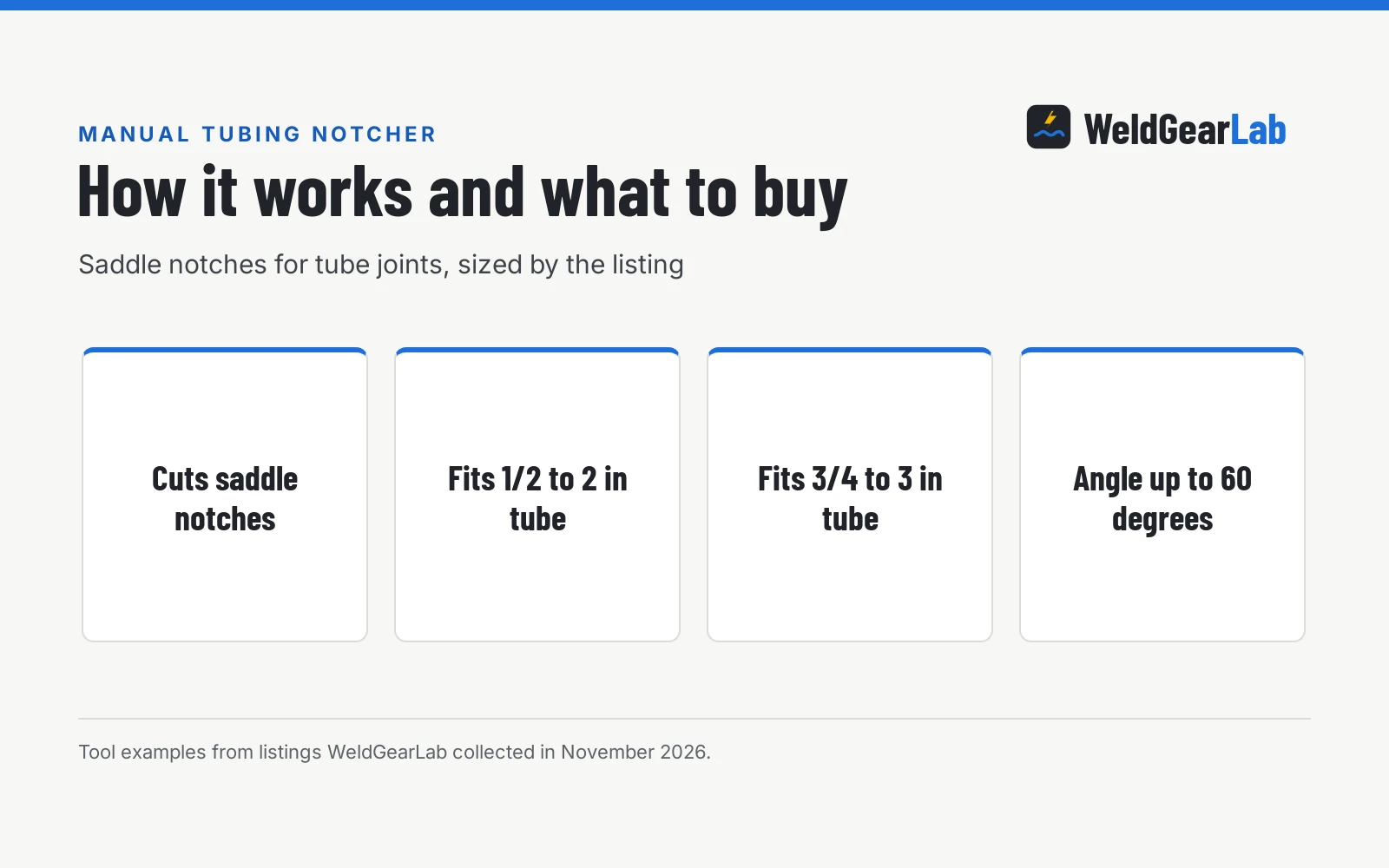
A tubing notcher shapes tube ends to fit other tubes; a tubing cutter cuts tube to length. This guide covers when to buy each.

On this page
Top picks at a glance
As an Amazon Associate I earn from qualifying purchases.
- 1
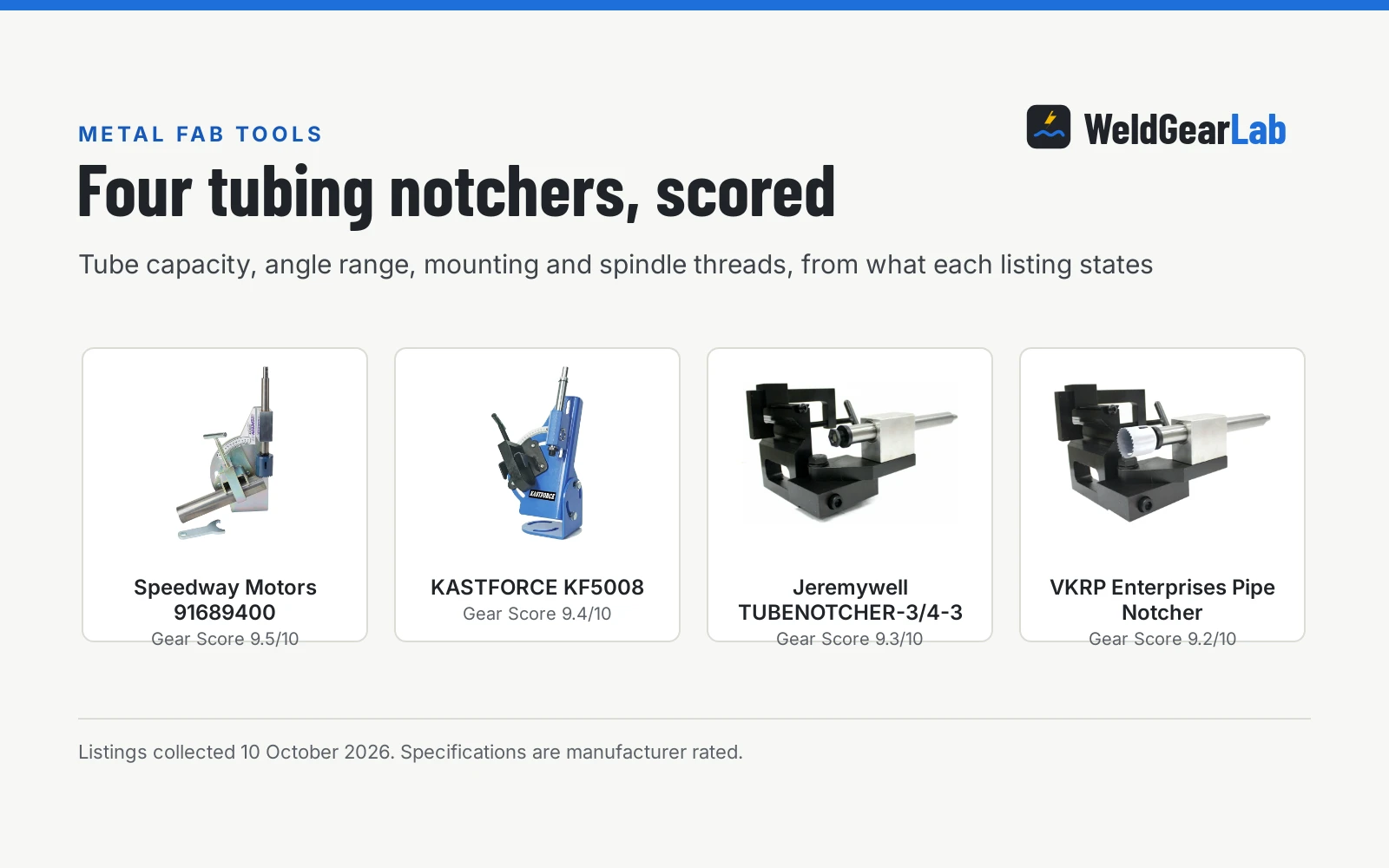
 Tube Notcher 9/16-2in Pipe Notcher 40-90 Degree Hole Saw Tool9.5/10View on Amazon
- 2
 KF5008 2 Inch Hole Saw Pipe Tube Notcher Tubing Notcher9.4/10View on Amazon
- 3
 Jeremywell Industrial Professional Pipe & Tube Notcher Punch9.3/10View on Amazon
- 4
 Professional Tube & Pipe NotcherView on Amazon
- 5
 Allstar Performance ALL10411 Tubing Notcher Brand: AllstarView on Amazon
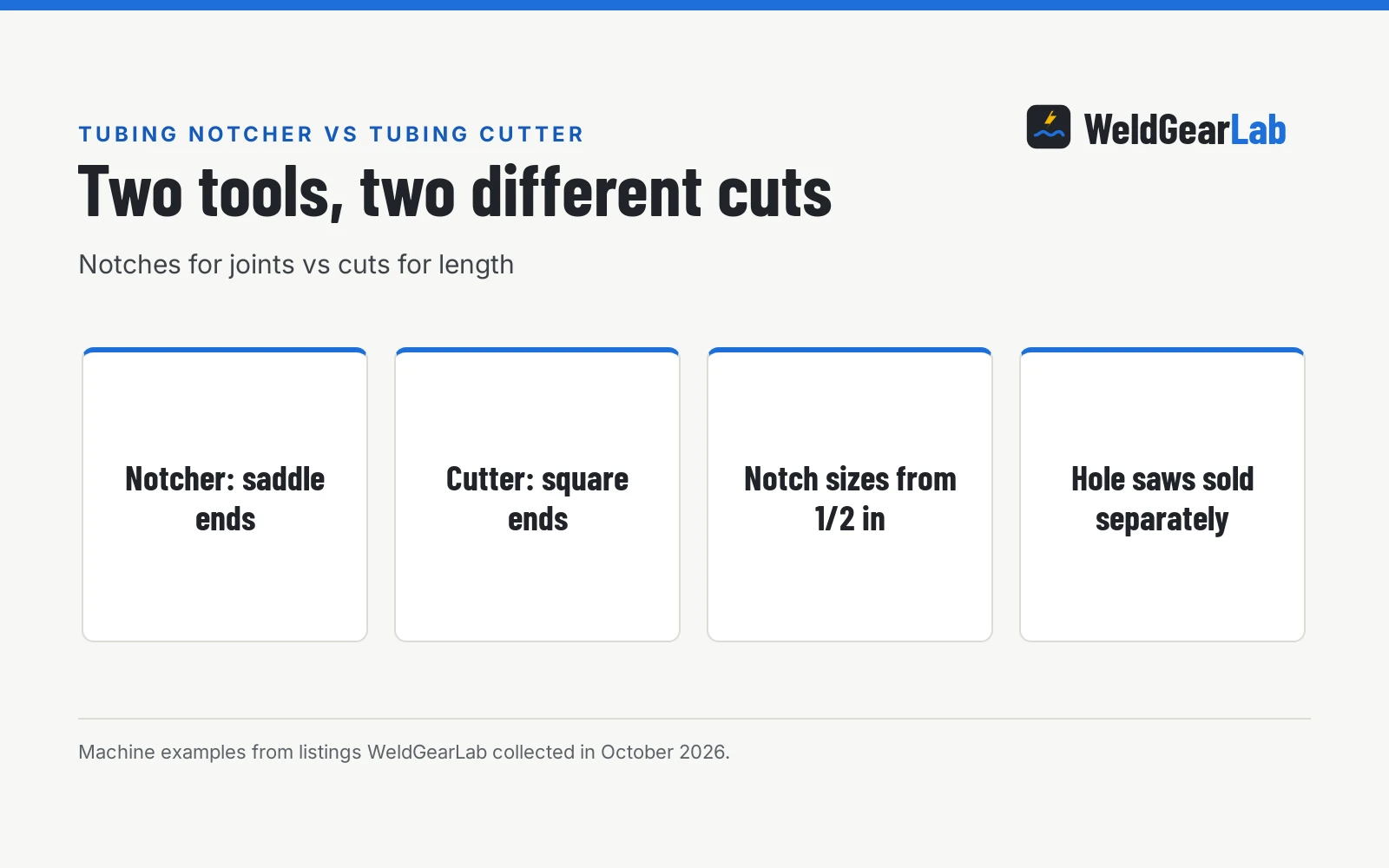
A tubing notcher vs tubing cutter choice is really a choice of jobs: a tubing notcher shapes the end of a tube so it fits tight against another tube, while a tubing cutter cuts tube to length with a square end. Buy the notcher for tube frames, roll cages and handrails; buy the cutter for cutting stock to length. Many shops end up with both, because the cutter prepares the stock and the notcher prepares the joint.
Other welders and gear to compare
 Professional Tube & Pipe NotcherCheck price on Amazon
 Allstar Performance ALL10411 Tubing Notcher Brand: AllstarCheck price on Amazon
This guide links to our product roundups, where WeldGearLab gets a commission on purchases made through links on this page, and your price stays the same. Read our affiliate disclosure.
tubing notcher vs tubing cutter: the difference in one paragraph
A notcher clamps the tube and drives a hole saw into its end, cutting a curved saddle, sometimes called a fishmouth, that hugs the mating tube. A tubing cutter severs the tube across its axis, leaving a flat square end for measuring, threading or a simple butt joint. One shapes ends for welding; the other sizes stock for the shop.
Side by side
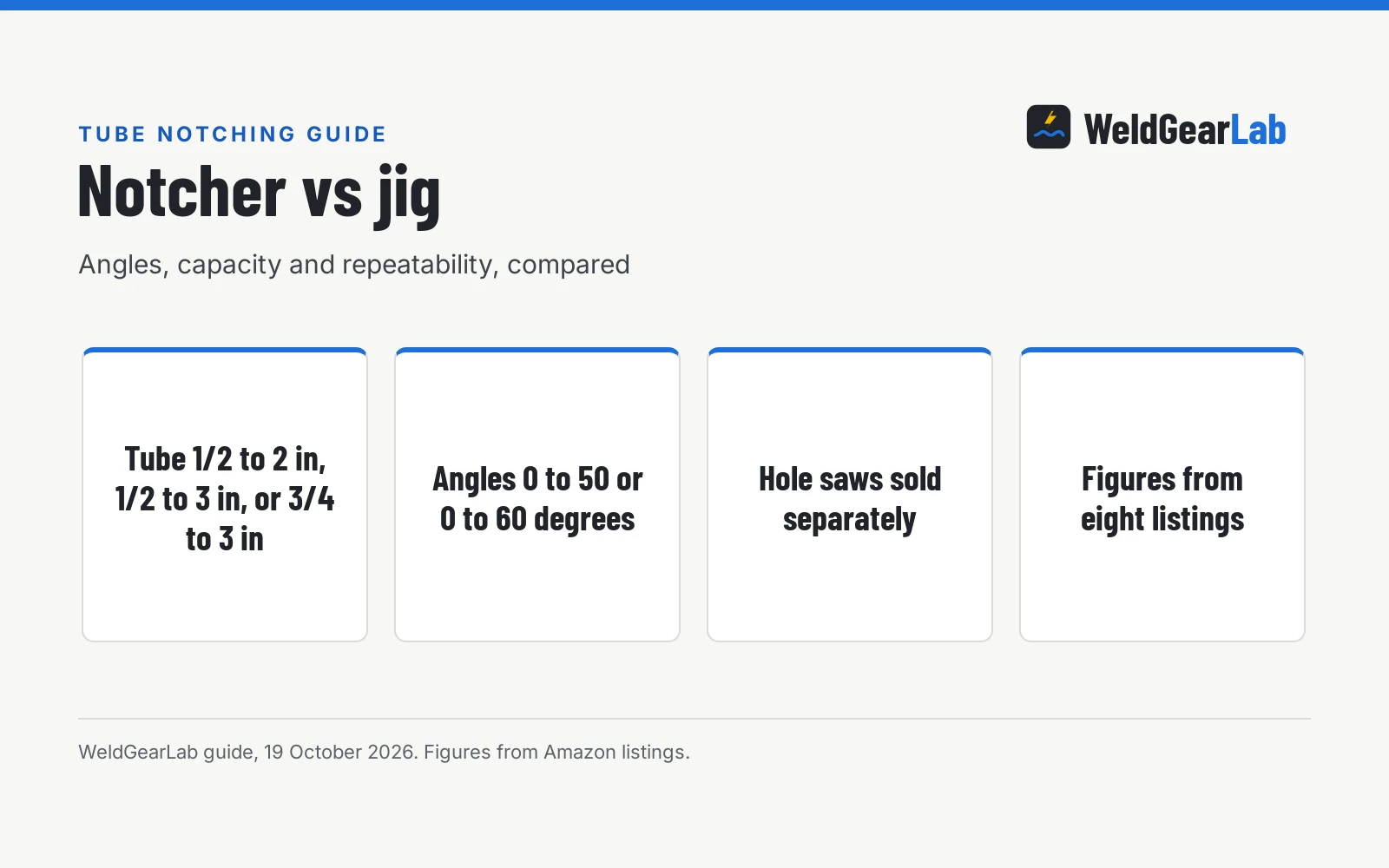
| Factor | Tubing notcher | Tubing cutter | What the listings show |
|---|---|---|---|
| Job | Shapes the tube end to fit another tube | Cuts tube to length | Notcher listings only in the reference set |
| Cut type | Saddle or fishmouth notch | Square cross cut | Tool design, general knowledge |
| Capacity | 1/2 to 3 in OD across listings | No cutter listing in the reference set | VEVOR, WONDERSUNM listings |
| Angles | 0-60° adjustable; templates at 22.5°, 45°, 90° | No cutter listing in the reference set | KAKA, Eastwood, ZhouDaShu listings |
| Power | Hole saw on drill press or hand drill | No cutter listing in the reference set | KAKA manual; WONDERSUNM listing |
| Hole saw included | Sold separately | No cutter listing in the reference set | KAKA, VEVOR listings |
| Listed weights | 6.82 to 24 lb | No cutter listing in the reference set | Eastwood; KAKA RA-9 |
| Stated warranty | 1 year on the Baileigh TN-250 | No cutter listing in the reference set | Baileigh listing |
All notcher figures below are manufacturer rated, as published in the reference listings and collected 19 October 2026. No tubing cutter listings were in the reference set, so the cutter side is described without figures.
When a tubing notcher is the better choice
- Tube frames and roll cages. Any joint where two round tubes meet at an angle wants a saddle notch for a full weld bead.
- Handrails and furniture. Notched ends sit flush instead of leaving gaps to fill.
- Angled joints. The KAKA PN-1/2S, Eastwood and VEVOR 1/2 to 2 in notchers adjust from 0 to 60 degrees; the KAKA RA-9 is built for 90 degree joints in 1, 1-1/4 and 1-3/8 in OD.
- Repeatable saddles. The ZhouDaShu saddle template kit covers 1-7/8, 2-3/8 and 2-7/8 in pipe at 22.5, 45 and 90 degrees for marking the cut.
When a tubing cutter is the better choice
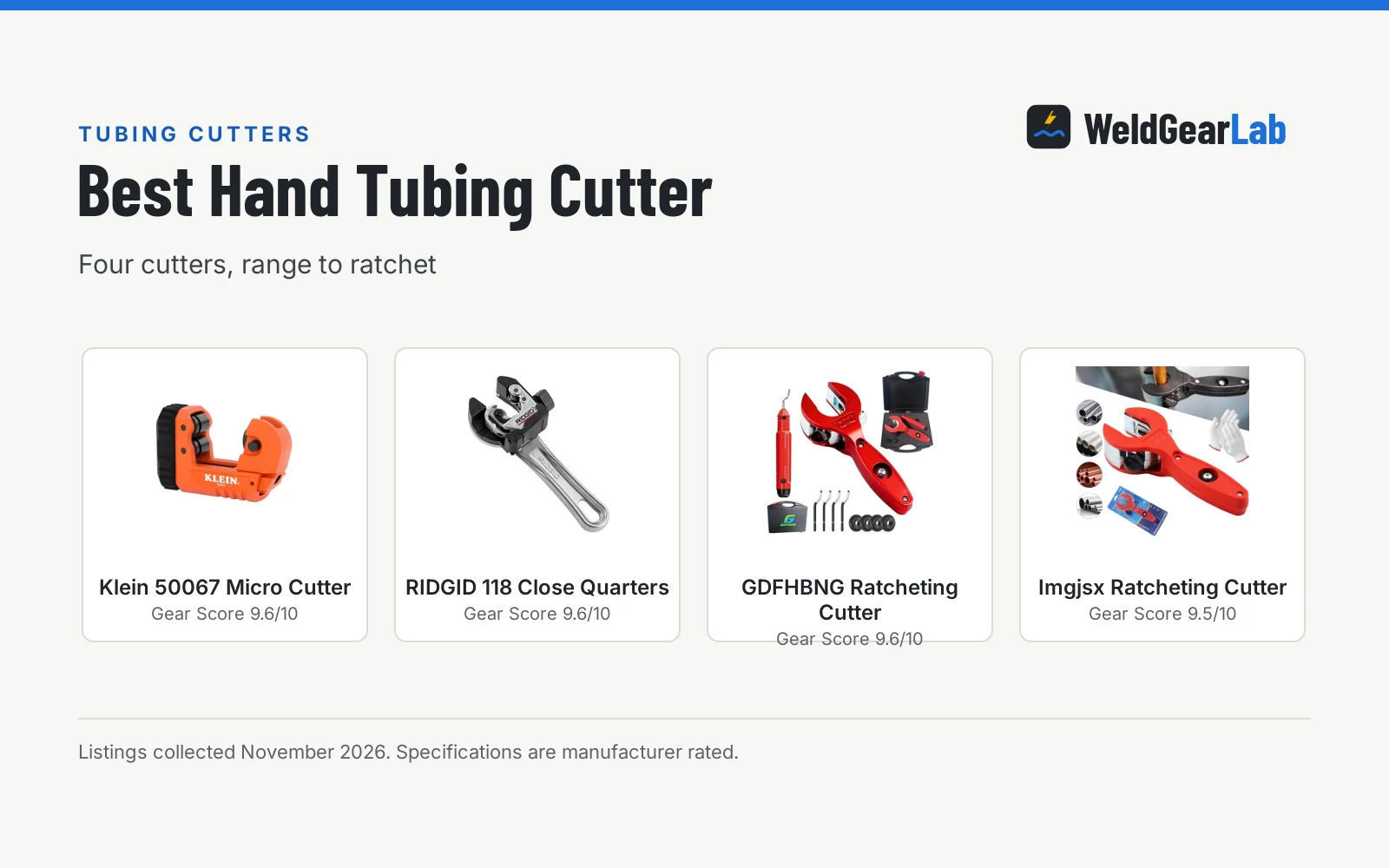
- Cutting stock to length. A cutter gives a clean square end without setting up a jig.
- Plumbing and conduit. Straight runs and fittings need length cuts, not notches.
- Prep before notching. Cut the tube to rough length with the cutter, then notch the end with the notcher.
- Thin wall tube. Cutters handle the cut with less setup than a hole saw fixture.
What the listings show about notchers
Capacity runs from 1/2 in up: the VEVOR notcher lists 1/2 to 2 in, its larger PNM1-1/2 model 1/2 to 3 in, the WONDERSUNM 3/4 to 3 in, and the KAKA PN-1/2S and Eastwood 2 in. Hole saws are sold separately on the KAKA and VEVOR listings; the Eastwood uses a standard hole saw up to 2-1/2 in diameter. Mounting differs: the KAKA PN-1/2S must be mounted to a drill press table per its manual, while the WONDERSUNM can be clamped in a vise or bolted to a workbench for use with a handheld drill. Listed weights run 6.82 lb for the Eastwood to 24 lb for the KAKA RA-9. The Baileigh TN-250 lists a 1 year manufacturer warranty, the only warranty stated among the listings.
FAQ for welders
Can a tubing cutter make a notch?
No. A cutter severs the tube across its axis; it cannot shape a saddle into the end. A notch needs a hole-saw notcher, like the ones in the reference listings, or a saddle template such as the ZhouDaShu kit to mark the cut.
Do tubing notchers come with hole saws?
Usually not. The KAKA PN-1/2S and both VEVOR listings state hole saws are sold separately. The Eastwood notcher uses a standard hole saw up to 2-1/2 in diameter. Match the hole saw diameter to the tube you are notching into, not the tube you are notching.
What sizes do tubing notchers handle?
The listings span 1/2 in to 3 in OD: VEVOR 1/2 to 2 in, VEVOR PNM1-1/2 1/2 to 3 in, WONDERSUNM 3/4 to 3 in, KAKA PN-1/2S and Eastwood 2 in, KAKA RA-9 in 1, 1-1/4 and 1-3/8 in, and the ZhouDaShu template in 1-7/8, 2-3/8 and 2-7/8 in. Check your tube OD against the listing before ordering.
What angles can a tubing notcher cut?
The KAKA PN-1/2S, Eastwood and VEVOR 1/2 to 2 in notchers adjust from 0 to 60 degrees. The VEVOR PNM1-1/2 and WONDERSUNM adjust from 0 to 50 degrees, and the ZhouDaShu template marks 22.5, 45 and 90 degrees. The KAKA RA-9 is fixed for 90 degree joints. Note the KAKA PN-1/2S listing contradicts itself: its title and bullets say 0 to 60 degrees while its spec table says 0 to 45 degrees; we trust the title and bullets.
Can I use a notcher without a drill press?
It depends on the tool. The KAKA PN-1/2S manual says it must be mounted to a drill press table. The WONDERSUNM lists vise clamping or workbench bolting so it can be used with a handheld drill. The ZhouDaShu kit is a marking template, not a cutting tool; it marks the cut line for whatever saw or grinder you use.
Related: best tubing notcher, drill press vs mill, flap disc vs grinding wheel and the metal fab tools hub.