Propane vs Charcoal Forge: Which One Should You Buy?
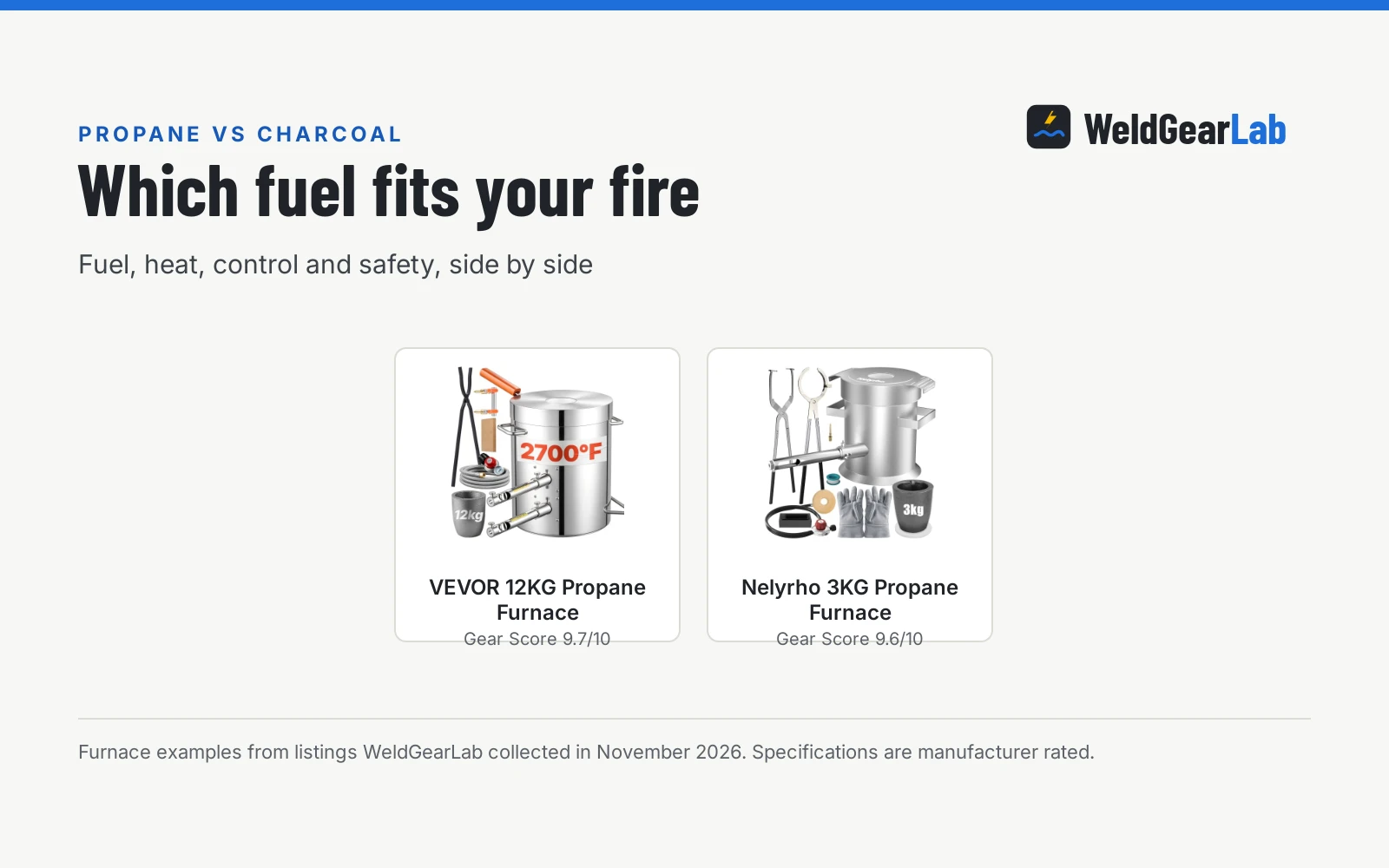
Propane lights fast and shuts off with a valve, while charcoal needs a blower, makes smoke and stays hot; here is how the two fuels compare, with two propane furnaces as examples.

On this page
Top picks at a glance
As an Amazon Associate I earn from qualifying purchases.
- 1
 VEVOR Propane Melting Furnace Kit Large Capacity9.7/10View on Amazon
- 2
 Nelyrho 3KG Propane Melting Furnace Kit9.6/10View on Amazon
Verdict. Propane lights fast, heats fast and shuts off with a valve, while charcoal needs a blower, makes smoke and ash, and stays hot long after the work ends. Pick propane if you melt or forge in short sessions and want control; pick charcoal if you want the traditional fire and can work outdoors with time to tend it.
Propane vs charcoal forge is a choice of fuel, and the fuel decides how the fire starts, how it is controlled and how it ends. Both listings here are propane melting furnaces, so they show the propane side in detail, while the charcoal side is covered from what a charcoal fire needs. This comparison sets out the fuel, the heat, the control and the safety of each side.
WeldGearLab gets a commission on purchases made through links on this page, and your price stays the same. Read our affiliate disclosure.
The two furnaces
VEVOR Propane Melting Furnace Kit Large Capacity
A 12 KG propane melting furnace with double burners, a 2700 F top temperature and a stainless steel body, for melting and forging.
Pros
- Largest capacity here, 12 KG
- 2700 F top temperature in 6.5 to 8 minutes
- Double burners with a 30 psi adjustable regulator
- Stainless steel body with 1.2 in insulation cotton
Cons
- Crucible is consumable, 2 to 3 uses per the listing
- 32.0 lb, heavy to move
- No warranty term stated
- No safety standard stated
Nelyrho 3KG Propane Melting Furnace Kit
A 3 KG propane melting furnace kit with a 135,000 BTU burner, a 2400 F top temperature and dual crucible tongs, for small melts.
Pros
- 135,000 BTU burner with a 30 PSI regulator
- 2400 F top temperature stated
- Dual tongs for lifting and pouring
- Kit includes crucible, ingot mold, fire brick and gloves
Cons
- Small 3 KG capacity
- No heat up time stated
- No warranty term stated
- No safety standard stated
Other welders and gear to compare
 Flame King FK4500CGA High Intensity Propane Torch Head forCheck price on Amazon
 Flame King FK8500CGA High Intensity Propane Torch Head forCheck price on Amazon
 Flame King High Intensity Propane Torch Head with Bendable &Check price on Amazon
 LSMIITTH Propane Forge Burner with RegulatorCheck price on Amazon
 Mr. Heater 9Check price on Amazon
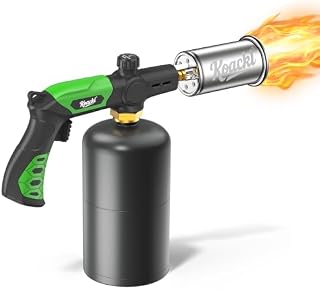 KOACKL 12.6" CSA Propane Torch 2462°F Adjustable FlameCheck price on Amazon
Side by side: propane vs charcoal forge
| VEVOR 12KG Propane Furnace | Nelyrho 3KG Propane Furnace | Notes | |
|---|---|---|---|
| Gear Score | 62 | 59 | VEVOR leads on capacity and heat |
| Fuel | Propane | Propane | Both listings are propane |
| Capacity | 12 KG | 3 KG | VEVOR holds more per melt |
| Max temperature | 2700 F | 2400 F | VEVOR states the higher figure |
| Heat up | 6.5 to 8 minutes to 2700 F | Not stated | VEVOR states a heat up time |
| Burners | Double burners | 135,000 BTU burner | VEVOR lists two burners |
| Regulator | 30 psi adjustable | 30 PSI | Both list a 30 psi regulator |
| Insulation | 1.2 in insulation cotton | Refractory insulation | VEVOR states the thickness |
| Weight | 32.0 lb | 14.0 lb | VEVOR weighs more |
| In the box | Furnace, 2 burners, 12kg crucible, tong, pipe, valves, nozzles, 1.5 fire bricks | Crucible, ingot mold, dual tongs, fire brick, gloves | Both list a full kit |
| Crucible life | 2 to 3 uses | Not stated | VEVOR states the crucible is consumable |
| Warranty | Not stated | Not stated | Neither listing states a warranty |
All specs here repeat what the maker rates and the listing prints, copied down 13 November 2026. Neither listing states a safety standard or a warranty term, and both listings are propane, so the charcoal side below is described from the fuel, not from a listing.
Fuel and fire
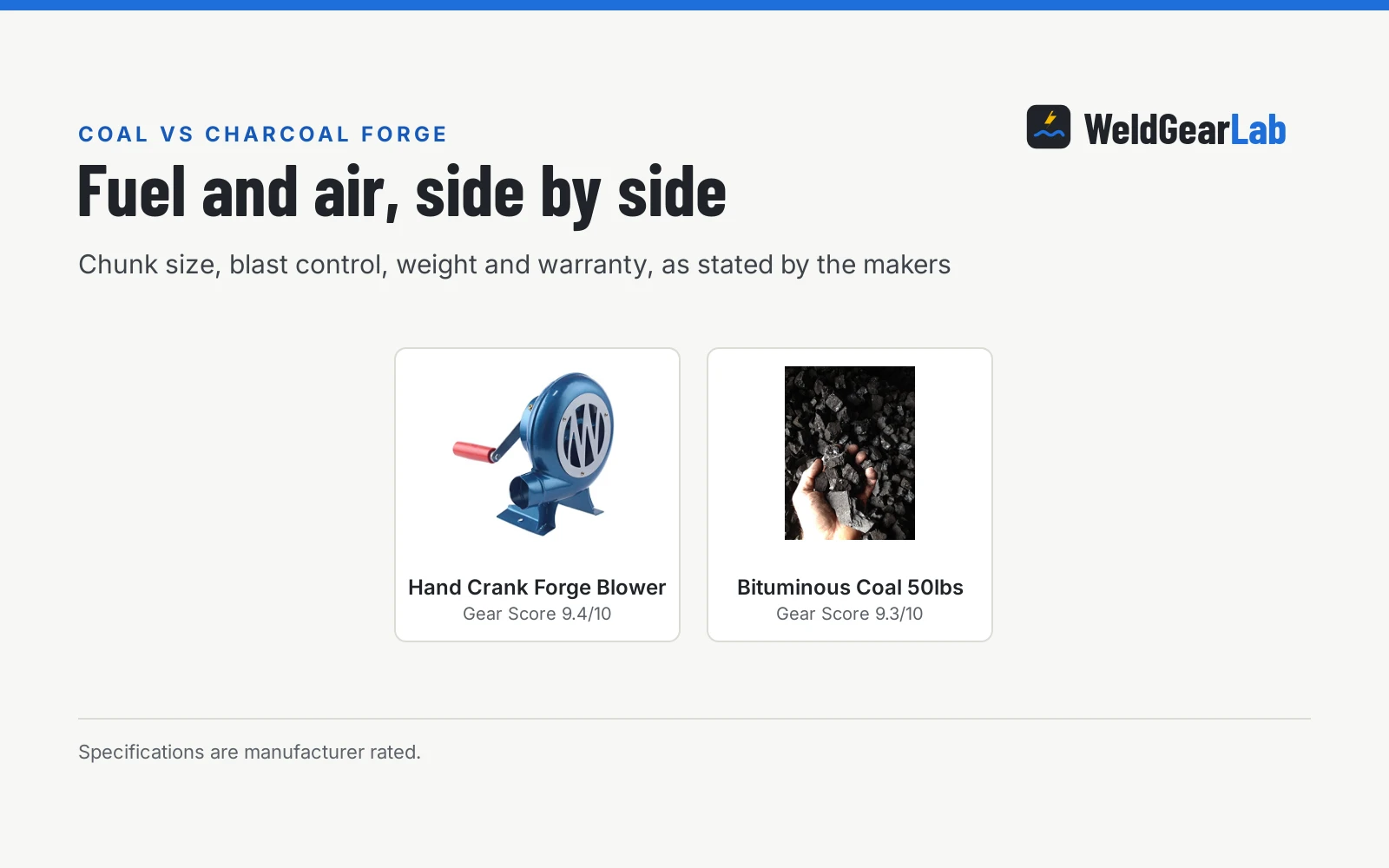
Propane comes in a tank with a regulator and a valve: open the valve, light the burner, and the fire is on; close the valve and it is off. The Nelyrho lists a 30 PSI regulator and a 135,000 BTU burner, and the VEVOR lists a 30 psi adjustable regulator with double burners, so both examples carry a 30 psi regulator. Charcoal is solid fuel: it needs a blower or bellows to reach forging heat, and it keeps burning until the fuel is spent or damped down.
That difference drives everything else. Propane gives steady heat with a turn of the valve, while charcoal heat rises and falls with the air you feed it, so the smith tends the fire between heats. A propane furnace can sit idle between melts, while a charcoal fire needs watching until it is out.
Heat and capacity
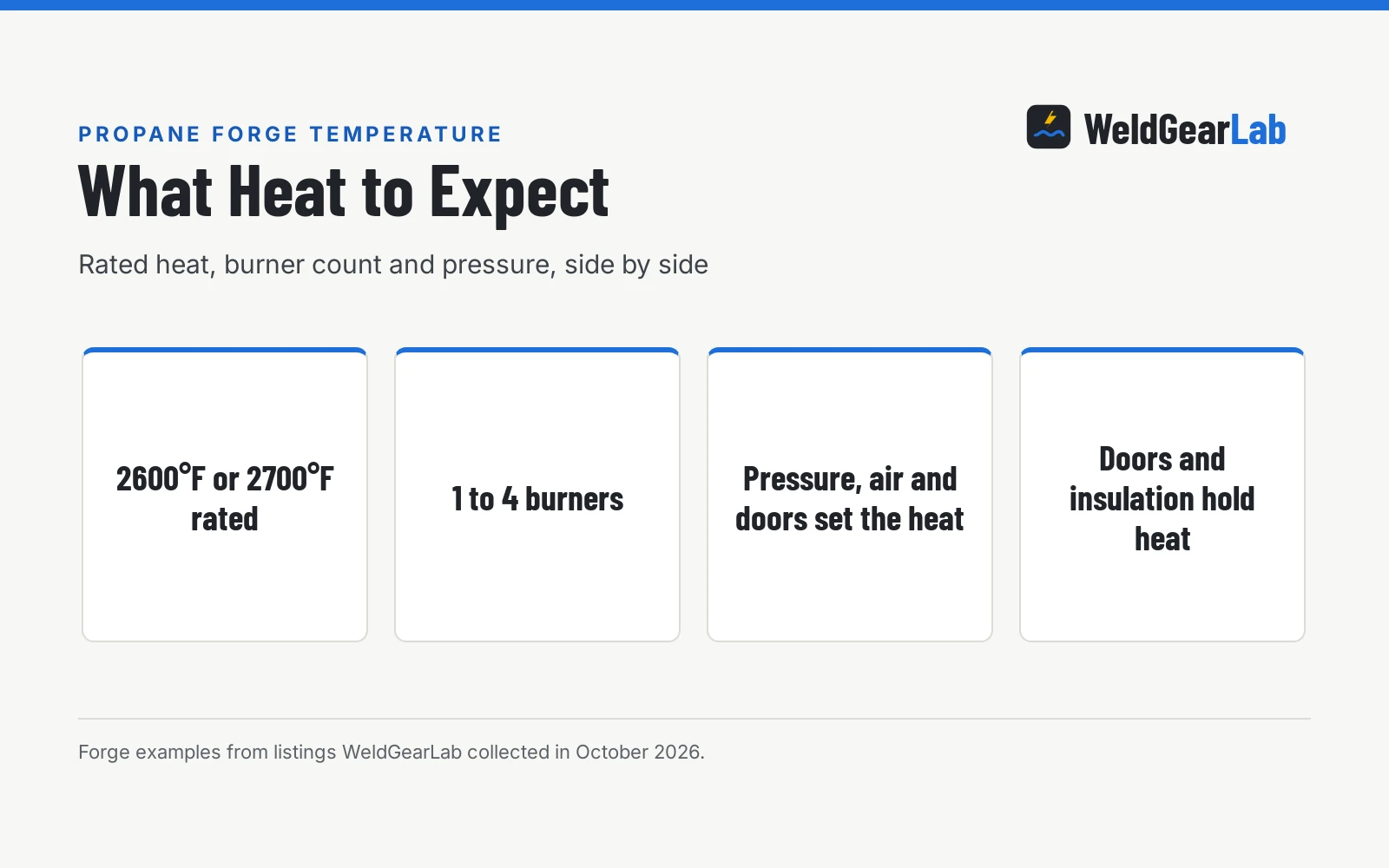
The VEVOR states the higher top temperature, 2700 F against the Nelyrho at 2400 F, and the larger crucible, 12 KG against 3 KG. The VEVOR also states a heat up time, 6.5 to 8 minutes to 2700 F, while the Nelyrho states no heat up time, so the listings leave that side unclear. Do not read a higher top temperature as a better forge: the listing does not say how long either furnace holds its heat, and capacity is about batch size, not quality.
Control and cleanup
Propane control is a valve and a regulator: both listings here carry a 30 psi regulator, and the VEVOR adds a pressure gauge on the pipe. Charcoal control is air: more air means more heat, less air means less, and the fire answers slowly. Cleanup splits the same way: propane leaves no ash from the fuel, while charcoal leaves ash and clinker to clear out.
Safety: fire, gas and smoke
Both fuels burn outdoors or with strong ventilation, and neither fire should be left lit and unwatched. Propane needs a sound tank, hose and regulator, with no leaks, and a CO alarm where the furnace runs under cover. Charcoal makes carbon monoxide and smoke, so it belongs outdoors, with a fire extinguisher close and nothing flammable near the fire. Never melt unknown or sealed scrap, and keep tools and molds dry: wet tools in molten metal can throw metal out of the crucible.
Wear a full face shield and leather PPE when you melt or pour, and use tongs that fit the crucible: the Nelyrho kit includes dual tongs, and the VEVOR includes a high strength tong. Keep a lid or cover on the furnace when it is not being charged, and let the furnace cool before you move it.
Choose propane if
- You melt or forge in short sessions and want the fire on and off with a valve.
- You work outdoors or with strong ventilation and want no ash to clear.
- You want steady heat without tending a solid fuel fire.
- You need the furnace to sit idle between melts.
Choose charcoal if
- You want the traditional fire and can work outdoors with room for fuel and ash.
- You forge long sessions where the fire stays lit and tended.
- You have a steady supply of charcoal and a place to store it dry.
- You accept smoke and cleanup as part of the work.
FAQ for welders
Is propane or charcoal better for a beginner forge?
Propane is the easier start: the fire lights with a valve, the heat holds steady, and it shuts off when you close the valve. Charcoal needs a blower, tending and cleanup, so it suits a smith who has time to learn the fire. Both need outdoor work or strong ventilation, a CO alarm and a fire extinguisher.
Can a propane furnace melt aluminum?
Yes, per both listings here. The Nelyrho lists aluminum with gold, silver, copper and brass at up to 2400 F, and the VEVOR lists aluminum with copper, gold and silver at up to 2700 F. Keep tools and molds dry, and never melt unknown or sealed scrap.
How hot does a propane forge get?
The listings here state top temperatures of 2400 F for the Nelyrho and 2700 F for the VEVOR. The VEVOR states it reaches 2700 F in 6.5 to 8 minutes. Neither listing states how long the furnace holds that heat, so treat the top figure as a peak, not a working temperature.
Does a charcoal forge need a blower?
Yes. Charcoal reaches forging heat with forced air, from a blower or bellows, and the heat follows the air you feed it. Without air, the fire smolders and never reaches working heat. The listings here are both propane, so they state no blower figure.
Is it safe to run a forge in a garage?
Only with strong ventilation, a CO alarm and a fire extinguisher, and never with the fire left lit and unwatched. Charcoal belongs outdoors because of smoke and carbon monoxide, and propane needs a sound tank and hose with no leaks. When in doubt, work outdoors.
Related: our propane forge for blacksmithing roundup, our 2 burner forge roundup, our gas forge vs coal forge guide, and the forges and anvils hub.
Scoring, line by line
Both furnaces are scored on performance, build, value, safety listing and warranty. Neither listing states a safety standard or a warranty term, so both score at the bottom on those two.
| Product | Gear Score | Perf. /35 | Build /25 | Value /25 | Safety /10 | Warranty /5 |
|---|---|---|---|---|---|---|
| VEVOR 12KG Propane Furnace | 9.7 | 32 | 22 | 21 | n/a | 0 |
| Nelyrho 3KG Propane Furnace | 9.6 | 29 | 21 | 21 | n/a | 0 |
A pick’s weighted total decides where it lands between a 9.2 floor and a 9.8 ceiling, and a bigger total never produces a smaller number. Safety is only scored for powered machines or when a listing names safety features; otherwise it drops out and the score is worked from the other 90 points.