Portable Band Saw vs Chop Saw: Which One Should You Buy?
Portable band saws and metal chop saws handle different cutting tasks in the metal shop, from mobile notch cuts to heavy batch cutoff work.

On this page
Top picks at a glance
As an Amazon Associate I earn from qualifying purchases.
- 1
 DEWALT9.5/10View on Amazon
- 2
 Evolution S15CPS 15" Heavy-Duty Metal Cutting Chop Saw9.7/10View on Amazon
- 3
 WEN Portable Band Saw for Metal9.5/10View on Amazon
- 4
 MAXXT 2-in-1 Band Saw with Table Saw BaseView on Amazon
- 5
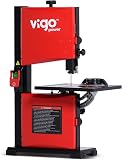 9 Inch Benchtop Band Saw for WoodworkingView on Amazon
- 6
 VEVOR Portable Band SawView on Amazon
- 7
 PowerSmart Portable Band SawView on Amazon
When you are prepping square tubing, pipe, or angle iron on the bench for a welding project, clean cut-offs make or break your fit-up. Choosing between a portable band saw vs chop saw comes down to mobility, spark hazards, and how much grinding you want to do before striking an arc. If you need clean, cool cuts on the move or want to trim installed pipe without throwing sparks across the shop, buy a portable band saw. If your work consists of repetitive straight cutoff work on structural stock at a dedicated cut station, buy a chop saw.
Other welders and gear to compare
 MAXXT 2-in-1 Band Saw with Table Saw BaseCheck price on Amazon
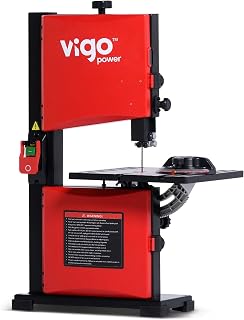 9 Inch Benchtop Band Saw for WoodworkingCheck price on Amazon
 WEN Portable Band Saw for MetalCheck price on Amazon
 VEVOR Portable Band SawCheck price on Amazon
 PowerSmart Portable Band SawCheck price on Amazon
 DEWALTCheck price on Amazon
This guide links to our product roundups, where WeldGearLab gets a commission on purchases made through links on this page, and your price stays the same. Read our affiliate disclosure.
Portable band saw vs chop saw: the difference in one paragraph
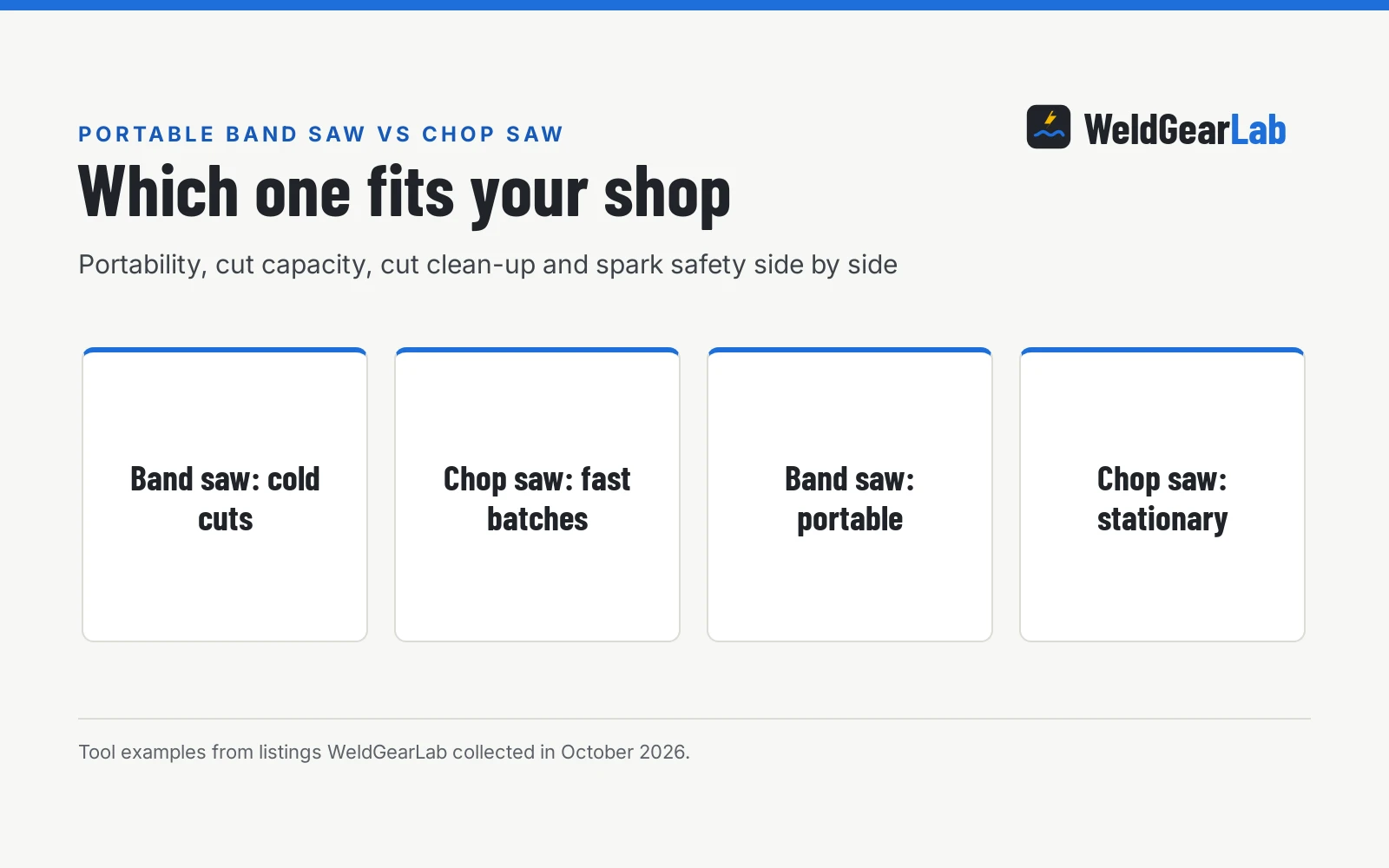
A portable band saw uses a continuous, flexible toothed steel band looping around rubber-tired drive wheels, shearing through metal with low heat and without abrasive sparks. That shearing action leaves a cold, smooth kerf ready for fit-up with minimal deburring. A stationary metal chop saw drives an abrasive cutting disc downward through metal clamped in a vise. It grinds through thick stock quickly, but throws a heavy shower of hot sparks, heats the workpiece, and leaves a raised burr that requires clean-up with a grinder.
Side by side
| Portable Band Saw | Abrasive Chop Saw | Dry Cut Metal Saw | |
|---|---|---|---|
| Primary cutting action | Continuous looped band blade shearing | High-speed abrasive wheel grinding | Toothed carbide blade downward chop |
| Cut temperature and sparks | Cold cut, virtually spark-free | Hot cut, heavy spark shower | Cool cut, minimal sparks |
| Cut edge and burr | Smooth edge, minimal deburring | Heavy burr collar, requires grinding | Clean edge, light deburring |
| Portability | Handheld mobility or table stand | Stationary benchtop tool | Stationary benchtop tool |
| Repeatable square cuts | Requires steady hands or stand | Rigid built-in clamping vise | Rigid built-in clamping vise |
| High-volume batch cuts | Slower on heavy runs | Fast, repetitive downward chops | Fastest cutting with long blade life |
| Curved and coping cuts | Capable handheld for notches and saddles | Straight cuts only | Straight cuts only |
| Installed workpiece cuts | Cuts pipe and conduit directly in place | Workpiece must come to the saw bench | Workpiece must come to the saw bench |
| Thin-wall tubing and conduit | Clean shearing without crushing | Can deform or melt thin wall edges | Clean cut if clamped securely |
Cutting capacities and drive types vary across specific tool builds. Always check the maker’s stated vise capacity, blade speed, and recommended material thickness in the manual before mounting heavy bar or structural tubing.
When a portable band saw is the better choice
- Cold cuts with minimal clean-up. The shearing blade produces narrow kerfs that remain cool to touch immediately, preventing heat-affected edges and eliminating heavy deburring before you weld.
- Spark-free cutting. Because the teeth shear metal rather than grinding through it, you can cut safely near wooden walls, wiring, dry storage, and adjacent shop equipment without throwing hot ignition sources.
- True handheld mobility. You can bring the tool directly to installed pipe, overhead conduit, trailer tongue assemblies, or structural framework instead of hauling steel to a stationary bench.
- Coping, notches, and contour cuts. Handheld control allows you to guide the blade through curved cuts, pipe saddles, and clearance notches that stationary drop-down saws cannot execute.
Our best portable band saw for metal and best cordless band saw guides cover compact and deep-cut saws for shop and field fabrication.
When a chop saw is the better choice
- High-volume batch cutting. Dropping a rigid cutting arm through bundled tubing, angle iron, or repetitive framing parts is far faster and less fatiguing than holding a bandsaw by hand.
- Solid bar stock and thick structural sections. The downward leverage and rigid clamp chew through dense cross sections that would bog down handheld blades.
- Built-in clamping vise. The integrated base vise secures long workpieces firmly, maintaining consistent square crosscuts without relying on manual steady hands.
- Dedicated shop cutoff station. Paired with roller stands or an outfeed table, a chop saw anchors a fixed cut station for processing raw mill lengths as stock enters the shop.
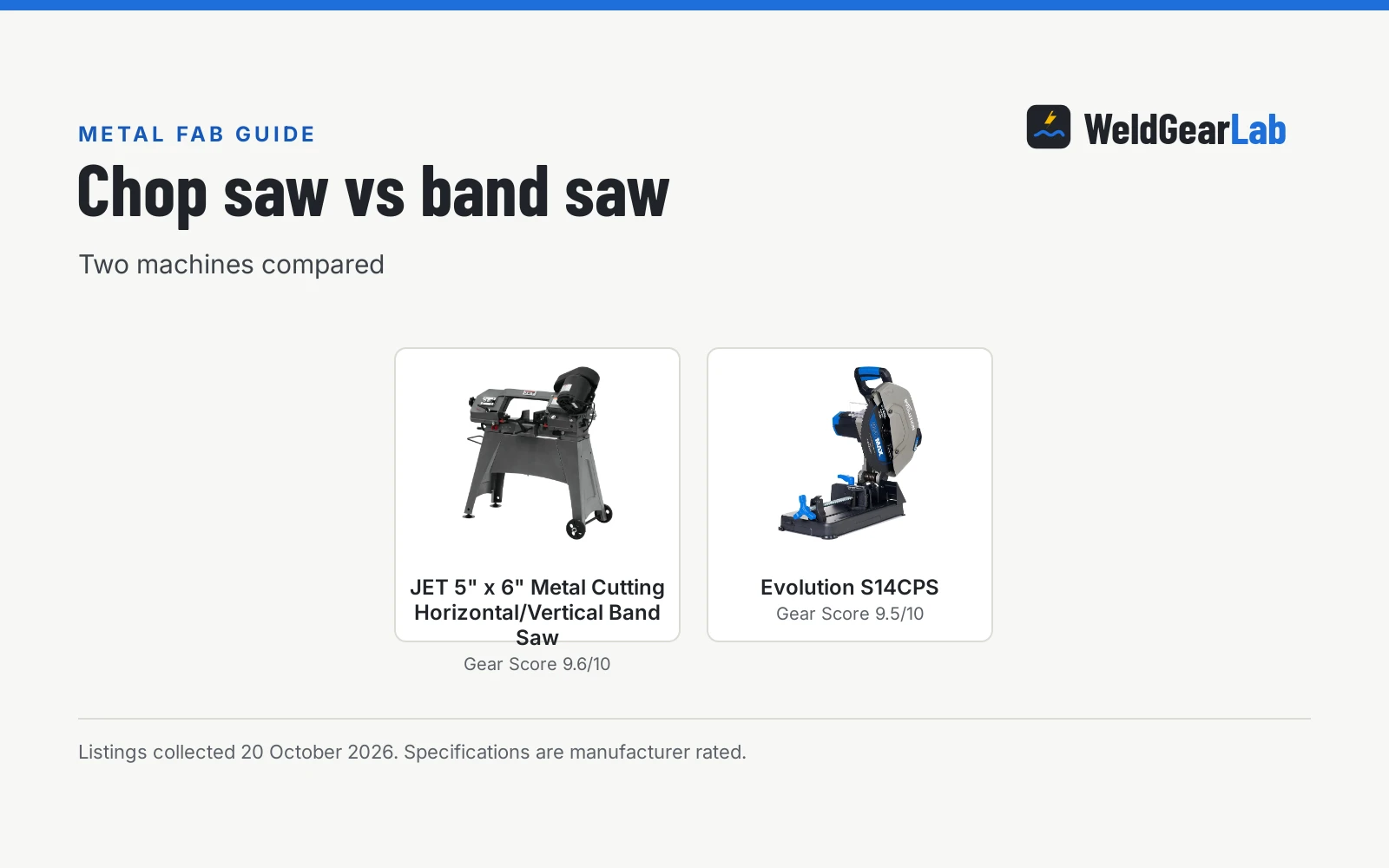
Our best chop saw for metal cutting guide details heavy-duty saws, while our dry cut saw vs abrasive chop saw breakdown explains how carbide tooth blades differ from abrasive wheels.
Cutting capacity and blade choices
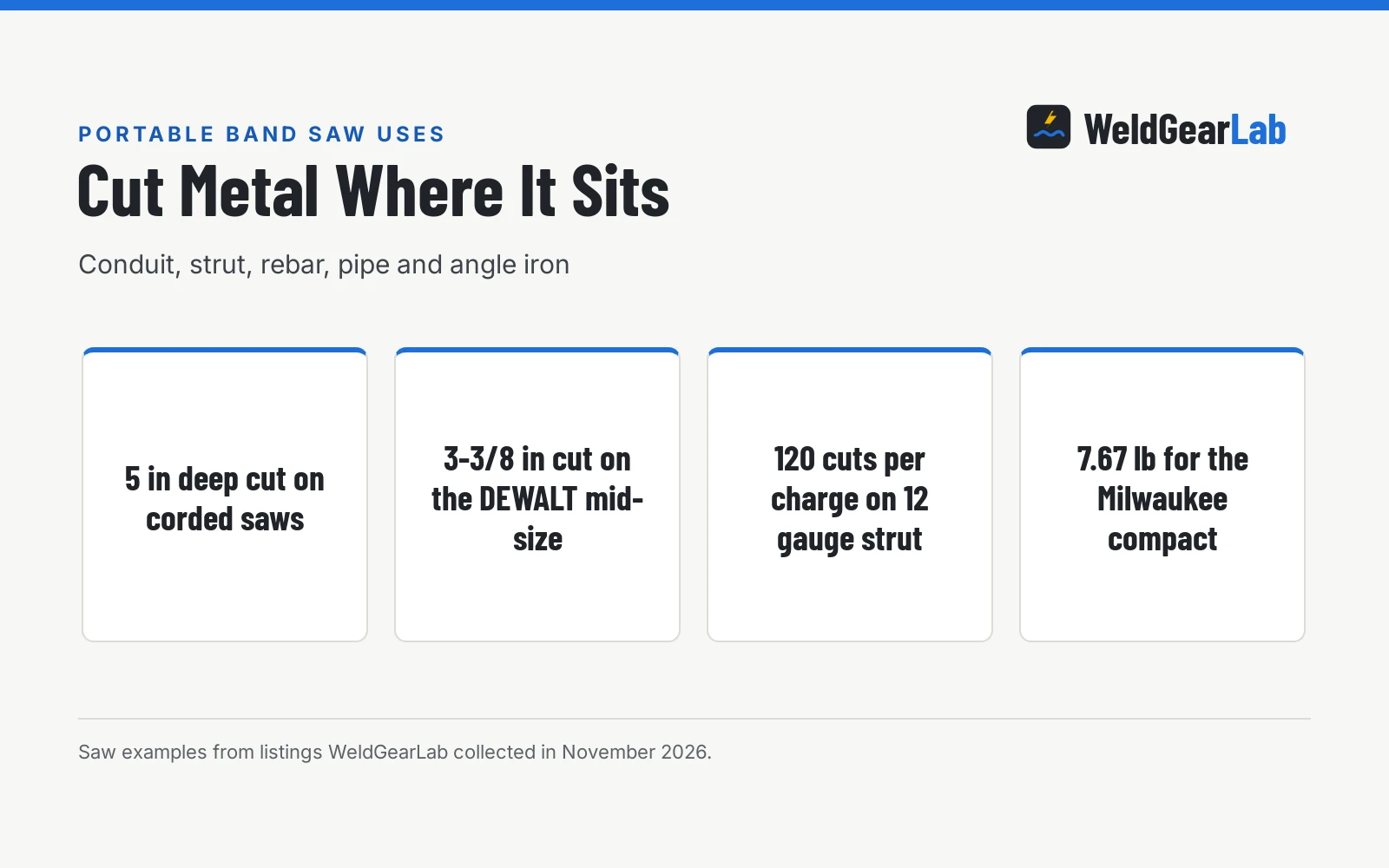
Capacity marks a clear boundary between these tool styles. Handheld band saws come in sub-compact, compact, and deep-cut frames. In data from manufacturer listings, Makita lists a sub-compact saw with a 2″ x 2″ cutting capacity and an operating weight of 7.3 pounds, while its compact saw offers a 2-5/8″ x 2-5/8″ cutting capacity. For larger fabrication work, DEWALT lists a 5 in. cutting capacity on its dual-handed band saw that cuts up to 4 in. Sch 40 pipe at a weight of 14.5 pounds. Milwaukee lists its deep-cut band saw at 13.6 pounds, built for deep-cut trade work. For multi-purpose shop use, MAXXT lists a 10 amp portable band saw with a 5-Inch deep cut opening that accommodates round tubes up to 120mm in diameter and square tubes measuring 120x120mm handheld, or round tubes up to 115mm and square tubes measuring 100x100mm when mounted in its included table base.
Blade selection on band saws dictates cut performance across different wall thicknesses. Makita listings specify 18 TPI bi-metal blades for compact cutting, while MAXXT includes blades in 10/14 TPI, 14/18 TPI, and 24 TPI for varied steel profiles. Finer teeth with higher TPI ratings prevent thin-wall tube from stripping teeth, while coarser variable-pitch teeth clear chips on solid bar. In contrast, abrasive chop saws rely on continuous friction discs that grind through heavy cross sections without teeth to strip, though carbide-tipped cutoff blades on dry-cut saws require strict attention to material thickness limits.
Cut quality, sparks, and shop safety
Fit-up quality and shop safety separate these tools drastically during fabrication. Abrasive chop saws generate extreme heat as friction grinds through metal. That friction throws a continuous rooster tail of glowing sparks that can ignite sawdust, oily shop rags, or solvent containers. The heat also blues the cut ends of carbon steel and leaves a heavy, hardened burr collar. You must spend extra time grinding and beveling the end before you can achieve sound weld fit-up.
Portable band saws run at controlled surface speeds, such as the 0-630 ft./min. variable speed listed by Makita or the 60 to 420 ft/min range listed by MAXXT. Because the teeth slice thin chips rather than grinding stock away, the heat stays in the chips rather than the workpiece. The metal comes off the saw cool enough to handle barehanded, without hot spark throw or molten splatter. When running either saw, always wear safety glasses with side shields, hearing protection, and leather work gloves. When operating a chop saw, maintain clear surroundings free of combustible materials and angle spark deflectors toward a fire-resistant wall.
Can one saw handle both shop and field jobs?
For small shops balancing budget and bench space, a deep-cut portable band saw offers the widest range of tasks. Handheld, it handles field repairs, fence installs, and awkward notch cuts. When fitted with a specialized bench stand or table base, it converts into a stationary chop station for mitering tubing and small structural shapes. For example, MAXXT lists a 2-in-1 portable band saw setup featuring a rolling table base with adjustable cutting angles from 0 to 45 degrees, allowing welders to alternate between handheld cutting and stationary miter work.
However, if your daily fabrication involves cutting heavy solid steel rounds or processing large bundles of framing stock, a portable band saw cannot match the rapid cutoff speed and brute clamping force of a dedicated metal chop saw. Many fabricators start with a portable band saw for its clean kerfs and field versatility, then add a stationary cutoff saw when production volume justifies a permanent cutting bench. For larger shop equipment comparisons, see our guide on the horizontal vs vertical metal band saw.
FAQ for welders
Can a portable band saw replace a chop saw completely?
A portable band saw can replace a chop saw for most light fabrication, tubing cuts, and jobsite repairs, especially when used with a table stand. It delivers cleaner kerfs without sparks or heavy burrs. However, for continuous batch processing of thick bar stock or structural steel, a chop saw remains faster and less fatiguing.
Why do abrasive chop saws leave heavy burrs on metal cuts?
Abrasive chop saws cut by friction grinding rather than shearing with sharp teeth. That friction creates extreme heat that melts and pushes softened metal to the outer edge of the cut, creating a raised burr collar. You must remove this slag with an angle grinder or file before fitting and welding your joint.
Can a portable band saw cut structural steel and thick solid bar?
A portable band saw can cut solid steel bar and structural tubing if the material fits within the throat clearance, such as the 5 in. cutting capacity DEWALT lists on its deep-cut saw. However, cutting dense solid bar by hand is slow and easily bogs down handheld motors compared to a rigid chop saw. For thick solid stock, you need a coarse tooth blade, light feed pressure, and patience to avoid binding or stripping teeth.
Which saw is safer for a home garage or small welding shop?
A portable band saw is generally much safer in home garages and small shops because it cuts without throwing hot spark showers. Abrasive chop saws send sparks flying across the workspace, creating severe fire hazards near woodworking benches, solvents, or cardboard boxes. Band saws also produce significantly less noise and airborne grinding grit during operation.
How do you get square cuts with a handheld band saw?
Getting square crosscuts by hand requires letting the weight of the saw feed the blade rather than forcing downward pressure. Scribe your cut line completely around the tubing, align the blade against the line before squeezing the trigger, and keep your body aligned with the cut plane. For repeatable square cuts, mounting the saw to a dedicated benchtop stand or table base provides rigid guidance.
Related: best portable band saw for metal, best chop saw for metal cutting, best cordless band saw, and the metal fab tools hub. Also see our comparison on dry cut saw vs abrasive chop saw.