Dry Cut Saw vs Abrasive Chop Saw: Which One Should You Buy?
Dry cut saws use toothed carbide blades to deliver clean, cold cuts with minimal sparks and burrs, while abrasive chop saws rely on friction discs for rough cutoff work.

On this page
Top picks at a glance
As an Amazon Associate I earn from qualifying purchases.
- 1
 Evolution S6CCS-Li Loaded Kit9.6/10View on Amazon
- 2
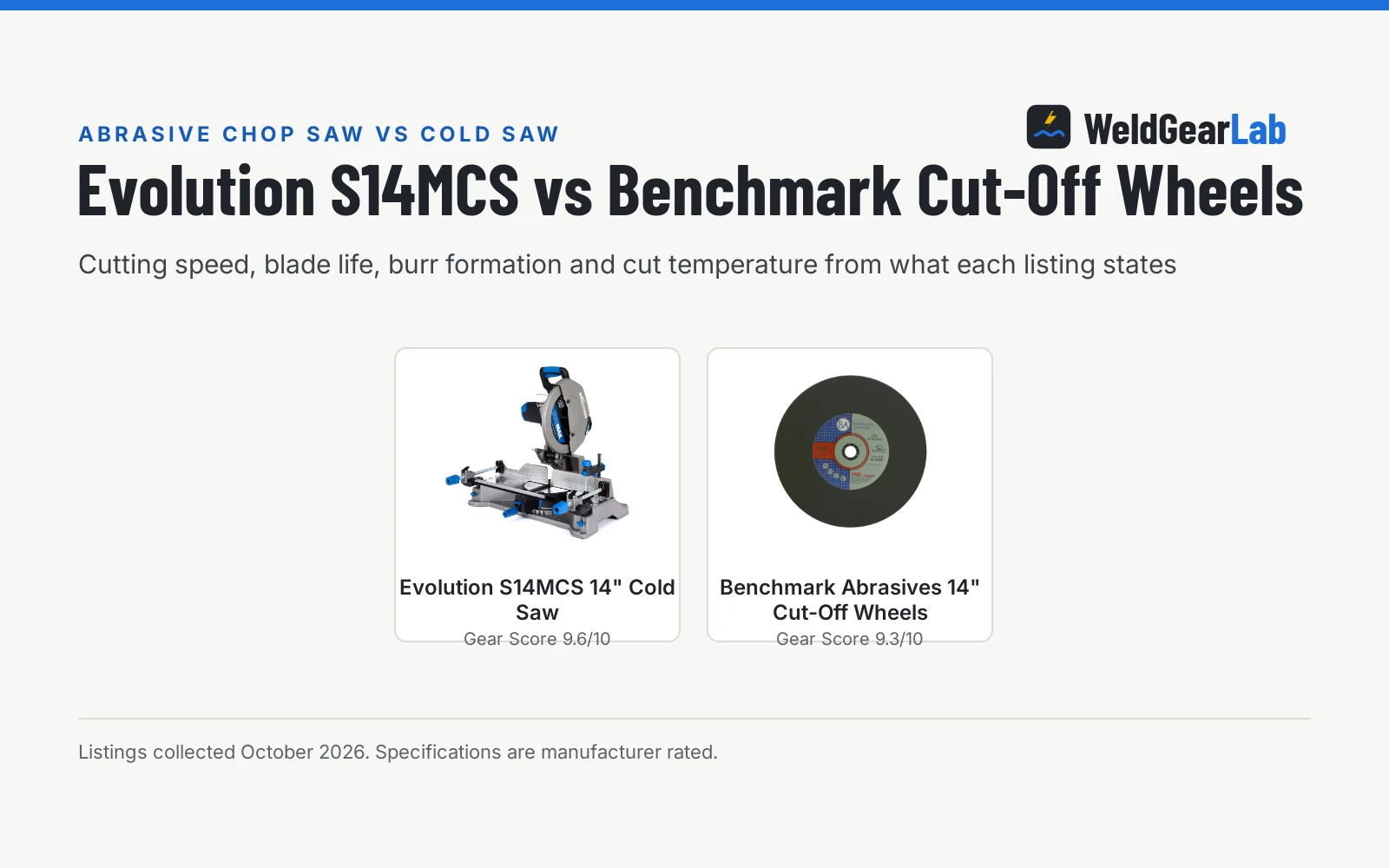
 Evolution S14MCS 14" Mitering Chop Saw9.6/10View on Amazon
- 3
 Benchmark Abrasives Aluminum Oxide Type 19.3/10View on Amazon
- 4
 APLMAN 6 Inch Cut off Saw Metal Cutting Chop Saw Miter SawView on Amazon
- 5
 DEWALT Portable Band SawView on Amazon
- 6
 VEVOR Portable Band SawView on Amazon
- 7
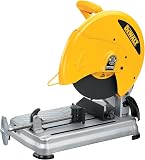 DEWALT Chop SawView on Amazon
- 8
 Makita LW1401 Cut-Off SawView on Amazon
- 9
 Makita 2414NB 14" Cut-Off SawView on Amazon
When comparing a dry cut saw vs abrasive chop saw, choose a dry cut saw if you need clean, accurate cuts with minimal burrs that stay cool to the touch. Pick an abrasive chop saw if you need a lower upfront tool cost for rough cutoff work and do not mind heavy sparks, hot edges and grinding away thick burrs. For tubing frames and joint fit-up in a welding shop, a dry cut saw saves labor and delivers cleaner cuts on structural metal.
Other welders and gear to compare
 APLMAN 6 Inch Cut off Saw Metal Cutting Chop Saw Miter SawCheck price on Amazon
 DEWALT Portable Band SawCheck price on Amazon
 VEVOR Portable Band SawCheck price on Amazon
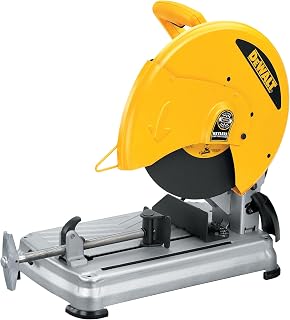 DEWALT Chop SawCheck price on Amazon
 Makita LW1401 Cut-Off SawCheck price on Amazon
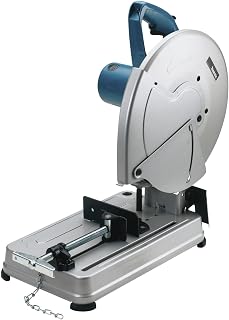 Makita 2414NB 14" Cut-Off SawCheck price on Amazon
This guide links to our product roundups, where WeldGearLab gets a commission on purchases made through links on this page, and your price stays the same. Read our affiliate disclosure.
Dry cut saw vs abrasive chop saw: The core difference
The core difference between a dry cut saw and an abrasive chop saw comes down to how the blade removes material. A dry cut saw uses a toothed carbide blade turning at low rotational speed to shear away distinct metal chips. Because the teeth slice cleanly through steel, heat transfers primarily into the discarded chips, leaving the workpiece cool to the touch.
An abrasive chop saw uses a thin composite disc made from bonded abrasive grain that spins at high rotational speed. It relies on friction and abrasion to grind steel away. That friction generates a shower of sparks, abrasive dust and localized heat that transfers directly into the workpiece, leaving a heavily burred edge with heat discoloration.
Dry cut saw vs abrasive chop saw side by side
| Dry cut saw (carbide blade) | Abrasive chop saw (cutoff disc) | Shop takeaway | |
|---|---|---|---|
| Cutting action | Toothed carbide blade shearing metal | Friction grinding with abrasive disc | Dry cut saw shears cleanly |
| Heat in workpiece | Stays cool, heat transfers into chips | Heats up significantly with heat-affected zone | Dry cut saw prevents heat warp |
| Sparks and dust | Minimal sparks, heavy metal chips | Heavy spark stream and abrasive dust | Dry cut saw keeps shop air cleaner |
| Cut edge finish | Clean, square edge with minimal burr | Rough, discolored edge with heavy burr | Dry cut saw saves grinding labor |
| Weld prep needed | Minimal deburring, ready for fit-up | Requires heavy grinding and deburring | Dry cut saw speeds up fit-up |
| Blade diameter | Constant diameter across entire blade life | Shrinks as disc wears down | Dry cut saw maintains cut depth |
| Cut speed | Fast cut through profiles and tube | Slower cut, bogs under pressure | Dry cut saw cuts faster |
| Initial tool cost | Higher machine cost | Lower machine cost | Abrasive saw saves upfront cost |
| Consumable cost | Higher per blade, economical per cut | Low per disc, wears out rapidly | Dry cut saw lowers cost per cut |
Both tools share a benchtop footprint, a downward pivot arm and a material vise, but the cutting action and edge quality differ completely. Understanding where each excels helps you pick the right machine for your shop.
When a dry cut saw is the better choice
For metal fabrication, structural frames and welding projects, a dry cut saw provides clear operational advantages:
- Clean joint fit-up for welding. The carbide blade produces a square, clean edge with minimal burrs. You can clamp cut tubing straight to the welding table and strike an arc without spending shop time grinding edges.
- Cool metal ready to handle. Because cutting heat transfers into the ejected chips, the cut steel stays cool to the touch. You can handle parts immediately without waiting for joints to cool down.
- Accurate miter angles and square cuts. The rigid steel body of a carbide blade resists flexing under cutting pressure. It tracks straight through tube walls, preventing the blade deflection that spoils miter joints on abrasive saws.
- Cleaner shop atmosphere. Dry cut saws do not produce clouds of abrasive dust or spark streams. Heavy chips drop downward near the deflector guard, keeping shop air cleaner and reducing fire hazards.
- Constant cutting capacity. Unlike an abrasive disc that shrinks as it wears down, a carbide blade maintains its full diameter throughout its working life, preserving throat clearance.
For dedicated carbide cutting machines, check our cold cut saw guide to see how shop models compare.
When an abrasive chop saw is the better choice
While abrasive chop saws produce rougher cuts, they remain practical for several shop tasks:
- Lower initial machine expense. An abrasive chop saw costs significantly less to buy than a geared carbide saw, making it an economical cutoff choice for occasional shop work.
- Low-cost replacement discs. Abrasive wheels are inexpensive and readily available at farm supply stores and hardware outlets whenever you need consumables.
- Cutting hardened or contaminated stock. Abrasive discs grind easily through hardened steel, leaf springs, rebar, rusty iron and painted scrap. Hitting hardened foreign material with an expensive carbide blade can chip teeth.
- Rough demolition and breakdown work. When cutting scrap metal or roughing out fence posts where joint tolerances do not matter, an abrasive saw handles the job without risking a premium blade.
If you need an economical cutoff tool for rough stock, read our detailed chop saw guide for dependable options.
Blade technology and cutting mechanics
A dry cut saw relies on specialized carbide-tipped teeth brazed onto a tensioned steel plate. Each tooth features specific rake and clearance angles designed to carve away metal chips without coolant. Because carbide edges degrade under excessive surface speed, dry cut saws use gear reduction to lower rotational speed. This controlled speed maintains proper surface velocity, allowing teeth to shear clean chips without thermal damage. The operator applies steady downward pressure, allowing each tooth to cut rather than rub.
An abrasive chop saw uses a disc formed from abrasive grain held by a resin bond and reinforced with fiberglass mesh. The motor drives the arbor at high speed without heavy reduction gearing. As the wheel presses into metal, abrasive grains gouge the surface, fracture and release to expose fresh grit. This abrasive action relies on high surface velocity to abrade steel, causing a continuous shower of sparks and disc wear.
Shop safety, sparks and air quality
Fire prevention is a primary concern with an abrasive chop saw. The grinding action throws a continuous spray of hot sparks across the floor, which can ignite sawdust, cardboard or solvent rags. Operating an abrasive saw safely requires clearing combustibles from the surrounding area and maintaining a vigilant fire watch.
A dry cut saw produces minimal sparks, reducing fire hazards in compact garages. The cutting action directs sharp metal chips against the rear deflector guard. While these chips are warm when ejected, they fall quickly to the floor rather than floating across the shop as burning embers.
Respiratory safety also favors dry cutting. Abrasive chop saws generate clouds of fine dust composed of pulverized steel and resin fumes that irritate lungs and coat equipment. Running an abrasive saw requires good ventilation and a particulate respirator. Dry cut saws produce coarse chips that settle quickly instead of floating in your breathing zone.
Eye and face protection remains essential on both machines. Flying dry cut chips are sharp, while abrasive wheels risk wheel breakage if pinched. Always wear safety glasses with side shields under a full face shield, hearing protection and leather work boots when cutting metal.
Can you put a dry cut blade on an abrasive chop saw?
A common question is whether you can mount a carbide metal cutting blade onto an abrasive chop saw. The answer is no, as doing so creates severe equipment damage and serious safety risks.
The critical barrier is rotational speed. An abrasive chop saw spins far too fast for a carbide blade. Exposing carbide teeth to excessive velocity causes immediate thermal shock, dulling and tooth detachment. Detached carbide fragments thrown at high speeds present an extreme safety hazard.
Furthermore, abrasive saws lack the gear reduction needed to deliver low-speed torque, and their clamping mechanisms allow flex under load. Workpiece vibration or chatter will fracture brittle carbide teeth. To use a carbide blade safely, you need a purpose-built dry cut saw engineered with low rotational speed and rigid clamping.
To understand how toothed cutting compares to other shop methods, explore our breakdown of abrasive chop saw vs cold saw and our guide comparing a cold saw vs band saw.
FAQ for welders
Does a dry cut saw leave a heavy burr?
A dry cut saw leaves a minimal burr when cutting structural shapes and tubing. The shearing action slices metal cleanly, producing a smooth edge that requires little to no deburring before fit-up. In contrast, an abrasive wheel leaves a rough burr that requires grinding before you can weld.
Why are carbide dry cut blades more expensive than abrasive wheels?
Carbide dry cut blades require a tensioned steel core with individually brazed, precision-ground teeth. The manufacturing costs are higher than pressing abrasive grit into a disc. However, a single carbide blade delivers clean cuts across its working life, making the cost per cut competitive with replacing worn abrasive wheels.
Can an abrasive chop saw cut aluminum safely?
Cutting aluminum with an abrasive chop saw disc is unsafe. Soft aluminum melts under friction and clogs the pores of the abrasive wheel, leading to rapid overheating and potential wheel failure. Dry cut saws cut aluminum cleanly and safely when equipped with an appropriate non-ferrous carbide blade.
How long does an abrasive chop saw disc last?
Abrasive disc lifespan depends on material thickness and hardness. Cutting solid bar or heavy structural tubing wears discs rapidly. As the wheel shrinks, you lose cutting depth and must replace the disc to maintain capacity through larger stock.
Which saw makes more accurate miter cuts for tubing?
A dry cut saw makes far more accurate miter cuts than an abrasive chop saw. The rigid steel plate of a carbide blade resists deflection, holding a true angle across the cut. Abrasive discs are flexible and wander when contacting angled tube walls, leaving uneven gaps during fit-up.
Related: best cold cut saw, best chop saw for metal cutting, abrasive chop saw vs cold saw, cold saw vs band saw, and our metal fab tools hub.