How Hot Does a Powder Coating Oven Need to Be: Bake Settings Explained
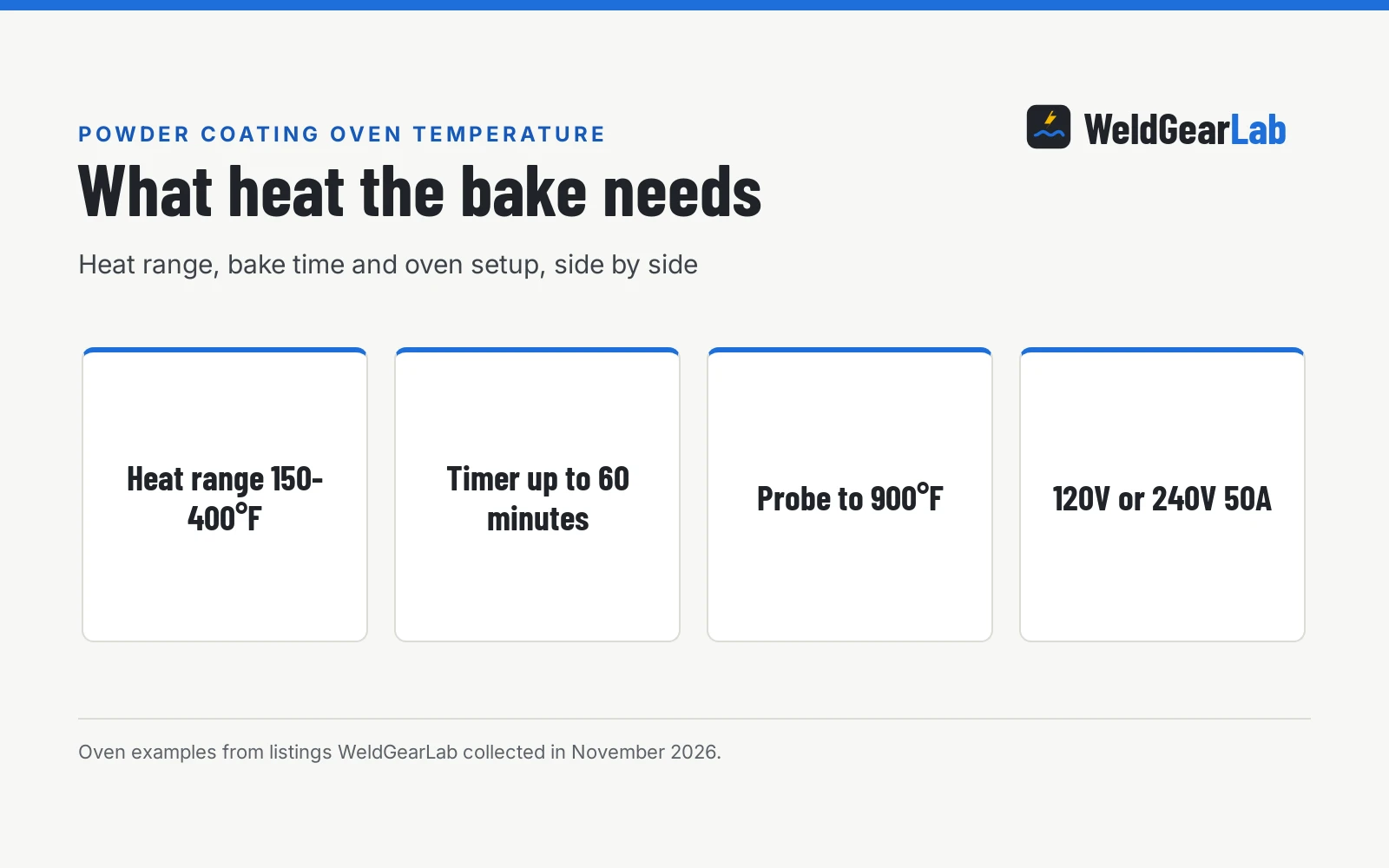
A powder coating oven has to bring the coated part to the bake heat the powder maker lists and hold it there; a bench-top oven that lists 150-400°F is built for small to mid-size coating projects.

On this page
Top picks at a glance
As an Amazon Associate I earn from qualifying purchases.
- 1
 2 PackView on Amazon
- 2
 Eastwood Hotcoat Bench Top Powder Coating OvenView on Amazon
- 3
 Control Panel for Powder Coating OvenView on Amazon
- 4
 Bench Top Powder Coating OvenView on Amazon
A fresh coat of powder hangs on the part, soft and dusty to the touch, and the only thing between it and a hard finish is heat held steady long enough to do the job. A powder coating oven needs to be hot enough to bring the coated part itself to the bake heat the powder maker lists, and to hold it there until the bake is done. That is the whole answer to how hot does a powder coating oven need to be: part heat, not air heat, and time at that heat, not a quick blast through the door.
Other welders and gear to compare
 2 PackCheck price on Amazon
 Eastwood Hotcoat Bench Top Powder Coating OvenCheck price on Amazon
 Control Panel for Powder Coating OvenCheck price on Amazon
 Bench Top Powder Coating OvenCheck price on Amazon
This guide links to our product roundups, where WeldGearLab gets a commission on purchases made through links on this page, and your price stays the same. Read our affiliate disclosure.
How hot does a powder coating oven need to be?
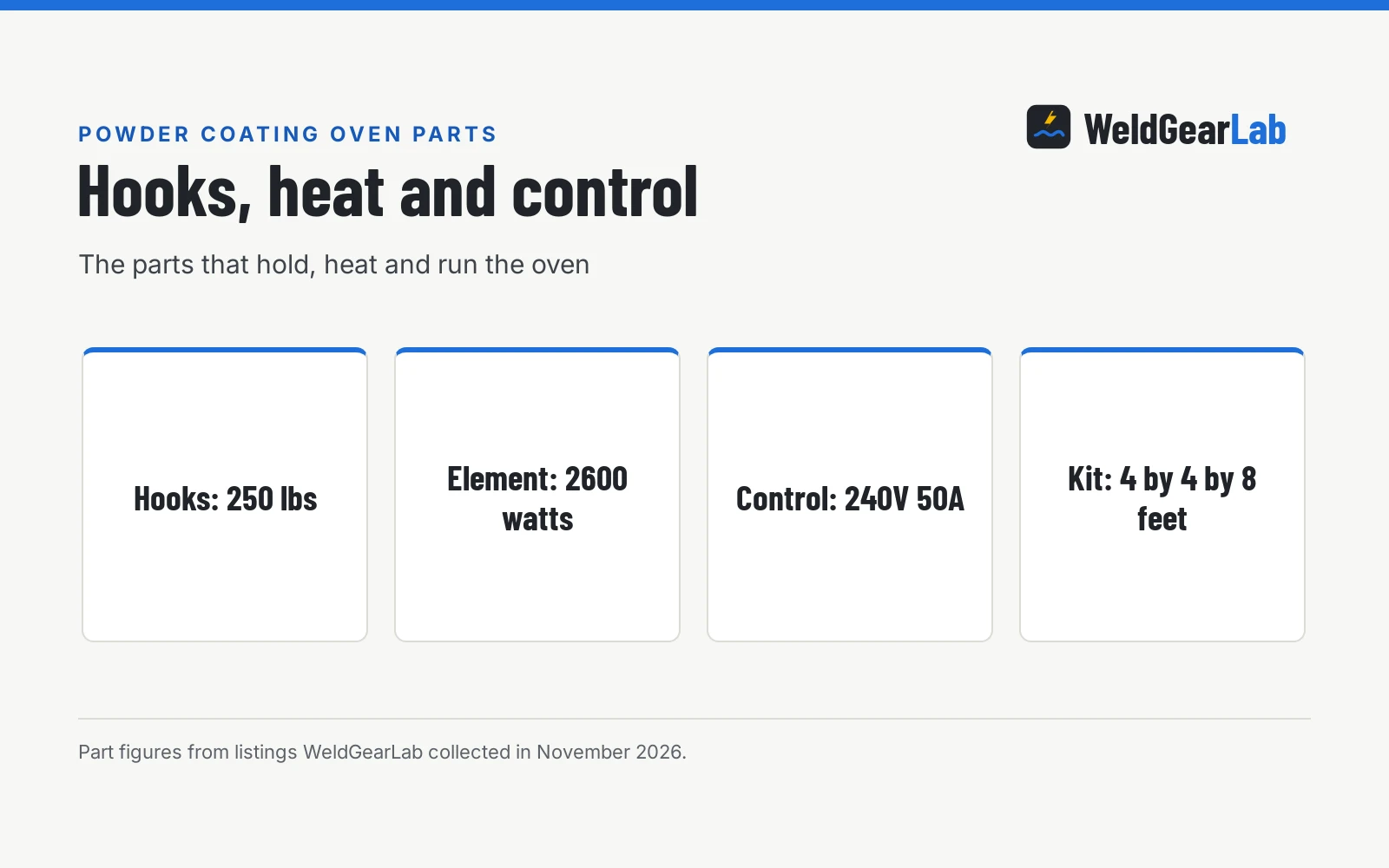
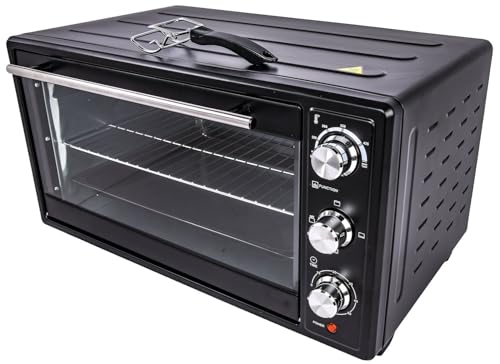
The powder maker’s sheet names the bake heat and the bake time for the powder on the part. The oven has to reach that heat across the whole part and hold it steady while the powder flows out and sets into a hard coat. A bench-top oven like the Eastwood HotCoat (on Amazon) lists a heat range of 150-400°F and runs on 120V, with a built-in timer that runs up to 60 minutes. Match that range against the bake heat on the powder maker’s sheet before buying.
The part lags behind the air. The dial shows air heat, and the metal takes longer to reach the set heat, so the bake time starts when the part reaches the set heat, not when the door closes. That lag is why a powder coating oven needs even heat across the chamber, not a hot spot near the element. The Eastwood bench-top oven lists an air circulation fan that spreads heat across the chamber for an even bake, plus upper and lower heating elements. Hang the part so air moves around it and keep it clear of the elements.
Bench-top oven or panel build, side by side
A bench-top oven arrives ready to plug in and run, while a panel build lets a shop wire its own chamber and elements to a PID controller. The table below puts the two side by side on the figures the listings state.
| Eastwood HotCoat bench-top oven | briidea control panel build | Notes | |
|---|---|---|---|
| Heat range | 150-400°F | Not stated | Match the range to the powder maker’s sheet |
| Power supply | 120V | 240V 50A | Check the supply against the shop circuit |
| Timer | Built-in timer up to 60 minutes | Dual-line universal timer | Time the bake from part heat, not door time |
| Heating elements | Upper and lower elements | Powers elements up to 12,000 watts | Even heat across the chamber matters |
| Air movement | Air circulation fan | Not stated | A fan evens heat across the chamber |
| Control | Built-in timer | Dual-line PID controller | A PID controller holds the set heat |
| Probe limit | Not stated | Probe withstands up to 900°F | A probe reads heat at the part |
| Warranty | 1-year limited warranty | Not stated | Check the warranty before buying |
The bench-top oven suits small to mid-size parts that fit its chamber. The panel build suits a shop that already has a chamber and wants PID control over its own elements. Either way, the powder maker’s sheet sets the heat and the time, and the oven has to hold both steady. Pair the oven with a gun from the best powder coating gun for home use roundup, and read the how to powder coat at home guide for the full process from prep to bake.
What sets the heat
The powder maker’s sheet sets the heat. It also sets the bake time, and the two go together: a lower heat with a longer bake is not the same bake as the sheet calls for. Read the sheet for the powder on the part and set the oven to that heat. If the sheet is lost, get a fresh sheet from the powder maker before baking the part.
- The powder. Each powder has its own bake heat and bake time on its sheet, so check the sheet each time the powder changes.
- The part. Thick metal takes longer to reach the set heat than thin sheet, so the bake time starts at the part, not at the door.
- The oven. A fan evens the heat across the chamber, and a PID controller holds the set heat steady.
- The probe. The briidea control panel (on Amazon) lists a temperature probe that withstands up to 900°F, so it holds up through the bake without damage.
How to run a bake
Heat the oven to the set heat before the part goes in, so the chamber is steady when the door opens. Hang the part, close the door, and set the timer once the part reaches the set heat. The Eastwood bench-top oven lists a built-in timer that runs up to 60 minutes, and the briidea panel lists a dual-line universal timer. When the timer ends, let the part cool in still air before handling it.
What can go wrong when the heat is off
Too little heat leaves the powder soft and chalky, with a coat that never flows out into a smooth skin. Too much heat can scorch the coat and dull the color. A part that goes in cold and comes out early looks done on the outside while the metal inside never reached the set heat. When a bake looks wrong, check the heat at the part and the sheet for the powder on the part before changing anything.
Hot surfaces and fumes. A powder coating oven runs hot enough to burn skin on contact, and the bake gives off fumes, so run it with strong ventilation or outdoors with your head out of the plume, wear leather gloves and a full face shield when opening the door, and keep flammable material clear of the oven. Let the oven cool before moving it, and follow the manual. See the OSHA welding overview and our Safety Disclaimer.
FAQ for welders
How hot does a powder coating oven get?
A bench-top oven like the Eastwood HotCoat lists a heat range of 150-400°F. The briidea control panel lists a temperature probe that withstands up to 900°F, but that is the probe’s limit, not the oven’s bake heat. The bake heat itself comes from the powder maker’s sheet, and the oven has to reach that heat and hold it.
How long does a powder coat bake take?
The powder maker’s sheet sets the bake time for the powder on the part, and the bake time starts when the part reaches the set heat. The Eastwood bench-top oven lists a built-in timer that runs up to 60 minutes, and the briidea panel lists a dual-line universal timer. Set the timer from the sheet, not from a guess, and let the part cool before handling it.
What power supply does a powder coating oven need?
The Eastwood bench-top oven runs on 120V, so it plugs into a standard shop outlet. The briidea control panel runs on 240V 50A and powers heating elements up to 12,000 watts, which calls for a wired shop circuit. Check the supply the oven lists against the circuit on the wall before buying.
Do I need a fan in a powder coating oven?
A fan is not required to make heat, but it evens the heat across the chamber so the part bakes the same on all sides. The Eastwood bench-top oven lists an air circulation fan that spreads heat across the chamber for an even bake. Without a fan, check the heat at the part during the bake.
Related: HVLP vs powder coating gun, welding rod oven temperature chart, and the metal fab tools hub. Also see our coating and polishing hub.