Fiber Disc vs Flap Disc: Which One Should You Buy?
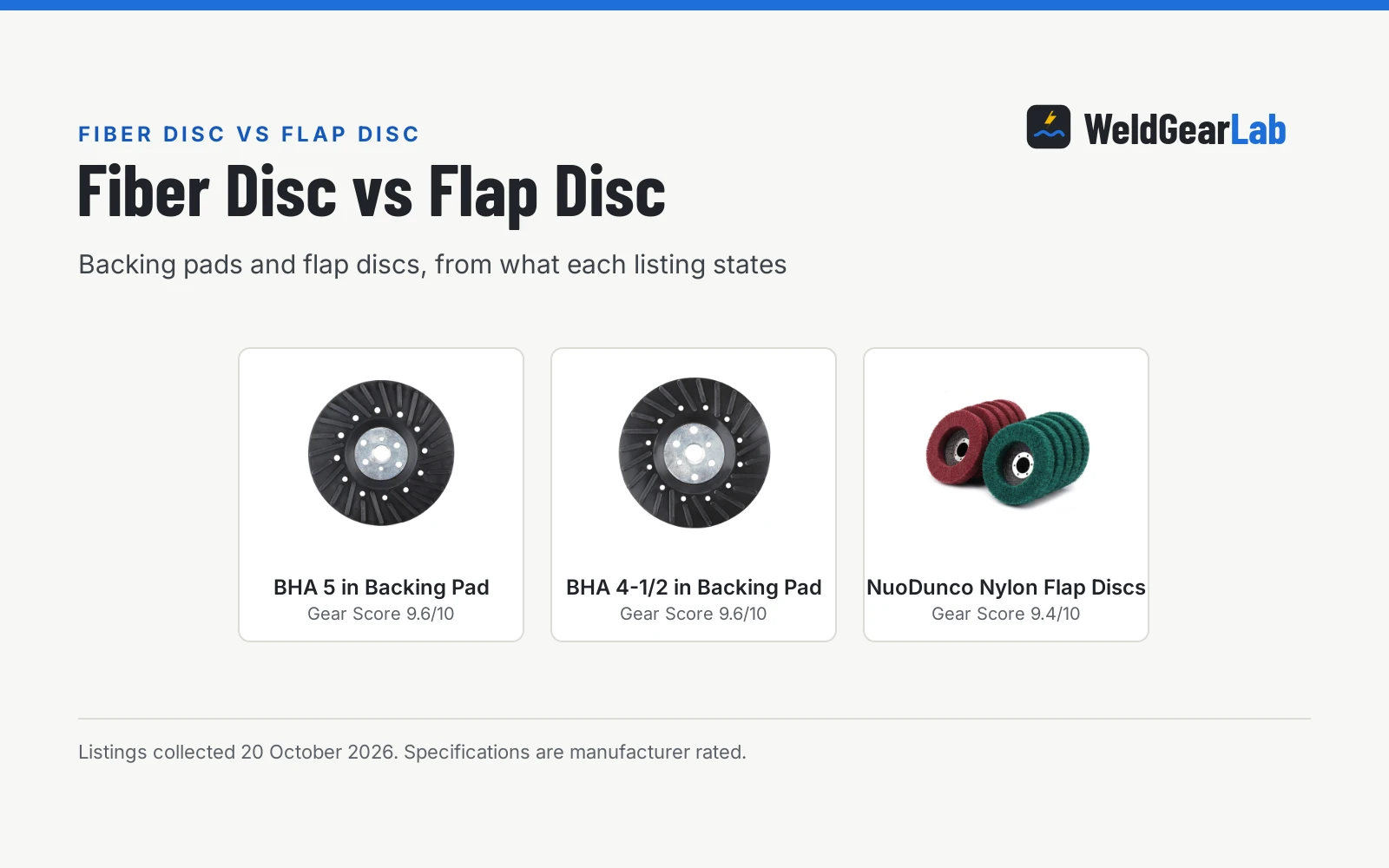
Fiber discs need a backing pad; flap discs mount directly. Compare two BHA backing pads against a 10-pack of nylon flap discs on speed, grit, cooling and what ships.

On this page
Top picks at a glance
As an Amazon Associate I earn from qualifying purchases.
- 1
 BHA 5 Inch Backing Pad for Fiber Discs9.6/10View on Amazon
- 2
 BHA 4-1/2 Backing Pad for Fiber Discs9.6/10View on Amazon
- 3
 10Pcs 4"Nylon Flap Disc 180/320 Grit Angle Grinder9.4/10View on Amazon
Verdict. If you want aggressive stock removal on a grinder you already own, the fiber disc setup wins, but remember it is a two-part system: the BHA backing pads here are what you mount, and the fiber discs themselves are a separate purchase. If you want one-step finishing, polishing and rust removal with no extra hardware, the NuoDunco nylon flap discs are the pick.
This fiber disc vs flap disc comparison starts with the tools: both go on an angle grinder, but they work differently. A fiber disc is a flat abrasive disc that the BHA listings say needs a backing pad behind it; a flap disc has overlapping abrasive flaps, and the NuoDunco listing gives its discs a 5/8-inch arbor for a 4-inch angle grinder. This fiber disc vs flap disc comparison puts the two sides against one another using three listings: two BHA backing pads on the fiber side and a 10-pack of nylon flap discs on the flap side.
WeldGearLab gets a commission on purchases made through links on this page, and your price stays the same. Read our affiliate disclosure.
The three products
| # | Product | Gear Score | Buy |
|---|---|---|---|
| 1 | BHA 5 Inch Backing Pad for Fiber Discs | 9.6/10 | Buy on Amazon |
| 2 | BHA 4-1/2 Backing Pad for Fiber Discs | 9.6/10 | Buy on Amazon |
| 3 | 10Pcs 4"Nylon Flap Disc 180/320 Grit Angle Grinder | 9.4/10 | Buy on Amazon |
BHA 5 Inch Backing Pad for Fiber Discs
A 5-inch backing pad for fiber discs with 5/8-11 thread, a ribbed cooling face and a stated 12200 RPM maximum.
Pros
- Ribbed face stated to cool the disc and extend the life of a resin fiber disc 30% - 50%
- Stated 12200 RPM maximum suits common grinder speeds
- Rigid polypropylene pad with cast alloy plate
- Zinc-alloy locking nut included
Cons
- Fiber discs are a separate purchase, not included
- No warranty term is stated
- No safety certification is stated
- Table lists two thicknesses, 0.63 in and 0.04 in: contradiction
BHA 4-1/2 Backing Pad for Fiber Discs
A 4-1/2-inch backing pad for fiber discs with 5/8-11 thread, a ribbed cooling face and a stated 13300 RPM maximum.
Pros
- Stated 13300 RPM maximum, the highest rating here
- Same ribbed cooling face and 30% - 50% disc life claim
- Fits 4-1/2 inch grinders, the most common size
- Zinc-alloy locking nut included
Cons
- Fiber discs are a separate purchase, not included
- No warranty term is stated
- No safety certification is stated
- Listing is nearly identical to the 5-inch pad apart from size
10Pcs 4"Nylon Flap Disc 180/320 Grit Angle Grinder
Ten 4-inch nylon flap discs in 180 and 320 grit with a 5/8-inch arbor, stated for polishing, deburring and rust removal.
Pros
- Ten discs in two grits, 180 and 320, ready to mount
- No backing pad needed: complete one-piece abrasive
- Stated for welds on complex surfaces and rust removal
- Nylon fiber stated as self-sharpening with good heat dissipation
Cons
- 5000 RPM maximum is far below the backing pads' ratings
- Fine grits only: not a stock-removal abrasive
- No warranty term is stated
- No safety certification is stated
Other welders and gear to compare
 BHA 4.5 Zirconia Resin Fiber Disc for Angle GrinderCheck price on Amazon
 BHA 4.5 x 7/8 AO Resin Fiber Disc for Angle GrinderCheck price on Amazon
 BHA 7 x 7/8 Zirconia Resin Fiber Disc for Angle GrinderCheck price on Amazon
 BHA 5 x 7/8 Zirconia Resin Fiber Disc for Angle GrinderCheck price on Amazon
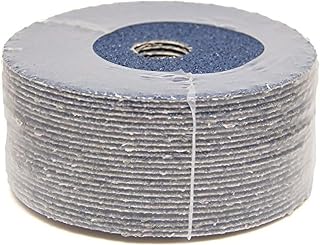 Benchmark Abrasives 5" Resin Fiber Sanding DiscsCheck price on Amazon
 BHA 4.5 Ceramic Resin Fiber Disc for Angle GrinderCheck price on Amazon
Side by side
| BHA 5 in Backing Pad | BHA 4-1/2 in Backing Pad | NuoDunco Nylon Flap Discs | |
|---|---|---|---|
| Verdict | Top pick | Runner-up | Finishing pick |
| Side | Fiber disc | Fiber disc | Flap disc |
| What it is | Backing pad | Backing pad | 10 flap discs |
| Max RPM | 12200 | 13300 | 5000 |
| Size | 5 in | 4-1/2 in | 4 in |
| Mount | 5/8-11 thread | 5/8-11 thread | 5/8 in arbor |
| Grit | Not stated (pad) | Not stated (pad) | 180 / 320 |
| Warranty | Not stated | Not stated | Not stated |
All specs here repeat what the maker rates and the listing prints, copied down 20 October 2026. None of the three listings states a safety certification or a warranty term.
Fiber disc vs flap disc: what separates the sides
The honest framing first: the fiber side of this comparison is two backing pads, not fiber discs themselves. Both BHA listings say the pad is required to run fiber sanding discs on an angle grinder, with a 5/8-11 thread and a ribbed face that cools the disc and, per the listing, can extend the life of a resin fiber disc 30% – 50%. The flap side is the complete abrasive: ten 4-inch nylon flap discs in 180 and 320 grit with a 5/8-inch arbor, mounting straight on a 4-inch grinder. That is the core trade. Fiber gives you the aggressive flat disc at the cost of buying the pad and the discs separately; flap gives you the one-piece disc at the cost of the gentler nylon abrasive.
Speed ratings
Speed ratings decide which grinder each listing suits. The BHA 5-inch pad states a maximum of 12200 RPM and the 4-1/2-inch pad states 13300 RPM, both stated as maximums in the listings. The NuoDunco flap discs state 5000 RPM maximum, much lower, which suits the polishing and finishing work the listing describes rather than high-speed grinding. Do not run an abrasive above its stated maximum: the flap discs’ 5000 RPM ceiling is the number to respect here.
Grit and finish
Grit tells you the job. The NuoDunco listing states 180 and 320 grit in nylon fiber, a fine range for polishing, deburring and rust removal on welds and complex surfaces. The BHA pads carry no grit themselves; one listing’s table says grit 60 medium and the other says fine, but those describe the pads’ intended discs, not the pads. For stock removal you would pair the pad with a coarse fiber disc bought separately; for the finish work, the flap discs are complete as listed.
Cooling and heat
Heat kills abrasives and tempers steel. The BHA listings lead with cooling: spiral raised ribs on the pad face that the listing says cut loading and extend the life of a resin fiber disc 30% – 50%, on a rigid polypropylene pad with a cast alloy plate. The NuoDunco listing claims good heat dissipation and self-sharpening nylon fiber. One is a pad feature that protects the disc you add; the other is a property of the disc itself. Neither listing states a temperature figure, so compare the claims as claims.
What ships in the box
The BHA pads each ship as one pad with a zinc-alloy locking nut included. The NuoDunco ships ten discs: five 180-grit and five 320-grit. Count accordingly: the fiber side needs discs on top of the pad, while the flap side is ready to mount. Our flap disc vs sanding disc comparison covers a related choice, and zirconia vs aluminum oxide flap disc covers flap abrasive types.
Choose the fiber disc setup if
- You want aggressive flat-disc stock removal and already own a grinder with a 5/8-11 spindle.
- You like the cooling story: ribbed pads that the listing says extend the life of a resin fiber disc 30% – 50%.
- You accept the two-part buy: pad here, fiber discs separately.
- Your grinder runs hot and fast: the pads are rated to 12200 and 13300 RPM.
Choose the flap disc if
- You want one-step polishing, deburring and rust removal with no extra hardware.
- You work complex surfaces and contours: the listing names welds on complex surfaces directly.
- You want fine grits out of the box: 180 and 320 in a 10-pack.
- Your grinder stays under 5000 RPM, the discs’ stated maximum.
FAQ for welders
Do I need a backing pad for fiber discs?
Yes. Both BHA listings say the pad is required to run fiber sanding discs on an angle grinder, with a 5/8-11 thread. A fiber disc has no backing of its own.
Can flap discs replace fiber discs?
The NuoDunco listing describes its discs for polishing, deburring and rust removal; it makes no claim about replacing fiber discs. The two overlap but the listings do not position one as a substitute for the other.
What RPM can these run at?
The BHA 5-inch pad states 12200 RPM maximum and the 4-1/2-inch pad states 13300 RPM. The NuoDunco flap discs state 5000 RPM maximum. Match the number to your grinder.
What grit are the flap discs?
The NuoDunco 10-pack includes five 180-grit and five 320-grit nylon discs. Both are fine grits for polishing and finishing rather than heavy removal.
Do the BHA pads include the fiber discs?
No. Each BHA listing is the backing pad with a zinc-alloy locking nut. The fiber discs are a separate purchase.
Related: flap disc vs sanding disc, zirconia vs aluminum oxide flap disc, and our best angle grinder for beginners.
Scoring, line by line
Each product is scored on performance, build, value, safety listing and warranty, with the weights published on our How We Pick page. A spec the listing does not publish scores nothing.
| Product | Gear Score | Perf. /35 | Build /25 | Value /25 | Safety /10 | Warranty /5 |
|---|---|---|---|---|---|---|
| BHA 5 in Backing Pad | 9.6 | 29 | 20 | 20 | n/a | 0 |
| BHA 4-1/2 in Backing Pad | 9.6 | 28 | 20 | 20 | n/a | 0 |
| NuoDunco Nylon Flap Discs | 9.4 | 26 | 18 | 19 | n/a | 0 |
A pick’s weighted total decides where it lands between a 9.2 floor and a 9.8 ceiling, and a bigger total never produces a smaller number. Where safety does not apply (unpowered gear with no listed safety features), it is left out and the remaining 90 points make up the score.
Before you strike an arc. Wear a face shield and safety glasses with any grinder, plus gloves and hearing protection. Check the abrasive’s maximum RPM against your grinder’s no-load speed before mounting, and make sure the guard is on. Grinding dust is unhealthy to breathe; work with ventilation and keep sparks away from anything flammable. See the OSHA welding overview and our Safety Disclaimer.