Flap Disc vs Sanding Disc: Which One Should You Buy?
A flap disc grinds on the angle grinder while a sanding disc finishes on the orbital sander. How they differ on stock removal, finish, dust and grits, plus three sanding disc sets ranked.

On this page
Top picks at a glance
As an Amazon Associate I earn from qualifying purchases.
- 1
 EZARC Zirconia Flap Discs 40 Grit9.7/10View on Amazon
- 2
 50 Pack Flap Discs 4 1/2" x 7/8" for Angle Grinder9.7/10View on Amazon
- 3
 5-Inch 8-Hole Hook and Loop Sanding Discs 80-GritView on Amazon
- 4
 YNZDRWA 70 PCS 5 Inch 8-Hole Sanding DiscsView on Amazon
- 5
 6 Inch 50 Pcs Wet Dry Sanding Discs Hook and Loop 1000-5000View on Amazon
- 6
 EZARC Zirconia High Density Flap Discs 40GritView on Amazon
- 7
 EXKRAEFT Flap Discs 4 1/2 for Angle GrinderView on Amazon
- 8
 GRENPRO 110PCS 5-Inch Sanding DiscsView on Amazon
A flap disc goes on the angle grinder and grinds; a sanding disc goes on the random orbital sander and smooths. That is the whole answer in one sentence: flap disc vs sanding disc is really angle grinder against orbital sander, aggressive stock removal against controlled finishing. Pick the flap disc to knock down welds and shape metal, and the sanding disc to finish and polish it.
Other welders and gear to compare
 5-Inch 8-Hole Hook and Loop Sanding Discs 80-GritCheck price on Amazon
 YNZDRWA 70 PCS 5 Inch 8-Hole Sanding DiscsCheck price on Amazon
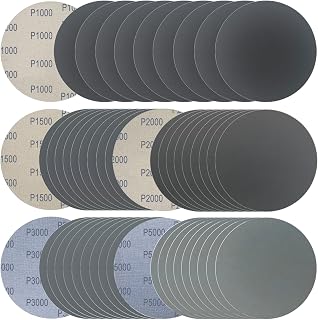 6 Inch 50 Pcs Wet Dry Sanding Discs Hook and Loop 1000-5000Check price on Amazon
 EZARC Zirconia High Density Flap Discs 40GritCheck price on Amazon
 EXKRAEFT Flap Discs 4 1/2 for Angle GrinderCheck price on Amazon
 GRENPRO 110PCS 5-Inch Sanding DiscsCheck price on Amazon
This guide links to our product roundups, where WeldGearLab gets a commission on purchases made through links on this page, and your price stays the same. Read our affiliate disclosure.
The difference in one paragraph
A flap disc is overlapping flaps of abrasive cloth arranged around a hub, mounted on an angle grinder. The flaps wear back to expose fresh grain as you work, so one disc both grinds and blends, which is why fab shops reach for it to knock down a weld bead and feather the edges in a single pass. A sanding disc is a flat circle of abrasive paper or net on a hook-and-loop backing, mounted on a random orbital sander. It cuts slower and flatter, which makes it the finishing tool: smoothing panels, prepping for paint and polishing without digging trenches in the work.
Side by side
| Flap disc | Sanding disc | In the listings | |
|---|---|---|---|
| Tool | Angle grinder | Random orbital sander | 5 in orbital (POTUINOM, YNZDRWA, 3M) |
| Abrasive form | Overlapping flaps of abrasive cloth around a hub | Flat disc of paper or net on hook-and-loop backing | Paper or net, hook and loop throughout |
| Strongest at | Grinding welds, shaping, fast stock removal | Smoothing, paint prep, polishing | |
| Finish quality | Blended in one step, needs follow-up for fine work | Flat and fine when you work up through the grits | |
| Grit range | Not stated | 40 to 800 across the three sets | 40-600; 80+-320+; 40-800 |
| Dust | Grinder throws dust and sparks | Net discs extract up to 99% of dust, per the maker | 8-hole discs (POTUINOM, YNZDRWA); net (3M) |
| Disc changes | One disc grinds and blends as flaps wear back | Change discs as you step up the grits | 165, 70 and 12 piece sets |
The tool pairing is the practical split. A flap disc needs an angle grinder; a sanding disc needs a random orbital sander. Buy the abrasive that matches the tool you already own, unless the job forces the other one.
When a flap disc is the better choice
- Knocking down welds. Grind the bead close to flush, then blend the toes into the parent metal, without stopping to change discs.
- Shaping and beveling. The grinder’s power and the flaps’ aggression remove stock fast, which is what you want on thick plate and heavy tacks.
- One-disc jobs. Because the flaps wear back to fresh grain, a single flap disc covers the range from grinding to blending.
- Field and farm repairs. One grinder and a couple of flap discs handle most steel cleanup away from the shop.
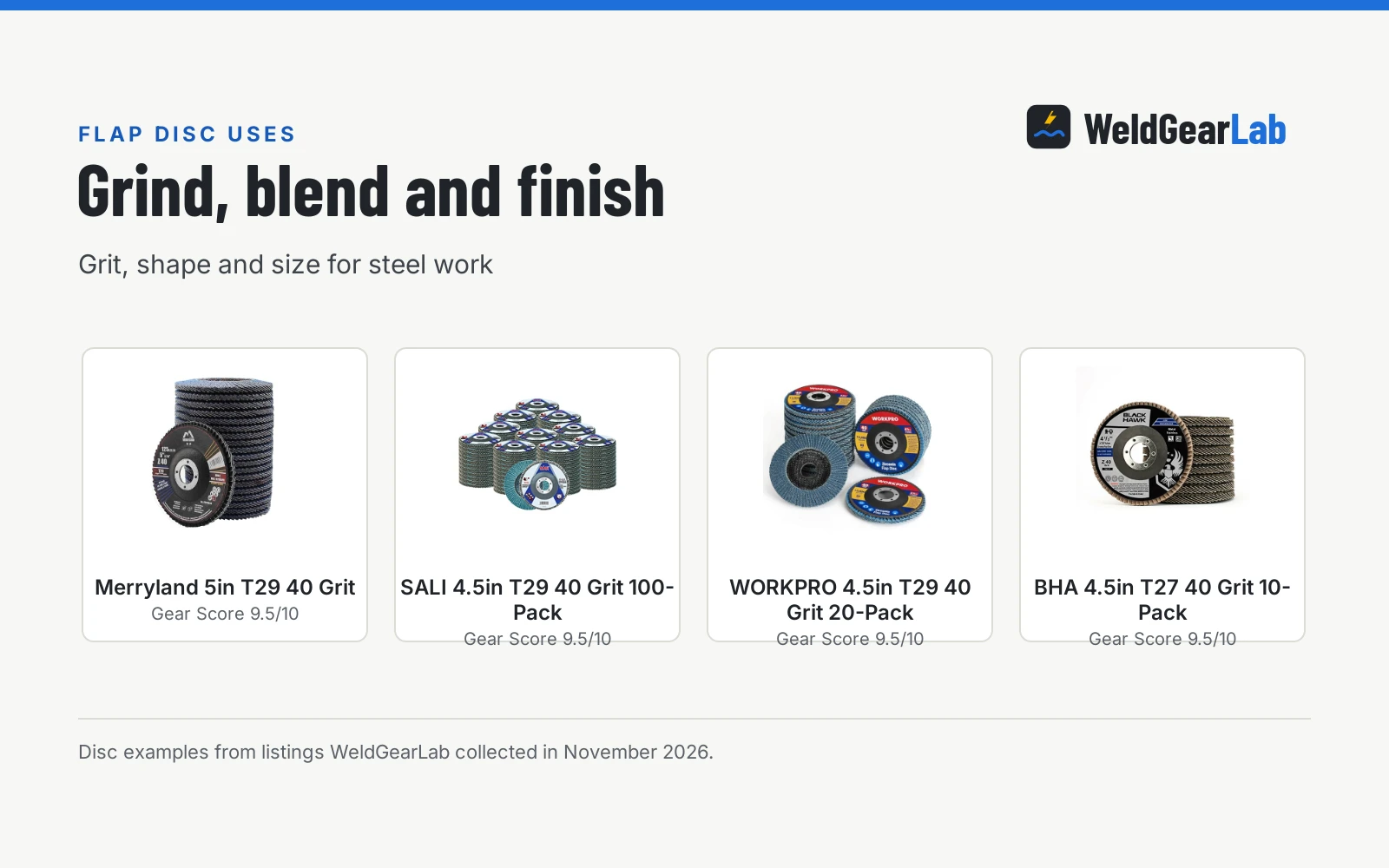
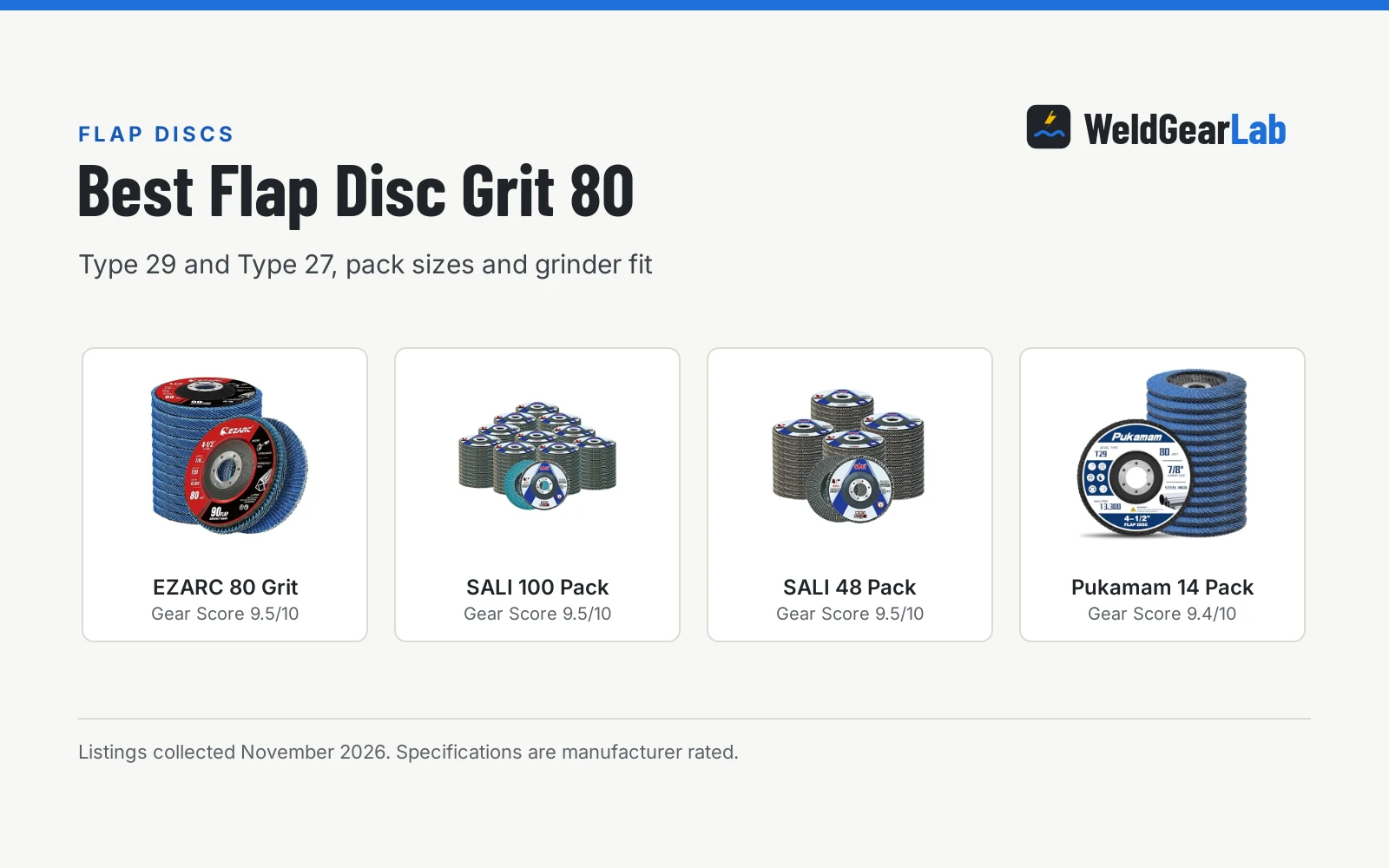
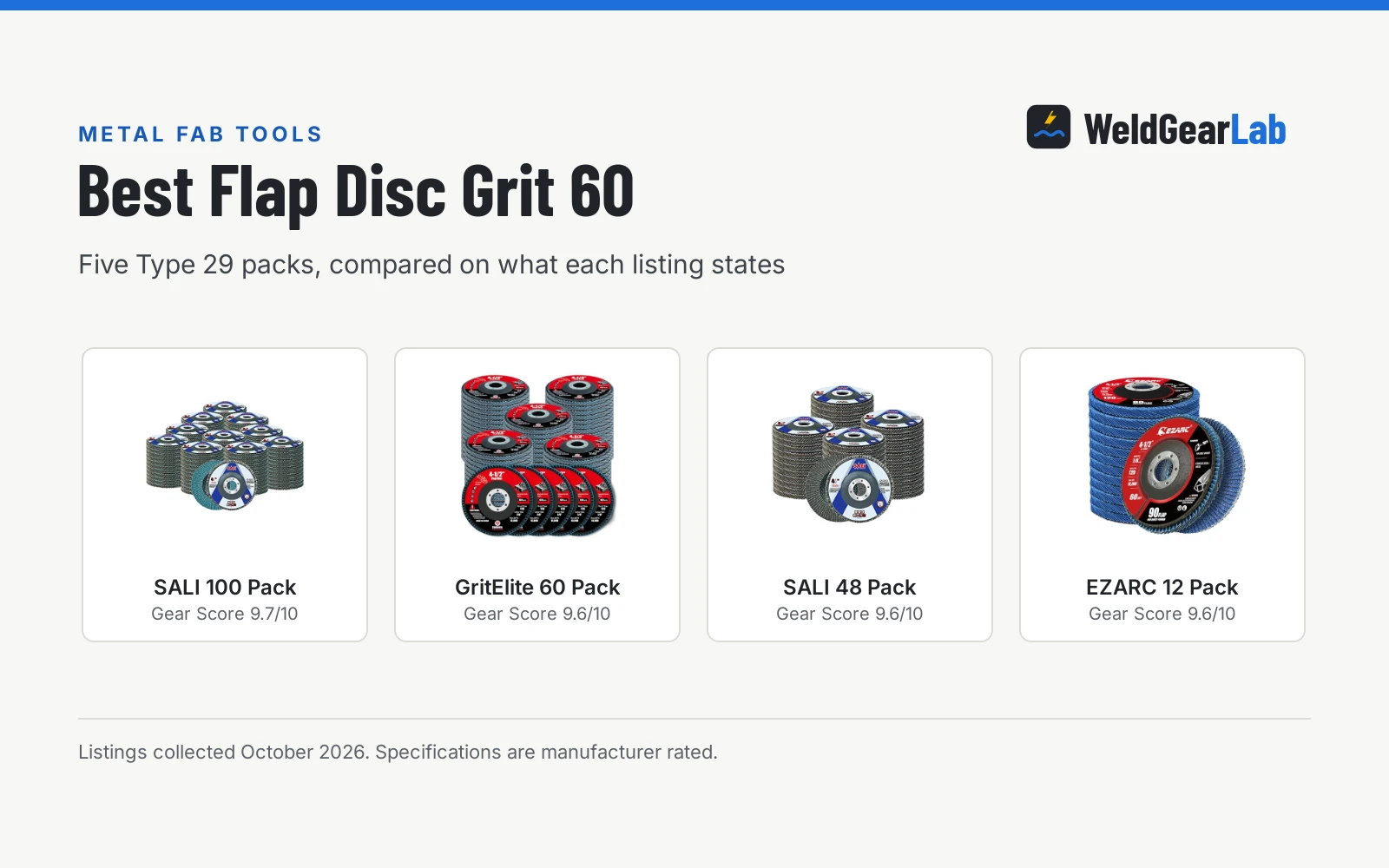
Our zirconia vs aluminum oxide flap disc comparison covers which flap disc grain to buy once you have decided.
When a sanding disc is the better choice
- Finishing flat panels. The orbital action smooths without the gouges and heat marks a grinder leaves behind.
- Paint prep. Work up through the grits and the surface is ready for primer; a grinder leaves scratches that telegraph through paint.
- Polishing. Fine grits on a sander bring metal and glass to a shine the flap disc cannot reach.
- Dust control. Net discs paired with extraction keep the shop air cleaner than open grinding.
Sanding disc sets worth a look
This section covers sanding disc sets, ranked by what the listings state, and the flap-disc side is covered by how the tool works.
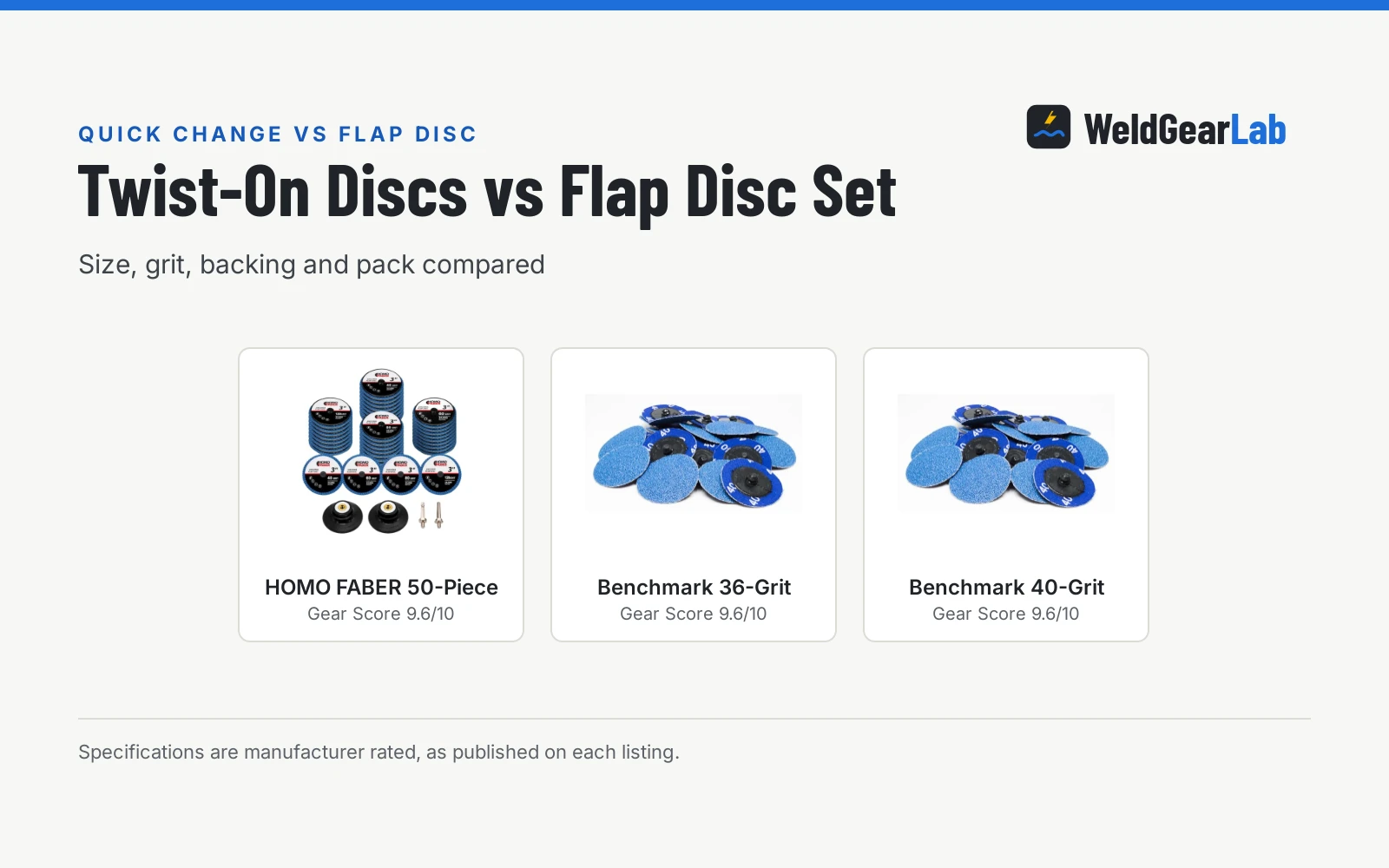
3M Xtract Cubitron II net disc, 12-piece. The premium pick: precision-shaped ceramic grain on a net backing, in 80+ through 320+ grades, with hook-and-loop mounting for random orbital sanders and hand sanding. The maker claims the net pattern extracts up to 99% of dust for a virtually dust-free work environment, and that the grain fractures into sharp edges for twice the abrasion life and cut rate of leading competitor net discs. Twelve discs, two of each grade, from 80+ to 320+. The listing notes it is for industrial and occupational use.
POTUINOM 165-piece 5-inch set. The assortment pick: 165 hook-and-loop discs in 40, 60, 80, 120, 150, 240, 320, 400 and 600 grit, with an extra 5 pieces of 40 grit. Aluminum oxide abrasive the maker says resists clogging, with 8-hole dust extraction, sized for most 5-inch random orbital sanders, die grinders and drills. Stated uses run from grinding and derusting metal to polishing wood, rubber, leather, plastic, stone and glass.
YNZDRWA 70-piece 5-inch set. The runner-up assortment: 70 hook-and-loop discs in 9 grits from 40 to 800, in aluminum oxide the maker calls solid and anti-static, with 8-hole backing for random orbital sanders. Fewer discs but a wider top end than the POTUINOM set, reaching 800 grit where the POTUINOM set tops out at 600, with the same 5-inch format and the same basic job: general grinding and polishing of metal, wood and plastic.
Flap disc vs sanding disc for common shop jobs
Match the abrasive to the job, not the habit. Cleaning up a weld bead on a trailer frame: flap disc on the grinder, then a sanding disc if the joint will be visible. Prepping a panel for paint: sanding discs up through the grits, never the grinder. Shaping a bevel on plate: flap disc. Polishing a small bracket: the YNZDRWA set’s grits up to 800. And if the shop fills with dust, the 3M net discs with extraction earn their keep over any paper disc. See our best sanding disc for metal roundup for five scored picks, and our best angle grinder for beginners if you need the grinder side of the pairing.
Abrasive dust and grinder safety. Grinding throws dust, sparks and hot grit; sanding makes fine dust that hangs in the air. Wear safety glasses and a dust mask or respirator for either job, keep the grinder’s guard on, and clear anything flammable from the spark path. Abrasive discs have a maximum speed, so check the disc matches the tool before it spins up. See the OSHA welding overview.
FAQ for welders
Can a flap disc replace sandpaper?
For grinding and blending, yes, and that is its whole point: one flap disc takes a weld from bead to blended without a disc change. For fine finishing it cannot: the grinder’s aggression leaves marks that only a sanding disc worked up through the grits will remove.
What grit should I start with on a weld?
Start coarse enough to cut the bead without endless passes. The sets here start at 40 grit for the POTUINOM and YNZDRWA and 80+ for the 3M, which is the right neighborhood for rough work, then step up through the middle grits toward finishing. Jumping straight to fine grit just loads the disc.
Can I use sanding discs on an angle grinder?
Not the ones in these listings. These sanding discs use hook-and-loop backing for random orbital sanders. An angle grinder needs abrasives rated for its speed and mounting, like a flap disc or a fiber disc with a backing pad.
Do I need dust extraction for sanding?
It helps a lot indoors. The 3M Xtract net discs claim up to 99% dust extraction when paired with a sander that has extraction, and the 8-hole paper discs in the POTUINOM and YNZDRWA sets work with a dust-collecting sander. Outdoors or in a ventilated shop, a dust mask covers the rest.
Which lasts longer, a flap disc or sanding discs?
They wear differently, so the listings do not give a shared measure. A flap disc keeps cutting as its flaps wear back to fresh grain, covering grinding through blending on one disc. Sanding discs are consumables by the grit: the 165-piece and 70-piece sets exist because you go through discs as you step up the grades.
Related: best sanding disc for metal, zirconia vs aluminum oxide flap disc, best angle grinder for beginners and best welding gloves for grinding.