E71t-1 vs E71t-11 Wire: Which One Should You Buy?
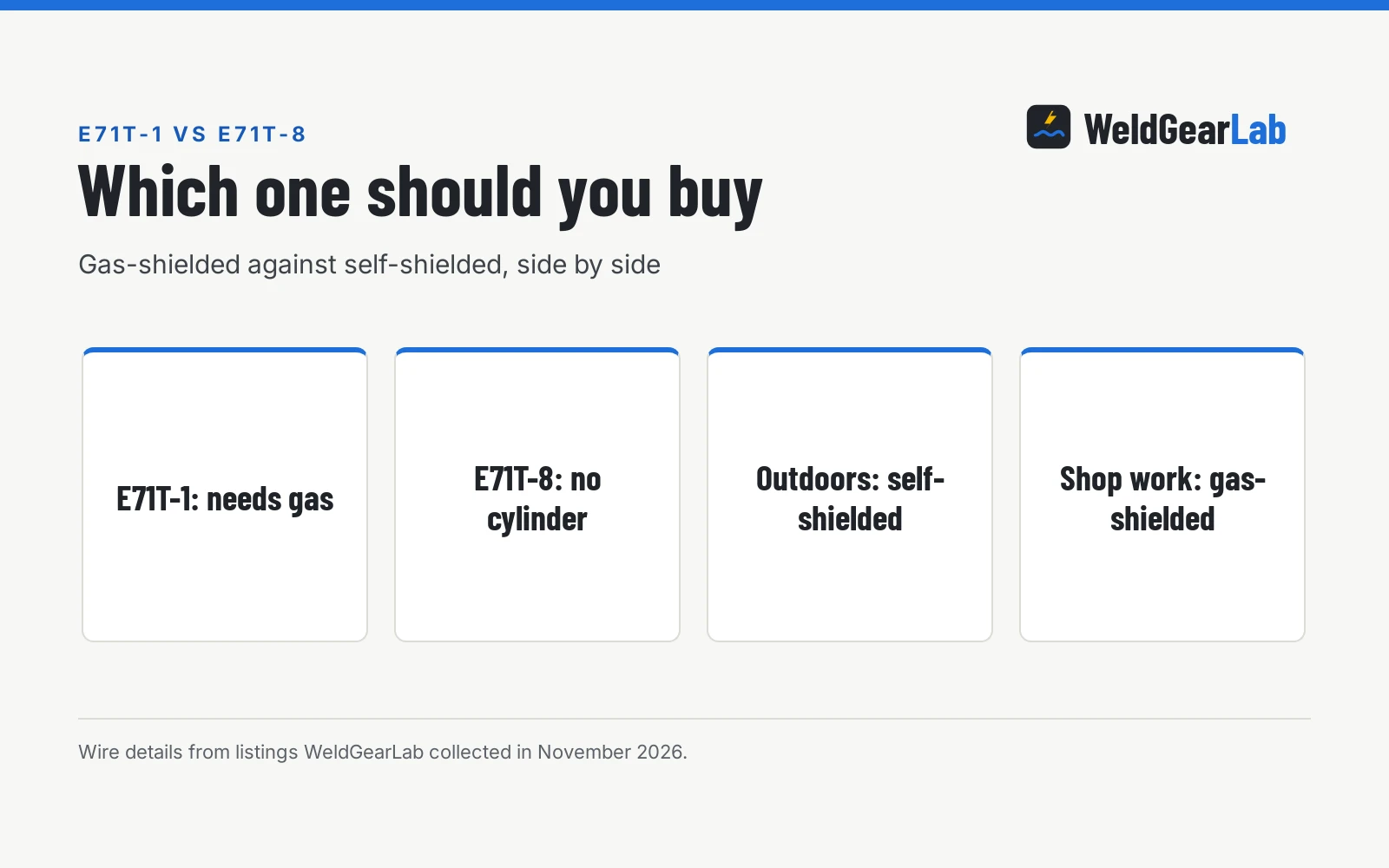
E71T-1 needs shielding gas while E71T-11 runs gasless, and the four listings here are all gasless wires in .030, .035 and .040 inch.

On this page
Top picks at a glance
As an Amazon Associate I earn from qualifying purchases.
- 1
 PGN E71T-11 .035" Gasless Flux Core Welding Wire9.6/10View on Amazon
- 2
 PGN E71T-11 .030" Gasless Flux Core Welding Wire9.6/10View on Amazon
- 3
 findmall E71T-GS Gasless-Flux Core Wire Welding Wire 0.045In9.6/10View on Amazon
- 4
 ARCCAPTAIN Flux Core Welding Wire E71T-GS .035" 2LB x 3 MildView on Amazon
- 5
 .040" Flux Core Welding WireView on Amazon
- 6
 findmall E71T-GS Gasless-Flux Core Wire Welding wire 0.035InView on Amazon
- 7
 PGN E71T-11 .030"View on Amazon
- 8
 HZXVOGEN Gasless Flux Core MIG Welding WireView on Amazon
- 9
 ATLASWELDER Flux Core Welding WireView on Amazon
A fence post cracked at the bracket and the wind is up, so dragging out a gas cylinder is the last thing you want. The e71t-1 vs e71t-11 wire question comes down to shielding: E71T-1 is a gas-shielded flux-cored wire, while E71T-11 is self-shielded and runs gasless. This guide explains what each classification means and compares four gasless spools from the listings.
Other welders and gear to compare
 ARCCAPTAIN Flux Core Welding Wire E71T-GS .035" 2LB x 3 MildCheck price on Amazon
 .040" Flux Core Welding WireCheck price on Amazon
 findmall E71T-GS Gasless-Flux Core Wire Welding wire 0.035InCheck price on Amazon
 PGN E71T-11 .030"Check price on Amazon
 HZXVOGEN Gasless Flux Core MIG Welding WireCheck price on Amazon
 ATLASWELDER Flux Core Welding WireCheck price on Amazon
This guide links to our product roundups, where WeldGearLab gets a commission on purchases made through links on this page, and your price stays the same. Read our affiliate disclosure.
The difference in one paragraph
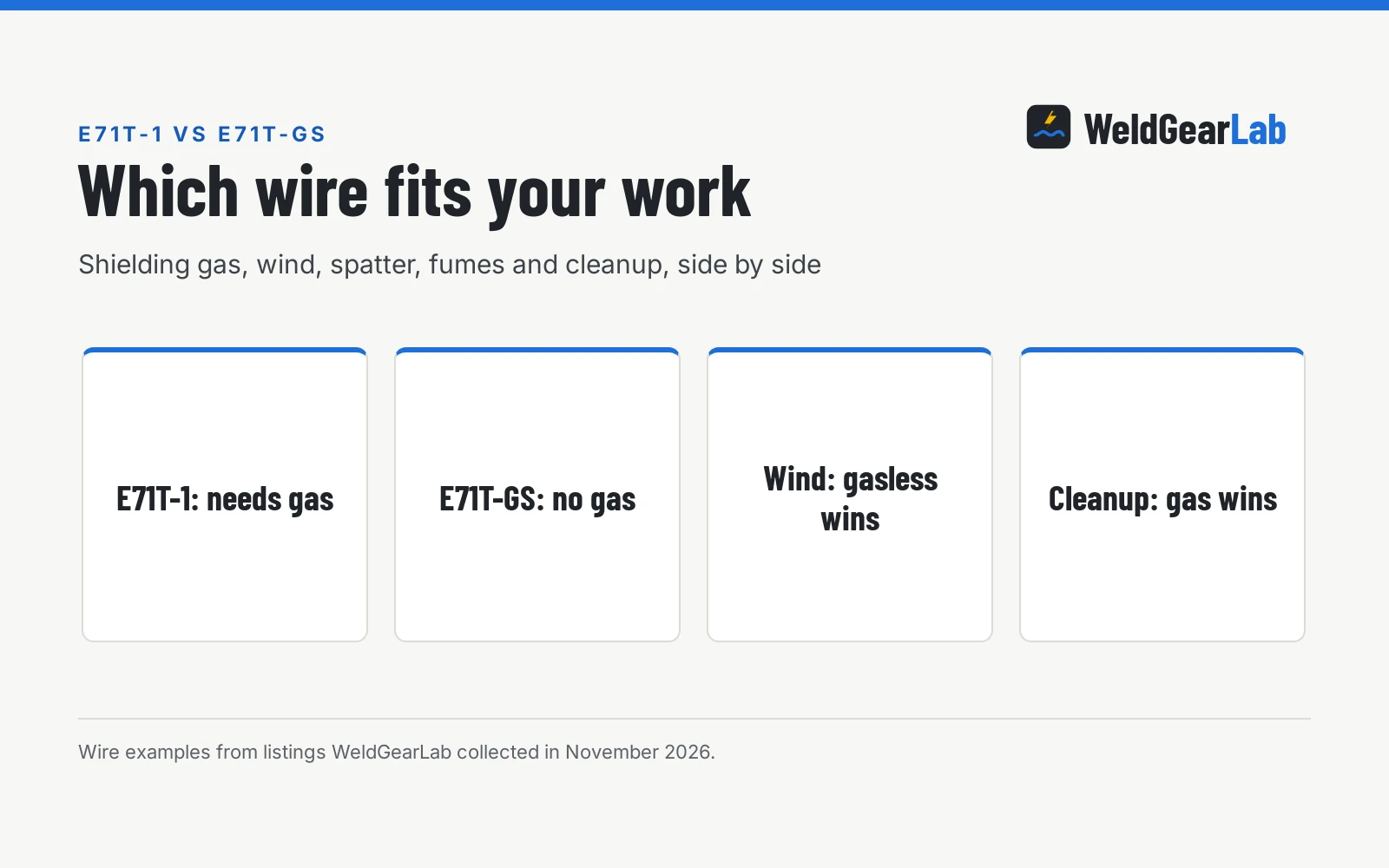
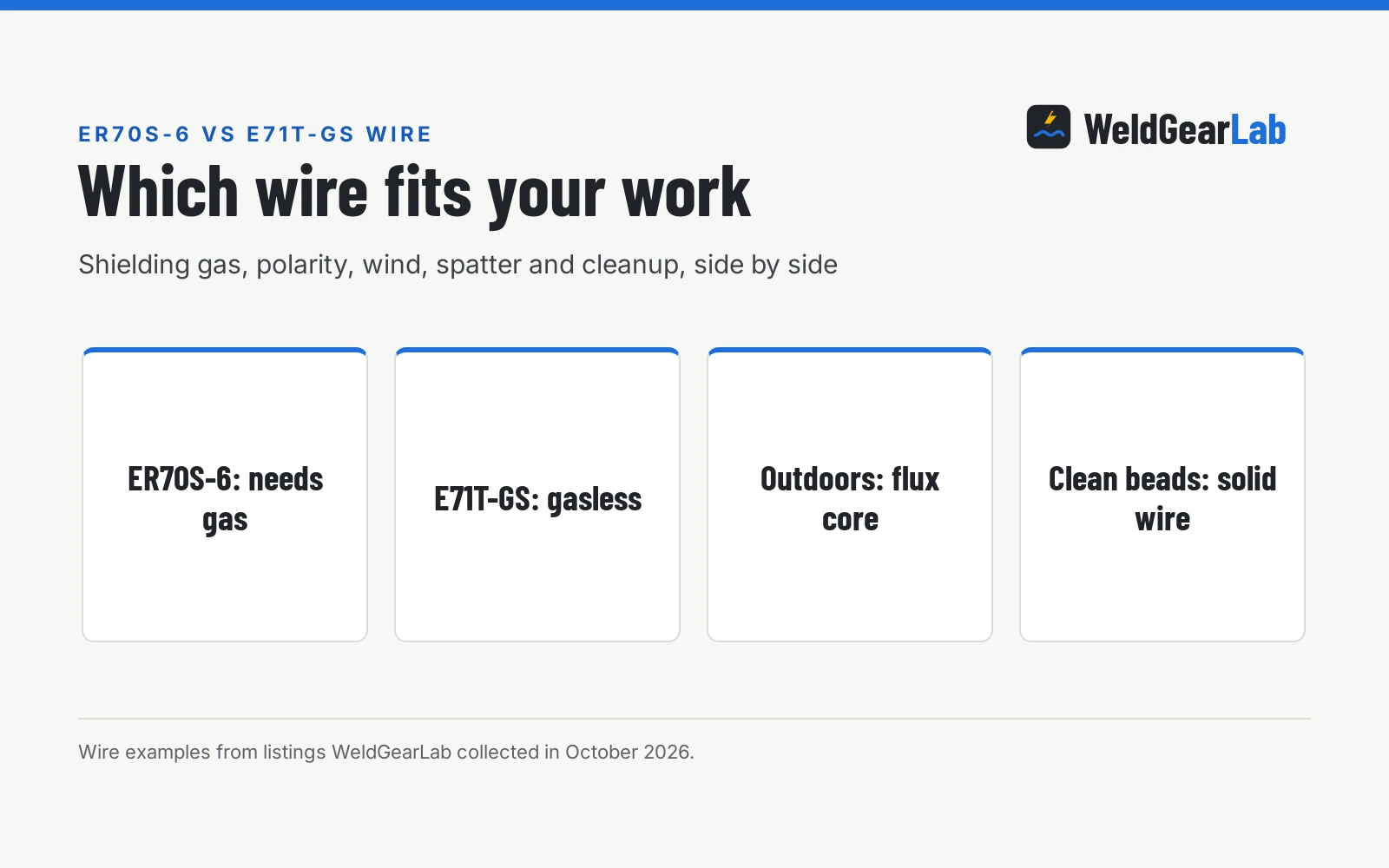
Both wires are flux-cored: the core is filled with flux that shields the molten puddle from air. E71T-1 needs an external shielding gas, usually straight CO2 or an argon and CO2 mix, fed through the gun the way gas MIG works. E71T-11 and E71T-GS are self-shielded: the flux inside the wire burns to make its own shielding gas, so there is no cylinder, no hose and no regulator. That is the whole decision: if you want to weld without gas, E71T-11 and E71T-GS are the gasless choices, and E71T-1 is the gas-shielded one.
Side by side
| E71T-1 | E71T-11 | E71T-GS | |
|---|---|---|---|
| Shielding gas | Required | None, self-shielded | None, self-shielded |
| Positions | All positions | All positions | All positions |
| Pass rating | Multi-pass | Single-pass | Single-pass |
| Wind tolerance | Needs shelter | Tolerates wind | Tolerates wind |
| Best for | Shop and structural | Outdoor repair | General repair |
Classifications describe the wire type, not the brand on the spool. Always follow the polarity and settings printed on your wire’s label and in the machine’s manual; most gasless wires run electrode negative.
When E71T-11 is the better choice
- Outdoor repair. Fence posts, gates, trailers and farm equipment. No gas to blow away in the wind.
- No cylinder. You skip the cylinder, regulator and hose entirely.
- Single-pass joints. T-joints, butt welds and lap welds in one pass, which is what the classification is rated for.
- .030 inch wire. The PGN listing runs .030 inch wire for mild steel.
Our best flux core welder guide covers gasless machines for this kind of work.
When E71T-1 is the better choice
- Multi-pass welds. E71T-1 is rated for multiple passes, which matters on thicker joints.
- Shop work. Indoors or under shelter where wind cannot touch the shielding gas.
- Cleaner arc. Gas shielding generally means less spatter and a smoother bead than self-shielded wire.
- Structural joints. Where the weld is load-bearing and the procedure calls for a gas-shielded wire.
E71T-1 vs E71T-11 wire: the gear from the listings
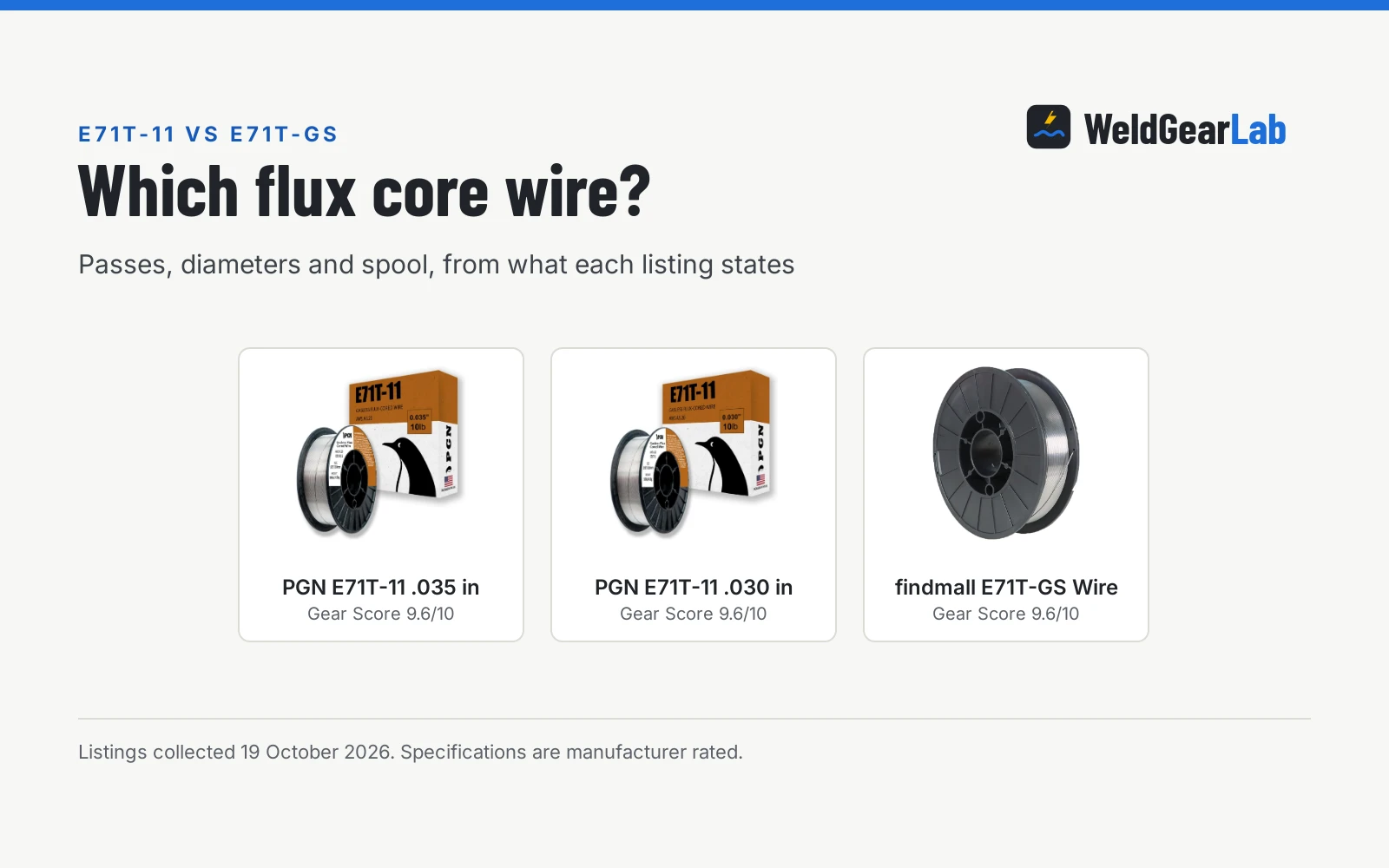
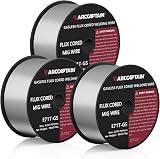
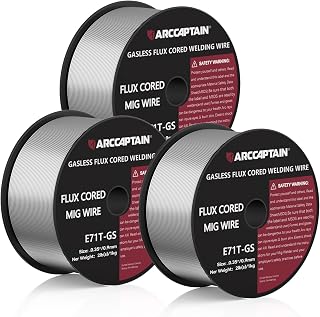
The listings are the ARCCAPTAIN E71T-GS at .035 inch in a 3-pack of 2 lb spools, with a stated TUV certification, all-position welding, and T-joint, butt and lap welds; the Harukiku E71T-GS at .040 inch in a 2-pack of 2 lb spools, stating single and multi-pass welding plus windy-day farm and fence work; the PGN E71T-11 at .030 inch in a 3-pack of 2 lb spools for mild steel; and the findmall E71T-GS, a 10 lb spool of .035 inch wire for farm and industrial work, but its spec table contradicts the title, listing 0.045 inch and 2 LB in places, so trust the title and bullets.
Gasless wire smoke and slag. Self-shielded wire makes more smoke than gas-shielded wire, and hot slag can flick off when you chip it. Weld with good ventilation or outdoors with your head out of the plume, wear safety glasses under the helmet when chipping, and clear anything flammable from the area.
Buying advice: pick wire by diameter, spool size and stated facts
Match the diameter to your machine and the metal. The PGN runs .030 inch, the ARCCAPTAIN and findmall list .035 inch, and the Harukiku lists .040 inch. Thinner wire suits thin stock and lower heat; .040 inch wire feeds more metal per pass on thicker farm repairs. Your drive rolls and contact tips must match the diameter you buy.
Then look at spool size. The ARCCAPTAIN and PGN are 3-packs of 2 lb spools, and the Harukiku is a 2-pack of 2 lb spools: small spools suit occasional repair work and keep unused wire sealed. The findmall is a single 10 lb spool on an 8 inch spool, which suits long runs but leaves the rest of the wire exposed once opened. All four listings here describe vacuum packing, which keeps the wire free of moisture until you open it.
Read the spec table against the title. The findmall title says 0.035 inch and 10 lbs while its spec table rows list 0.045 inch diameter and 2 LB weight: trust the title and bullets, as this guide already notes. Also watch the marketing words: only the ARCCAPTAIN states a checkable certification, the TUV mark; the other three state none. When a listing claims low spatter or a stable arc without a stated standard, treat it as the maker’s claim.
FAQ for welders
Can I run E71T-11 without shielding gas?
Yes. E71T-11 is self-shielded: the flux inside the wire makes its own shielding gas as it burns, so no cylinder is needed. All four listings here are gasless wires, including the PGN E71T-11. That is why the Harukiku listing names windy days and outdoor farm repairs.
What is the difference between E71T-GS and E71T-11?
Both are self-shielded gasless wires. E71T-GS is a general-purpose single-pass classification, while E71T-11 is the more common self-shielded classification for all-position work. Three of the four listings here are E71T-GS and one, the PGN, is E71T-11. For the farm repair and general shop tasks they describe, either type fits.
What diameters do these listings come in?
The ARCCAPTAIN and findmall list .035 inch, the Harukiku lists .040 inch, and the PGN lists .030 inch. Match the diameter to your machine’s drive rolls and the metal thickness. The listings do not state a thickness range, so check your machine’s door chart.
Can I weld outdoors in the wind with these wires?
Yes. Gasless flux-cored wire is made for exactly that: the Harukiku listing names windy conditions, farm gates and fences. Wind that would blow away cylinder gas does not affect self-shielded wire. You still want a dry work area and solid footing.
Do any of these listings state a certification?
Only the ARCCAPTAIN states one: a TUV certification for its E71T-GS wire. The Harukiku, findmall and PGN listings state no certification. A stated certification is one data point, not the whole decision.
How much wire comes in each listing?
The ARCCAPTAIN is a 3-pack of 2 lb spools, the Harukiku a 2-pack of 2 lb spools, the findmall a single 10 lb spool, and the PGN a 3-pack of 2 lb spools. Bigger spools suit long runs; small spools suit occasional repair. The findmall spec table also lists 2 LB in one row, which contradicts the 10 lb title; trust the title.
Related: how to choose flux core wire, flux core vs MIG, best MIG wire for mild steel, and the MIG welders hub.