Deerskin vs Goatskin Welding Gloves: Which One Should You Buy?
Deerskin vs goatskin welding gloves: what each leather does best, when to pick softness for TIG and when to pick toughness, with figures from the deerskin listings.

On this page
Top picks at a glance
As an Amazon Associate I earn from qualifying purchases.
- 1
 Tillman 1338 Top Grain Goatskin TIG Welding Gloves with 4"9.5/10View on Amazon
- 2
 TIG Welding Gloves9.4/10View on Amazon
- 3
 Caiman Genuine Goatskin Leather White KontourTM TIG/MIG Gloves9.6/10View on Amazon
- 4
 Caiman Premium Wasabi Green Split Deerskin MIG/Stick WeldingView on Amazon
- 5
 Caiman Premium Split Deerskin MIG/Stick Welding GlovesView on Amazon
- 6
 Black Stallion 25D-BLK Premium Deerskin TIG Welding GlovesView on Amazon
- 7
 Caiman Wasabi Green DeerskinView on Amazon
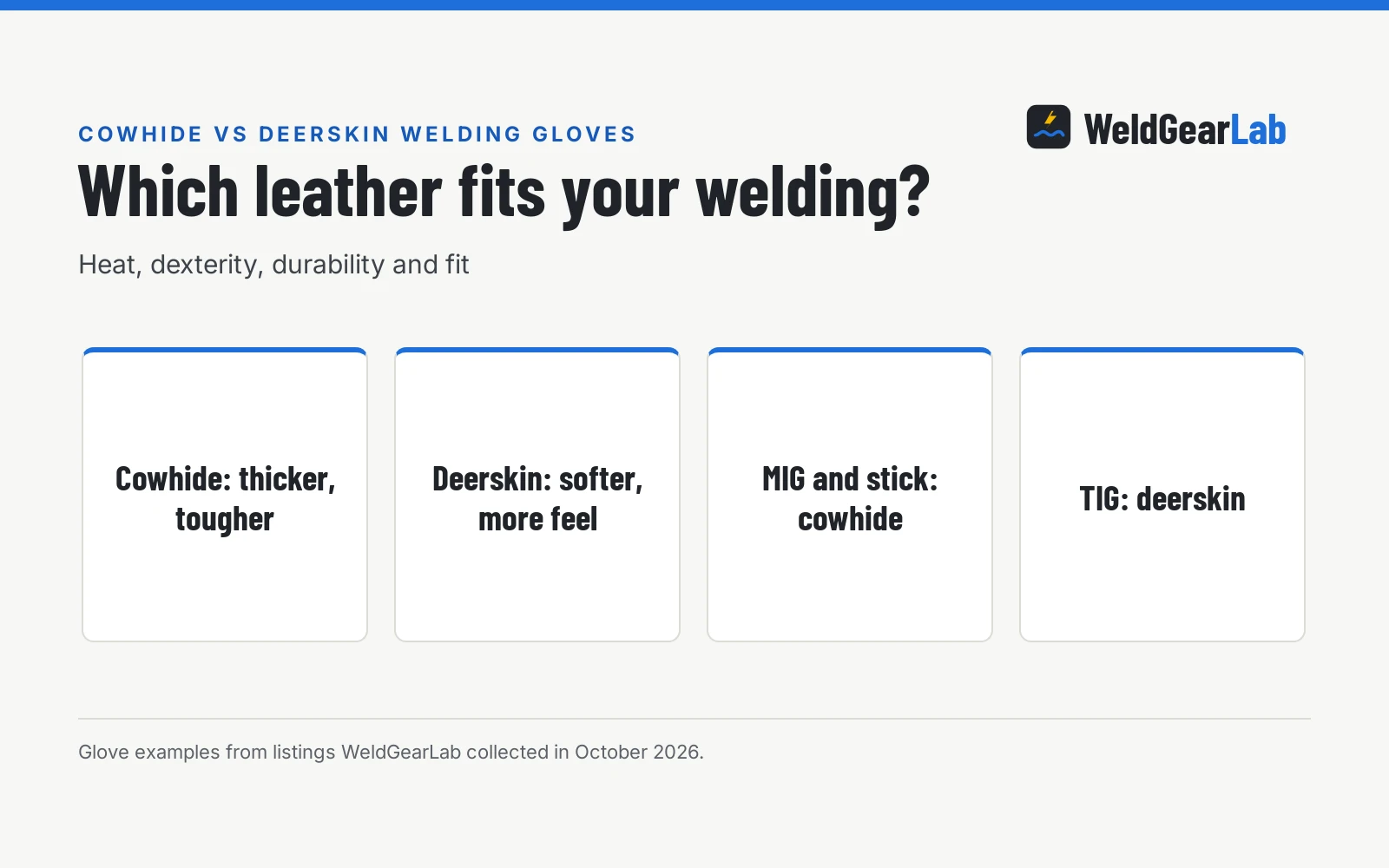
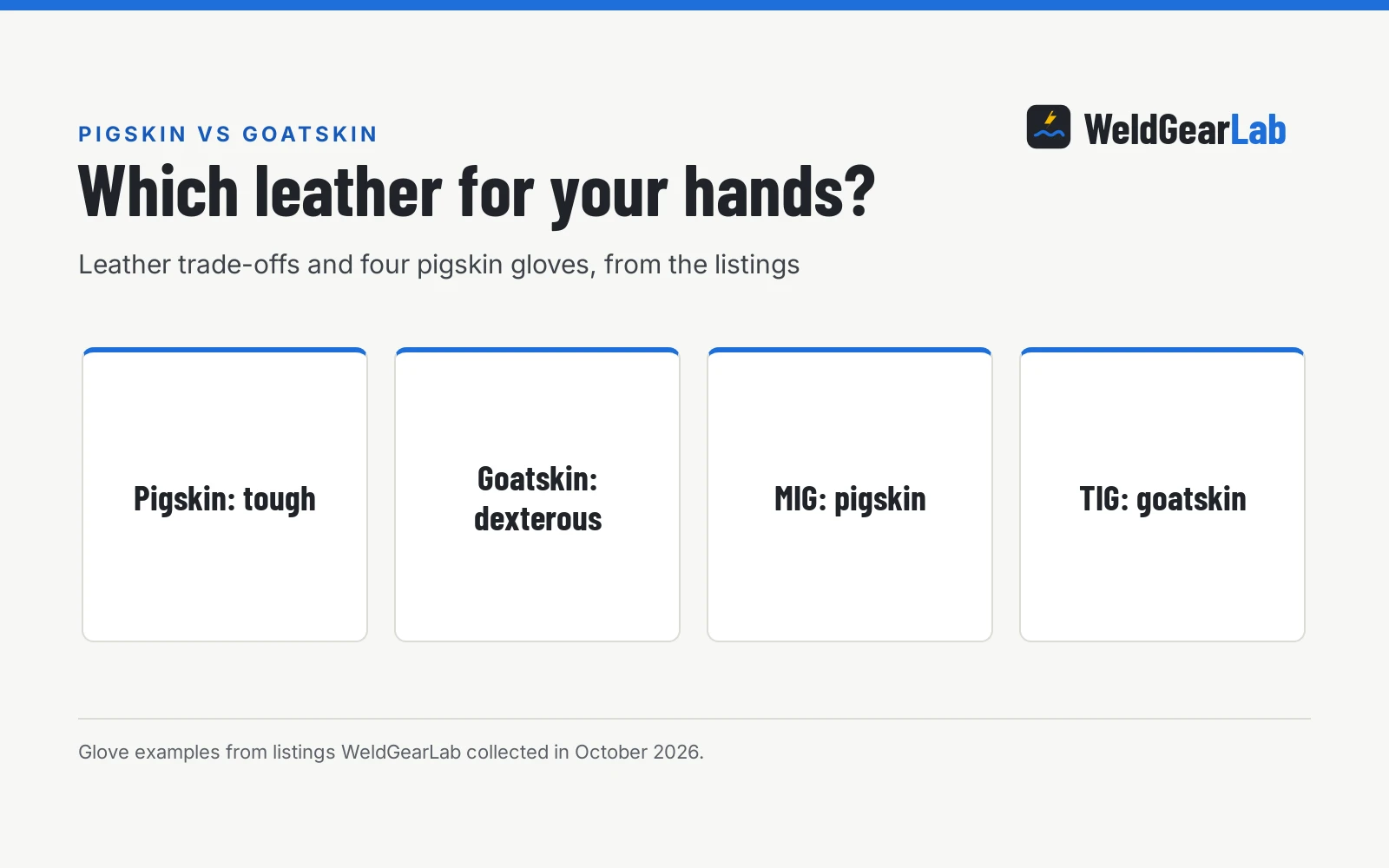
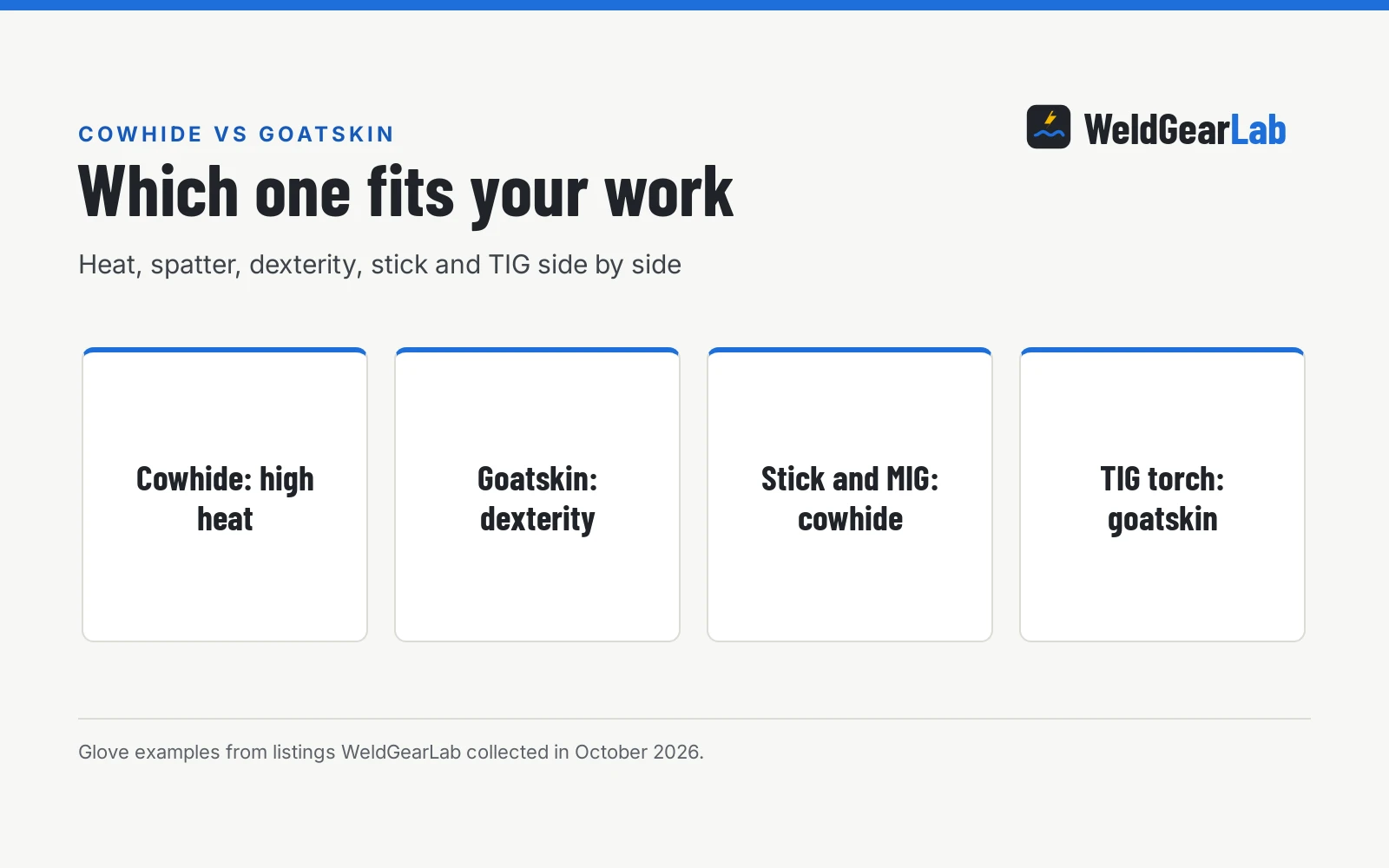
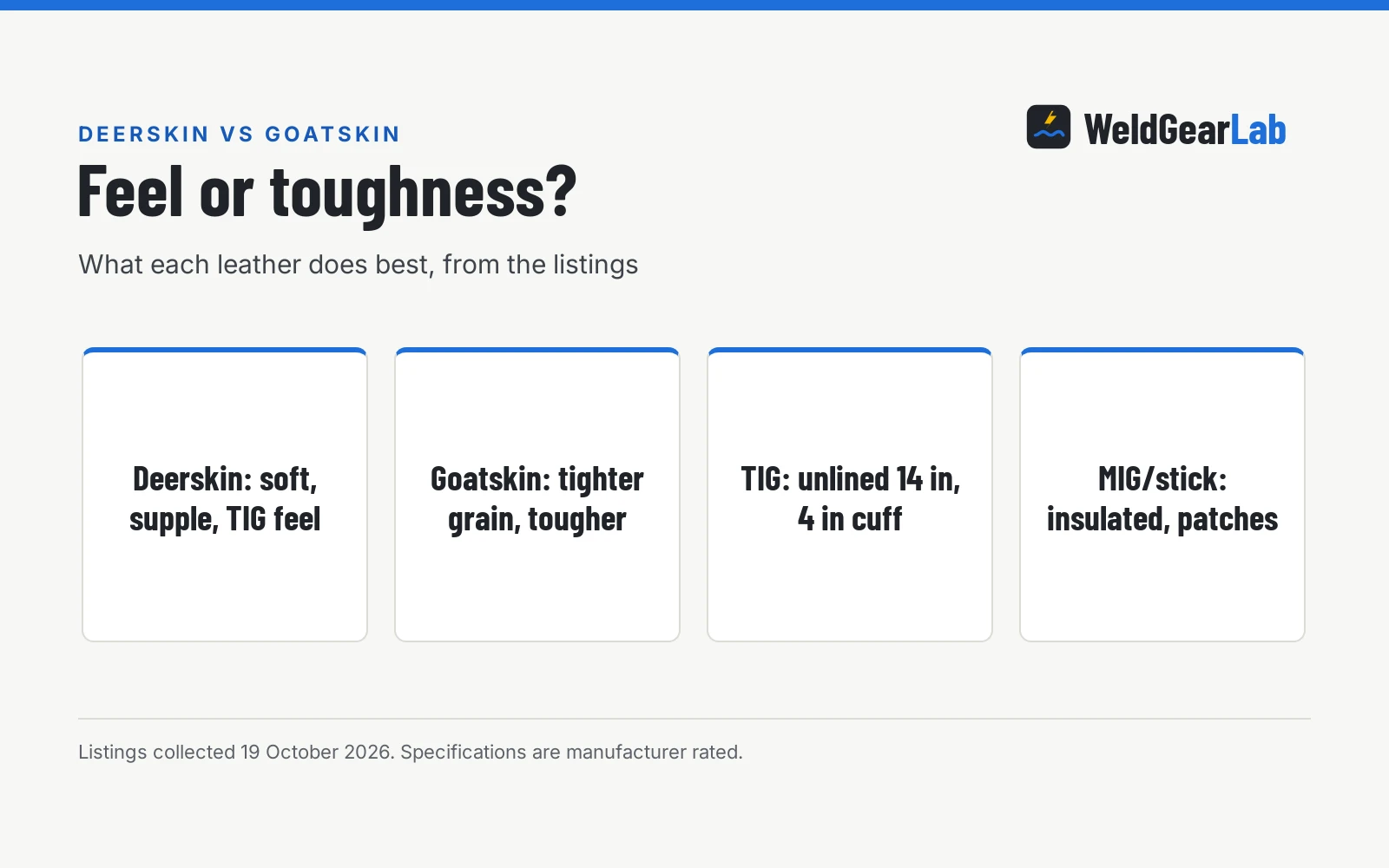
TIG torch in one hand, filler rod in the other, and the deerskin vs goatskin welding gloves question is really about feel against toughness. Deerskin is the softer, more supple leather: it gives the finger feel TIG welders want for feeding rod and working the torch. Goatskin is the tougher hide with a tighter grain: it stands up to abrasion better, which is why it shows up on MIG and stick gloves. Both are proper welding leathers; the right one depends on your process and what your hands do all day.
Other welders and gear to compare
 Caiman Premium Wasabi Green Split Deerskin MIG/Stick WeldingCheck price on Amazon
 Caiman Premium Split Deerskin MIG/Stick Welding GlovesCheck price on Amazon
 Black Stallion 25D-BLK Premium Deerskin TIG Welding GlovesCheck price on Amazon
 Caiman Wasabi Green DeerskinCheck price on Amazon
This guide links to our product roundups, where WeldGearLab gets a commission on purchases made through links on this page, and your price stays the same. Read our affiliate disclosure.
Deerskin vs goatskin welding gloves: the difference in one paragraph
Deerskin gloves trade on softness. The deerskin listings reviewed run from the unlined Tillman 14 in TIG glove with a 4 in cuff and Kevlar stitching to the insulated Caiman MIG and stick gloves, and the theme is consistent: supple leather, comfortable from the first wear, with insulation or patches added where the work gets hot. Goatskin is a denser, tighter-grained leather that resists abrasion and lasts longer in rough service, at the cost of some of deerskin’s softness.
Side by side
| Factor | Deerskin | Goatskin | Listing notes |
|---|---|---|---|
| Feel | Soft and supple; unlined for TIG | Soft, tighter grain; less soft | Tillman 14 in unlined |
| Durability | Good; patches add life | Not covered by a figure in this guide | Caiman wear patch, Kevlar stitch |
| Heat | Needs insulation or patches for MIG/stick | Stands up well; still needs build | Caiman FR foam/fleece; cowhide shield |
| Best for | TIG feel; comfortable MIG/stick | Rough service, grinding, handling | Deerskin figures from listings |
| Break-in | Fast; soft from the start | Not covered by a figure in this guide | Tillman unlined; Caiman supple |
Figures are from the deerskin listings reviewed, collected 19 October 2026; a figure from one listing describes that listing only.
When deerskin is the better choice
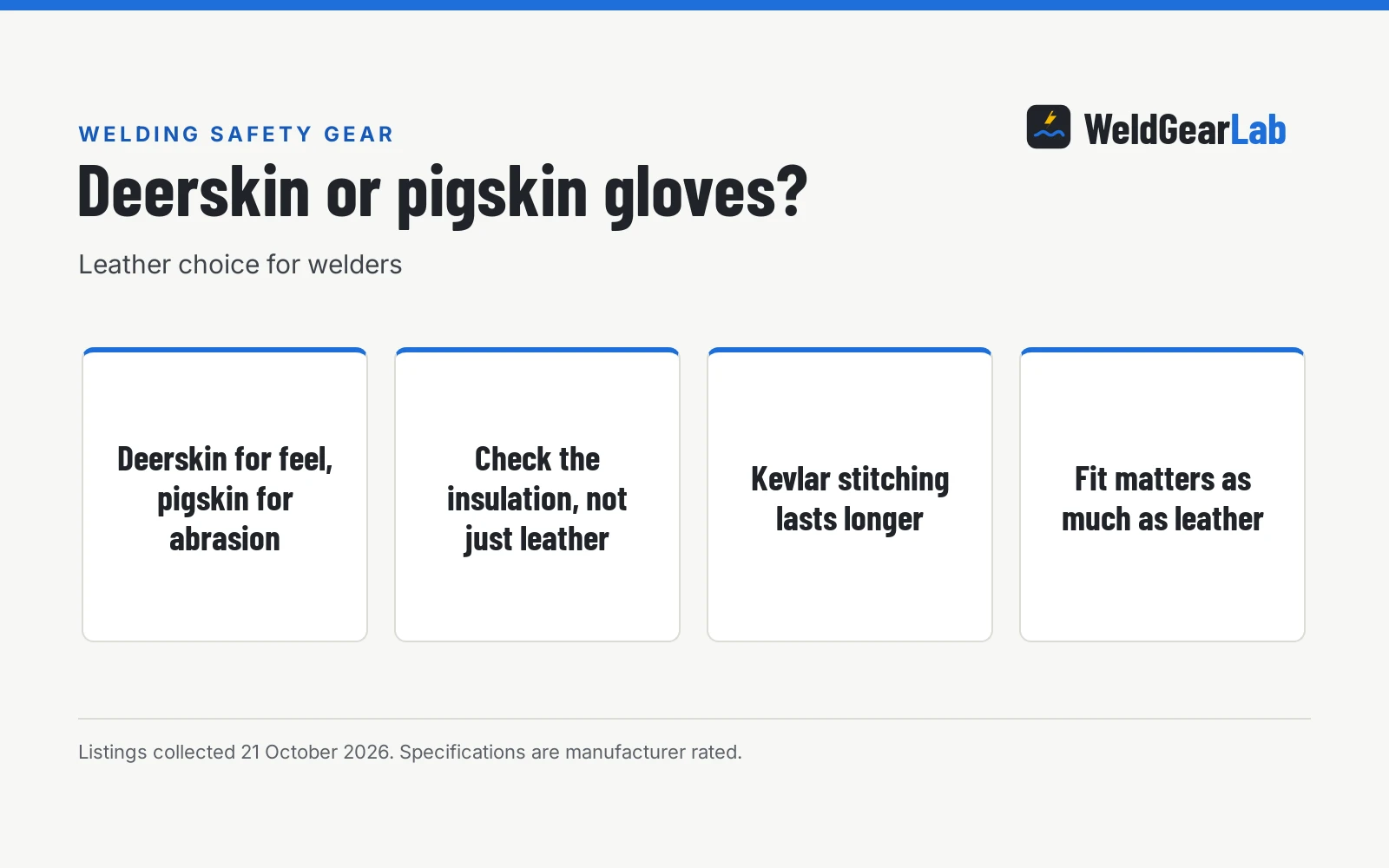
Pick deerskin when feel matters most. The Tillman listing is the TIG case: a size Large unlined split deerskin glove with a 4 in cuff and Kevlar stitching, lightweight and supple for torch and filler control. Unlined deerskin breaks in fast and stays soft, which is why TIG welders who feed rod by feel reach for it. Deerskin also works for MIG and stick when it is built for it: the Caiman 1816 pairs split deerskin with flame-resistant foam and fleece insulation, a sock lining, double-stitched palm padding and a wear patch, and the 21 in Caiman 1878 adds a split cowhide leather heat shield patch for the highest-heat work.
When goatskin is the better choice
Pick goatskin when durability matters most. Goatskin’s tighter grain resists abrasion better than deerskin, so it holds up longer on grinding, material handling and rough stick work where gloves get punished. It is still a soft leather compared to cowhide, just not as soft as deerskin. If you burn through gloves quickly or your work is more abrasion than arc time, goatskin is the longer-lived choice.
What the deerskin listings tell you
The listings show how deerskin gloves are built up for different processes. For TIG, the Tillman size-Large glove stays unlined with a 4 in cuff and Kevlar stitching, and the Caiman 1864 is the gray split deerskin TIG glove. For MIG and stick, the Caiman 1816 comes in Large and X-Large with full sock insulation in flame-resistant foam and fleece, a double-stitched palm and a wear patch, and the Caiman 1878 runs 21 in long with fleece and foam insulation plus a cowhide heat shield patch. The pattern is clear: deerskin for the hand, insulation and patches for the heat.
Sizing and fit
Sizes run Small to X-Large: the Caiman 1816 comes in Large and X-Large, the 1878 in X-Large, the 1864 in Small and Medium, and the Tillman in size Large. A welding glove should fit snug without binding: loose fingers cost you the feel you bought deerskin for, and a tight glove fatigues your hand. If you are between sizes, go by the size stated on the listing.
Coverage matters too. The Tillman is size Large with a 4 in cuff, and the Caiman 1878 runs 21 in long. Shorter TIG gloves trade that coverage for dexterity at the torch, so match the length to the position you weld in most.
FAQ for welders
Which leather is better for TIG welding?
Deerskin, for feel. The unlined Tillman size-Large deerskin glove with its 4 in cuff is built for torch and filler control, and soft deerskin needs almost no break-in. Goatskin works for TIG too, but deerskin is the feel-first choice.
Which lasts longer, deerskin or goatskin?
Goatskin generally outlasts deerskin in abrasive work because of its tighter grain. Deerskin lasts well when the glove is built for the job, like the Caiman 1816 with its double-stitched palm and wear patch, but soft leather is not the pick for grinding and handling.
Are deerskin gloves good for MIG and stick?
Yes, when they are built for it. The Caiman 1816 and the 21 in 1878 are split deerskin MIG and stick gloves with flame-resistant foam and fleece insulation, sock linings and heat shield patches. Unlined deerskin TIG gloves are not the choice for heavy MIG and stick heat.
What does split deerskin mean?
Split leather is the inner layer of the hide, softer and more flexible than the outer top grain. Every deerskin listing here is split deerskin, which is why suppleness is the consistent theme.
Do I want lined or unlined gloves?
Unlined for TIG feel, insulated for MIG and stick heat. The Tillman TIG glove is unlined for maximum feel; the Caiman MIG and stick gloves use flame-resistant foam and fleece insulation with sock linings for warmth and protection.
Related: the cowhide vs deerskin welding gloves comparison, the cowhide vs goatskin welding gloves comparison, the best TIG welding gloves for small hands picks and the best stick welding gloves picks.