Cowhide vs Sheepskin Welding Gloves: Which One Should You Buy?
Two cowhide welding gloves compared by stated thickness, heat rating, cuff length, lining and stitching, with guidance on judging sheepskin pairs by the same figures.

On this page
Top picks at a glance
As an Amazon Associate I earn from qualifying purchases.
- 1
 Black Stallion9.6/10View on Amazon
- 2
 Hobart Premium Goatskin MIG Welding Gloves9.7/10View on Amazon
- 3
 Wells Lamont TIG Welding Gloves9.6/10View on Amazon
- 4
 Welding Gloves 14 Inch Heat Resistant up to 662°F forView on Amazon
- 5
 Caiman Premium Cow Grain MIG/Stick Welding GlovesView on Amazon
- 6
 ARCCAPTAIN Soft Goat Grain TIG Welding GlovesView on Amazon
- 7
 Leather Work Gloves for MenView on Amazon
- 8
 Wells Lamont Leather Welding GlovesView on Amazon
- 9
 Cowhide Welding GlovesView on Amazon
You are about to run a bead and the question is which hide goes on your hands. Here is the straight answer on cowhide vs sheepskin welding gloves: the gloves featured in this guide are all cowhide, and their listings give you the only figures worth comparing, thickness, heat rating, cuff length, lining and stitching. No sheepskin glove is featured below, so judge any sheepskin pair by those same stated figures rather than by hide name alone.
Other welders and gear to compare
 Welding Gloves 14 Inch Heat Resistant up to 662°F forCheck price on Amazon
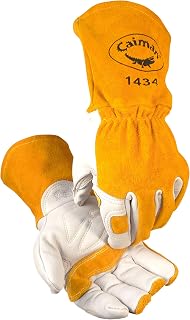 Caiman Premium Cow Grain MIG/Stick Welding GlovesCheck price on Amazon
 ARCCAPTAIN Soft Goat Grain TIG Welding GlovesCheck price on Amazon
 Leather Work Gloves for MenCheck price on Amazon
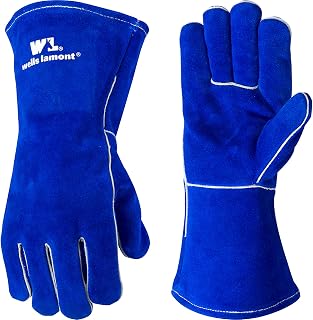 Wells Lamont Leather Welding GlovesCheck price on Amazon
 Cowhide Welding GlovesCheck price on Amazon
This guide links to our product roundups, where WeldGearLab gets a commission on purchases made through links on this page, and your price stays the same. Read our affiliate disclosure.
The difference in one paragraph
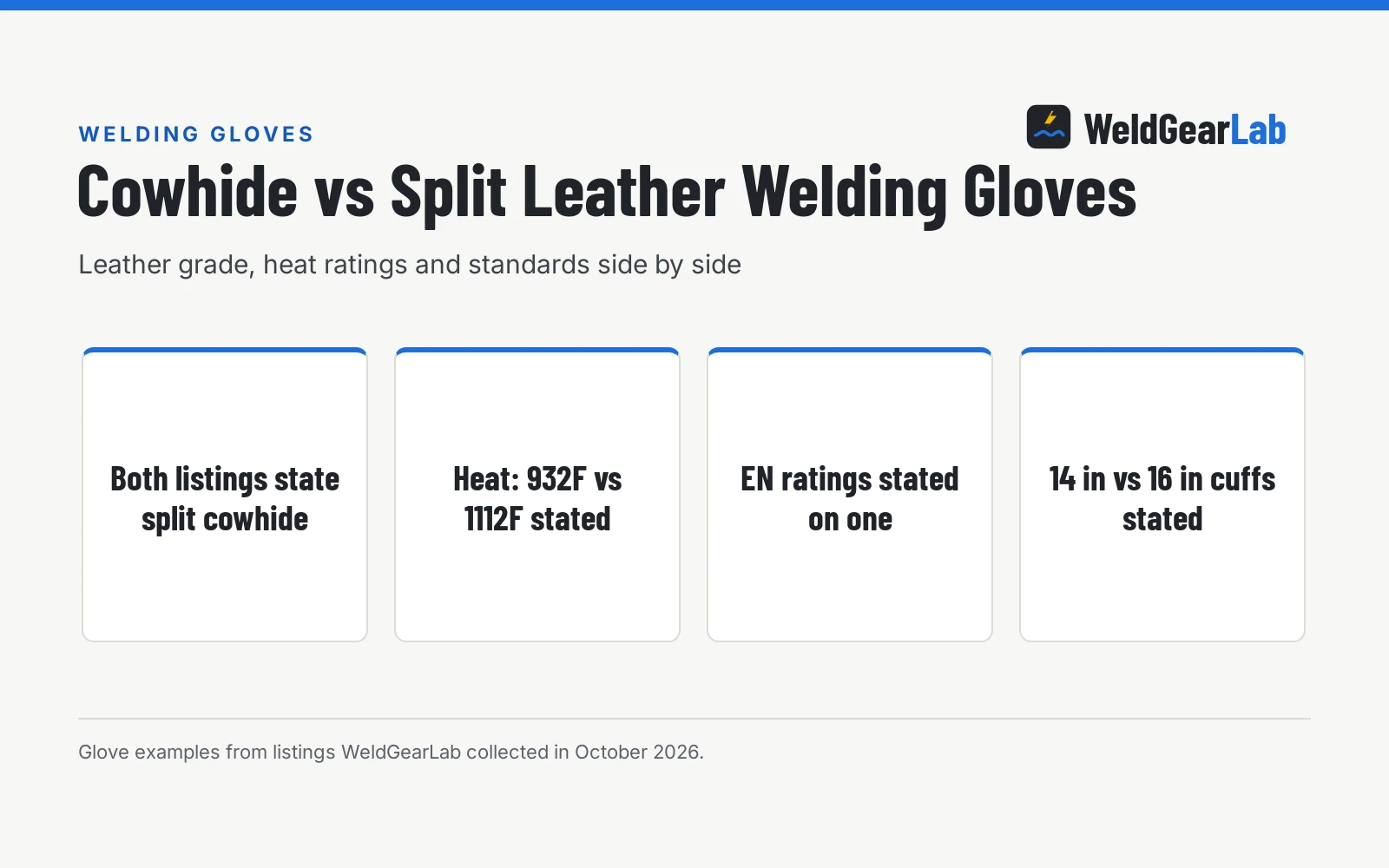
Cowhide and sheepskin are both leathers sold for welding gloves, but the listings in this guide only document cowhide. The TICONN listing states a 2.4mm thick cowhide outer with three layers of heat protection, an insulated aluminum foil middle and a flame retardant cotton inner, rated to 1000°F with palm contact heat at 932°F for 16 secs. The PerfeSafe listing states 100% split cowhide with a 100% cotton lining, rated to 662°F (350°C). Because no sheepskin listing is featured here, this guide compares the two cowhide examples on their stated specs and tells you which figures to demand from any sheepskin pair you consider.
Side by side
| Glove | Length | Leather | Heat rating | Lining | Stitching |
|---|---|---|---|---|---|
| TICONN 16 inch | 16 inches | 2.4mm cowhide, 3 layers | 1000F; palm 932F for 16 secs | Flame retardant cotton, aluminum foil | Reinforced stitching |
| PerfeSafe 14 inch | 14 inches | Split cowhide | 662F (350C) | 100% cotton | Kevlar stitching |
Heat ratings are the maker’s claim as printed on each listing. A higher stated rating does not mean the glove is safe for every hot job; match the rating to the work and replace gloves when the leather chars or the stitching fails.
The gear: two cowhide examples
TICONN 16 inch cowhide. The listing states a 16 inch glove in 2.4mm thick cowhide with three heat protection layers: cowhide outside, insulated aluminum foil in the middle and flame retardant cotton inside. It claims 1000°F heat resistance, palm contact heat at 932°F for 16 secs, and flame, oil, cut, puncture, abrasion, heat and tear resistance, with reinforced stitching. The palm is cotton and leather, the closure is adjustable, and one pair ships at 1.1 pounds package weight. It is not water resistant. For MIG and TIG work where the listing’s stated specs are the reference, this is the heavier-duty example of the two.
PerfeSafe 14 inch split cowhide. The listing states a 14 inch glove in 100% split cowhide with a 100% cotton lining, rated to 662°F (350°C), with a 5.5-inch extended sleeve for forearm coverage and 100% Kevlar stitching. It names MIG, TIG and stick among its uses and adds cooking, gardening and fireplace work. The palm is reinforced, the fit is ambidextrous with a pull-on closure, and the care instructions say do not wash. Against the TICONN, this is the shorter, lighter-spec example with the wider stated use list.
How to choose cowhide vs sheepskin welding gloves
Thickness and layers
The TICONN states a leather thickness of 2.4mm with three stated layers. The PerfeSafe spec table lists 0.01 centimeters, a figure that does not fit a split cowhide welding glove, so treat it as a listing error and compare the other stated specs.
Length and cuff coverage
The two examples are 16 inches and 14 inches long, and the PerfeSafe adds a 5.5-inch sleeve figure for forearm coverage. Longer cuffs cover more forearm against sparks; pick the length that covers your typical arm position over the work.
Lining and stitching
Both listings state a cotton lining; the TICONN adds an insulated aluminum foil layer. Stitching is reinforced on the TICONN and 100% Kevlar on the PerfeSafe.
Heat rating honesty
The stated ratings here are 1000°F and 662°F, plus a palm contact figure of 932°F for 16 secs on the TICONN. Treat every heat number as the maker’s claim for its own conditions, not a promise for your job. For more on hand protection, see our Kevlar vs leather welding gloves and welding gloves vs work gloves comparisons.
FAQ for welders
Are thicker welding gloves always better?
Not always. Thickness adds heat protection but costs dexterity, which matters for TIG. The TICONN states 2.4mm; the PerfeSafe spec table lists 0.01 centimeters, which does not fit a split cowhide glove, so there is no usable thickness comparison here.
What does the heat rating on a glove listing mean?
It is the maker’s stated claim, nothing more. The TICONN claims 1000°F with palm contact heat at 932°F for 16 secs, and the PerfeSafe claims 662°F (350°C). Match the rating to the work and replace gloves when the leather chars.
Do welding gloves need a lining?
Both examples have one: cotton on the PerfeSafe, and flame retardant cotton plus insulated aluminum foil on the TICONN. A lining adds insulation and comfort; an unlined glove’s heat protection comes from the leather alone.
How long should the cuff be?
The examples are 16 inches and 14 inches, with the PerfeSafe adding a 5.5-inch sleeve figure. Longer cuffs protect more forearm from sparks and spatter when you reach over the work.
Can I wash welding gloves?
Follow the listing. The PerfeSafe care instructions say do not wash; the TICONN says clean with a damp cloth, allow to dry naturally, and condition with a leather care product.
Related: elkskin vs cowhide welding gloves, cut resistant gloves vs leather gloves and leather vs synthetic welding gloves.