Clamp on vs Bolt Down Bench Vise: Which One Should You Buy?
Clamp-on and bolt-down bench vises hold work the same way but mount differently, and the right choice depends on table thickness, permanence and jaw size.

On this page
Top picks at a glance
As an Amazon Associate I earn from qualifying purchases.
- 1
 BESSEY KREK2440 K Body REVO Clamp Kit9.8/10View on Amazon
- 2
 MYTEC 2-In-1 Work Bench ViseView on Amazon
- 3
 Bench ViseView on Amazon
- 4
 VEVOR Bench ViseView on Amazon
- 5
 Wilton Multi-Purpose Bench ViseView on Amazon
- 6
 Dazefree Bench ViseView on Amazon
- 7
 Wilton 3" Clamp-On Apprentice ViseView on Amazon
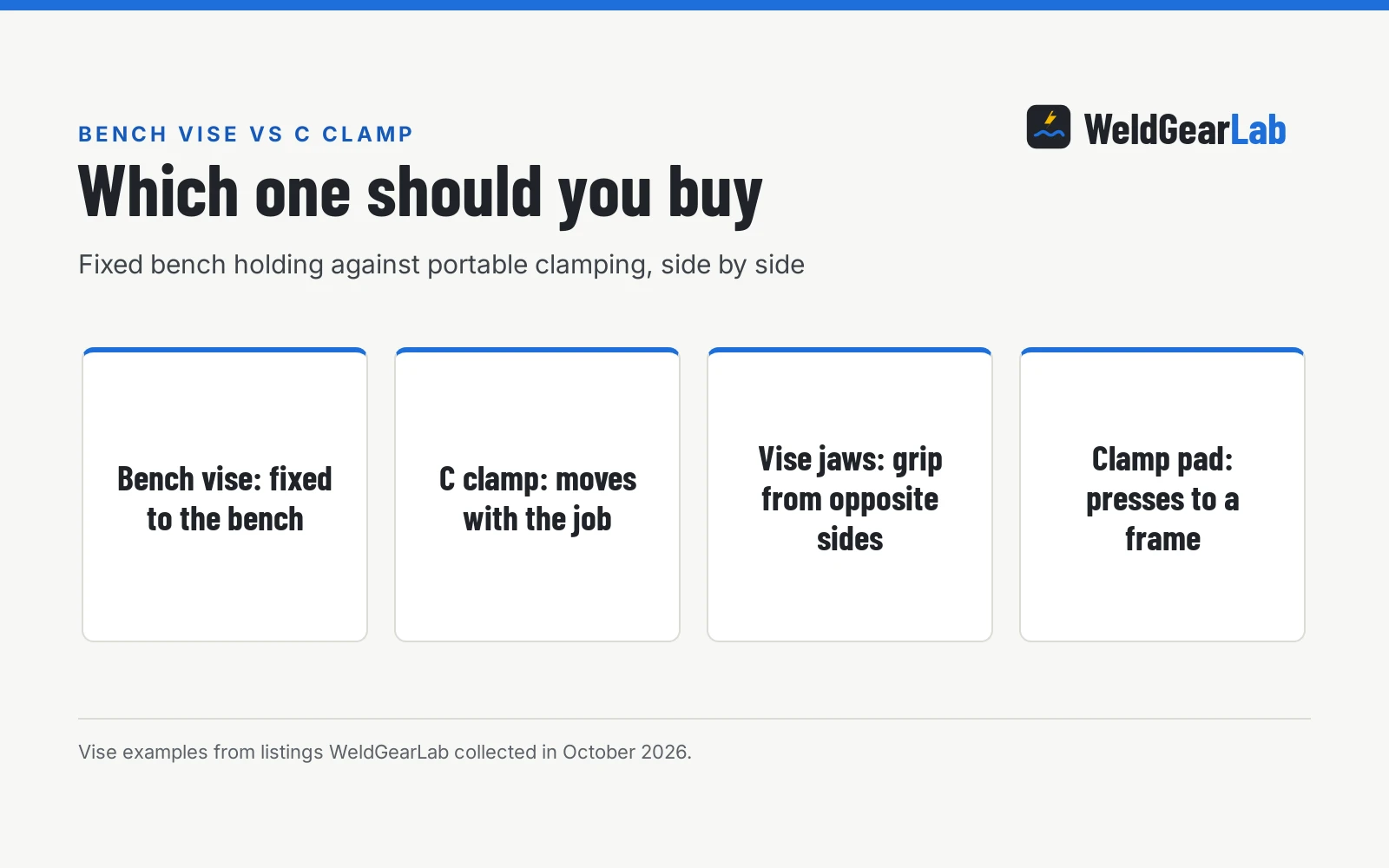
A clamp-on vise grips the bench edge and comes off when the job moves, while a bolt-down vise screws through the bench and stays put. For a shared, rented or portable bench, clamp-on wins on flexibility; for a dedicated shop bench that sees hammering and heavy holding, bolt-down wins on permanence. This guide compares clamp on vs bolt down bench vise mounting by table fit, moving and jaw features.
Other welders and gear to compare
 MYTEC 2-In-1 Work Bench ViseCheck price on Amazon
 Bench ViseCheck price on Amazon
 VEVOR Bench ViseCheck price on Amazon
 Wilton Multi-Purpose Bench ViseCheck price on Amazon
 Dazefree Bench ViseCheck price on Amazon
 Wilton 3" Clamp-On Apprentice ViseCheck price on Amazon
This guide links to our product roundups, where WeldGearLab gets a commission on purchases made through links on this page, and your price stays the same. Read our affiliate disclosure.
The difference in one paragraph
Mounting is how the vise attaches to the bench, not how its jaws hold work. A clamp-on vise squeezes the bench edge with a clamp base, so it needs a bench edge within the clamp range and no holes in the bench. A bolt-down vise is fixed with bolts or screws into the bench, so it stays in one place and needs a fixing put into the bench top. Jaw width, jaw opening, anvil and pipe jaws are separate features from mounting.
Clamp on vs bolt down bench vise side by side
| Clamp-on | Bolt-down | What to check | |
|---|---|---|---|
| Mounting | Clamps to a bench edge with a base, no holes needed for clamp mode | Bolts or screws into the bench for a permanent mount | Whether you can drill the bench |
| Moving it | Carry it to the spot and clamp it on | Stays where it is bolted | Whether the vise moves between jobs |
| Table thickness | Limited by the clamp range in the listing | Not limited by a clamp range, since it bolts into the bench | Measure the bench edge first |
| Best for | Portable, shared or rented benches | A dedicated shop bench that stays in one place | How permanent the setup is |
Mounting figures in the gear section come from the listings. Where a listing does not state a mounting method, the gear section says so rather than assuming one.
When clamp-on is the better choice
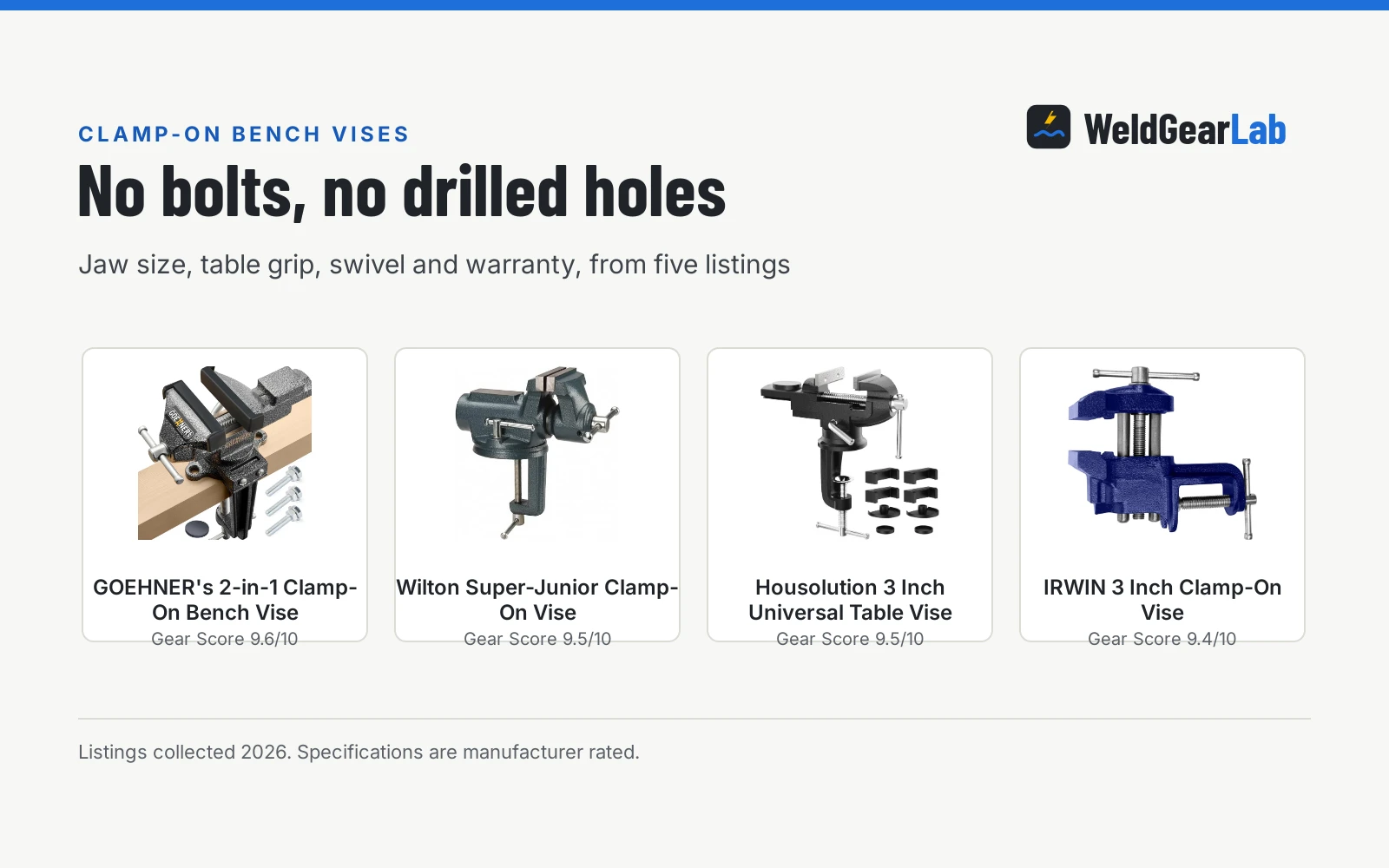
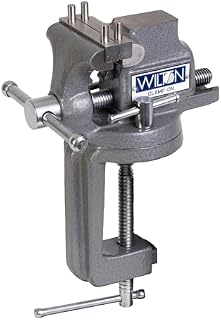
- Portable and shared benches. A clamp base lets the vise move to the work, and the MYTEC listing calls its clamp-on form a portable vise for jobsites and portable work tables.
- No holes in the bench. The ZHRMJZG listing says its clamp form does not need punching to install on the edge of a table, which suits a bench you do not want to drill.
- Table thickness fits the clamp. Check the bench edge against the stated clamp range before buying: 2.1 inches on the MYTEC example and 2.3 inches on the ZHRMJZG example.
When bolt-down is the better choice
- A permanent shop bench. Bolting or screwing a vise down suits a bench that stays in one place, and both 2-in-1 examples in the gear section offer a bolt or screw fixing as well as a clamp base.
- Heavy holding and hammering. A fixed mount resists shifting under anvil work, but clamping force is a separate figure from mounting: the strongest force in the gear section is 4500 lbs on the SEDY example, whose mounting method is not stated.
- One setup, no moving. If the vise never leaves the bench, a bolted mount removes the need to clamp and unclamp for every job.
Can one vise do both?
Yes, on the listings here. The MYTEC example offers permanent bolting down or a clamp base, and the ZHRMJZG example can be fixed to a table with screws or clamped to the workbench with its base. The SEDY example states neither mounting method, so its mounting should be checked in the listing before buying it for either style.
Gear examples
The gear examples below are in the order they fit this mounting question, starting with the vises that offer both mounting methods. All figures are from the listings.
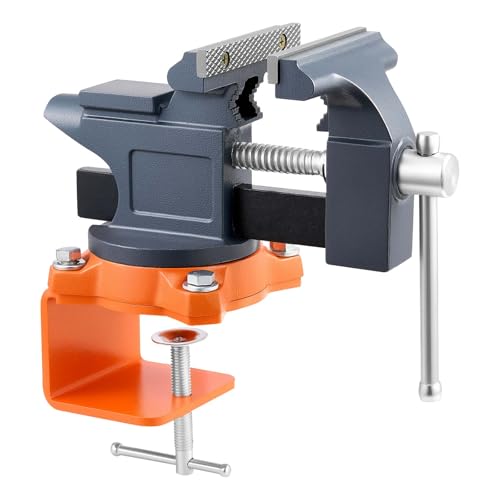
MYTEC 2-in-1 Work Bench Vise. This vise offers both mounting methods: permanently bolting it down, or clamping it onto the workbench or table with its clamp base. It lists a 270 degree swivel base, a jaw width of 4.5 inches, a maximum jaw opening of 4.2 inches, a throat depth of 2 inches, a clamp base range of 2.1 inches, a recommended working maximum clamping force of 2200 lbs, and a net weight of 13 pounds. Its jaws combine serrated pipe jaws and flat jaws in hardened steel, the body is high-strength cast steel with a chrome-plated spindle, and it lists a polished flat anvil for straightening nails and small metal pieces. Who it fits: someone who wants one vise for both a portable setup and a permanent bench. Who should skip it: someone who needs a wider jaw than 4.5 inches.
ZHRMJZG 2-in-1 Table Vise. This vise also offers both methods: fixing it to a table or workbench with screws, or clamping it to the workbench with its base, with no punching needed to install on the edge of a 2.3-inch thick table. It lists a 270 degree swivel base, a jaw width of 6 inches, a maximum jaw of 3.6 inches, a weight of 17.4 lb, and a high-strength forged steel body with a coating that prevents rusting. Its service note offers replacement within 3 years if the product malfunctions during normal use. Who it fits: someone who wants a wider jaw and both mounting options on a home workshop bench. Who should skip it: someone whose bench edge is thicker than 2.3 inches for the clamp form.
SEDY 6-Inch Bench Vise. This vise lists the strongest clamping force here at 4500 lbs, from 60,000 PSI ductile iron, with a 360 degree swivel locking base with dual locking handles, a large built-in anvil, integrated pipe jaws, and two magnetic jaw pads that protect finished and delicate surfaces. It lists a 6-inch jaw and holds wood, metal, tubing and plastic. Its listing does not state whether it mounts by clamp or by bolts, so mounting must be confirmed separately. Who it fits: heavy holding, anvil work and delicate surfaces where jaw pads matter. Who should skip it: anyone who needs the mounting method stated in the listing before buying.
What to check before you buy
- Bench edge thickness. Compare it with the clamp range where stated: 2.1 inches on the MYTEC example and 2.3 inches on the ZHRMJZG example.
- Mounting method stated. Look for a clamp base, a bolt fixing or a screw fixing in the listing; the SEDY listing states none of these.
- Jaw width and opening. These differ by example: jaw widths of 4.5 inches and 6 inches, and maximum openings of 4.2 inches and 3.6 inches, so check both figures, not just the headline size.
- Weight to move. The MYTEC example weighs 13 pounds and the ZHRMJZG example weighs 17.4 lb, which matters if the vise moves between benches.
FAQ for welders
Do I need to drill holes for a clamp-on vise?
No, not for the clamp form. The ZHRMJZG listing says its clamp form does not need punching to install on a table edge, and the MYTEC listing offers a clamp base as an alternative to bolting down. Fixing into the bench is only needed if you choose the bolt or screw form.
Can a clamp-on vise hold as much as a bolt-down vise?
Clamping force is separate from mounting, so judge the listed force, not the mount alone. The MYTEC dual-mount example lists a recommended working maximum clamping force of 2200 lbs, while the SEDY example lists 4500 lbs with its mounting unstated. A clamp-on vise is not automatically weaker, and a bolt-down vise is not automatically stronger.
What table thickness works with a clamp-on vise?
It depends on the clamp range in the listing. The MYTEC clamp base range is 2.1 inches and the ZHRMJZG clamp form fits a 2.3-inch thick table edge. Measure the bench edge first, and use the bolt or screw form if the edge is thicker than the stated range.
Does swivel rotation depend on mounting?
No, rotation is a separate feature from mounting. The MYTEC and ZHRMJZG examples list a 270 degree swivel base, while the SEDY example lists a 360 degree swivel locking base with dual locking handles. Check rotation and mounting as two separate figures in the listing.
Related: bench vise vs C clamp, swivel vs fixed welding vise, ductile iron vs cast iron bench vise, welding table vs workbench, and the welding tables and carts hub.