Built in Compressor vs External Compressor Plasma Cutter: Which One Should You Buy?
A built-in compressor plasma cutter offers all-in-one portability for mobile repairs and small shops, while an external compressor plasma cutter connects to dedicated shop air for heavy, continuous cutting.

On this page
Top picks at a glance
As an Amazon Associate I earn from qualifying purchases.
- 1
 Hypertherm Powermax 30 Air Plasma Cutter 088096 with Built-In9.5/10View on Amazon
- 2
 Hobart AirForce 12ci Plasma Cutter 120V with Built-In AirView on Amazon
- 3
 Reboot Plasma Cutter With Built In Air Compressor 40A 120VView on Amazon
- 4
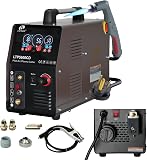 LTP5600CD 56A Drag-Cut Built-In Air Plasma Cutter 110V/220VView on Amazon
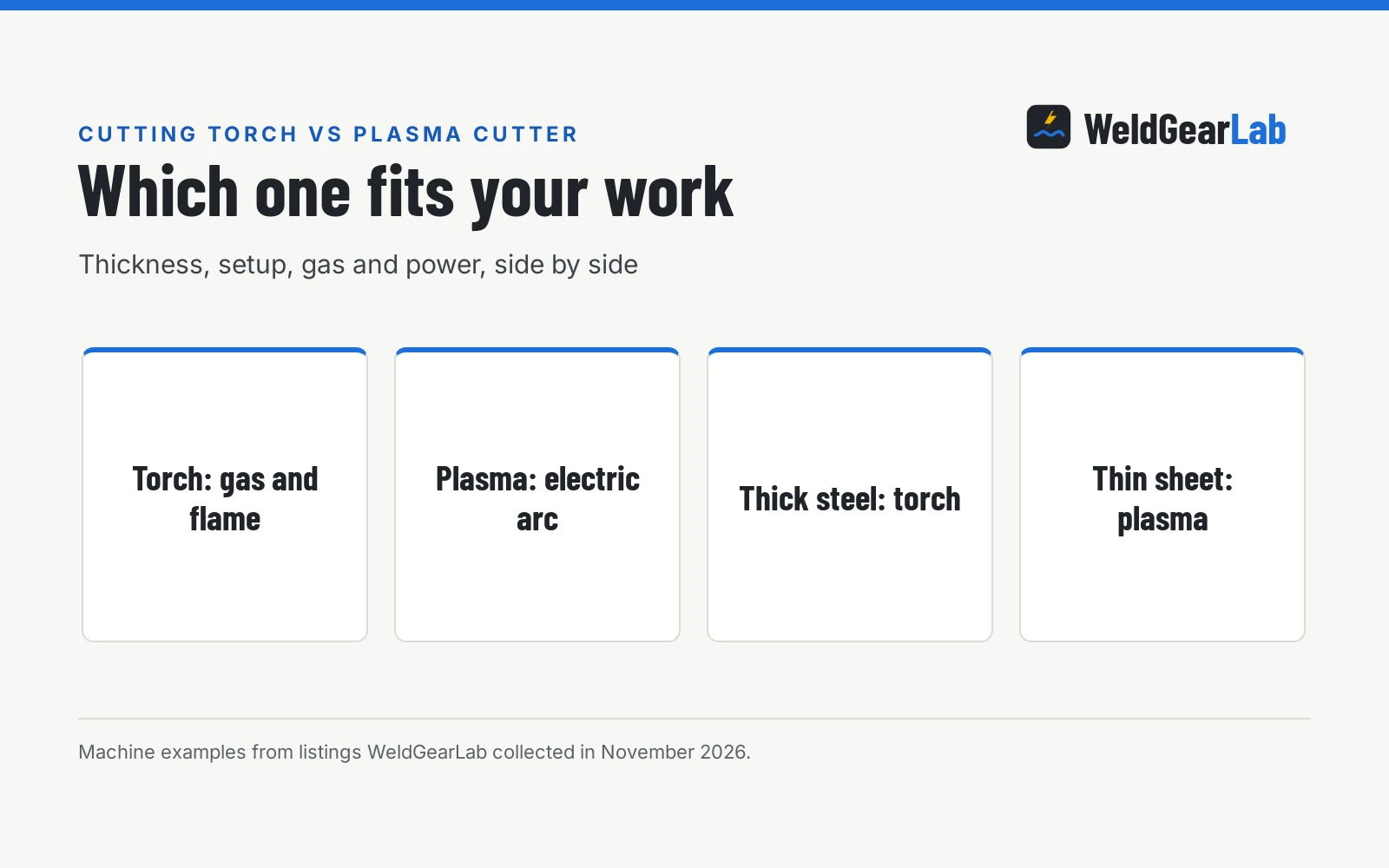
When slicing rusty plate or trimming brackets on the bench, choosing between a built in compressor vs external compressor plasma cutter comes down to all-in-one portability versus shop air integration. An internal pump cuts anywhere you have power without hauling tanks or hoses. A machine built for external air stays lighter and connects directly into your workshop air lines. Here is how they compare.
Other welders and gear to compare
 Hobart AirForce 12ci Plasma Cutter 120V with Built-In AirCheck price on Amazon
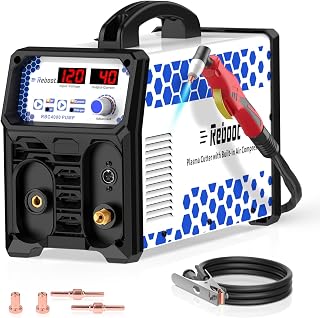 Reboot Plasma Cutter With Built In Air Compressor 40A 120VCheck price on Amazon
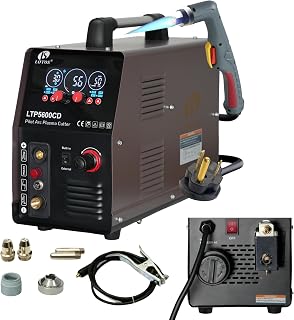 LTP5600CD 56A Drag-Cut Built-In Air Plasma Cutter 110V/220VCheck price on Amazon
This guide links to our product roundups, where WeldGearLab gets a commission on purchases made through links on this page, and your price stays the same. Read our affiliate disclosure.
The difference in one paragraph
Plasma cutting constricts an electrical arc through a nozzle, ionizing air into plasma and blowing molten metal out of the cut kerf. A built-in compressor plasma cutter houses an internal pump inside the casing, generating airflow from room air without external hoses. An external compressor plasma cutter has no internal pump and connects to a separate shop air compressor. That difference decides whether your cutter is fully self-contained or requires dedicated air plumbing.
Side by side
| Built-in compressor | External compressor | Dual-air hybrid | |
|---|---|---|---|
| Air supply | Internal pump only | Separate shop compressor only | Internal pump plus external air inlet |
| Portability | High, single power unit to carry | Requires transporting cutter and air compressor | High on internal pump, flexible in shop |
| Setup complexity | Plug into power and ground the work | Requires connecting air line, regulator, and hose fittings | Plug and cut on internal air, plumbed for shop |
| Cutting capacity | Handles sheet metal and plate within machine rating | Handles sheet metal and plate within machine rating | Cuts on internal pump, expands capacity on external air |
| Bare machine weight | Heavier due to internal pump hardware | Lighter with no onboard pump motor | Heavier due to internal pump hardware |
| Air moisture control | Relies on internal or basic moisture separation | Accommodates external multi-stage shop dryers | Basic on internal pump, full drying on shop air |
| Air supply duty cycle | Limited by internal pump heat during long runs | Sustained continuous airflow from compressor tank | Limited on internal air, sustained on shop air |
| Noise at the machine | Internal pump motor runs inside machine case | Quiet at machine; compressor noise depends on tank location | Pump runs on internal air; quiet on shop air |
| Typical application | Field maintenance, remote repairs, and small garages | Dedicated shop fabrication and continuous production | Versatile work spanning field repairs and shop bench |
Air supply shapes setup time and mobility. Internal pumps prioritize grab-and-go jobs, external air provides sustained airflow from a tank, and dual-air machines let you use both.
When a built-in compressor plasma cutter is the better choice
A self-contained cutter suits mobile flexibility and fast setup:
- Remote farm and field repairs. Fixing gates, brackets, or trailers where hauling an air compressor is impractical.
- Driveway and home garage projects. Making quick cuts without uncoiling stiff air lines or waiting for tank pressure.
- Limited shop floor space. Saves room in garages lacking space for a stationary compressor.
- Simpler electrical demands. Runs from a single outlet or generator without powering a separate compressor motor.
Our plasma cutter with air compressor guide covers self-contained machines.
When an external compressor plasma cutter is the better choice
External air fits heavy fab and continuous duty:
- Sustained heavy plate cutting. Thick plate demands steady air volume and pressure from a large tank.
- Production and long cuts. Continuous cuts run cooler on shop air than on a hard-working internal pump.
- Inline moisture drying. Dedicated lines let you add desiccant dryers and water separators to protect consumables.
- CNC table integration. Automated tables require stable air pressure without pressure drops.
See our guide on what size air compressor do I need for a plasma cutter to size your tank.
How to tell which air setup a machine uses
Look for these clues in product listings:
- Internal pump wording. Built-in units explicitly state built-in air compressor, internal pump, or no external air needed.
- External air notes. Standalone units state external air compressor required or compressor purchased separately.
- Dual-air flexibility. Some listings state an internal pump plus an external air port.
- Bare machine weight. Units with pumps are heavier (often 29 to 40 pounds) than bare external power sources (often under 21 pounds).
- Air specs. External models list required pressure (50 to 75 PSI) and flow (250 liters per minute or 4 cfm).
Built in compressor vs external compressor plasma cutter: air and power requirements
Published listing specifications show concrete differences in power, capacity, and weight:
- Hobart AirForce 12ci. Runs on 120 volts and weighs 29 pounds with an internal compressor; no external air needed.
- Reboot RBC4000PUMP. Weighs 30.5 pounds on 120 volts at 40A, listing a 3/8 inch clean cut, 3/5 inch max cut, and a 50A breaker recommendation.
- LOTOS APEX LTP5600CD. Delivers 56A on 110V/220V at 38 pounds. Cuts 1/2 inch steel on internal air, or connects to external air for a 5/8 inch clean cut and 3/4 inch severance, listing 4 cfm airflow and 75 psi max pressure.
- H HZXVOGEN HVC6000Pro. Built-in compressor unit with a 60% duty cycle on 240V at 50A, weighing 40 pounds with a 5/16 inch clean cut and 5/8 inch max cut.
- SONNLER 2 in 1. Built-in compressor machine running on 220V with 15-40A DC output, listing a 1/3 inch clean cut, 3/5 inch max cut, and a 5-15 seconds gas delay.
- ANDELI. Built-in compressor model rated 55A on 110V/220V, with a 3/4 inch clean cut, 1 inch max cut, and 15 mm perforation on 220V with external air.
- ARCCAPTAIN CUT55 Non-HF. External-air machine weighing 18.81 pounds. Requires 50 PSI at 35A on 110V and 60 PSI at 55A on 220V (recommended 50–75 PSI on 220V), listing a 3/5 inch clean cut and 1 inch max cut.
- Bestarc BTC500XP-11GEN. External-air cutter at 20.6 pounds, requiring 65 PSI air at 250 liters per minute, reaching a 1/2 inch clean cut and 1 inch max cut at 50A on 220V.
- SILATU STC550P. External-air rig weighing 12.57 pounds with a 1/4 inch NPT fitting, requiring 70 PSI for a 9/16 inch clean cut and 7/10 inch max cut at 220V at 55A.
- AWT CUT-65. External-air unit weighing 19.91 pounds, listing a 3/4 inch clean cut and 1 inch max cut on 220V at 65A.
Can one machine do both?
Yes. Dual-air machines combine an onboard pump with an external air port. For example, the LOTOS APEX LTP5600CD cuts 1/2 inch steel on internal air, but accepts shop air for a 5/8 inch clean cut and 3/4 inch severance at 56A. Models from H HZXVOGEN and ANDELI also support external air lines, giving you grab-and-go mobility now and shop air expansion later.
Plasma cutting safety. Plasma cutting generates ultraviolet arc radiation, sparks, and fumes. Wear leather gloves, protective clothing, and a helmet with the right shade (see our guide on what shade for plasma cutting). Never cut near flammables. Secure all pressurized air hoses and fittings. Work in well-ventilated areas to avoid fumes. See the OSHA welding overview and our Safety Disclaimer.
Before You Strike an Arc
- Power supply. Confirm the outlet and circuit match what the listing states before first use.
- Parts on arrival. Check the torch consumables and ground clamp are in the box.
- Air fittings. Match the air fitting to the hose and regulator you plan to use.
- First cut. Check airflow and arc on scrap metal before starting a finished cut.
FAQ for welders
Do plasma cutters with built-in compressors need any external air tanks?
No. An onboard pump produces airflow directly from ambient air. Plug the machine into power and attach your ground clamp to start cutting. This eliminates hauling a separate compressor for mobile repairs.
Does an external compressor plasma cutter cut thicker metal than a built-in model?
Cutting thickness depends on power output and torch design. External-air models like the AWT CUT-65 and Bestarc BTC500XP-11GEN list a 1 inch max cut on 220V, while the ANDELI with internal air also lists 1 inch. External air simply provides sustained cooling and volume from a tank for long, heavy cuts.
Why is air dryness critical for plasma cutting?
Moisture erodes copper nozzles, pits electrodes, causes arc sputtering, and leaves heavy dross. Adding water separators or desiccant dryers along your air line keeps air dry, extending consumable life and keeping edges clean.
Are built-in compressor plasma cutters heavier to carry?
Yes, bare power sources with internal pumps are heavier. The LOTOS APEX LTP5600CD weighs 38 pounds and H HZXVOGEN weighs 40 pounds, while external units like the SILATU STC550P weigh 12.57 pounds and ARCCAPTAIN CUT55 weighs 18.81 pounds. However, you leave the bulky separate air compressor at home.
Can I run an external plasma cutter from a small garage compressor?
A small compressor handles short cuts, but torches quickly drain small tanks. If pressure drops below the machine’s minimum threshold, the arc cuts out. Sustained cutting requires an air compressor that meets the torch’s CFM rating.
Related: plasma cutter with air compressor, best air compressor for plasma cutter, best air dryer filter for plasma cutter, and the plasma cutters hub. Also see our guide on what size air compressor do I need for a plasma cutter.