Best Material for Welding Gloves (2026)
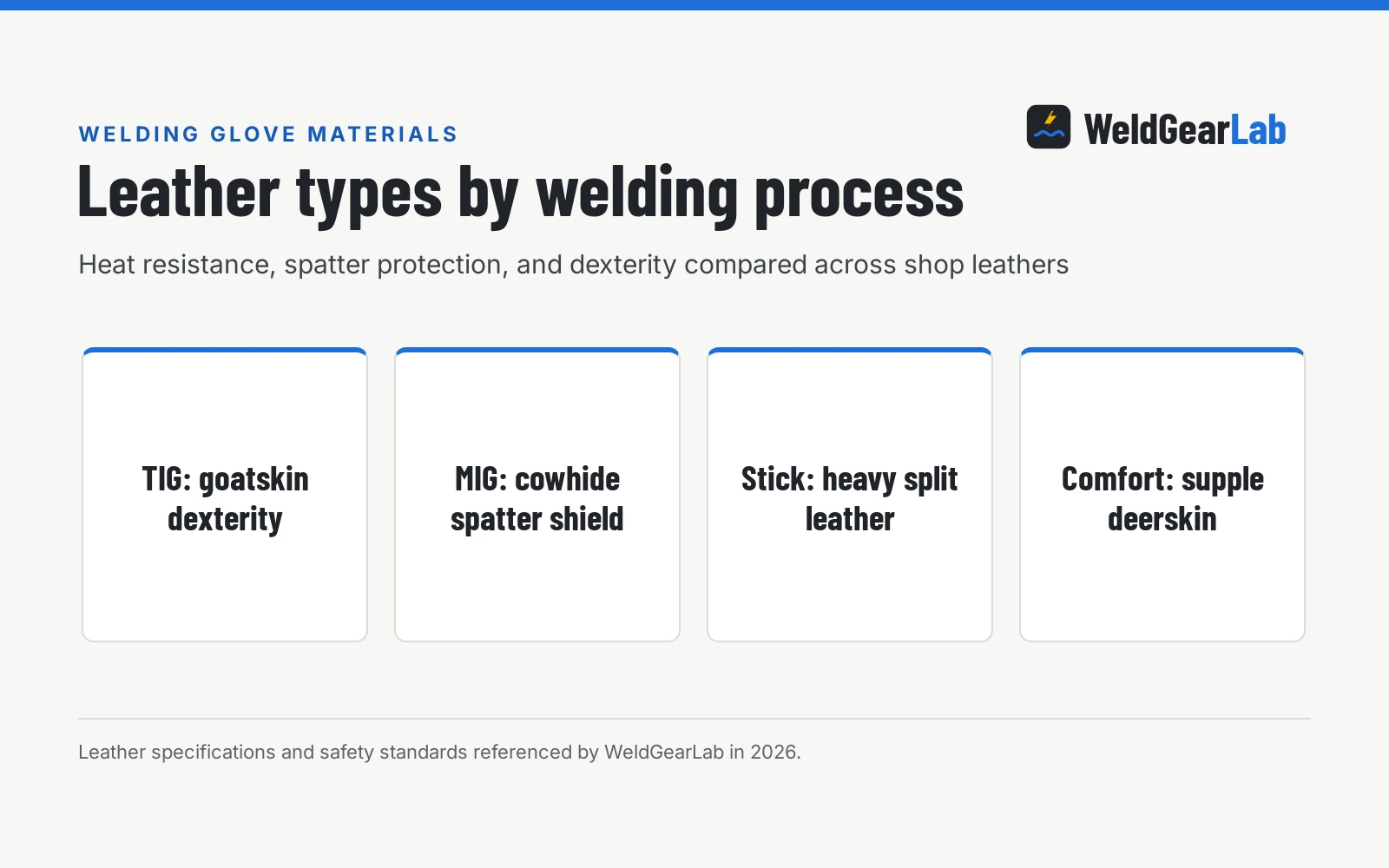
The best material for welding gloves depends on your process: premium goatskin delivers TIG dexterity, split cowhide resists heavy MIG heat, and supple deerskin offers all-day comfort.

On this page
Top picks at a glance
As an Amazon Associate I earn from qualifying purchases.
- 1
 Hobart Premium Goatskin MIG Welding Gloves9.7/10View on Amazon
- 2
 Leather Welding & Gardening Gloves for Women- Pink9.7/10View on Amazon
- 3
 ARCCAPTAIN Tig Welding Gloves: Premium Goatskin Grain Leather9.7/10View on Amazon
When you strike an arc on thin sheet steel or clamp up structural plate at the bench, your hands take radiant heat, flying spatter, and sharp metal edges. The best material for welding gloves depends on your process: premium goatskin is the best choice for TIG welding because it delivers fine torch control and tactile feel, while thick split cowhide is the best material for MIG and stick welding where heavy spatter and high heat dominate. Choosing the right leather balances tactile feedback against thermal burn protection so you can lay consistent beads without blistering your palms.
This guide links to our product roundups, where WeldGearLab gets a commission on purchases made through links on this page, and your price stays the same. Read our affiliate disclosure.
Best material for welding gloves
No universal leather type handles every welding process equally. An electric welding arc produces intense radiant heat and ultraviolet radiation, while open-arc processes like MIG, flux core, and stick eject liquid spatter and slag. TIG welding requires precise fingertip manipulation to feed fine filler wire into a small puddle, meaning thick hide causes hand fatigue and sloppy dab control. In contrast, flux core and MIG welding throw molten metal droplets that would burn straight through delicate goatskin. Understanding the trade-offs between grain leather, split leather, and internal linings lets you match your hand protection to the metal on your bench.
Side by side
| Goatskin | Split Cowhide | Deerskin | Pigskin | |
|---|---|---|---|---|
| Primary process | TIG welding | MIG and stick welding | TIG welding and bench fabrication | MIG and shop fabrication |
| Heat and spatter resistance | Resists radiant heat; vulnerable to spatter | High radiant heat and heavy spatter resistance | Moderate radiant heat; vulnerable to spatter | Moderate radiant heat and moderate spatter resistance |
| Dexterity and tactile feel | High, excellent filler rod control | Low, stiff and bulky protection | High, supple and soft grip | Moderate, pliable and breathable |
| Abrasion and tear resistance | High tensile strength, moderate puncture resistance | High resistance to rough steel and burrs | Moderate resistance; soft surface prone to scuffing | High abrasion resistance; durable grain |
| Moisture and heat response | Can dry stiff if overheated | Hardens and shrinks under extreme heat | Dries soft after sweating without hardening | Dries soft after moisture exposure without stiffening |
| Common lining configuration | Unlined or thin seamless palm | Thick cotton, fleece, or foam lining | Unlined or lightweight fleece | Unlined or cotton lining |
| Best shop application | Precision TIG torch and filler control | Heavy MIG, flux core, and stick welding | Prolonged TIG welding and precision assembly | Humid shop environments and handling oily stock |
Leather selection reflects shop priorities: thin grain leathers maximize tactile dexterity, while heavy split hides resist slag penetration and radiant heat soak. Many fabricators keep different glove styles at the bench to swap when moving from torch setup to heavy deposition passes.
When goatskin is the better choice
- TIG welding and filler rod feeding. The natural grain of goatskin is supple and smooth, letting filler rod slide smoothly across your fingers without catching.
- Fine torch control and tactile feel. Light torch angles and tight cup clearances require delicate wrist and finger movement that bulky leathers restrict.
- High tensile strength in a thin cut. Goatskin fibers are exceptionally dense and tight, providing dependable tear and abrasion resistance despite being lightweight.
- Precision bench assembly. Fitting up small brackets, tacking sheet metal, and adjusting gas nozzles are easier without having to pull off a glove.
Our best welding gloves for dexterity guide reviews lightweight models designed specifically for precise torch manipulation and filler rod control.
When split cowhide is the better choice
- Heavy MIG and flux core welding. Split cowhide has a rough, dense fibrous structure that repels molten spatter and resists burning through.
- Stick welding and slag chipping. Chipping slag and handling hot electrode stubs demands a thick thermal barrier between the arc and your palm.
- Handling rough, hot steel cutoffs. The coarse exterior of split leather resists cuts, abrasions, and sharp burrs from freshly sheared metal plate.
- Extended high-heat duty cycles. Lined cowhide insulates against radiant heat soak when working close to large weldments or preheated castings.
See our best welding gloves for MIG roundup for durable leather models built for high spatter environments, and check the best welding gloves for high heat for heavy-duty stick and multi-pass work.
Alternative leathers for specific shop conditions
- Deerskin for soft grip and reduced fatigue. Deerskin is naturally soft and flexible from initial wear. It contains natural oils that prevent the leather from hardening after exposure to heat and sweat, making it popular for fabricators spending long fabrication sessions at the table.
- Pigskin for oily, damp, or humid work. Pigskin has a distinct porous grain that breathes well and sheds moisture. When pigskin gets wet from water cooling tubs or shop humidity, it dries soft without shrinking or stiffening.
- Elkskin for extreme heat without stiffening. Heavy elkskin is thicker than standard deerskin yet remains supple. It resists heat-induced shrinkage better than cowhide, making it a favorite for heavy structural stick passes.
Female welders often struggle with loose fingertips in standard bulky gloves; our best welding gloves for women covers models proportioned for smaller hands without sacrificing leather quality.
Stitching, welting, and heat shield construction
The leather shell is only part of glove longevity; seams and thread fail long before the hide wears out. Consider these critical build features when selecting hand protection:
- Kevlar thread stitching. Standard cotton or synthetic thread chars and unravels quickly under welding sparks. Kevlar thread resists heat degradation and keeps seams intact under heavy shop abuse.
- Welted seams. Welting places thin strips of leather directly between the seam edges, protecting the Kevlar thread from direct spatter exposure and grinding abrasion.
- Reinforced palm and thumb straps. A reinforced thumb saddle adds extra leather where the MIG gun handle or grinder grips rub continuously against your hand.
- Back-of-hand heat shields. Aluminized pads or reflective inserts reflect intense radiant heat away from the back of the hand during long, continuous welds.
Safety, heat exposure, and glove care
Welding gloves protect against radiant arc energy, spatter, and brief contact with hot steel, but they are not fireproof tongs. Never pick up freshly welded metal directly with leather gloves; doing so shrinks the leather, cooks the natural oils, and destroys the flexibility permanently. Once leather dries out from extreme heat, it becomes brittle and cracks along flex points, leaving hands vulnerable to burns.
Keep gloves dry and free from heavy grease, as oils degrade leather fibers and can ignite under heavy spark showers. If gloves become damp with sweat, let them air-dry at room temperature away from direct radiant heaters. For complete shop personal protective equipment requirements, consult our welding safety gear checklist for beginners and explore the full welding safety gear resource hub.
FAQ for welders
What material is welding gloves?
Welding gloves are primarily made from animal hides such as cowhide, goatskin, deerskin, pigskin, and elkskin. Each leather offers a distinct balance of thermal protection, abrasion resistance, and finger flexibility. Quality gloves combine these leathers with Kevlar stitching and cotton or fleece linings to protect against heat and flying spatter.
What are TIG welding gloves made of?
TIG welding gloves are typically made from thin grain goatskin, kidskin, or lightweight deerskin. These hides provide superior tactile sensitivity and flexibility, allowing the welder to feed fine filler wire smoothly and control the torch with precision. Because TIG produces virtually no spatter, the gloves remain unlined or lightly lined to maximize dexterity.
What size welding gloves do I need?
Welding gloves should fit comfortably across the palm without pinching or bunching. Measure your hand circumference around the widest part of the palm and check the maker sizing chart. Unlined TIG gloves should fit snugly against the fingertips for precise filler rod control, while heavy lined MIG and stick gloves benefit from a slightly relaxed fit so you can fling them off quickly if heat builds up.
Are TIG welding gloves heat resistant?
TIG welding gloves resist radiant arc heat during typical passes, but they provide minimal protection against direct contact with hot metal or sustained thermal soak. Their thin leather construction prioritizes dexterity and torch feel over thermal insulation. When resting your torch hand near a hot weld seam, use an external heat shield or resting finger block rather than relying on thin glove leather.
Are welding gloves heat resistant?
Welding gloves provide substantial resistance to radiant arc heat, flying sparks, and brief incidental contact with hot workpieces. Heavy split cowhide and lined elkskin gloves offer the highest thermal resistance for heavy deposition processes like MIG and stick welding. However, no leather glove is impervious to heat, and prolonged contact with freshly welded joints will rapidly scorch the hide and cause painful burns.
Related: best welding gloves for dexterity, best welding gloves for MIG, best welding gloves for high heat, and the welding safety gear hub. Also see our best welding gloves for women.