MIG Welding Vertical Up vs Vertical Down: Which Direction Fits Your Work
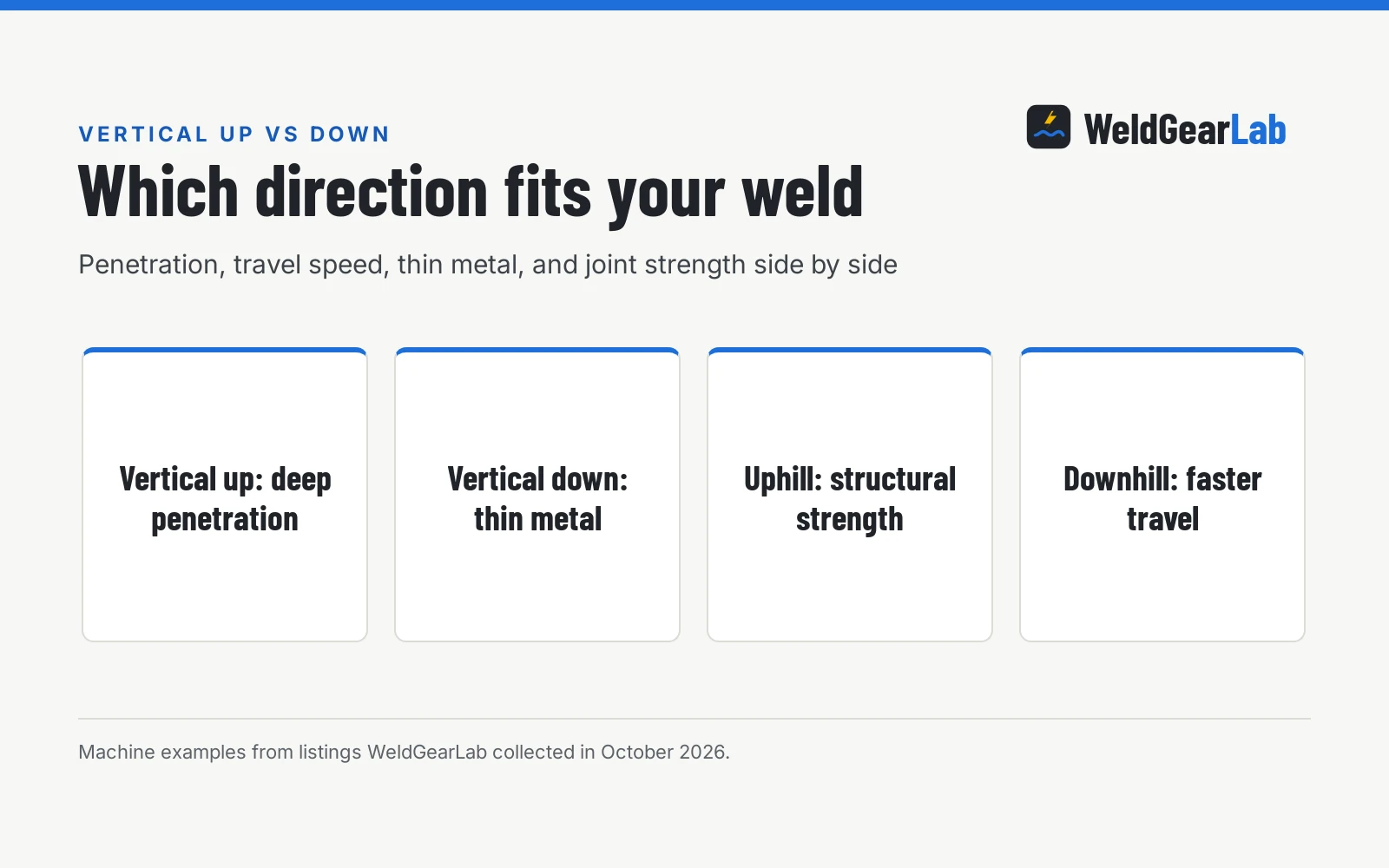
MIG welding vertical up provides deep penetration on thick steel, while vertical down offers fast travel speed and lower heat on thin sheet metal.


MIG welding vertical up provides deep penetration on thick steel, while vertical down offers fast travel speed and lower heat on thin sheet metal.
Harbor Freight Titanium and Hobart MIG welders suit different priorities, comparing lightweight inverter portability against heavy duty transformer construction and long term parts support.
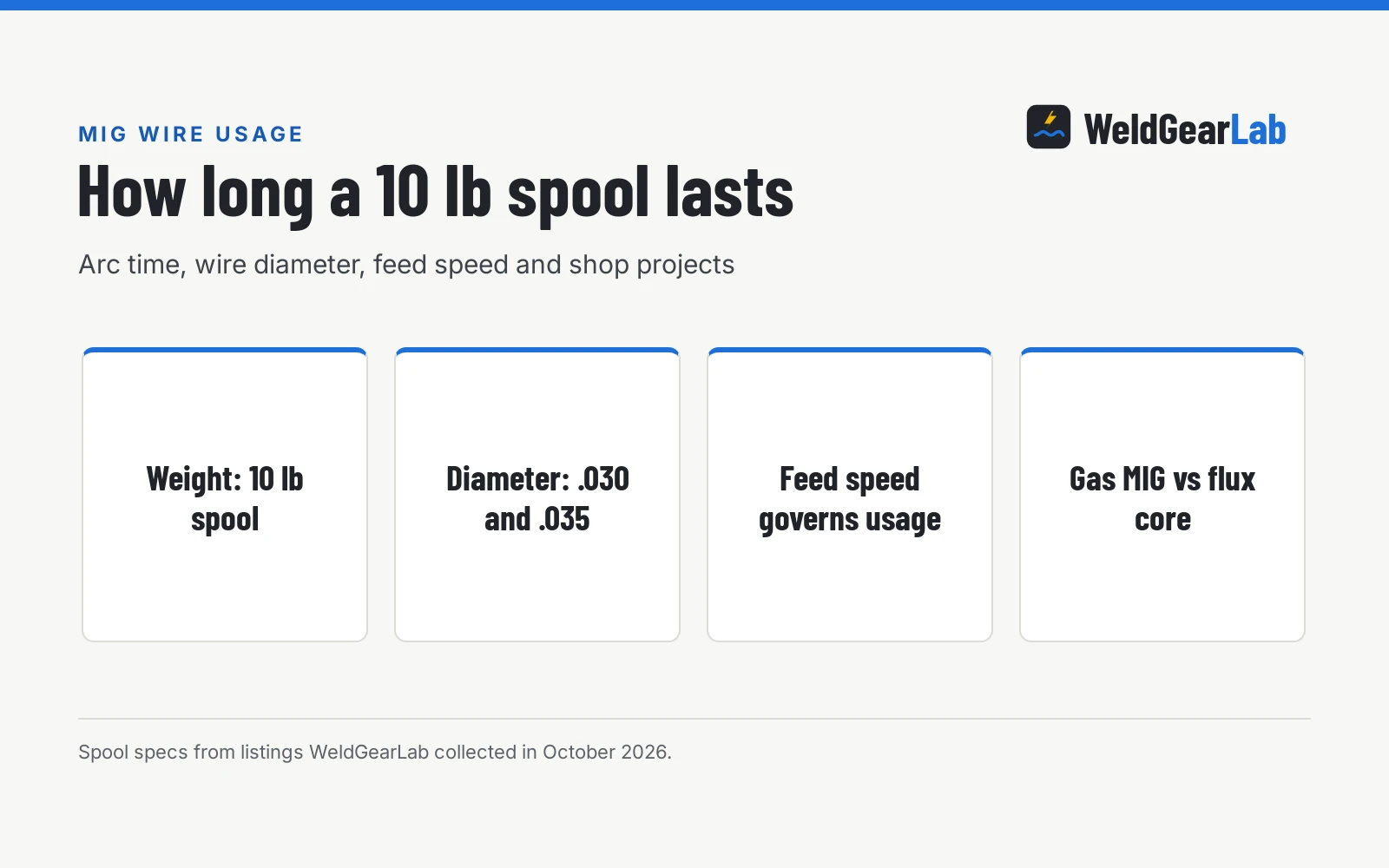
A 10 lb spool of MIG wire is consumed only while the trigger is pressed, governed by trigger time, wire diameter, and feed speed.
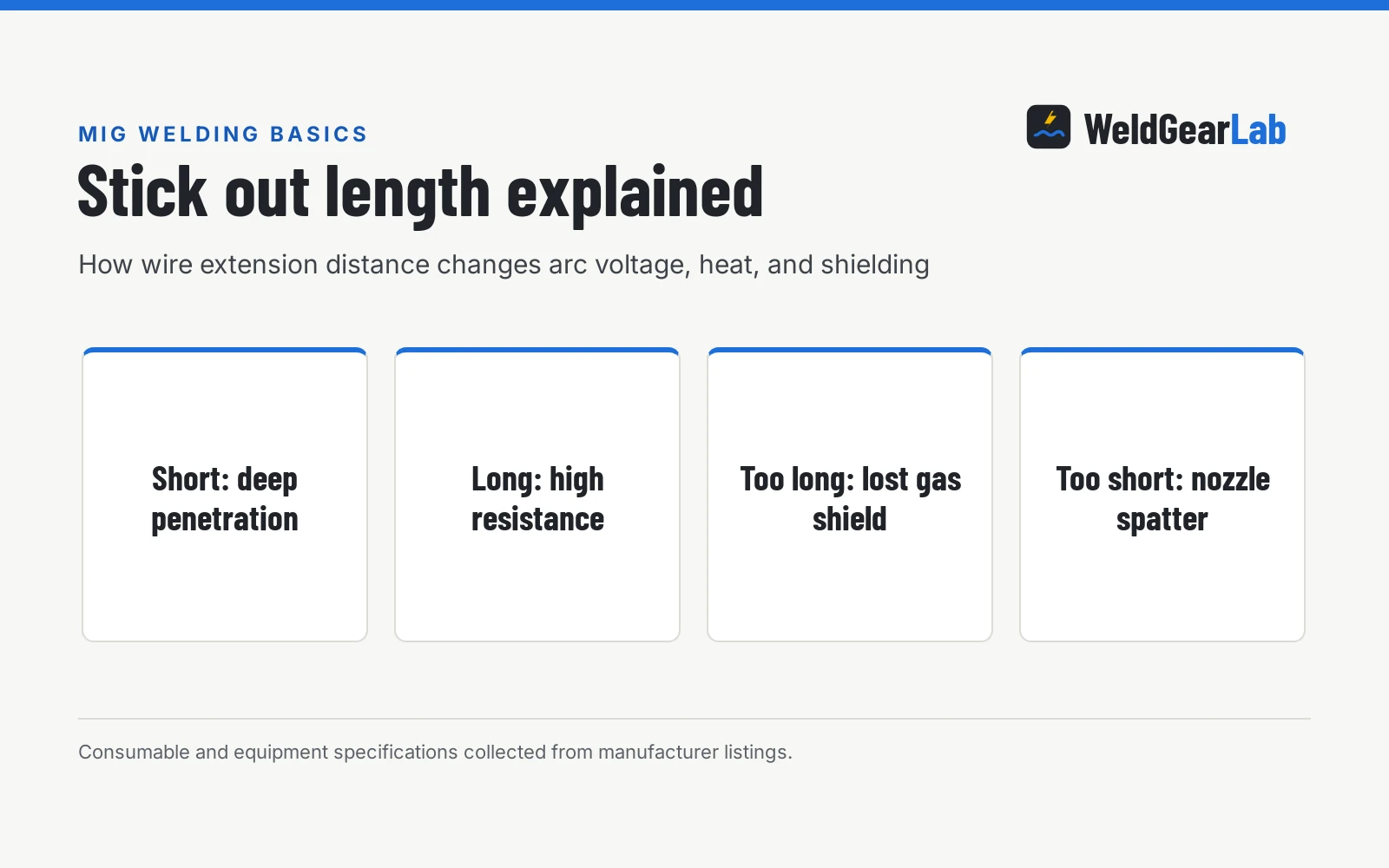
MIG welding stick out length controls arc stability, penetration, and shielding gas coverage, making correct wire extension essential for clean welds.
Pushing and pulling produce different penetration, bead profiles, and puddle visibility during MIG welding, making torch direction vital for clean steel joints.
How to change the wire spool on a MIG welder step by step, from trimming the old wire and setting spindle brake tension to…
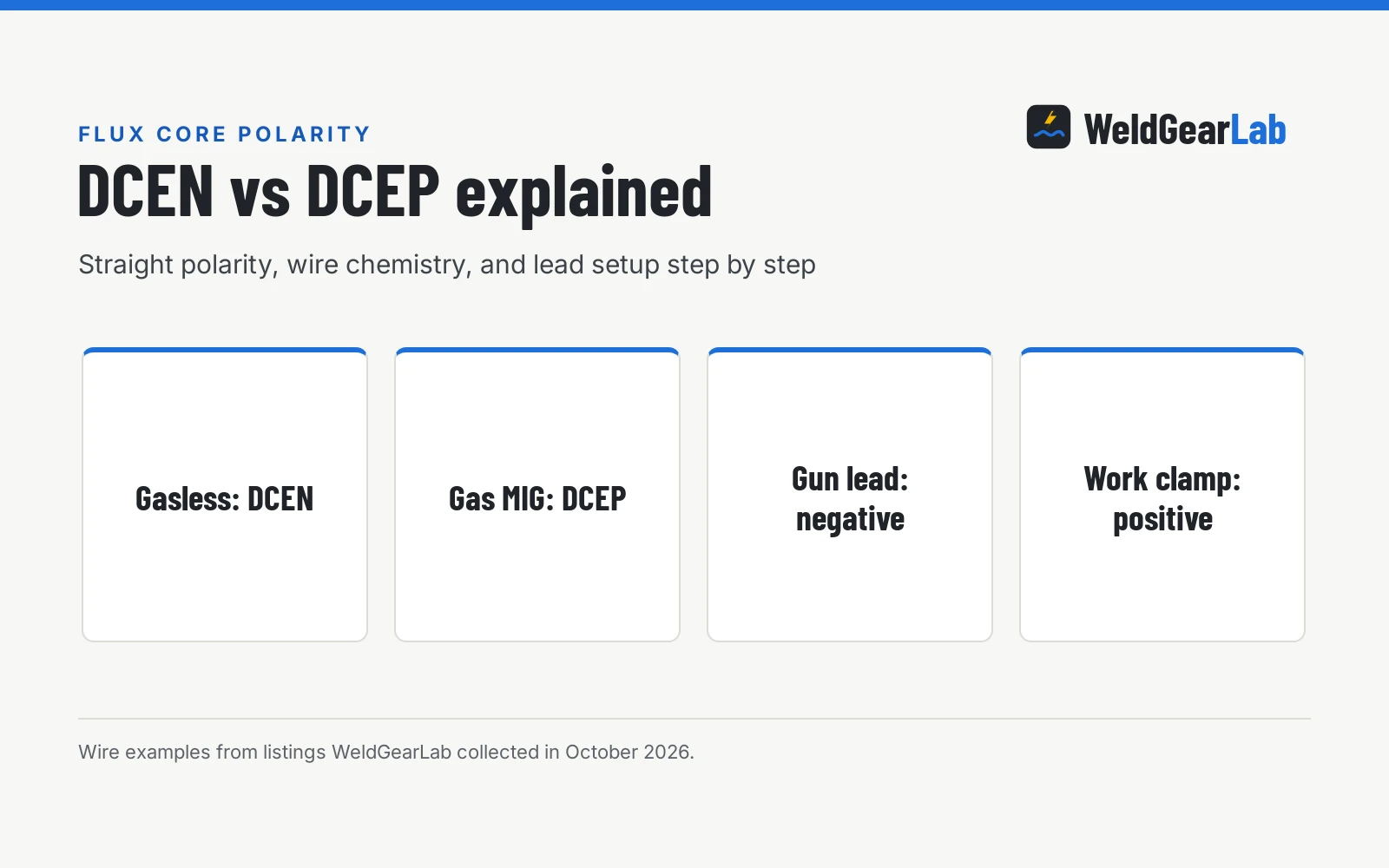
Self-shielded flux core wire runs on DCEN straight polarity. Why gasless welding requires electrode negative, how it differs from MIG, and how to swap…
How to determine what size generator to run a MIG welder based on input voltage, continuous wattage draw, arc strike surge headroom, and clean…
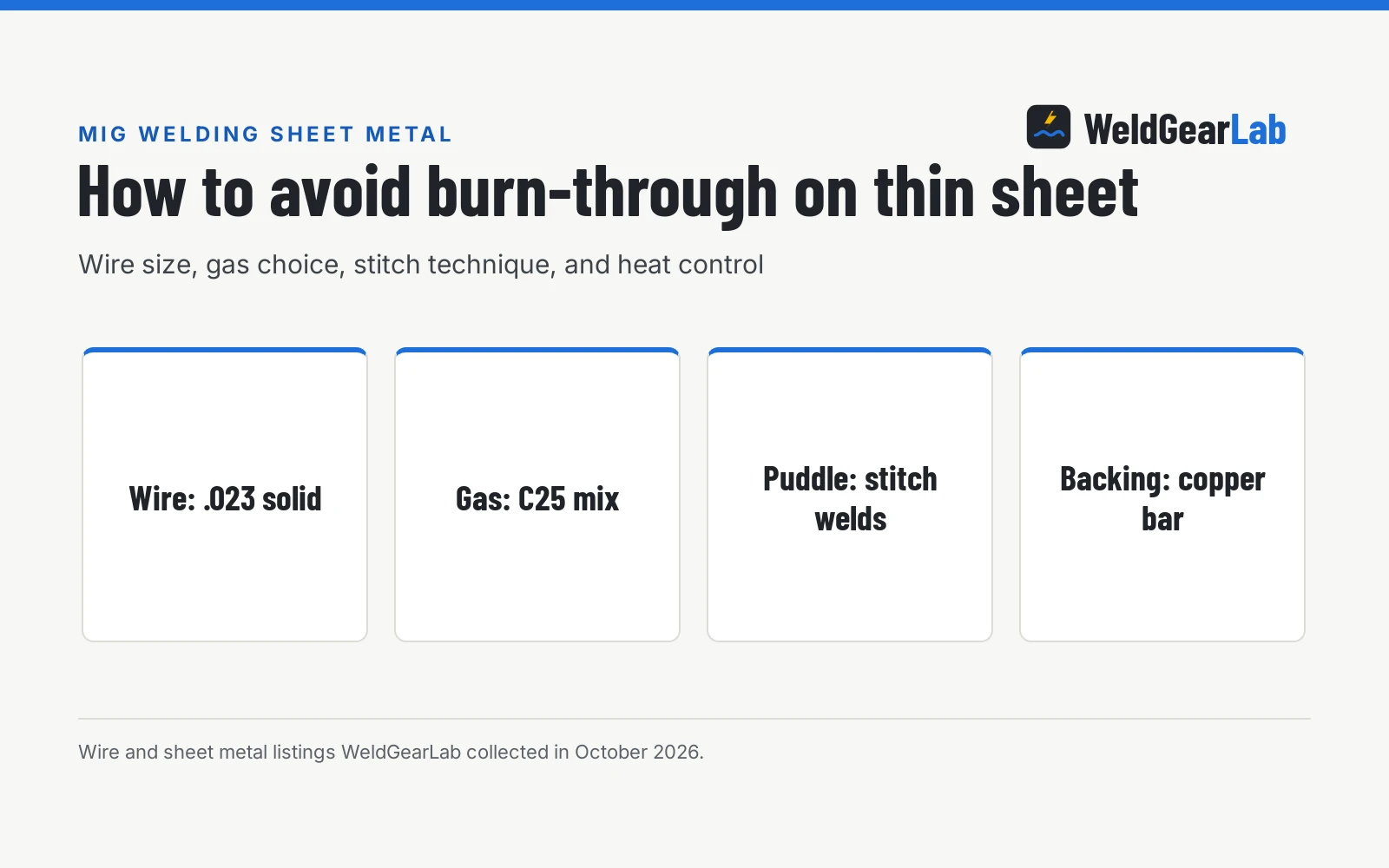
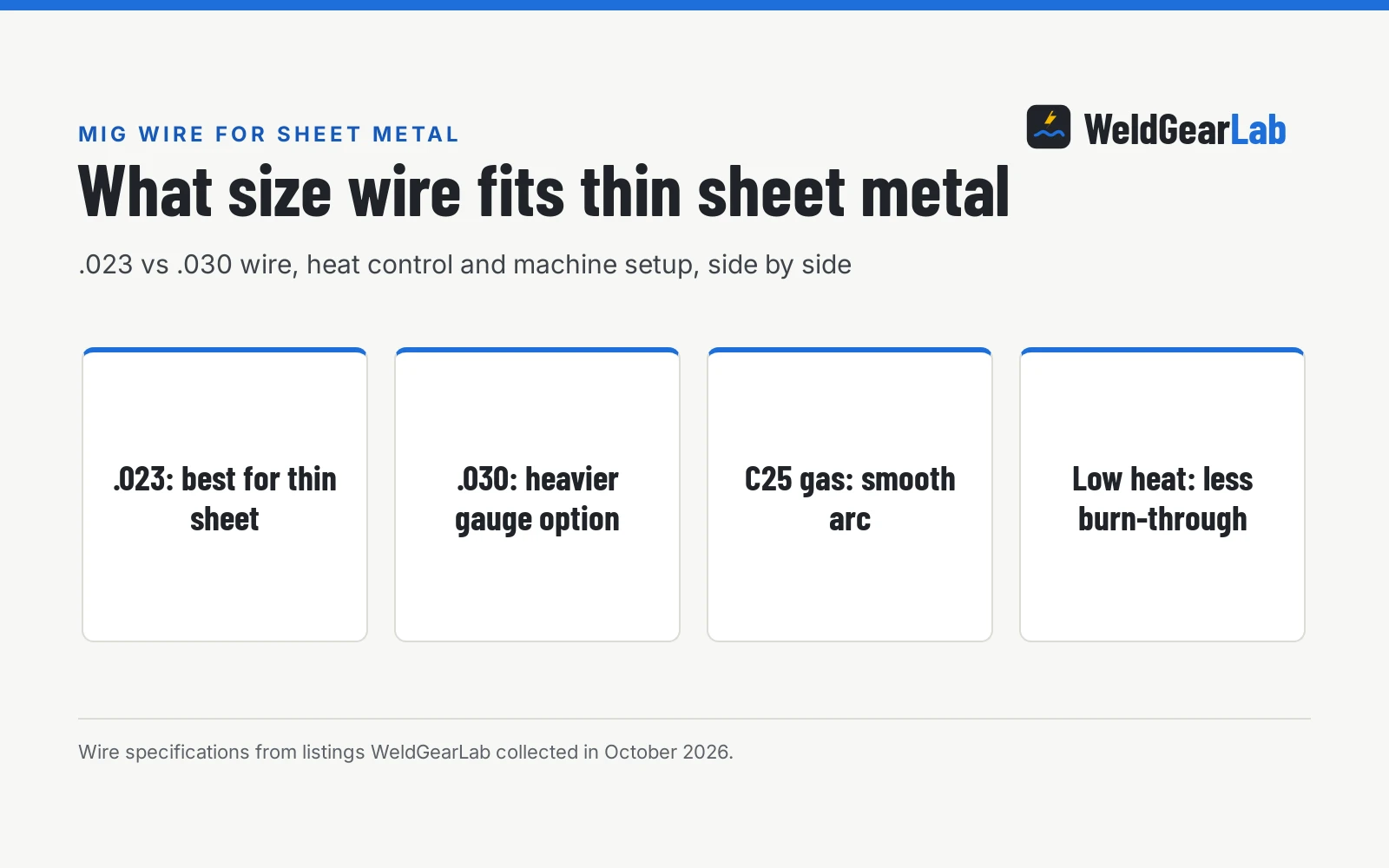
How to MIG weld thin sheet metal without burning through by using small-diameter wire, low heat settings, tight joint fitup, and short stitch welds.
For welding thin sheet metal, .023 inch MIG wire provides lower heat input and cleaner puddle control than .030 wire to prevent burn-through on…