Welding Helmet Optical Clarity Rating Explained
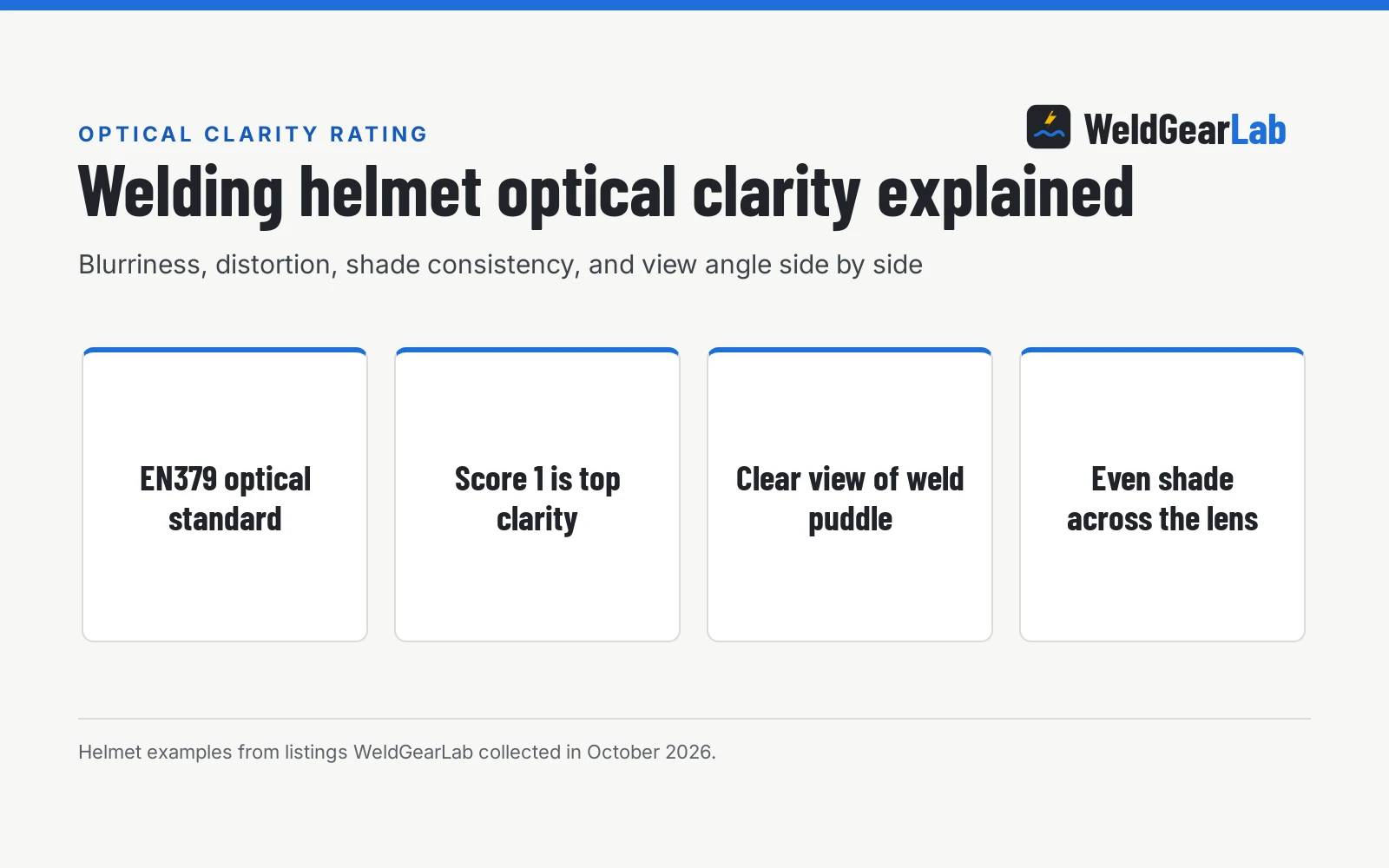
Optical clarity ratings explain how clearly an auto-darkening welding helmet lens shows the puddle by scoring blurriness, distortion, shade consistency, and view angle.


Optical clarity ratings explain how clearly an auto-darkening welding helmet lens shows the puddle by scoring blurriness, distortion, shade consistency, and view angle.
Auto darkening welding helmets last as long as their electronic filter cartridge, power supply, and protective shell hold up against shop heat, spatter, and…
How to replace a welding helmet battery, locate the cartridge tray or hatch, identify coin cell types like CR2450 and CR1025, and confirm filter…
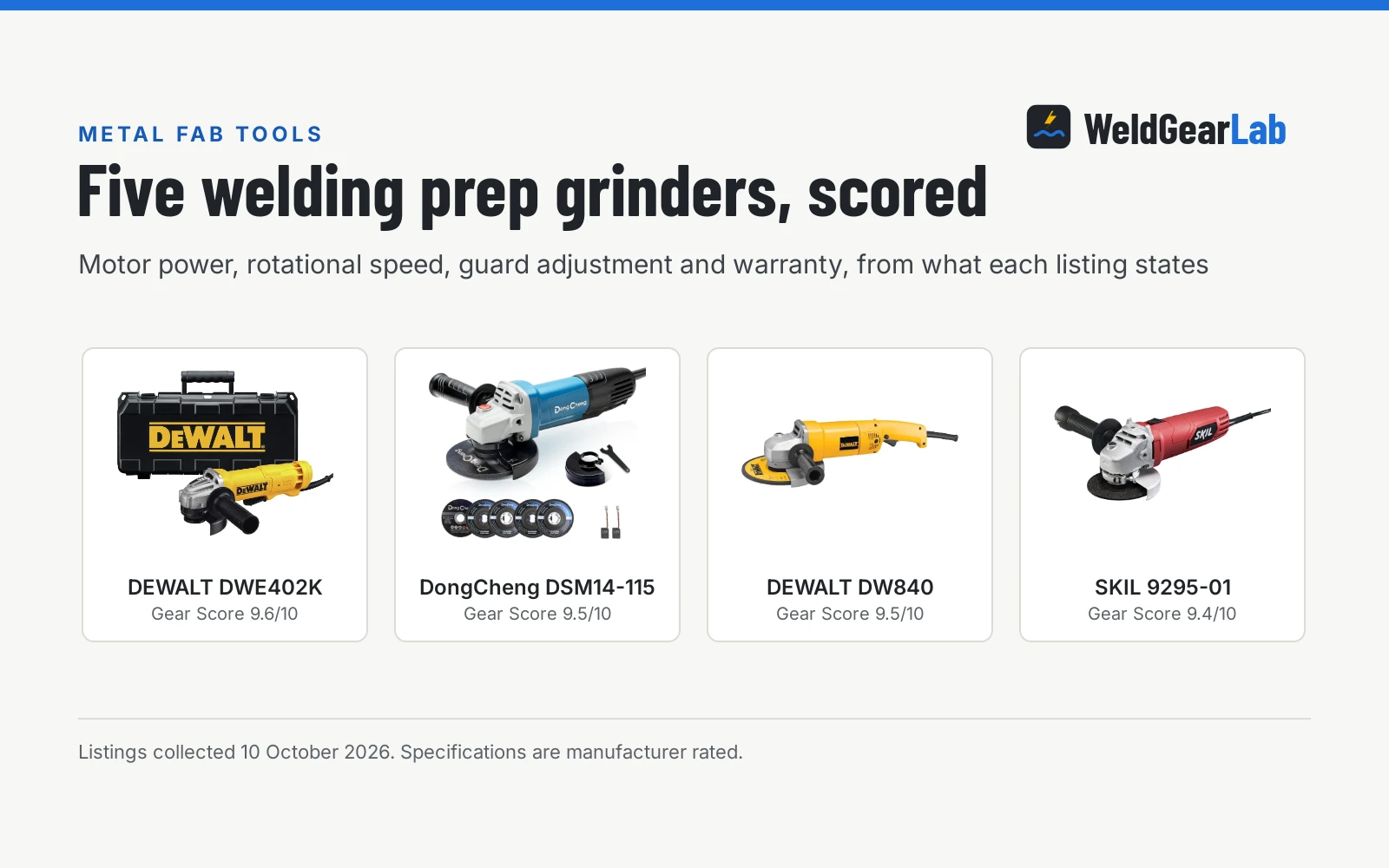
Five corded angle grinders for welding prep, compared on motor amperage, rotational speed, wheel guard design, ergonomics, and stated warranty terms.
An auto-darkening welding helmet flickers when its arc sensors lose line of sight, sensitivity is set too low, batteries run weak, or spatter blocks…
Auto-darkening welding helmet sensitivity and delay controls govern how easily the lens darkens and how long it stays dark after the arc stops, protecting…
Learn what shade for plasma cutting the listings offer, from fixed shade 5 to a DIN5 to DIN9 cutting mode, and how to choose…
How to choose the correct shade lens for TIG welding across different amperages, from variable shade 5-13 filters to fixed shade 10 and 11…
A direct comparison of Yeswelder and Hobart MIG welders across listed controls, power options, wire choices and the support terms each model listing states.
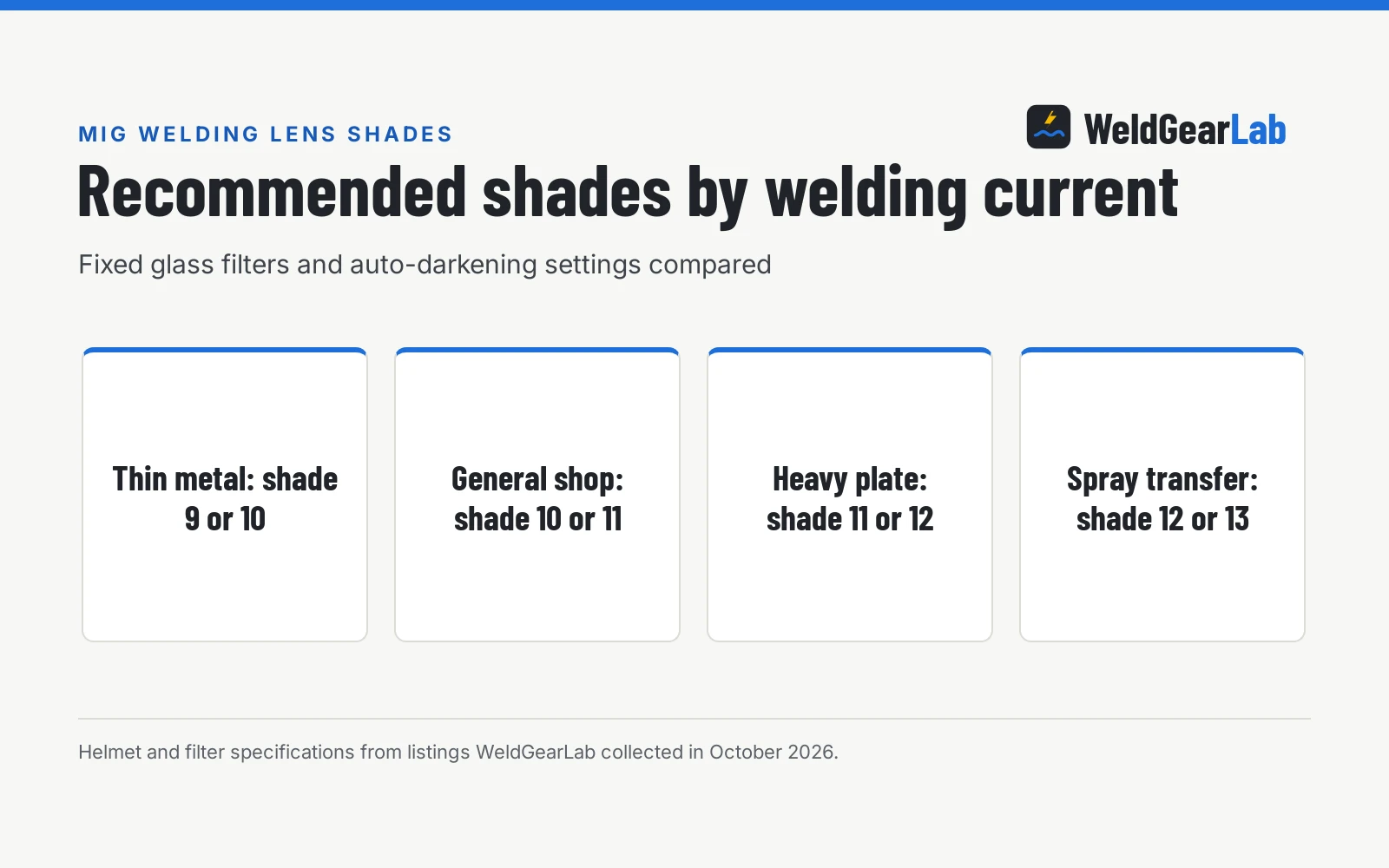
Learn what shade for MIG welding protects your eyes across different welding currents, how fixed and auto-darkening lenses differ, and how to set your…