Aluminum MIG Wire 5356 vs 4043: Which One Should You Buy?
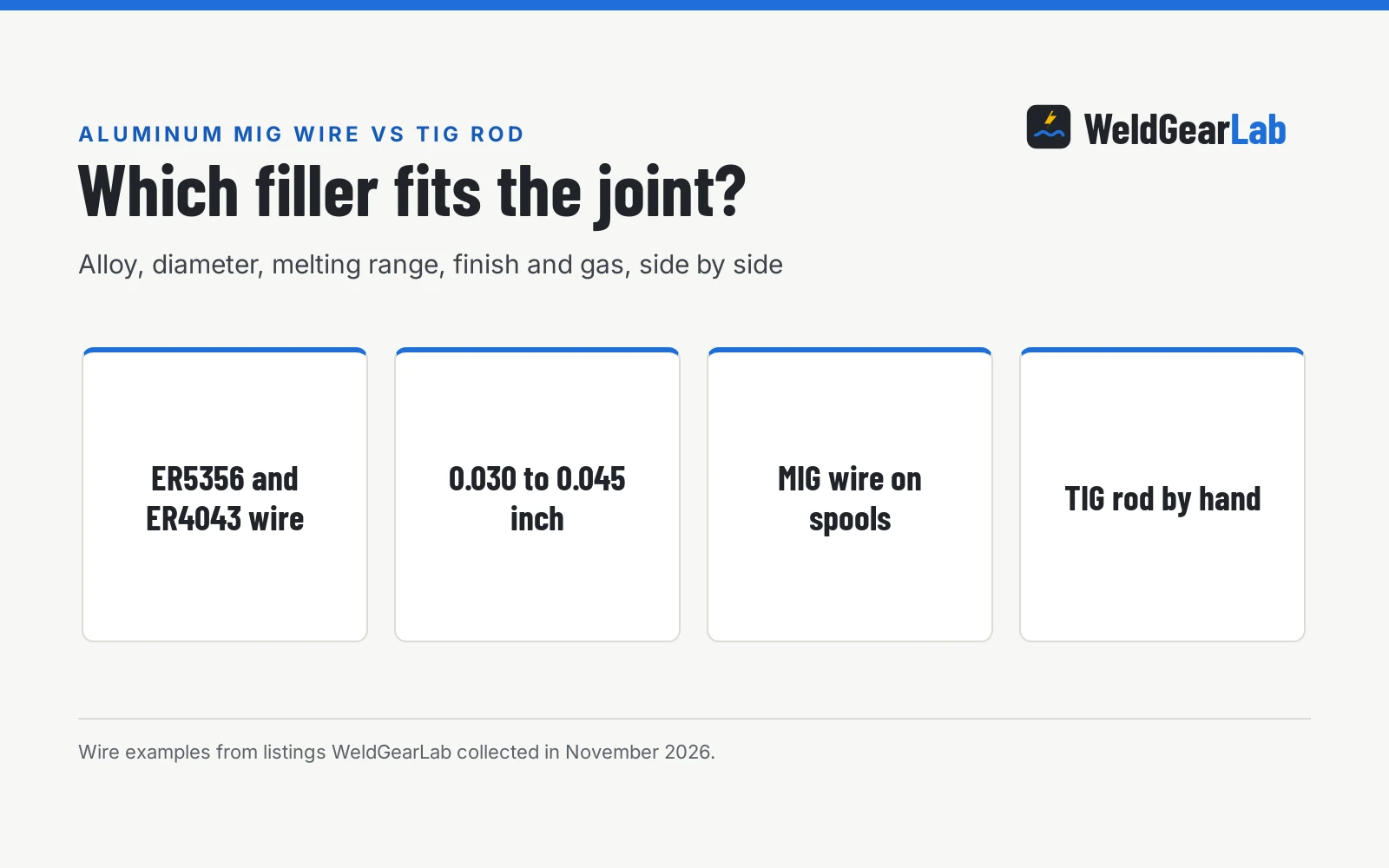
ER5356 and ER4043 are common aluminum MIG wires that suit different base metals and shop repairs. How they compare on weld strength, wire feeding, crack sensitivity, and anodizing color match.

On this page
Top picks at a glance
As an Amazon Associate I earn from qualifying purchases.
- 1
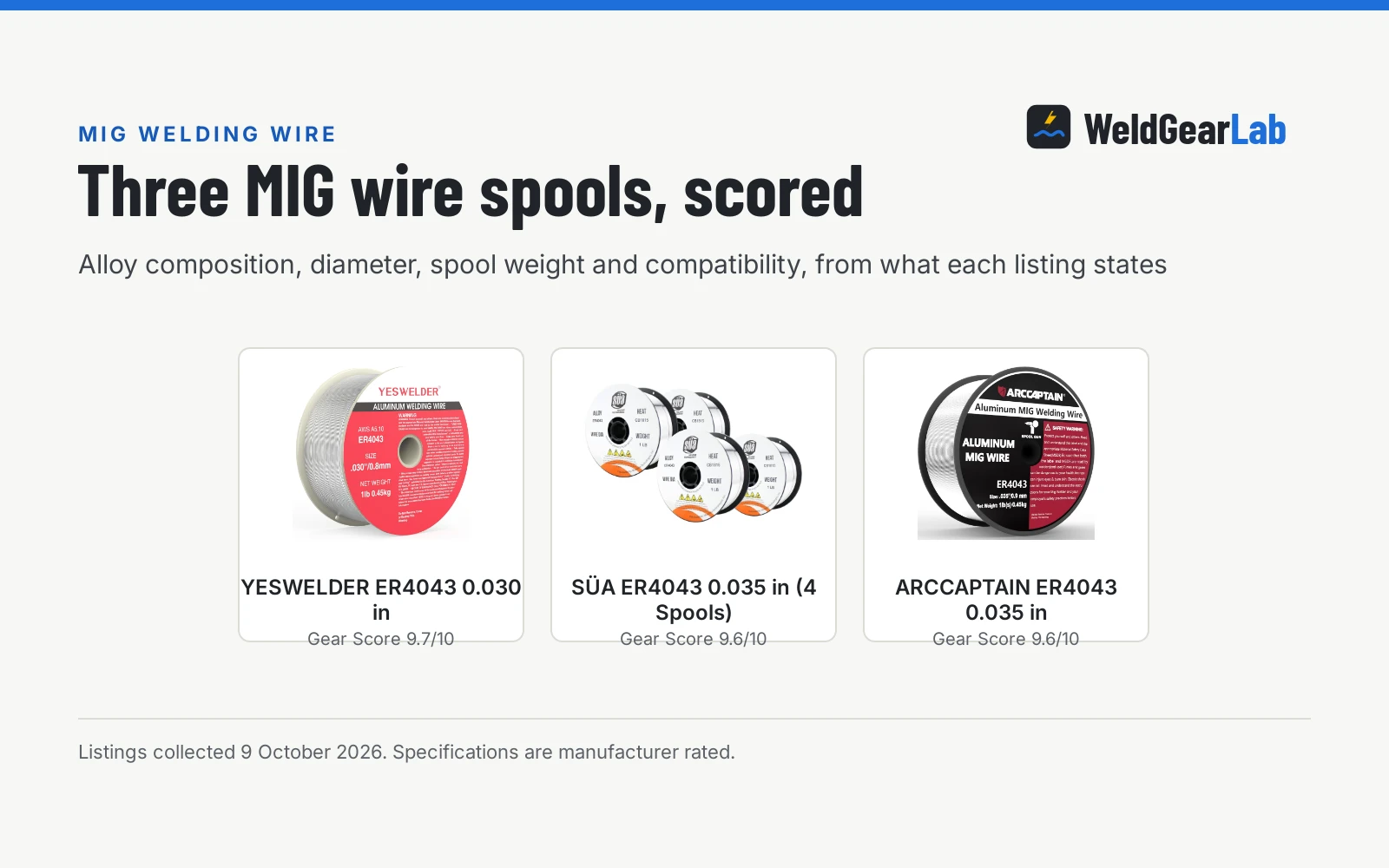
 YESWELDER Silicon Aluminum Welding Wire9.7/10View on Amazon
- 2
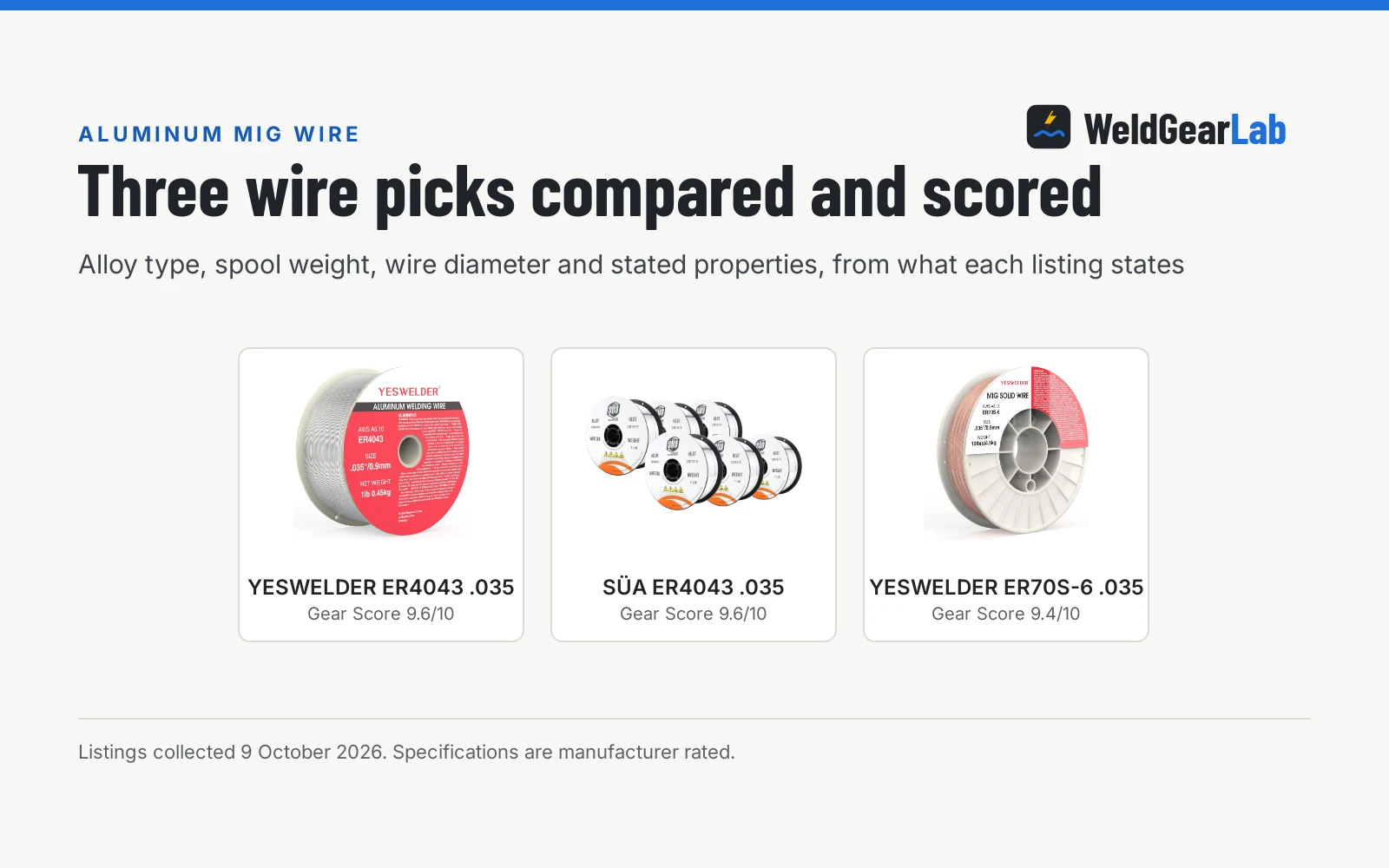
 YESWELDER Silicon Aluminum Welding Wire9.6/10View on Amazon
- 3
 ER40439.6/10View on Amazon
- 4
 Hobart ER5356 Aluminum MIG Welding Wire 0.030 inView on Amazon
- 5
 Mig Welding Wire ER70S-6 .030"View on Amazon
- 6
 SÜAView on Amazon
- 7
 MIG Welding WireView on Amazon
- 8
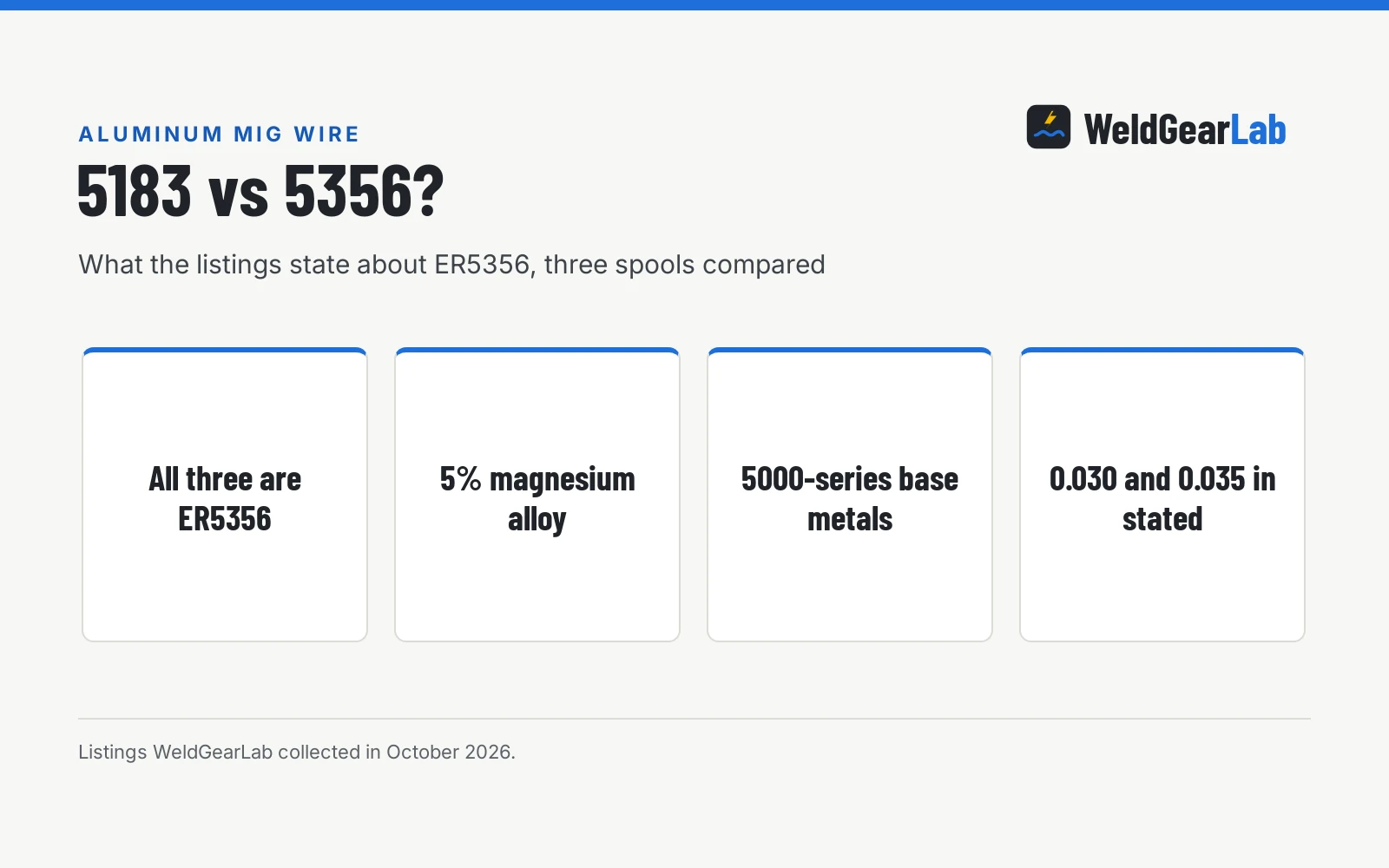
 ARCCAPTAIN Magnesium Aluminum MIG Welding Wire ER5356 .035"View on Amazon
- 9
 Aluminum 5356 MIG Welding Wire .035" Wire 5 Ib .035"View on Amazon
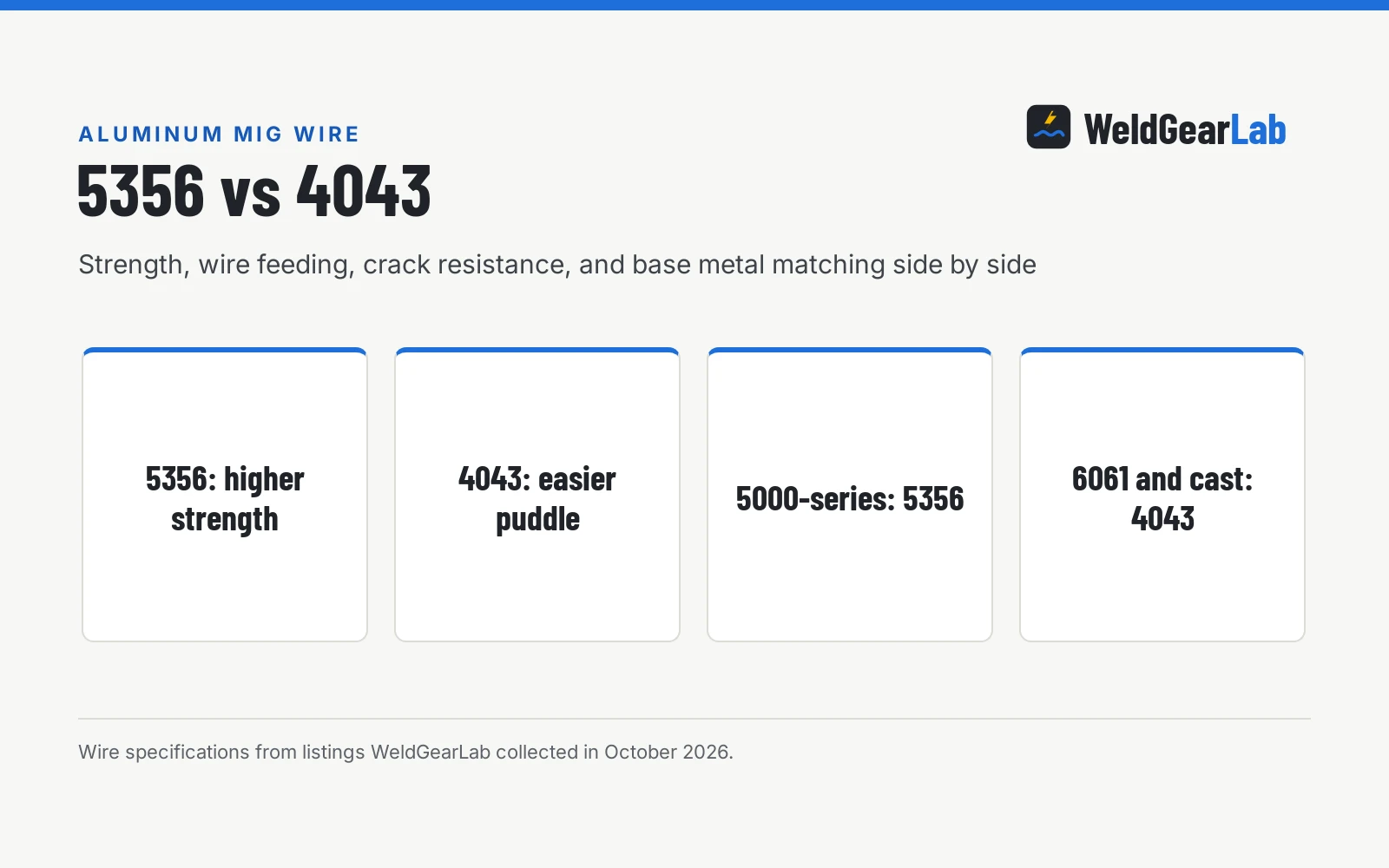
When choosing aluminum mig wire 5356 vs 4043, pick 5356 for higher strength, stiffer wire feed, and 5000 series aluminum, and pick 4043 for lower crack sensitivity, easier puddle control, and 6061 or cast aluminum. That direct choice settles most shop jobs right away. ER5356 uses 5% magnesium to deliver stiffer wire that pushes cleanly through a gun, while ER4043 uses silicon for smooth wetting and crack resistance on heat-treated alloys. This guide breaks down how both filler wires compare on strength, feedability, anodizing, and base metal matching.
Other welders and gear to compare
 Hobart ER5356 Aluminum MIG Welding Wire 0.030 inCheck price on Amazon
 Mig Welding Wire ER70S-6 .030"Check price on Amazon
 SÜACheck price on Amazon
- MIG Welding WireCheck price on Amazon
 ARCCAPTAIN Magnesium Aluminum MIG Welding Wire ER5356 .035"Check price on Amazon
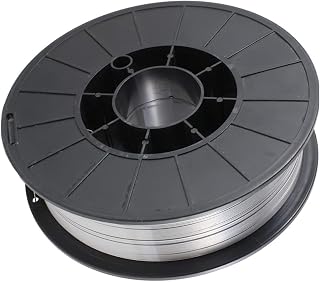 Aluminum 5356 MIG Welding Wire .035" Wire 5 Ib .035"Check price on Amazon
This guide links to our product roundups, where WeldGearLab gets a commission on purchases made through links on this page, and your price stays the same. Read our affiliate disclosure.
The difference in one paragraph
The practical difference comes down to alloy chemistry. ER5356 is an aluminum-magnesium wire with 5% magnesium that produces stiffer wire, higher shear strength, and a bright white weld that matches base metal after anodizing. ER4043 is an aluminum-silicon wire with a lower melting temperature that flows smoothly, wets joint edges cleanly, and reduces cooling cracks in crack-sensitive joints. Because 5356 is stiffer, it feeds through MIG liners and spool guns with fewer snarls, whereas softer 4043 needs careful drive roll tension to prevent birdnesting. For structural 5000-series fabrications, 5356 is the standard; for general repair on 6061 or casting repairs, 4043 is easier to run.
Side by side
| Property | ER5356 Wire | ER4043 Wire | Shop Recommendation |
|---|---|---|---|
| Primary alloying element | 5% magnesium (AlMg5) | Silicon (AlSi) | 5356 for magnesium alloys, 4043 for silicon alloys |
| Weld strength and shear | Higher shear and tensile strength | Lower shear strength | Choose 5356 for higher load capacity |
| Wire stiffness and feeding | Stiffer wire, feeds smoothly with less birdnesting | Softer wire, prone to buckling and shavings | 5356 feeds easier through torch cables |
| Crack sensitivity | Higher crack sensitivity on crack-prone alloys | Lower crack sensitivity, fluid puddle with good wetting | Choose 4043 to prevent cooling cracks on 6061 |
| Primary base metal match | 5000 series aluminum (5050, 5052, 5083, 5356, 5454, 5456) | 6061 and cast aluminum alloys | Match base metal alloy series |
| Post-weld anodizing color | Clean white color match | Gray or dark smudge, poor color match | Choose 5356 for decorative anodizing |
| Elevated temperature service | Not suitable for temperatures sustained above 150°F (65°C) | Suitable for higher operating temperatures | Choose 4043 for hot service environments |
| Shielding gas | Argon or helium mix | Argon or helium mix | Pure argon standard for both |
| Common spool sizes | 1 lb, 4 lb, and 5 lb spools in 0.030, 0.035, and 0.045 inch | 1 lb spools in .035 inch | 1 lb spools fit standard spool guns |
Both wires run on direct current electrode positive with pure argon shielding gas. Wire feeding behavior and base metal compatibility depend on alloy stiffness and chemistry. Always verify wire diameter against your contact tip and machine drive rolls, and check the base metal stamping before setting up your machine.
When 5356 is the better choice
- Welding 5000-series base metals. If you work on 5052, 5083, 5086, or 5456 plate and sheet, 5356 matches the magnesium chemistry for ductile, strong joints.
- Higher shear strength requirements. Marine hulls, trailer frames, and structural fabrications benefit from the higher shear strength of 5% magnesium wire.
- Anodized appearance. When parts go to an anodizing bath after welding, 5356 maintains a clean white color that matches surrounding plate without dark discoloration.
- Troublesome wire feeding. The stiffer temper of 5356 pushes through standard liners and spool guns with fewer jams and less birdnesting.
- Saltwater marine environments. The magnesium alloy chemistry offers excellent resistance when exposed to salt water and marine spray.
Our best aluminum MIG wire review covers top spools scored for fab shop and field repairs, and you can browse our welding consumables hub for more filler metals.
When 4043 is the better choice
- Welding 6061 extrusions and brackets. Silicon lowers crack sensitivity when joining 6061, letting the puddle freeze without center-line stress fractures.
- Aluminum castings and repair jobs. Automotive brackets, engine casings, and cast manifolds contain silicon, making 4043 the natural match for casting repairs.
- Smooth puddle wetting and bead appearance. Silicon improves puddle fluidity, creating flatter weld faces with distinct ripples and clean edge tie-in.
- Elevated operating temperatures. For hot service environments, 4043 is the recommended selection.
For dedicated structural 6061 fabrication, see our guide to the best MIG wire for 6061 aluminum.
Aluminum mig wire 5356 vs 4043: wire feed and gun setup
Feeding aluminum wire through a MIG torch requires a different touch than steel. Aluminum wire is soft and can bind inside a standard steel liner, causing birdnesting at the drive rolls. How each alloy feeds depends directly on stiffness:
- 5356 wire feeding: The addition of 5% magnesium gives 5356 column strength. It pushes more reliably through standard gun leads, resists buckling, and shaves less against U-groove drive rolls.
- 4043 wire feeding: Softer aluminum-silicon wire bends easily. If the torch cable has bends or the drive roll tension is too tight, 4043 will buckle and birdnest at the feeder inlet.
- Spool gun advantages: Running either alloy through a spool gun eliminates long cable friction completely by placing a 1 lb spool right at the torch. A spool gun with smooth U-groove rolls and an oversized contact tip keeps soft wire moving smoothly.
- Drive roll and contact tip tips: Always install smooth U-groove drive rolls rather than knurled rolls that gouge aluminum wire. Use contact tips designed specifically for aluminum wire diameters like 0.030, 0.035, or 0.045 inch to allow for thermal expansion.
If your feeder binds or tangles, consult our troubleshooting guide on how to fix MIG wire birdnesting and check our picks for the best MIG welder with spool gun included. For setup parameters, review our guide to spool gun settings for aluminum.
Shielding gas requirements for aluminum MIG
Unlike steel MIG welding that uses carbon dioxide mixes, aluminum MIG welding requires pure argon shielding gas. Pure argon stabilizes the spray arc transfer necessary to break through the tough aluminum oxide surface skin without contaminating the weld pool. Argon and helium mixtures are also listed by suppliers like WeldingCity when extra heat input is needed for heavy aluminum plate. Never use carbon dioxide or argon mixes designed for steel; oxygen and carbon dioxide will immediately ruin the weld with black soot and severe porosity. Set your regulator to provide adequate, steady flow, and weld indoors or behind screens to keep drafts from blowing the shielding envelope away.
Base metal matching and service limits
Matching your filler metal to the base alloy determines whether the finished weld will crack, hold under load, or fail in service. Here is how shop welders match them up:
- 5000-series structural plate: Always choose 5356 when joining 5050, 5052, 5083, 5356, 5454, or 5456 base metals. The matching magnesium content preserves ductility and corrosion resistance.
- 6061 extrusions and tube: Both alloys can weld 6061. Choose 4043 for lower crack sensitivity and a fluid puddle on structural frames. Choose 5356 if the part requires higher shear strength or post-weld anodizing.
- Castings: Choose 4043 when repairing cast aluminum housings or brackets. Casting alloys contain high silicon, which blends smoothly with 4043.
- Operating temperature limit: Never use 5356 on components in sustained elevated-temperature service. At elevated temperatures, the magnesium phase can migrate to grain boundaries, leading to stress corrosion cracking. For hot service environments, 4043 is the recommended selection.
If you are deciding between processes for aluminum fabrication, read our comparison of TIG vs MIG for aluminum and our overview on how to choose a MIG welder.
Aluminum welding fumes and arc radiation. Aluminum MIG welding generates intense ultraviolet radiation and ozone from the bright argon arc. Wear a welding helmet with adequate filter shade, heavy leather welding gloves, and long sleeves made of flame-resistant cotton or leather to protect your skin from arc flash. Aluminum fumes and ozone irritate respiratory passages, so always weld with local exhaust ventilation or keep your head well out of the fume plume. Chain compressed argon cylinders upright to a sturdy wall or welding cart. See the OSHA welding overview and our Safety Disclaimer.
FAQ for welders
Is 5356 stronger than 4043?
Yes, 5356 has higher shear and tensile strength than 4043 due to its 5% magnesium content. In fillet welds and structural joints on 5000-series base metals, 5356 provides greater load capacity. When welding 6061 with 4043, welders often increase fillet size to compensate for lower shear strength.
Can I run 4043 through a standard MIG gun liner?
Running 4043 through a long standard torch cable often leads to feeding jams and wire shaving. Because 4043 is softer than 5356, it buckles easily under drive roll pressure. A spool gun or a short gun equipped with a slick Teflon liner makes feeding soft wire far more dependable.
Which wire should I use for welding 6061 aluminum?
Both wires weld 6061 successfully, but each serves a different priority. Choose 4043 for general structural fabrication because silicon reduces cooling crack sensitivity and leaves a smooth bead. Choose 5356 if the weldment requires post-weld anodizing or higher joint shear strength.
Why does 4043 turn dark after anodizing?
The silicon content in 4043 reacts in chemical anodizing baths to form silicon particles that appear dark gray or black. This leaves an obvious dark stripe across the weld joint. By comparison, 5356 turns clean white and blends seamlessly into anodized base metal.
Why is 5356 restricted at elevated temperatures?
ER5356 filler metal is not suitable for sustained elevated-temperature service. Sustained heat causes magnesium compounds to precipitate along grain boundaries, increasing the risk of stress corrosion cracking. For hot service environments, 4043 is the recommended selection.
Related: best aluminum MIG wire, best MIG wire for 6061 aluminum, best MIG welder with spool gun included, and the MIG welders hub. Also see our guides on spool gun settings for aluminum and why MIG wire burns back to the tip.