Air Hammer vs Electric Hammer: Which One Should You Buy?
Air hammers run on shop air and electric hammers run on a cord or battery; a guide to the drive difference, with four air hammer listings ranked.

On this page
Top picks at a glance
As an Amazon Associate I earn from qualifying purchases.
- 1
 Ingersoll Rand 114GCQ EDGE Series 2 5/8" Stroke Air Hammer9.7/10View on Amazon
- 2
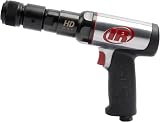 Ingersoll Rand 135MAX 3" Stroke Long-Barrel Air Hammer MaxView on Amazon
- 3
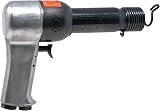 Chicago Pneumatic CP717View on Amazon
- 4
 Chicago Pneumatic CP714View on Amazon
- 5
 Pneumatic Needle Scaler 19 Needles and Air Hammer Pistol 4View on Amazon
A rusted exhaust flange, a stuck pin, a weld that needs chipping: the hammer you grab depends on what powers it. Air hammer vs electric hammer is a question about drive and setup, and the answer starts with an honest note. All four listings in this guide are air hammers; none is electric, and none includes a compressor. What follows compares the two drives in plain terms, then ranks the four air hammer listings by what each one states.
Other welders and gear to compare
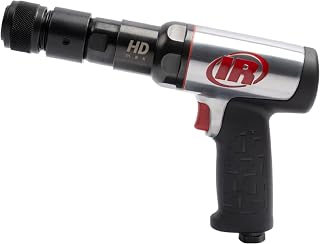 Ingersoll Rand 135MAX 3" Stroke Long-Barrel Air Hammer MaxCheck price on Amazon
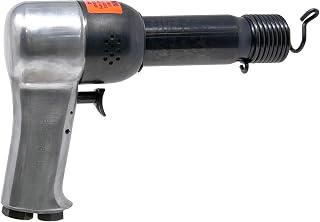 Chicago Pneumatic CP717Check price on Amazon
 Chicago Pneumatic CP714Check price on Amazon
 Pneumatic Needle Scaler 19 Needles and Air Hammer Pistol 4Check price on Amazon
WeldGearLab gets a commission on purchases made through links on this page, and your price stays the same. Read our affiliate disclosure.
Air hammer vs electric hammer: the difference in one paragraph
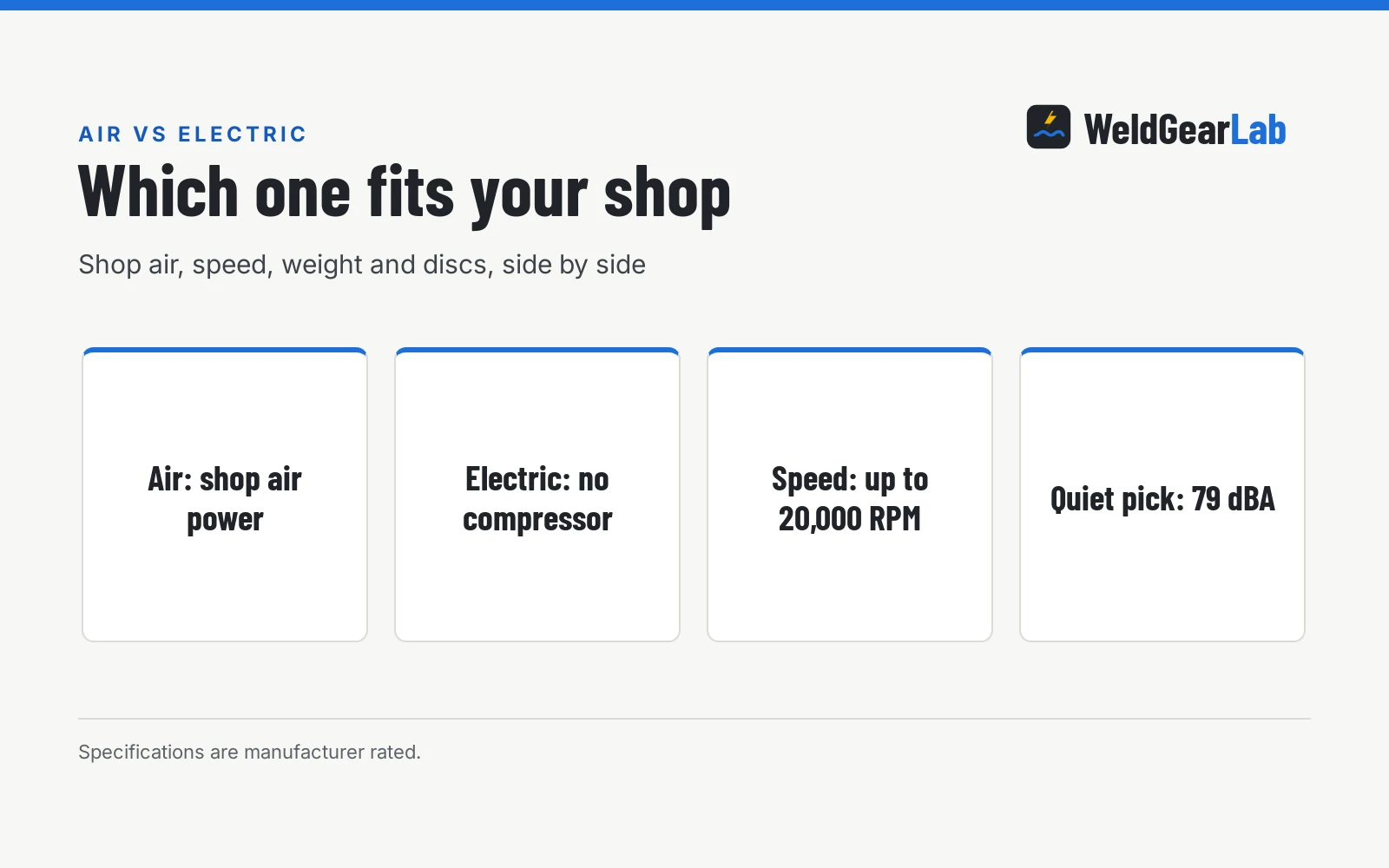
An air hammer runs on compressed air from a shop compressor; an electric hammer runs on a cord or a battery. The air side gives you the BPM and stroke figures in these listings, plus light tool bodies, at the cost of needing a compressor and a hose. The electric side skips the compressor entirely, which matters where there is no shop air. Pick air when the shop already has a compressor; pick electric when it does not.
Side by side
| Ingersoll Rand 114GCQ | Ingersoll Rand 119MAXK | Dynamic Power D319115-SA | PROSHI AF-150 | |
|---|---|---|---|---|
| Drive | Air, compressor not included | Air, compressor not included | Air | Air |
| BPM | 3,500 | 2,530 | 4,500 | 4,500 |
| Stroke | 2 5/8 in | 3 1/2 in | 1-5/8 in | 150mm |
| Chisels | 3 | 5 | 4 | 4 |
| Weight | 4.1 lbs | 4.5 lbs | Not stated | Not stated |
| Air need | Not stated | Not stated | 90 PSI, 4 CFM | Not stated |
| Warranty | 1 Year Limited Warranty | 1 Year Limited | Not stated | Not stated |
These numbers are the manufacturer’s ratings exactly as each listing gives them, recorded on 22 October 2026. Only the Dynamic Power D319115 states its air need: 90 PSI with 4 CFM average consumption. The Ingersoll Rand listings state the compressor is not included.
When air is the better choice
- Shop air is already there. The listings assume a compressor on the wall; the Dynamic Power states 90 PSI and 4 CFM, which the maker says suits most shop and garage compressors.
- Chisel work all day. The listings name exhaust work, bolt cutting, pin driving, body-shearing, chipping and shaping, with chisel sets from 3 to 5 pieces.
- Light tool bodies. The 114GCQ weighs 4.1 lbs and the 119MAXK 4.5 lbs, both with anti-vibration systems stated.
- Stated speeds. The listings state 2,530 to 4,500 BPM, so you can match the hammer to the job on paper.
Match the stroke and chisel set to the job
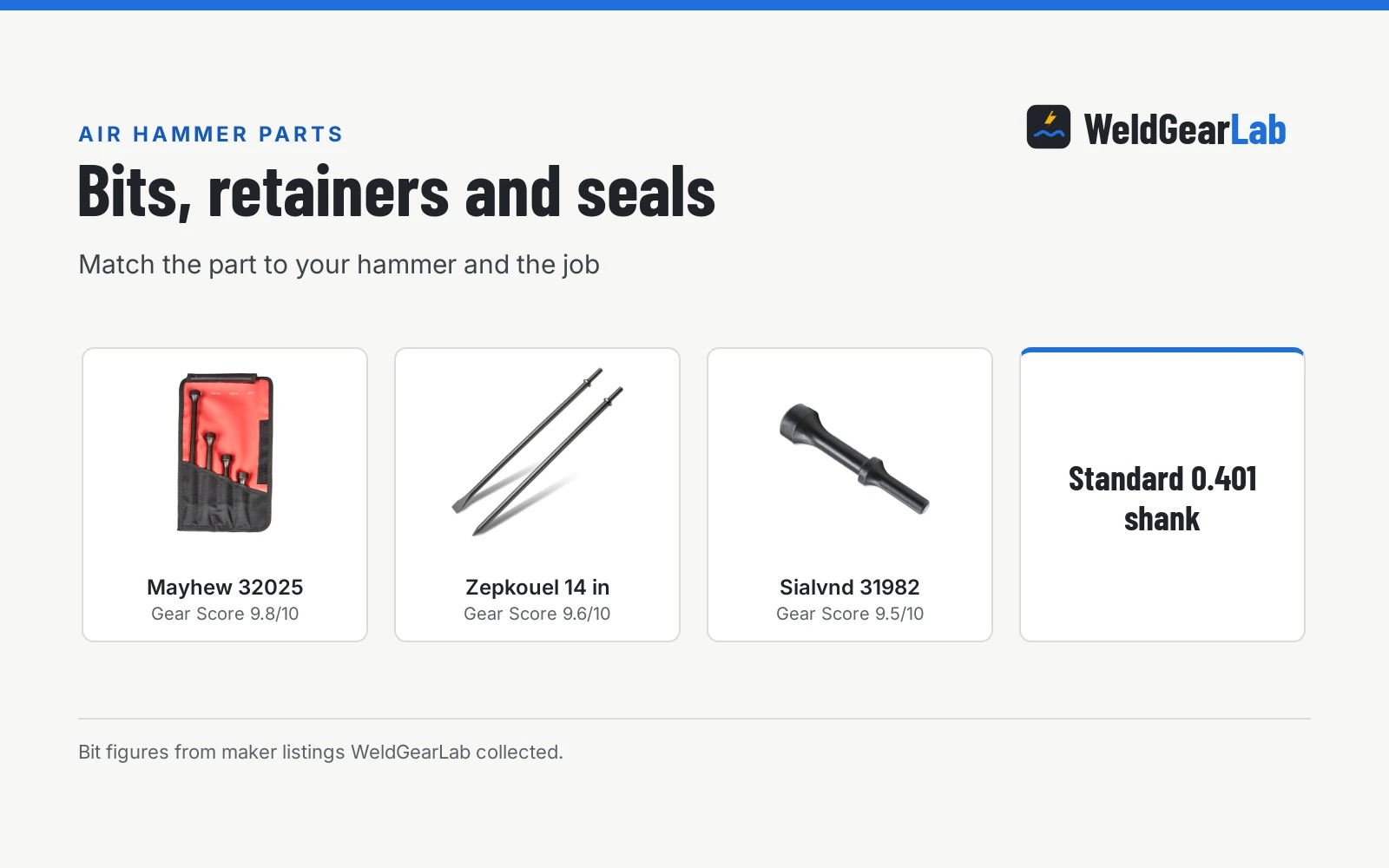
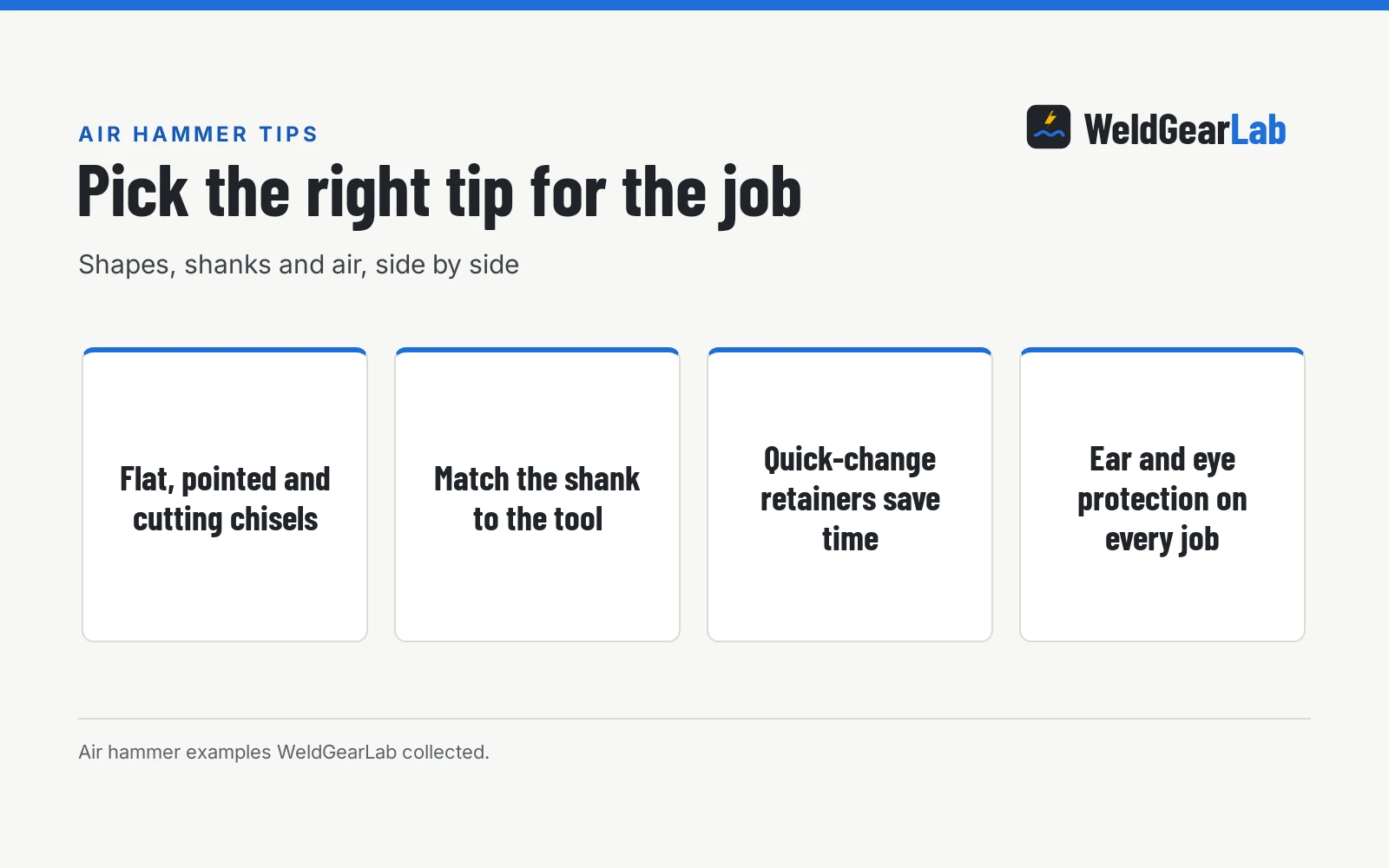
The four listings state very different strokes: the 114GCQ lists 2 5/8 in, the 119MAXK 3 1/2 in, the Dynamic Power 1-5/8 in, and the PROSHI 150mm. A longer stroke generally means more impact per blow, and the 119MAXK pairs its 3 1/2 in stroke with a claimed 15% increase in impact force. Chisel counts run 3 to 5 pieces: the 114GCQ includes 3, the Dynamic Power and PROSHI 4 each, and the 119MAXK 5. The Dynamic Power names its four, ripper, bolt cutter, flat and tapered punch, on a .401 in shank, while the PROSHI names a spot weld breaker and a wide chisel among its four hardened steel chisels.
The listed weights are 4.1 lb for the 114GCQ and 4.5 lb for the 119MAXK; the Dynamic Power and PROSHI listings state no weight. Both Ingersoll Rand listings state an anti-vibration system, and the 119MAXK adds a swivel air inlet that the maker says prevents hose tangling. The Dynamic Power listing states an adjustable air regulator and speed control for precision work.
What about electric hammers?
One more check before you buy air: only the Dynamic Power listing states its air need, 90 PSI with 4 CFM average consumption. The other three listings state no air requirement, so confirm your compressor against the tool before you commit to the air side.
None of the four listings here is an electric hammer, so this guide cannot rank electric models from these listings. The practical difference the listings imply is setup: every air hammer here needs a compressor and a hose, and the Ingersoll Rand listings state the compressor is not included. Where there is no compressor, an electric hammer is the tool that works; where there is, the air listings above are the ones to compare.
The gear: four air hammer listings, ranked
The four listings below are all air hammers, ranked by how completely each listing describes the tool: drive, speed, stroke, chisels, weight and stated warranty.
Ingersoll Rand 114GCQ leads: a 3,500 BPM air hammer with a 2 5/8 in stroke, a quick-change retainer and a 3-piece chisel set, at 4.1 lbs and 8.5 in. The listing pairs a stated anti-vibration system with an anti-slip grip, and it states a 1 Year Limited Warranty.
Ingersoll Rand 119MAXK follows: a long-barrel air hammer at 2,530 BPM with a 3 1/2 in stroke, a quick-change retainer and a 5-piece chisel set, at 4.5 lbs and 9.1 in. The listing claims a 15 percent increase in impact force, states a swivel air inlet, and states a 1 Year Limited warranty.
Dynamic Power D319115-SA is the pick with stated air figures: a short-barrel hammer at 4,500 BPM with a 1-5/8 in stroke, four named chisels on a .401 in shank, and the only stated air requirement here: 90 PSI with 4 CFM average. The spec table lists drill-type figures against the air hammer title, so trust the title and bullets.
PROSHI AF-150 closes the list: a 4,500 BPM air hammer with a 150mm extended stroke and 4 hardened steel chisels, including a spot weld breaker and a wide chisel, with a 1/4 in NPT air inlet. The listing states no weight and no warranty term.
Hammer safety. Air hammers are loud: the 114GCQ listing states 104.4/115.4 dBA, so wear hearing protection with eye protection. Chipping throws sharp metal, so wear gloves and keep the work clamped. Drain the compressor tank regularly and keep the hose clear of the chisel.
FAQ for welders
What is an air hammer good for?
The listings name exhaust and front-end jobs, bolt cutting, pin driving, body-shearing, chipping, shaping and scraping in automotive, metal and construction work.
How much air does an air hammer use?
Only the Dynamic Power listing states it: 90 PSI with 4 CFM average consumption. The other three listings state no air requirement, so check your compressor against the tool.
Do these kits include a compressor?
No. The Ingersoll Rand listings state the compressor is not included, and none of the other listings includes one. Every hammer here needs shop air.
What chisels come in the kits?
The 114GCQ includes 3 chisels, the 119MAXK 5, the Dynamic Power 4 named chisels on a .401 in shank, and the PROSHI 4 hardened steel chisels including a spot weld breaker.
Which listing states a warranty?
The 114GCQ states a 1 Year Limited Warranty and the 119MAXK states 1 Year Limited. The Dynamic Power and PROSHI listings state no warranty term.
Related: best air compressor for plasma cutter, what size air compressor do I need, oil-free vs oil-lubricated air compressor, and the metal fab tools hub.