Best Tubing Notcher: 5 Picks for Fabrication (2026)
Five tubing notchers for metal fabrication, compared on tube capacity, angle adjustments, mounting options, spindle threads, and stated materials.
 By WeldGearLab Editorial
Updated October 10, 2026
By WeldGearLab Editorial
Updated October 10, 2026
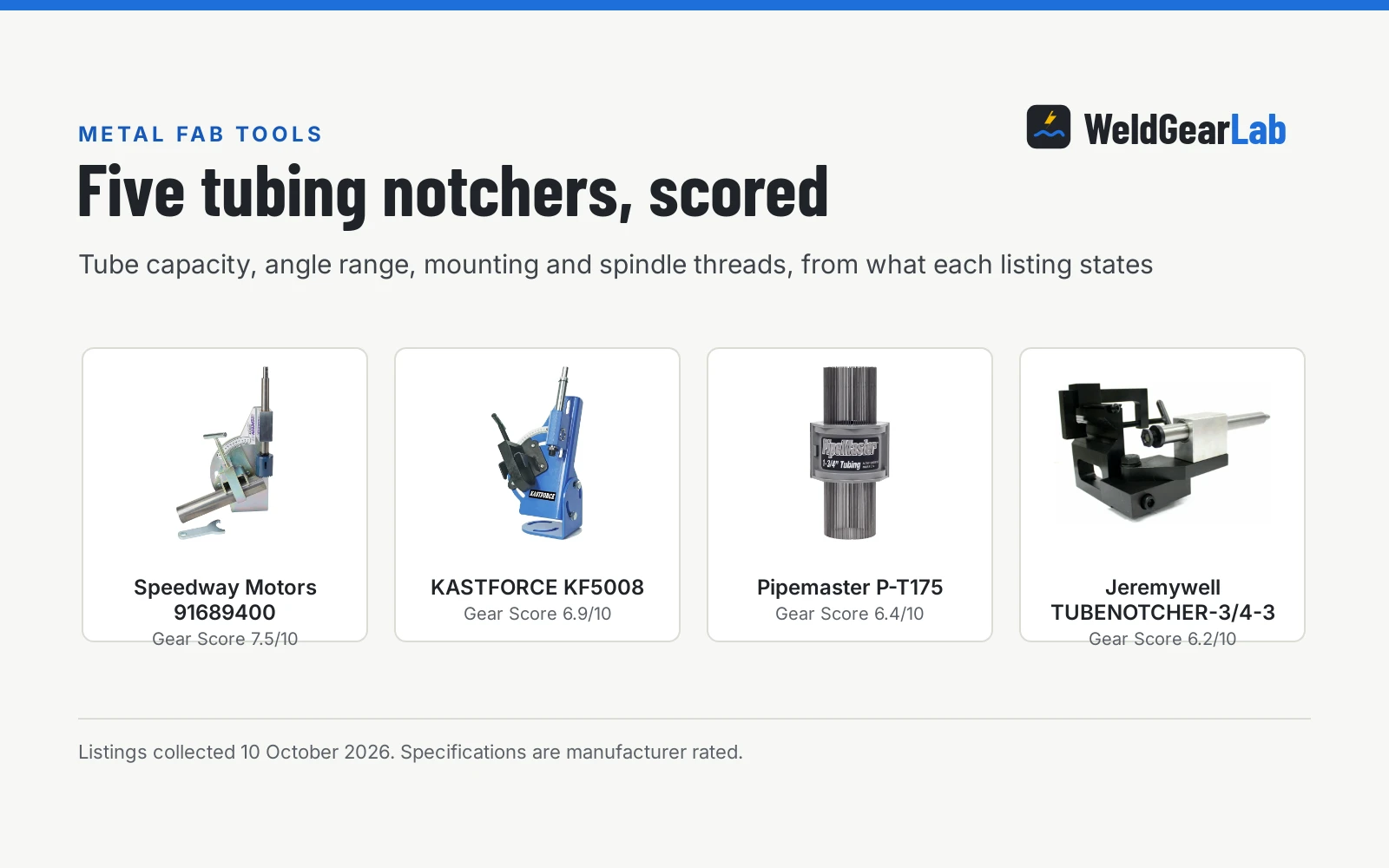
Finding the best tubing notcher makes tube coping faster and more accurate when building roll cages, chassis, or custom headers. This guide compares five notchers for metal fabrication on what each manufacturer publishes: round and square tubing capacity, angle adjustment range, mounting options, spindle threads, and warranty.
As an Amazon Associate I earn from qualifying purchases. WeldGearLab earns a commission when you buy through links on this page, at no extra cost to you. Read our affiliate disclosure.
Quick picks
- Best Overall Speedway Motors 91689400: Handles 9/16 to 2 inch round and up to 1-1/2 inch square tubing, adjusts from 40 to 90 degrees, has bronze bushings, and includes a 1-3/4 inch hole saw and mandrel. Check price on Amazon
- Best Value Hole Saw Notcher KASTFORCE KF5008: Accommodates tubing up to 2 inches (50 mm), adjusts from 0 to 60 degrees, features dual 1/2 inch and 5/8 inch spindle threads, and weighs 5.3 kg. Check price on Amazon
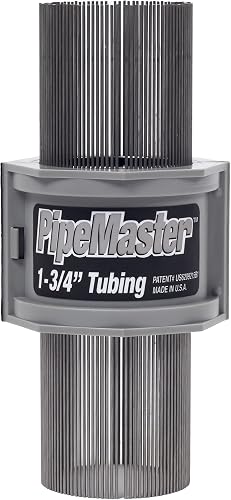
- Best Contour Layout Tool Pipemaster P-T175: A precision contour coping template with spring temper stainless steel pins and a 6061 aluminum inner core for 1-3/4 inch (44.45 mm) tubing. Check price on Amazon
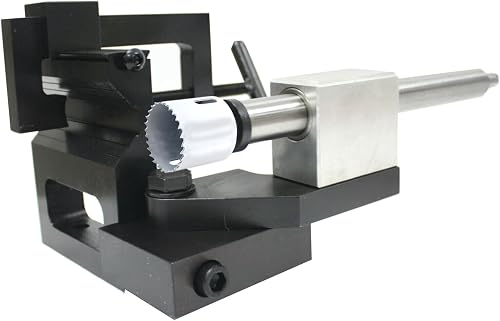
- Heaviest Steel Frame Jeremywell TUBENOTCHER-3/4-3: A 20.7 pound steel notcher frame with an adjustable mounting bracket for a 1/2 inch chuck and stated capacity up to 3 inches. Check price on Amazon
Compare the picks
| Model | Gear Score | Tubing capacity | Angle range | Drive / Mount | Materials | Weight | Warranty |
|---|---|---|---|---|---|---|---|
| Speedway Motors 91689400 | 7.5/10 | 9/16 to 2 in round, up to 1-1/2 in square | 40° to 90° | Vise or drill press, 1-3/4 in hole saw included | Steel and aluminum, bronze bushings | 10 lb | Not stated |
| KASTFORCE KF5008 | 6.9/10 | Up to 2 in (50 mm) | 0° to 60° | 1/2 in chuck, 1/2 and 5/8 in spindle threads | Metal handle | 5.3 kg | Not stated |
| Pipemaster P-T175 | 6.4/10 | 1-3/4 in (44.45 mm O.D.) | Manual contour layout | Hand powered template | ABS, aluminum, stainless steel | 7.2 oz | Not stated |
| Jeremywell TUBENOTCHER-3/4-3 | 6.2/10 | 3/4 to 3 in (bullets state 2 in) | 0° to 50° (bullets state 60°) | 1/2 in chuck, drill or drill press | Steel | 20.7 lb | Not stated |
| VKRP Enterprises Pipe Notcher | 5.6/10 | 3/4 to 3 in | 0° to 50° (title) | 1/2 in chuck | Steel | Not stated | Not stated |
Specifications are manufacturer rated, as published on each listing and collected 10 October 2026.
The picks
| Award | Product | Gear Score About the Gear ScoreThe Gear Score runs from 0 to 10 and weighs performance (35%), build (25%), value (25%), safety (10%, where it applies) and warranty (5%), using only what the manufacturer and the listing publish. How we pick › | |
|---|---|---|---|
 Tube Notcher 9/16-2in Pipe Notcher 40-90 Degree
|
7.5/10 | Check price on Amazon | |
 KF5008 2 Inch Hole Saw Pipe Tube Notcher Tubing
|
6.9/10 | Check price on Amazon | |
 P-T175 (1-3/4" Tube) - PipeMaster Contour Gauge
|
6.4/10 | Check price on Amazon | |
 Jeremywell Industrial Professional Pipe & Tube
|
6.2/10 | Check price on Amazon | |
 Pipe Notcher Industrial Professional Pipe & Tube
|
5.6/10 | Check price on Amazon |
Tube Notcher 9/16-2in Pipe Notcher 40-90 Degree
A versatile tubing notcher for 9/16-inch to 2-inch round tubing and up to 1-1/2-inch square tubing, with bronze bushings and an included 1-3/4-inch hole saw.
Pros
- Handles 9/16-inch to 2-inch round tubing and up to 1-1/2-inch square tubing
- Adjustable protractor angle gauge from 40° to 90° for weld preparation
- Steel and aluminum construction with bronze bushings for smooth operation
- Includes a 1-3/4-inch hole saw, mandrel, and threaded adapter
Cons
- Angle adjustment range stops at 40° rather than 0°
- No warranty term is stated in the listing
- Requires clamping in a bench vise or mounting to a drill press table
- Included hole saw is a fixed 1-3/4-inch size
KF5008 2 Inch Hole Saw Pipe Tube Notcher Tubing
A 2-inch capacity pipe and tube notcher with 0 to 60 degree angle adjustment and dual 1/2-inch and 5/8-inch spindle thread options.
Pros
- Accommodates pipe and tubing up to 2 inches (50 mm) in diameter
- Adjustable angle capability ranging from 0 to 60 degrees
- Dual spindle thread options of 1/2 inch and 5/8 inch for hole saws
- Works with drill press machines and slow speed hand drills
Cons
- Listing spec table incorrectly states corded electric power source
- Spec table lists deck railing caps and screws under included components
- Listing provides no stated square tubing capacity
- No warranty term is stated in the listing
P-T175 (1-3/4" Tube) - PipeMaster Contour Gauge
A manual contour gauge and coping layout tool built with spring temper stainless steel pins and a 6061 aluminum inner core for 1-3/4-inch tubing.
Pros
- Spring temper stainless steel pins slide smoothly for precise contour tracing
- 6061 aluminum inner core provides a durable, lightweight frame
- Rugged ABS housing withstands shop and field use
- Weighs only 7.2 ounces for easy handling
Cons
- Fixed sizing fits only 1-3/4-inch (44.45 mm O.D.) tubing
- Layout template only: does not cut or drill the notch itself
- Spec table contains an error listing 1 volts
- Warranty description states see return policy with no concrete term
Jeremywell Industrial Professional Pipe & Tube
A heavy 20.7-pound steel pipe and tube notcher with an adjustable mounting bracket designed for a 1/2-inch drill chuck.
Pros
- Heavy 20.7-pound all-steel frame provides rigid support
- Includes an adjustable mounting bracket
- Operates with an electric drill or drill press using a 1/2-inch chuck
- Handles up to 3-inch pipe according to the title and spec table
Cons
- Title states 3/4 to 3-inch pipe while bullets say up to 2-inch diameter
- Title states 0-50 degree angle while bullets say angles up to 60 degrees
- Does not include hole saws or arbor adapters in the package
- No warranty term is stated in the listing
Pipe Notcher Industrial Professional Pipe & Tube
A basic steel pipe and tube notcher tool for 3/4-inch to 3-inch tubing with an adjustable mounting bracket for 1/2-inch chucks.
Pros
- Handles 3/4-inch to 3-inch tubing bore hole
- Adjustable mounting bracket for shop setup
- Compatible with a 1/2-inch chuck
- Steel construction
Cons
- Listing lacks item weight, dimensions, and model numbers
- Angle range of 0-50 degrees is stated only in the title
- Bullet text contains repetitive phrasing and typos
- No warranty term is stated in the listing
How we scored them
Each tubing notcher is scored out of 100 on performance, build, value, safety listing and warranty, with the weights published on our How We Pick page. Mechanical tubing notchers and manual contour tools have no electrical safety listing to state, so every model here scores zero on that criterion; the ranking comes from the other four.
| Product | Gear Score | Perf. /35 | Build /25 | Value /25 | Safety /10 | Warranty /5 |
|---|---|---|---|---|---|---|
| Speedway Motors 91689400 | 7.5 | 30 | 22 | 22 | 0 | 0 |
| KASTFORCE KF5008 | 6.9 | 28 | 20 | 21 | 0 | 0 |
| Pipemaster P-T175 | 6.4 | 24 | 21 | 19 | 0 | 0 |
| Jeremywell TUBENOTCHER-3/4-3 | 6.2 | 23 | 21 | 18 | 0 | 0 |
| VKRP Enterprises Pipe Notcher | 5.6 | 21 | 18 | 18 | 0 | 0 |
Buying guide: how to choose the best tubing notcher
Round versus square tubing capacity
Most hole saw notchers are built primarily for round tube and pipe. If your fabrication work includes box tube or crossmembers, check that the clamping vise handles flat surfaces. The Speedway Motors model explicitly lists capacity for 9/16-inch to 2-inch round tubing and up to 1-1/2-inch square tubing. The KASTFORCE model handles up to 2 inches (50 mm), while the Jeremywell and VKRP listings state up to 3 inches. The Pipemaster contour gauge is dedicated to a fixed 1-3/4-inch (44.45 mm) tube size.
Angle adjustment range
Joint angles determine how versatile a notcher will be for complex roll cage nodes and chassis intersections. KASTFORCE provides an adjustable range from 0 to 60 degrees. Jeremywell and VKRP state 0 to 50 degrees in their titles, though Jeremywell bullets state up to 60 degrees. Speedway Motors features an integrated protractor angle gauge from 40° to 90°, making it suited for standard intersection angles.
Mounting options and spindle threads
Rigid mounting prevents chatter and extends hole saw tooth life. The Speedway Motors notcher clamps into a bench vise or bolts to a drill press table. The KASTFORCE, Jeremywell, and VKRP models require a 1/2-inch chuck on a drill press or hand drill. KASTFORCE also stands out by offering dual spindle threads of 1/2 inch and 5/8 inch, allowing direct attachment of different hole saw arbor sizes without separate adapters.
Hole saw notchers versus contour templates
Mechanical notchers use a rotating hole saw driven by a drill to cut a curved saddle directly into the tube end. In contrast, contour gauges like the Pipemaster use spring temper stainless steel pins inside an aluminum core to copy the intersection shape. You trace the profile onto the tube and grind the coping manually. While a contour gauge requires manual cutting, it accommodates compound angles that mechanical notchers cannot clamp.
Joint fit up and weld preparation
A tight-fitting coping notch reduces gaps, making welding cleaner and stronger. After coping your joints, knowing how to bevel metal for welding helps achieve complete weld penetration on thick tubing walls. Always degrease coped joints and remove burrs before tack welding.
Use as directed. Clamp workpieces securely before operating any drill or drill press. Cutting fluid helps cool hole saw teeth and prevents binding. Wear eye protection, secure loose clothing, and keep hands clear of rotating spindles.
Frequently Asked Questions
What is a tubing notcher used for?
A tubing notcher cuts a curved saddle or coping into the end of a tube so it fits flush against another tube before welding. This joint fit up is essential for roll cages, automotive chassis, motorcycle frames, and custom handrails. Accurate coping eliminates gaps that weaken welded joints.
Can I use a hole saw in a tubing notcher?
Most mechanical tubing notchers use standard bi-metal hole saws driven by a drill press or a hand drill. The notcher frame holds the tube securely at the desired angle while the spindle guides the hole saw through the cut. Cutting fluid should be applied to prevent overheating the teeth.
Can a tubing notcher cut square tubing?
Only notchers with suitable clamping vises can secure square tubing. In our comparison, the Speedway Motors listing explicitly states capacity for square tubing up to 1-1/2 inches. Always verify vise clamp geometry before attempting to notch square stock.
What drill speed should I use for tube notching?
Slow drill speeds provide the cleanest cuts and prolong hole saw life. High speeds generate excessive heat that dulls cutting teeth quickly and increases chatter during hole saw entry. A steady feed rate with steady lubrication keeps the cut smooth.
What is the difference between a hole saw notcher and a contour gauge?
A hole saw notcher physically cuts the coping profile into the tube using a rotating saw blade. A contour gauge such as the Pipemaster transfers the intersection profile onto the tube so you can mark cut lines and remove metal manually with a grinder. Contour gauges work well for compound angles where standard notchers cannot clamp.
Related: best tube bender for hobby fabrication, best drill press for metalworking, best portable band saw for metal, and the metal fab tools hub. Also see our best cold saw for small shop. Also see our best metal chop saw for home shop. Also see our how to remove mill scale before welding. Also see our angle clamps for welding. Also see our quick clamps for welding. Also see our best angle grinder for welding prep. Also see our best cut off wheels for metal. Also see our best flap disc for metal. Also see our cold saw for metal. Also see our best horizontal band saw. Also see our small chop saw for metal. Also see our best welding table for home shop.
About the author
WeldGearLab Editorial is the editorial team behind WeldGearLab. We research product listings, specifications, safety listings and warranty terms, score every pick with the published Gear Score method, and correct errors when readers report them. We do not run our own shop trials; see How We Pick for exactly how picks are made.