Best Cold Saw for Small Shop: 5 Saws Scored for Bench and Shop Work (2026)
Five cutting saws for a small shop, compared on blade size, tooth count, power, cutting capacity, materials and stated warranty terms.
 By WeldGearLab Editorial
Updated October 10, 2026
By WeldGearLab Editorial
Updated October 10, 2026
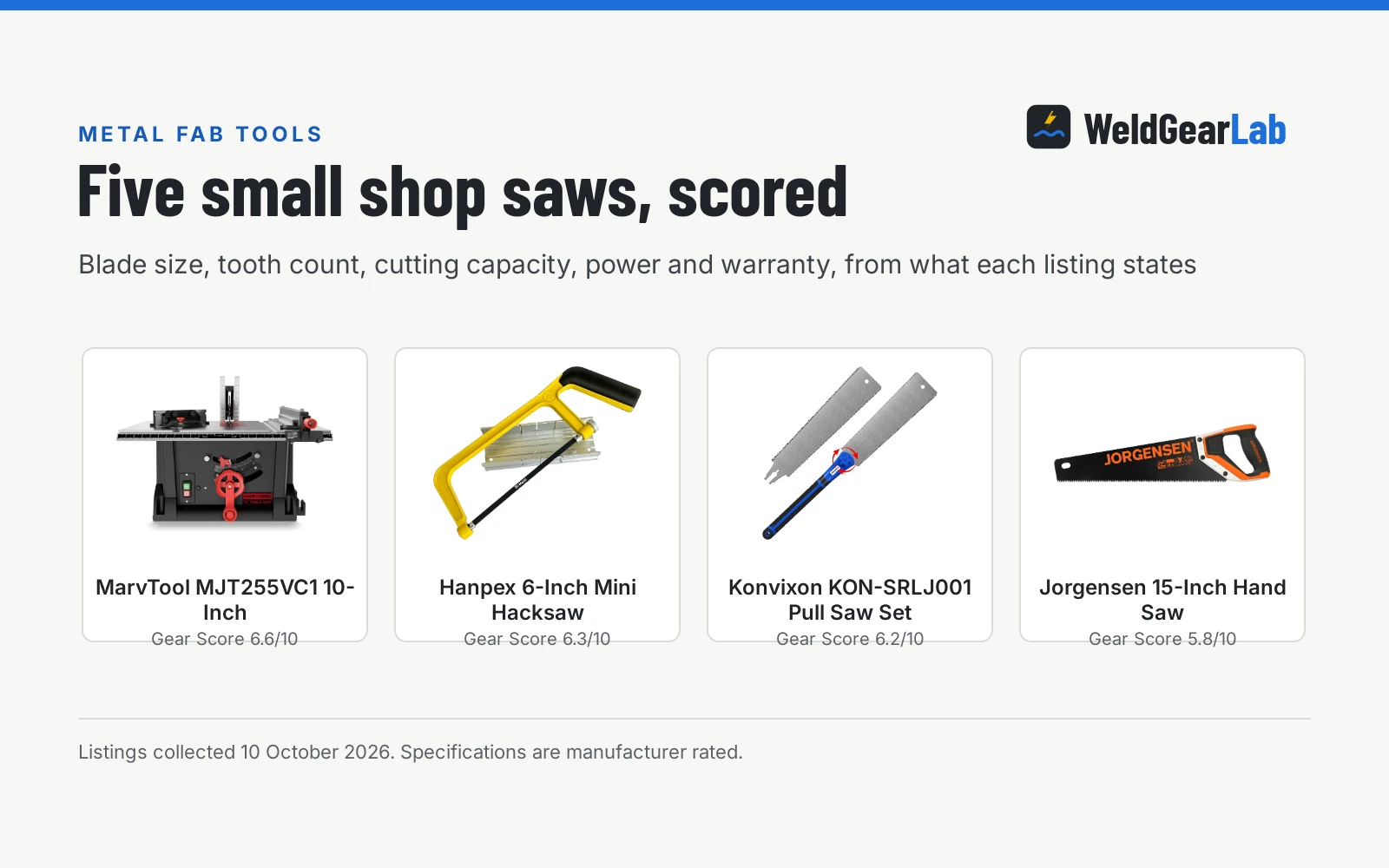
Finding the best cold saw for small shop cutting means choosing a tool that produces clean, square cuts without excessive heat or heavy burrs. A dedicated dry cut metal saw or cold-cutting setup preserves metal temper and reduces cleanup before welding or fabrication. This guide compares five saws for small shop use on stated motor power, blade size, tooth count, cutting capacity, materials and warranty terms from each listing.
As an Amazon Associate I earn from qualifying purchases. WeldGearLab earns a commission when you buy through links on this page, at no extra cost to you. Read our affiliate disclosure.
Quick picks
- Best Overall MarvTool MJT255VC1 10-Inch: A 15 amp motor delivering 4600 RPM, a 10 inch 36T blade, 3.4 inch cutting depth at 90 degrees, and bevel capability to 45 degrees. Check price on Amazon
- Best for Metal Hanpex 6-Inch Mini Hacksaw: A 6 inch bi-metal hacksaw blade with 32 teeth, an aluminum alloy frame, and a listing stating cuts in soft metal and stainless steel. Check price on Amazon
- Best Pull Saw Set Konvixon KON-SRLJ001 Pull Saw Set: Two SK5 steel blades measuring 9.5 and 11.5 inches with dual-edge teeth, a 0.04-inch blade thickness, and a replaceable handle. Check price on Amazon
- Longest Blade Jorgensen 15-Inch Hand Saw: A 15-inch SK5 steel blade with 8 TPI, Teflon coating, an edge protector, and 45-degree and 90-degree angle guides on the handle. Check price on Amazon
Compare the picks
| Model | Gear Score | Power / Type | Blade size | Teeth / TPI | Cutting capacity | Weight | Warranty |
|---|---|---|---|---|---|---|---|
| MarvTool MJT255VC1 | 6.6/10 | 15A, 120V corded | 10 in | 36T | 3.4 in at 90 deg, 2.1 in at 45 deg | 28.3 lb | Limited (term not stated) |
| Hanpex 6 in. Hacksaw | 6.3/10 | Manual hacksaw | 6 in (150 mm) | 32 teeth | Not stated | Not stated | Not stated |
| Konvixon KON-SRLJ001 | 6.2/10 | Manual pull saw | 9.5 in & 11.5 in | 14/18 & 7/11 TPI | 0.04 in blade thickness | 1.1 lb | Not stated |
| Jorgensen 15-Inch Hand Saw | 5.8/10 | Manual hand saw | 15 in | 8 TPI | Not stated | 0.61 kg | Not stated |
| Hanpex X079 | 5.5/10 | Manual pull saw | 6 in | 17 teeth | Not stated | 0.08 kg | Limited (term not stated) |
Specifications are manufacturer rated, as published on each listing and collected 10 October 2026.
The picks
| Award | Product | Gear Score About the Gear ScoreThe Gear Score runs from 0 to 10 and weighs performance (35%), build (25%), value (25%), safety (10%, where it applies) and warranty (5%), using only what the manufacturer and the listing publish. How we pick › | |
|---|---|---|---|
 15Amp Portable Table Saw 10 inch
|
6.6/10 | Check price on Amazon | |
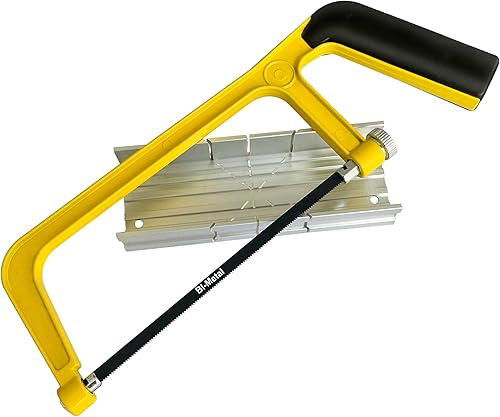 Hanpex 6 in. Mini Hacksaw & mitre Block Set
|
6.3/10 | Check price on Amazon | |
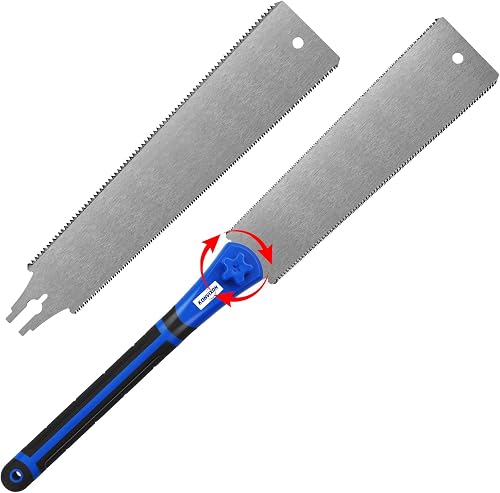 Japanese Pull Saw Set, 9.5" & 11.5" Double Edge
|
6.2/10 | Check price on Amazon | |
 JORGENSEN 15-Inch Hand Saw
|
5.8/10 | Check price on Amazon | |
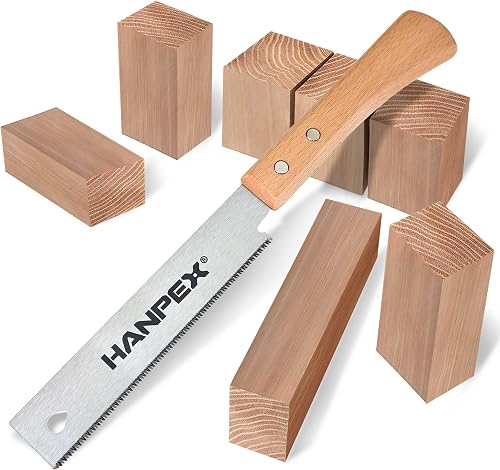 Hanpex 6-Inch Japanese Hand Saw
|
5.5/10 | Check price on Amazon |
15Amp Portable Table Saw 10 inch
A 15-amp portable benchtop saw with a 10-inch 36T blade, 4600 RPM motor, 0 to 45 degree bevel cutting, and a 3.4-inch cutting depth at 90 degrees.
Pros
- 15 amp motor running at 4600 RPM with a 10 inch 36T blade
- Cuts up to 3.4 inches at 90 degrees and 2.1 inches at 45 degrees
- Listing notes capacity for thin aluminum sheets and PVC pipes
- Transparent blade guard, push rod, hex wrenches and dust port included
Cons
- Listing specifies a limited warranty without stating a duration or term
- Spec table lists blade shape as oval instead of circular
- Surface recommendation lists iron despite high 4600 RPM blade speed
- No electrical safety certification such as UL or ETL is stated
Hanpex 6 in. Mini Hacksaw & mitre Block Set
A compact 6-inch hand hacksaw with an aluminum alloy frame and a 32-tooth bi-metal blade listed for cutting soft metal and stainless steel.
Pros
- 32-tooth fine-cut bi-metal blade suited for cutting metal
- Listing explicitly includes soft metal and stainless steel cutting
- Aluminum alloy frame with comfortable handle
- Compact 6-inch blade length fits tight spaces and bench work
Cons
- No warranty term is stated in the listing
- Spec table lists dimensions as 1 by 1 by 1 inch
- Spec table lists blade material as alloy steel while title states bi-metal
- Manual hand power limits cutting speed on thick metal stock
Japanese Pull Saw Set, 9.5" & 11.5" Double Edge
A two-piece Japanese pull saw set with 9.5-inch and 11.5-inch SK5 steel flexible blades, dual-edge teeth, and a replaceable rubber handle.
Pros
- Two interchangeable SK5 blades: 9.5 inch fine cut and 11.5 inch rip cut
- Dual-edge blades featuring 14/18 TPI and 7/11 TPI configurations
- Thin 0.04-inch flexible blade allows flush cutting without extra sanding
- Replaceable non-slip ergonomic rubber handle included
Cons
- No warranty term is stated in the listing
- Surface recommendation lists only wood rather than metal
- Spec table lists single 11.5 inch blade length despite two blades included
- Spec table lists 18 teeth while bullets describe dual-edge TPI ratings
JORGENSEN 15-Inch Hand Saw
A 15-inch coarse hand saw with 8 TPI triple-ground teeth, SK5 steel blade with black Teflon coating, and 45 and 90 degree handle guides.
Pros
- 15-inch SK5 high-carbon steel blade with aggressive 8 TPI teeth
- Black Teflon coating reduces friction and protects against rust
- Built-in 45-degree and 90-degree angle guides on the handle
- Includes plastic edge protector for safe transport and storage
Cons
- No warranty term is stated in the listing
- Surface recommendation lists only plastic and wood, not metal
- Spec table lists blade material as alloy steel while bullets specify SK5
- Coarse 8 TPI tooth pattern produces rougher cuts than fine saws
Hanpex 6-Inch Japanese Hand Saw
A lightweight 6-inch Japanese pull saw with an SK5 high-carbon steel flexible blade, 17 induction-hardened teeth, and a wooden handle.
Pros
- Flexible SK5 high-carbon steel blade for flush cutting plugs and tenons
- 17 induction-hardened teeth with triple grinding for rapid pull cuts
- Lightweight design weighing 0.08 kg for minimal hand fatigue
- Traditional wooden handle provides comfort and support
Cons
- Listing specifies a limited warranty without stating a duration or term
- Surface recommendation is restricted to wood cutting
- Small 6-inch blade limits cutting depth and stock capacity
- Supplied as a bare tool with no blade guard or edge cover
How we scored them
Each saw is scored out of 100 on performance, build, value, safety listing and warranty, with the weights published on our How We Pick page. None of the listings publish an electrical safety listing such as UL or ETL, so every saw here scores zero on that criterion; the ranking comes from performance, build and value.
| Product | Gear Score | Perf. /35 | Build /25 | Value /25 | Safety /10 | Warranty /5 |
|---|---|---|---|---|---|---|
| MarvTool MJT255VC1 10-Inch | 6.6 | 27 | 19 | 20 | 0 | 0 |
| Hanpex 6-Inch Mini Hacksaw | 6.3 | 23 | 19 | 21 | 0 | 0 |
| Konvixon KON-SRLJ001 Pull Saw Set | 6.2 | 22 | 20 | 20 | 0 | 0 |
| Jorgensen 15-Inch Hand Saw | 5.8 | 21 | 19 | 19 | 0 | 0 |
| Hanpex 6-Inch Pull Saw X079 | 5.5 | 19 | 18 | 19 | 0 | 0 |
Buying guide: choosing the best cold saw for small shop cutting
Cold cutting versus abrasive cutting
Cold cutting uses a toothed blade to sever metal mechanically without melting the kerf. Unlike abrasive wheels that throw heavy sparks, heat the workpiece and leave thick burrs, cold cutting keeps parts cooler and leaves cleaner edges ready for fit-up. A dry cut metal saw setup allows quicker assembly with minimal deburring.
Tooth count and blade design
Tooth geometry determines how smoothly a blade cuts different materials. Coarse teeth, such as an 8 TPI pattern, clear large chips quickly in soft materials. Finer patterns, including 14/18 TPI, 17 teeth, 32 teeth, or a 36-tooth blade, engage thinner wall sections with multiple teeth to prevent snagging and chatter.
Motor power and rotational speed
Motor power dictates cutting capability in dense stock. A 15 amp motor running on 120 volts delivers substantial cutting force at 4600 RPM. However, dedicated steel cold saws operate at much lower rotational speeds than woodworking tools to prevent tooth overheating. When using hand saws, manual power provides total speed control for small sections.
Cutting capacity and bevel capability
Capacity determines the maximum workpiece dimension you can crosscut. Stated capacities in this group reach 3.4 inches at 90 degrees and 2.1 inches at 45 degrees on benchtop equipment, while hand blades span 6 inches to 15 inches in length. Angle adjustment from 0 to 45 degrees allows mitered joints without secondary setup.
Edge preparation and safety
Proper edge prep is essential before striking an arc. After making your cut, learn how to bevel metal for welding to ensure full joint penetration on thicker sections. Always secure workpieces firmly in a vise or clamp before cutting. Wear eye and hearing protection, keep hands clear of the blade path, and never force a dull blade through stock. Follow workshop safety practices and manufacturer safety instructions.
Frequently Asked Questions
What is a cold saw for metal cutting?
A cold saw cuts metal using a circular toothed blade or reciprocating blade rather than an abrasive disc. The cutting action transfers heat into the chips rather than the workpiece, leaving the material cool enough to handle immediately. This produces square, clean cuts with minimal burr formation.
What is the difference between a cold saw and a dry cut metal saw?
A traditional cold saw uses a high-speed steel blade rotating at very low speeds with liquid flood coolant. A dry cut metal saw uses a carbide-tipped blade running at moderate speeds without liquid coolant. Both methods keep the cut edge cool compared to an abrasive chop saw.
Can you cut metal on a standard table saw?
Standard table saws operate at high rotational speeds, such as 4600 RPM, designed for wood. While some listings mention cutting thin aluminum sheets, standard table saws lack the slow speeds and rigid vises required for thick structural steel. Cutting ferrous steel on high-speed equipment risks blade destruction and throwing dangerous metal fragments.
What tooth count is recommended for metal cutting?
Thinner metal requires higher tooth counts so that at least two to three teeth contact the work at all times. A 32-tooth hacksaw blade or 14/18 TPI fine blade handles thin tubing and sheet without catching. Coarser configurations like 8 TPI are intended for rapid cutting in thicker, softer materials.
Why should I avoid abrasive chop saws for precise fab work?
Abrasive wheels flex under cutting pressure, producing angled cuts and leaving heavy burrs that require grinding. They also generate intense heat that hardens the steel edge and burns off coatings. A clean mechanical cut reduces joint prep time before fit-up and welding.
Related: metal fab tools, best metal chop saw for home shop, cold saw for metal, best cold cut saw, what is cold saw, cold saw vs band saw, best chop saw for metal cutting, small chop saw for metal, and best horizontal band saw.
About the author
WeldGearLab Editorial is the editorial team behind WeldGearLab. We research product listings, specifications, safety listings and warranty terms, score every pick with the published Gear Score method, and correct errors when readers report them. We do not run our own shop trials; see How We Pick for exactly how picks are made.