Pilot Arc vs Blowback Start Plasma Cutter: How Arc Ignition Fits Your Shop
Pilot arc and blowback start plasma cutters differ in how they strike the cutting arc, affecting electrical interference, torch parts, and CNC table compatibility.
 By WeldGearLab Editorial
Updated October 9, 2026
By WeldGearLab Editorial
Updated October 9, 2026
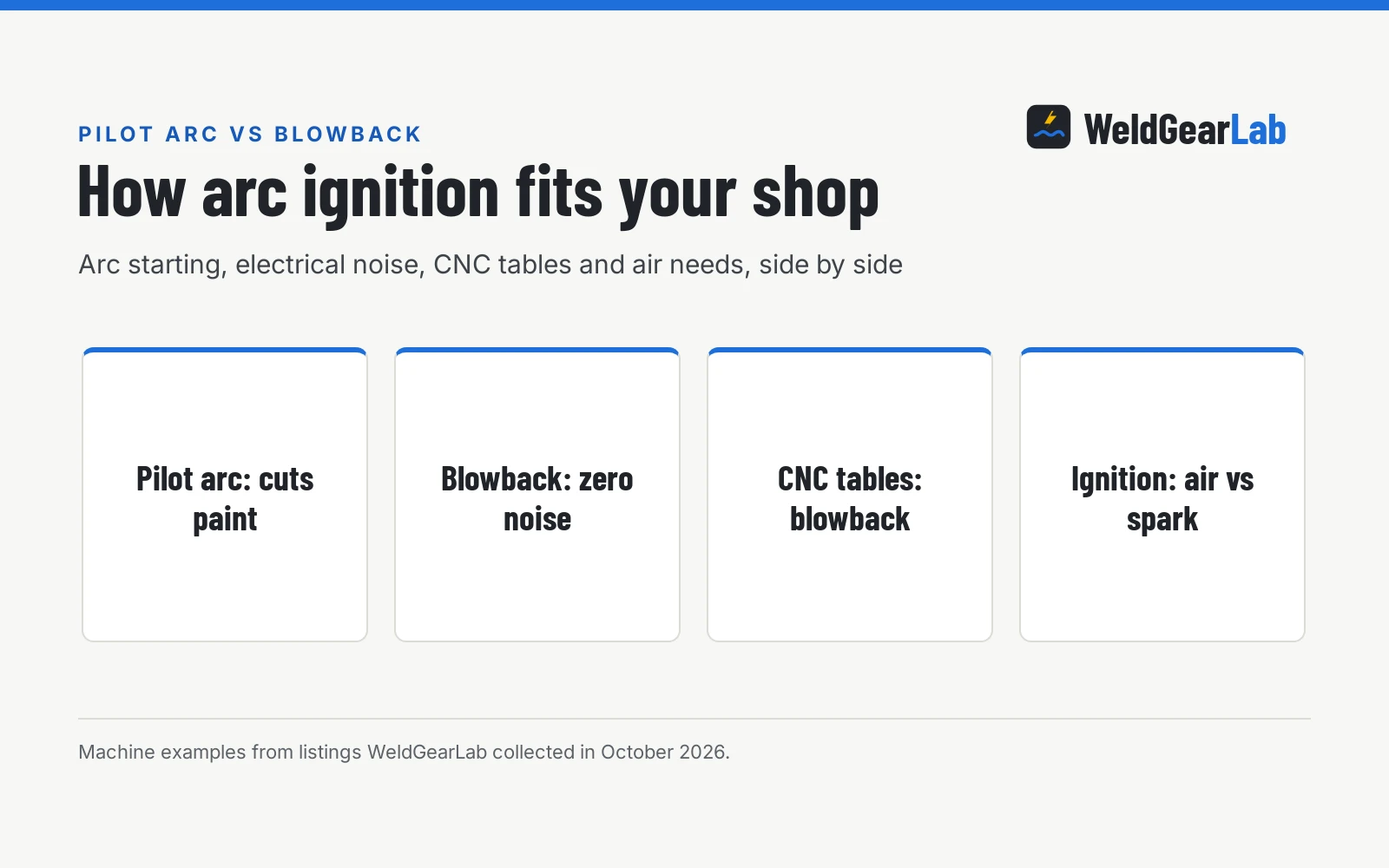
When choosing between a pilot arc vs blowback start plasma cutter, understanding how each system strikes the arc clarifies which machine fits your workshop. A pilot arc allows cutting without touching the torch to the plate, cleanly piercing paint, rust, and expanded mesh. Blowback start is a modern pneumatic method of igniting that pilot arc without high-frequency interference. Traditional pilot arc units use high-voltage electrical sparks that can disrupt nearby digital equipment, while blowback cutters use compressed air pressure to mechanically separate contacts and draw the arc inside the torch head.
As an Amazon Associate I earn from qualifying purchases. This guide links to our product roundups, where WeldGearLab earns a commission when you buy through links, at no extra cost to you. Read our affiliate disclosure.
The difference in one paragraph
The term pilot arc refers to an auxiliary electrical arc that forms between the torch electrode and cutting tip before transferring to the workpiece. This ionized plasma stream allows an operator to begin cutting without scratching or dragging the torch across the plate. Traditional pilot arc machines generate this arc with a high-voltage, high-frequency spark across an air gap. Blowback start machines produce the same pilot arc through mechanical separation: incoming compressed air pushes an internal piston or spring-loaded electrode back from the nozzle tip, drawing an electrical arc that establishes the plasma stream without high-frequency radio waves.
Side by side
| Touch start | High-frequency pilot arc | Blowback start pilot arc | |
|---|---|---|---|
| Arc ignition method | Physical contact with plate | High-voltage electrical spark across air gap | Air pressure mechanically separates internal contacts |
| Pilot arc in open air | No, requires physical contact with plate | Yes, forms pilot flame before touching metal | Yes, forms pilot flame before touching metal |
| Cutting painted or rusty metal | Requires bare metal contact to strike | Pierces through coatings without pre-cleaning | Pierces through coatings without pre-cleaning |
| Electrical noise (EMI) | Zero electrical interference | High radio frequency interference with nearby electronics | Zero high-frequency electrical interference |
| CNC table compatibility | Poor, drag contact disrupts automated torch height | Requires shielding and isolation to avoid computer lockups | Preferred standard for computer and CNC table controls |
| Arc transfer mechanism | Direct electrical short to plate | Transfers from nozzle to plate as torch nears work | Transfers from nozzle to plate as torch nears work |
| Internal torch parts | Solid fixed electrode and nozzle | Stationary electrode and nozzle without moving parts | Internal moving piston or spring-loaded electrode |
| Air pressure sensitivity | Standard airflow for cooling and cutting | Airflow needed for plasma gas and cooling | Air pressure must physically move internal torch parts |
Air pressure and arc transfer behavior depend on proper torch assembly and clean air; always consult the pressure specifications printed on your machine panel or in the user manual.
When high-frequency pilot arc is the better choice
- Manual cutting away from sensitive electronics. Ideal for handheld cutting on fabrication benches where no CNC tables, computers, or digital sensors are present.
- Stationary torch design. Torches like the AG60 or WSD60 have no moving internal pistons or slides, keeping replacement torch parts mechanically simple.
- Budget-friendly equipment cost. Standard high-frequency ignition circuits are widely produced and often cost less on entry-level manual machines.
- Tolerance to slight pressure drops. Because the torch head has no internal parts that must physically slide back to strike, the arc can ignite even if air pressure fluctuates briefly.
For manual cutting where radio interference is not a concern, high-frequency machines provide strong cutting performance. LOTOS APEX rates its high-frequency LTP8500 plasma cutter for a 1 inch clean cut and a 1.5 inch maximum sever cut on single-phase 220V power, with an output range of 15-85A DC and a 60 percent duty cycle at 85A. Bestarc lists its AG60P high-frequency pilot arc torch with a 13FT cable for 50/60A operation, while PLASMARGON offers its WSD60 high-frequency torch with a 23ft cable.
When blowback start is the better choice
- CNC plasma tables. Zero high-frequency electrical noise means stepper motor drivers, USB connections, and PC controllers operate without freezing or crashing.
- Home garages and shared spaces. Safe operation around smart electronics, laptops, Wi-Fi networks, and digital appliances.
- No electrical interference on shop grounds. Eliminates high-voltage radio-frequency discharge from feeding back through ground clamps or adjacent metal tools.
- Modern torch designs. Uses IPT series torches designed for clean arc transfer and automated machine torch mounting.
Blowback start has become the industry benchmark for automated cutting and modern workshops. By striking the arc through air pressure rather than high-voltage spark gaps, these machines eliminate electromagnetic interference entirely. ARCCAPTAIN rates its iControl CUT55 MP blowback unit for cuts up to 1 inch thick, delivering up to 55A on 240V power with non-touch pilot arc cutting on rusty surfaces. Bestarc rates its CUT60XP blowback cutter for a 5/8 inch clean cut and 4/5 inch maximum cut at 60A on 220V power, using a blowback mechanism that avoids signal interference. For heavier shop duty, Everlast rates its PowerPlasma 62i at 60AMP with a 60% duty cycle and regular cutting up to 3/4 inch, backed by a 5 Year Warranty. Fabricators looking for capable multi-voltage machines can compare top-rated models in our guide to the best plasma cutter under 1000 for farm and shop fabrication.
Pilot arc vs blowback start plasma cutter: How to tell what a machine supports
Not every pilot arc plasma cutter uses blowback technology. Many budget machines advertised with pilot arc still use high-frequency ignition. Check these indicators in the machine listing and documentation:
- Explicit non-HF or blowback labeling. Listings that feature blowback start specifically highlight terms like Non-HF, blow-back start, or pneumatic start. YESWELDER lists its CUT-60DS PRO as non-high frequency with blow-back start and an IPT40 torch.
- High-frequency warnings in the manual. Machines with high-frequency start mention spark gap maintenance, RF interference warnings, or guidelines for computer isolation.
- Torch model series. Blowback systems typically use torches with internal moving electrodes or pistons, such as the IPT40, IPT60, or IPT80 series. Bestarc lists an IPTM60 straight pencil torch with a 20FT cable specifically for non-HF CNC cutting. In contrast, AG60 and WSD60 torch models indicate high-frequency ignition.
- CNC port integration. Many plasma cutters designed with factory CNC ports incorporate blowback ignition to ensure reliable communication with computer equipment.
If a product listing only says pilot arc without mentioning non-HF or blowback, verify the specifications and manual, as entry-level pilot arc units commonly use high-frequency ignition.
Which air supply for plasma cutting
Both high-frequency and blowback pilot arc cutters require clean, dry compressed air, but blowback torches are particularly sensitive to air delivery. Because blowback start relies on mechanical motion inside the torch head, insufficient air pressure prevents the electrode from retracting, causing the arc to fail before it starts. Moisture or oil in the air line causes internal torch sliding parts to bind, leading to misfires and rapid nozzle degradation.
Operating air pressure varies by model and output amperage. Bestarc lists a recommended air pressure within 70 PSI and a flow rate of 250 liters per minute for the CUT60XP, while ARCCAPTAIN recommends 57.5 PSI (0.4 MPa) for the CUT55 MP. ARCTAYLOR recommends 90 PSI with a flow rate of 150 L/min for the CUT75P, and LOTOS APEX calls for 80 PSI or higher at approximately 4.5 SCFM for the LTP8500. Installing an inline moisture separator and dedicated air filter protects internal torch mechanisms. For guidance on sizing shop air equipment, read our guide on what size air compressor do I need for a plasma cutter.
Can one machine do both?
If you are asking whether a plasma cutter can have both pilot arc capability and blowback starting, the answer is yes: blowback start is simply a pneumatic method of producing a pilot arc. Every blowback plasma cutter delivers full pilot arc functionality, allowing you to cut through rust, paint, and mesh without touching the metal plate. However, if you are asking whether a single machine can switch between high-frequency ignition and blowback ignition, the answer is no. A high-frequency machine uses spark gap circuits and stationary torches that cannot operate a blowback torch, while a blowback machine uses pneumatic control circuits and moving-contact torches. You must choose one arc ignition design when selecting a machine.
Cutting safety and radiation. Plasma cutting produces intense optical radiation and high heat. Operators must wear proper eye protection (review our guide on what shade for plasma cutting for lens selections), flame-retardant clothing, and leather gloves. Always clear flammable debris from the cutting zone and ensure adequate shop ventilation to remove metal vapor plumes.
Frequently Asked Questions
What is the pilot arc meaning on a plasma cutter?
The pilot arc meaning refers to an electrical arc initiated inside the torch head between the electrode and the nozzle before touching the workpiece. This ionized gas plume allows the arc to establish in open air and transfer smoothly to the metal once positioned within cutting distance. It allows operators to cut through rust, paint, and mesh without scraping the tip against the plate.
Why is blowback start preferred for CNC plasma tables?
Blowback start initiates the cutting arc mechanically through air pressure rather than high-voltage electrical sparks. Traditional high-frequency ignition creates powerful electromagnetic interference that can freeze computer controllers, crash stepper motor drivers, and scramble digital torch height controls. Blowback torches eliminate this electrical noise, ensuring smooth automated operation.
Can a blowback plasma cutter cut painted and rusty metal?
Yes, because blowback start produces a genuine pilot arc that ionizes the compressed air before contacting the plate. The operator does not need direct electrical contact with clean metal to initiate cutting, allowing the plasma stream to burn through surface coatings effortlessly. Once the pilot flame pierces the coating, the main cutting current flows directly into the steel.
Do blowback torches wear out consumables faster than high-frequency torches?
Torch consumable life depends primarily on air dryness, operating pressure, and cutting technique rather than the ignition method alone. However, blowback torches contain moving internal parts that require dry, oil-free compressed air to prevent sticking and irregular arc strikes. Proper consumable care is detailed in our guide on how long do plasma cutter consumables last.
Can you cut aluminum with a pilot arc plasma cutter?
A pilot arc plasma cutter cuts aluminum effectively using either high-frequency or blowback starting systems. Aluminum develops a tough surface oxide layer, but the transferred pilot arc pierces this oxide film without requiring initial scratch starting. Operators cutting aluminum should consult our overview on can a plasma cutter cut aluminum for air pressure and travel speed recommendations.
Related: what size plasma cutter do I need, plasma cutter for metal, plasma cutter with air compressor, and the plasma cutters hub.
About the author
WeldGearLab Editorial is the editorial team behind WeldGearLab. We research product listings, specifications, safety listings and warranty terms, score every pick with the published Gear Score method, and correct errors when readers report them. We do not run our own shop trials; see How We Pick for exactly how picks are made.