1095 vs D2 Knife Steel: Which One Should You Buy?
1095 and D2 suit different knives: one sharpens with ease and rusts without care, the other holds an edge longer and grinds harder.

On this page
Top picks at a glance
As an Amazon Associate I earn from qualifying purchases.
- 1
 TITGGI 5 Pack 1095 Steel Flat Bar for Knife Making9.5/10View on Amazon
- 2
 1084 Carbon Steel Bar Cold Rolled for Knife Making9.6/10View on Amazon
- 3
 TITGGI 4 Pack 1095 Steel Flat Bar for Knife Making9.5/10View on Amazon
- 4
 TITGGI 5 Pack 1095 Steel Flat Bar for Knife MakingView on Amazon
- 5
 TITGGI 8 Pack 1095 Steel Flat Bar for Knife MakingView on Amazon
- 6
 12Pcs 1095 Carbon Steel Bar Cold Rolled for Knife MakingView on Amazon
- 7
 1095 Steel Flat Stock for Knife Making-Annealed High CarbonView on Amazon
- 8
 12"x2"x0.12" 1095 Steel for Knife MakingView on Amazon
- 9
 12"x1.5"x1/8" 1095 Steel for Knife MakingView on Amazon
A blank bar on the bench, a knife shape marked out in chalk, and a choice that shapes every hour after it: 1095 vs D2 knife steel. One is plain high carbon steel that grinds with ease and rusts without care. The other is a tool steel that holds a working edge longer and asks more from the grinder. This guide lays out the difference in plain shop terms, then walks through the 1095 bars for makers covered here.
Other welders and gear to compare
 TITGGI 5 Pack 1095 Steel Flat Bar for Knife MakingCheck price on Amazon
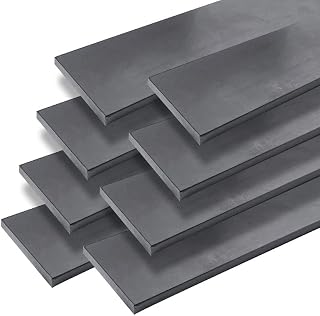 TITGGI 8 Pack 1095 Steel Flat Bar for Knife MakingCheck price on Amazon
 12Pcs 1095 Carbon Steel Bar Cold Rolled for Knife MakingCheck price on Amazon
 1095 Steel Flat Stock for Knife Making-Annealed High CarbonCheck price on Amazon
 12"x2"x0.12" 1095 Steel for Knife MakingCheck price on Amazon
 12"x1.5"x1/8" 1095 Steel for Knife MakingCheck price on Amazon
This guide links to our product roundups, where WeldGearLab gets a commission on purchases made through links on this page, and your price stays the same. Read our affiliate disclosure.
1095 vs D2 knife steel in one paragraph
1095 is a plain high carbon steel: carbon and iron, with little else in the mix, so it takes a keen edge, grinds fast, and rusts fast when left bare. D2 is a tool steel with more alloy in the mix, so it holds a working edge longer, resists rust better, and grinds slower. The trade is simple: 1095 gives easy shaping and easy sharpening, D2 gives longer edge life and more rust resistance. Neither is the wrong pick; the knife and the maker decide.
Side by side
| 1095 steel | D2 steel | Notes | |
|---|---|---|---|
| Edge holding | Needs sharpening more often | Holds a working edge longer | 1095 trades edge life for easy sharpening |
| Rust | Rusts fast when left bare | Resists rust better than 1095 | Keep any carbon steel blade dry and oiled |
| Sharpening | Sharpens with ease | Takes more work to sharpen | Annealed 1095 bars grind with ease |
| Grinding | Grinds fast | Grinds slower | Pre-deburred edges save cleanup on the Dkoryi bar |
| Forging | Suited to forging | Suited to stock removal | The WENHUALI bar is listed for forging |
| Typical knives | Kitchen and shop knives | Working knives that cut all day | Match the steel to the knife, not the other way round |
That is the whole comparison in brief: edge life against ease of work, rust against care. The rest of this guide fills in what each side means at the bench, and which bar to order when the steel is 1095.
When 1095 is the better choice
- Shaping by hand. Annealed 1095 bars grind and file with ease, so a maker working with hand tools and a small grinder gets through shaping without long sessions at the wheel.
- Learning the craft. A maker on a first knife gets a steel that forgives shaping and sharpens with ease, and a pack that leaves room to start over when a grind goes wrong.
- Forging. The WENHUALI bar is listed for forging, and untreated 1095 lets the maker control hardness and toughness through annealing.
- Knives that get sharpened often. Kitchen knives and shop knives that see a stone on a regular basis suit 1095, since a fresh edge comes back with little work.
A forge burner kit shapes the heat for this work; see the best forge burner kit for knife making guide.
When D2 is the better choice
- Edge life matters more than ease. A working knife that cuts all day and gets sharpened at the end of it suits D2, which holds a working edge longer between sharpenings.
- Damp work. A knife that works in wet conditions and sits in a sheath between jobs suits D2, which resists rust better than 1095.
- Less grinding, more cutting. A maker who shapes by stock removal and wants the edge to last suits D2, though the grinding takes more effort.
- Wear resistance. D2 resists wear better than plain high carbon steel, so edges used on abrasive material last longer.
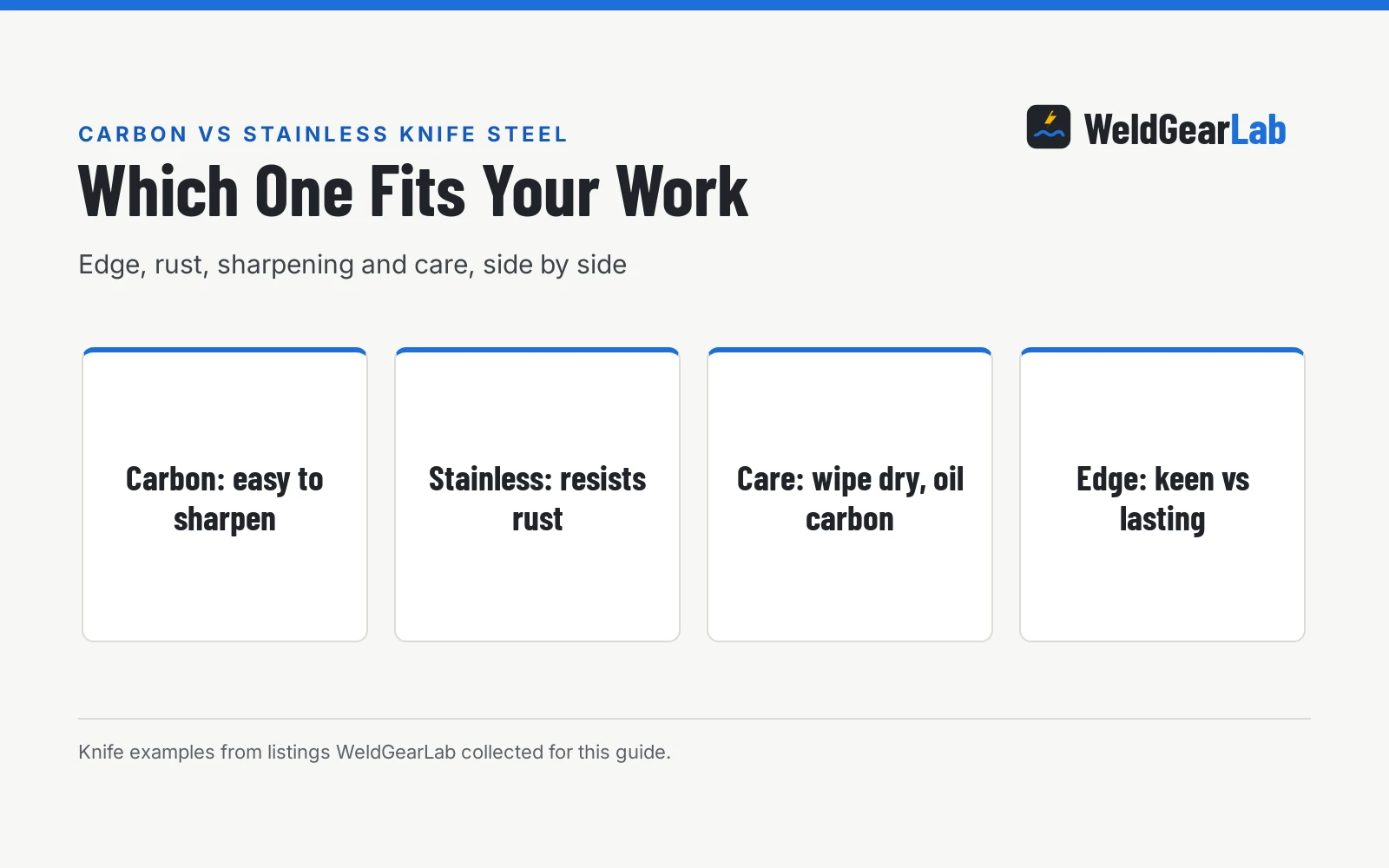
Stainless and carbon steels split on the same rust question; see carbon vs stainless knife steel for the wider picture.
The 1095 bars in this guide
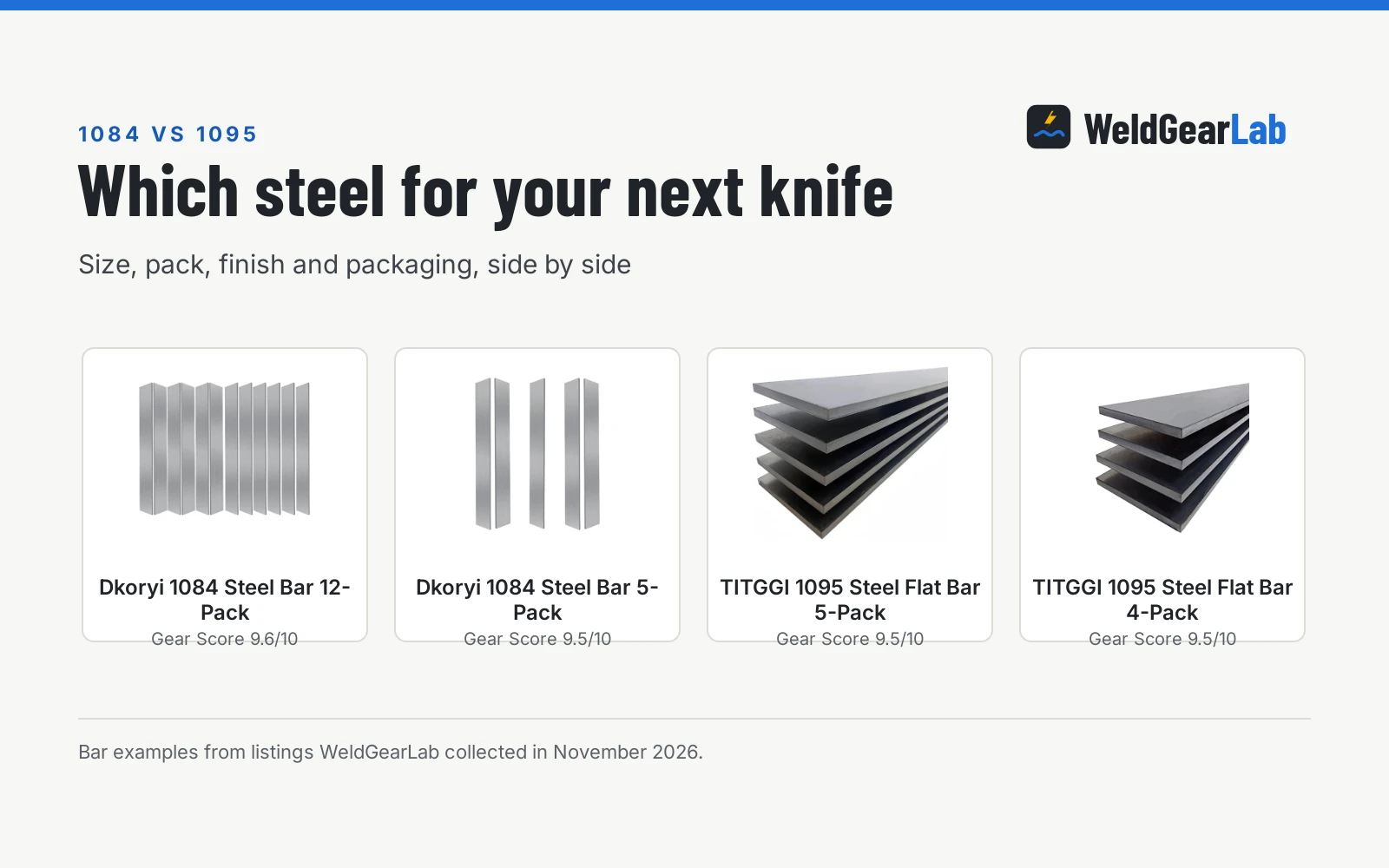
All the bars in this guide are 1095, so the choice here is size, pack, and finish rather than steel. The bars below cover the four packs in this guide.
| Bar | Size | Pack |
|---|---|---|
| Dkoryi 1095 bar | 12 x 1.5 x 1/8 inch | 12 pieces |
| WENHUALI 1095 bar | 12 x 2 x 0.24 inch | 2 pieces |
| XIOBTQT 1095 bar | 12 x 1.5 x 0.12 inch | 4 pieces |
| TITGGI 1095 bar | 12 x 1.5 x 0.12 inch | 5 pack |
Dkoryi. The Dkoryi bar leads the list. The maker lists 12 pieces of 12 x 1.5 x 1/8 inch bar, cold rolled and pre-annealed, with pre-deburred edges and a mill-scale-free surface, plus a stated tolerance of 0.1 mm. The size in metric is 304.8 mm by 38.1 mm by 3.18 mm. For a maker cutting several blanks, the pack covers more knives than any other bar here.
WENHUALI. The WENHUALI bar is the thick stock of the group: 12 x 2 x 0.24 inch, 2 pieces, untreated 1095 listed for forging and for knives, swords, and carving tools. Untreated steel allows easy annealing, so the maker keeps control of hardness and toughness. The width and thickness suit larger blades and forging work.
XIOBTQT. The XIOBTQT bar is a 4 piece pack of 12 x 1.5 x 0.12 inch annealed steel, cold rolled for easy shaping. The maker packs it in rust-proof oil, rust-proof paper, and bubble wrap. It is the plain, steady pick for a maker who wants annealed stock without a large pack.
TITGGI. The TITGGI bar is a 5 pack of 12 x 1.5 x 0.12 inch annealed cold rolled steel with a smooth finish, packed in rust-proof oil, rust-proof paper, and bubble bags. The maker gives 5 and 4 as the pack count; check before ordering.
How to pick a bar
Match the bar to the knife. A 12 inch length covers most knife blanks. The width sets the blade: 1.5 inch stock suits narrow blades, while 2 inch stock leaves room for wider blades and forging work. Thickness sets the grind: 0.12 inch and 1/8 inch stock grind fast and suit thin blades, while 0.24 inch stock suits thick blades and heavy use. Annealed bars grind with ease, pre-deburred edges save cleanup, and rust-proof packaging keeps bare steel dry in transit.
A belt grinder shapes these bars faster than hand files; see the best belt grinder for knife making guide. For forging, a burner kit and a forge to match it matter; see best 2 burner forge and propane vs charcoal forge.
Forge work needs care: work outdoors or with strong ventilation, keep tools and molds dry, wear a full face shield and leather gear, and never melt unknown or sealed scrap. Keep a fire extinguisher close and never leave a lit forge alone.
FAQ for welders
Is 1095 a good steel for a first knife?
Yes, for a maker starting out. Annealed 1095 grinds with ease, sharpens with ease, and forgives shaping, so a first blade comes together without a fight. The trade is rust: keep the blade dry and oiled, and store it out of damp air.
Does D2 rust?
D2 resists rust better than 1095, but it is not stainless and still needs care. Wipe the blade dry after use and keep it out of damp storage. A knife that lives in a wet sheath will show rust on any steel in this guide.
Can a knife be forged from 1095 bar stock?
Yes. The WENHUALI bar is listed for forging, and untreated 1095 allows annealing so the maker controls hardness and toughness. Work outdoors or with strong ventilation, keep tools dry, and wear a full face shield and leather gear.
What size 1095 bar should I order for a knife?
The bars in this guide run 12 inches long, 1.5 or 2 inches wide, and 0.12, 1/8, or 0.24 inch thick. A 1.5 inch wide bar suits narrow blades, a 2 inch bar suits wider blades, and 0.24 inch stock suits thick blades. Pick the pack that matches the number of blanks planned.
How do I keep 1095 bar stock from rusting?
Keep it dry and oiled. The TITGGI and XIOBTQT bars ship in rust-proof oil, rust-proof paper, and bubble wrap or bubble bags, which shows how the maker treats bare steel. Once the wrap comes off, wipe the bar with oil and store it in dry air.
Related: propane vs charcoal forge, carbon vs stainless knife steel, best belt grinder for knife making, and best 2 burner forge.