What Is MIG Welding Gas: Which Shielding Gas to Use
MIG welding gas shields the puddle from air while you weld, and the right mix depends on the metal, the wire and whether you weld indoors or out.

On this page
Top picks at a glance
As an Amazon Associate I earn from qualifying purchases.
- 1
 SPARC Premium Dual Argon Regulator for TIG/MIG Welding9.8/10View on Amazon
- 2
 CO2 Argon Regulator Gas Flowmeter for Mig Tig Welding with9.6/10View on Amazon
- 3
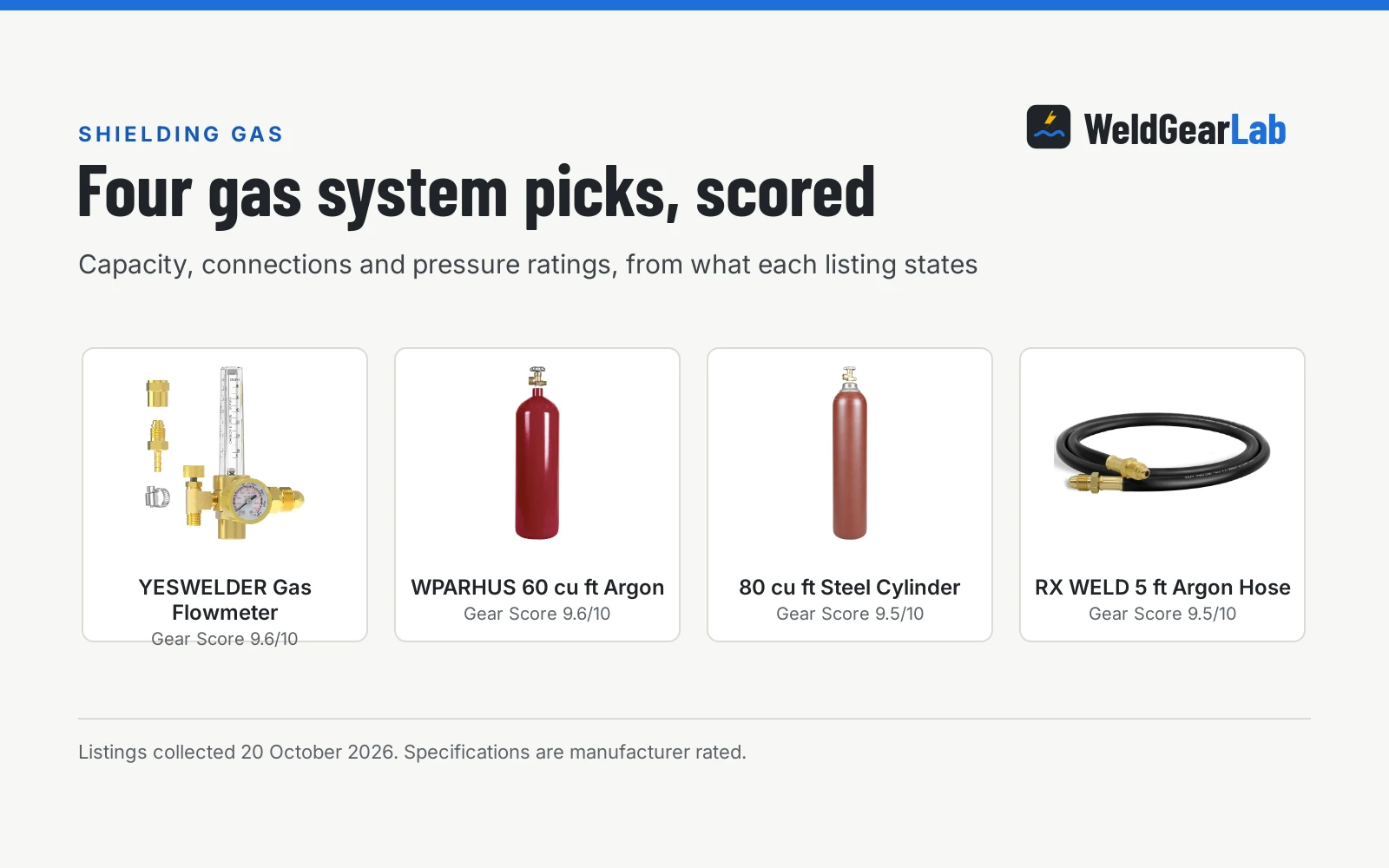
 YESWELDER Welding Gas Flowmeter9.6/10View on Amazon
A gate hinge, a trailer frame, a cracked mower deck: home MIG work like this is mild steel that has seen weather, and the weld has to hold in the real world. What is mig welding gas? It is the shielding gas that flows from the gun around the wire and keeps air off the molten puddle while you weld. Pick the wrong gas, or run out of it, and the bead comes out porous and weak no matter how steady your hand is. This guide explains what the gas does, which mix suits which metal, and what cylinder and fittings a home shop deals with.
This guide links to our product roundups, where WeldGearLab gets a commission on purchases made through links on this page, and your price stays the same. Read our affiliate disclosure.
What is mig welding gas
Molten steel reacts with oxygen and nitrogen in the air, and that reaction leaves pores and brittle spots in the finished bead. MIG welding gas is a shielding gas, usually argon, carbon dioxide, or a blend of the two, that the machine feeds through the gun so it blankets the arc and puddle and pushes air away. The gas does not become part of the weld metal. It just keeps the puddle clean long enough for the bead to freeze sound.
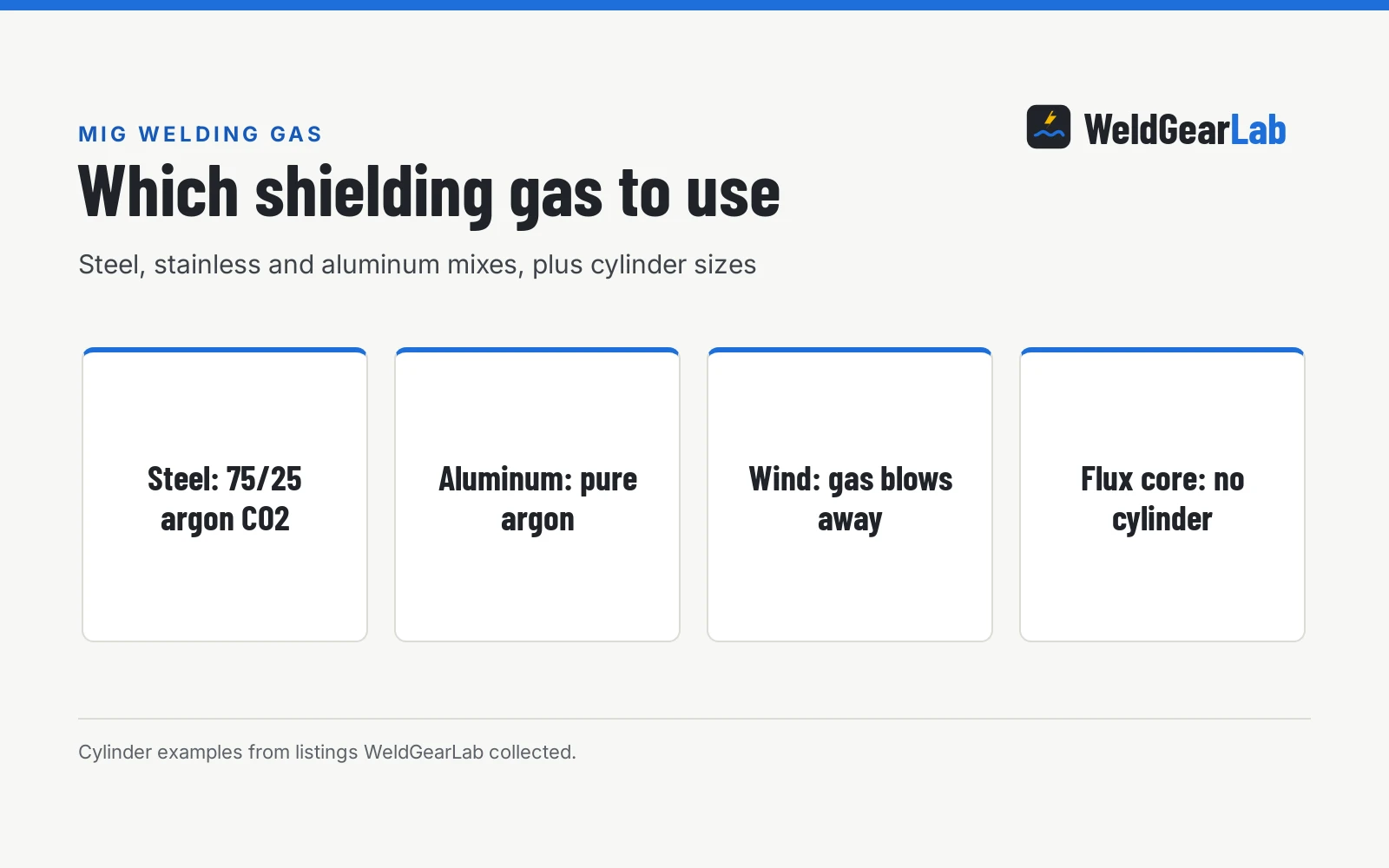
That blanket only works while the gas can stay put. A fan, an open door, or a breeze across the driveway can strip the shielding away and leave a porous bead, which is why gas MIG works best indoors or in sheltered spots. Gasless flux core wire carries its own shielding inside the wire, so it tolerates wind that ruins a gas setup. Our gasless vs gas MIG welder guide compares the two setups side by side.
Side by side
| 75/25 argon CO2 | Straight CO2 | Pure argon | |
|---|---|---|---|
| Used for | Mild steel, general shop work | Mild steel | Aluminum, and TIG work |
| Arc | Stable, smooth | Hotter, harsher | Smooth, soft |
| Spatter | Moderate | More | Low |
| Penetration | Moderate | Deeper | Deep and narrow on steel |
| Thin sheet | Good control | More burn through risk | Not the usual steel choice |
| Running cost | Not stated | Not stated | Not stated |
Blends vary by supplier, so read the label on the cylinder and the wire spool before you weld. The machine manual and the wire label name the gas each wire expects, and they outrank any general chart, including this one.
Which gas for steel
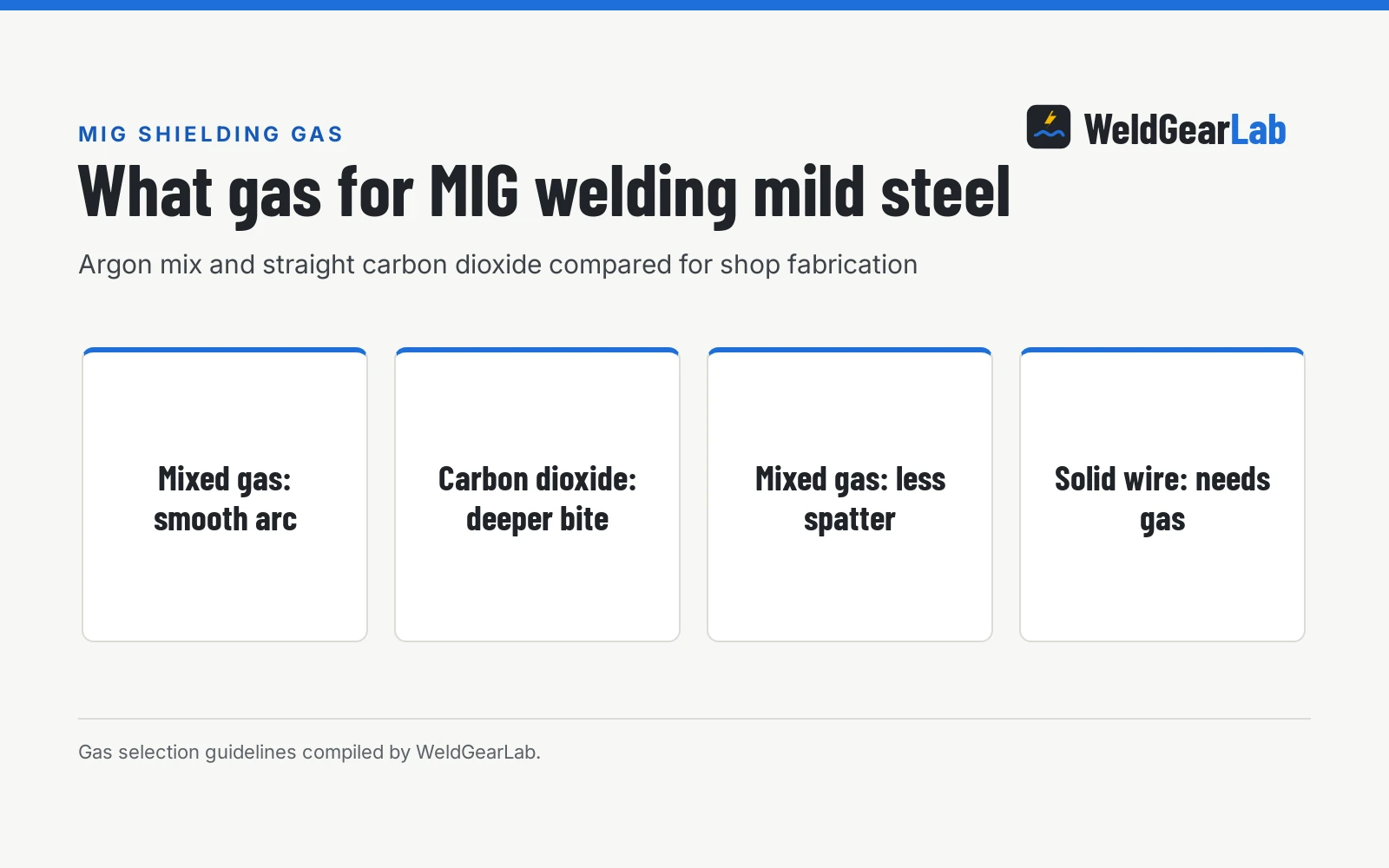
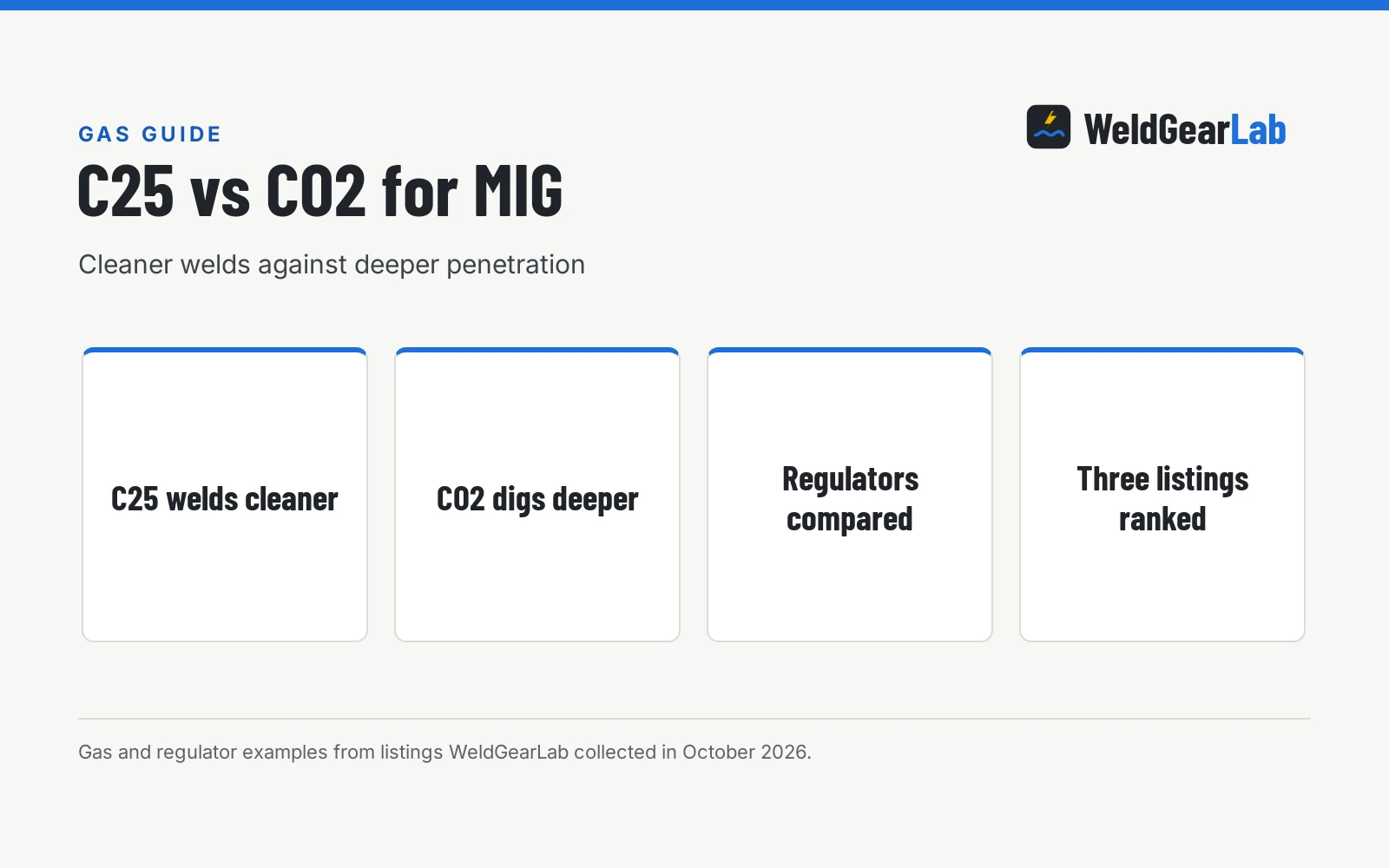
For mild steel, the common shop choice is a blend of 75% argon and 25% CO2. It gives a stable arc with moderate spatter and suits sheet, tube and plate work around the farm and garage. Cylinders of this blend are sold ready mixed: the Thoroughbred Industrial Cylinder Exchange listing, for example, is a 75/25 argon/CO2 cylinder in a 125 Cu. Ft. size for MIG work. Straight CO2 also welds mild steel and penetrates well, with more spatter to clean up afterward. Our argon vs CO2 shielding gas comparison walks through the tradeoffs in the arc and the cleanup.
Which gas for stainless and aluminum
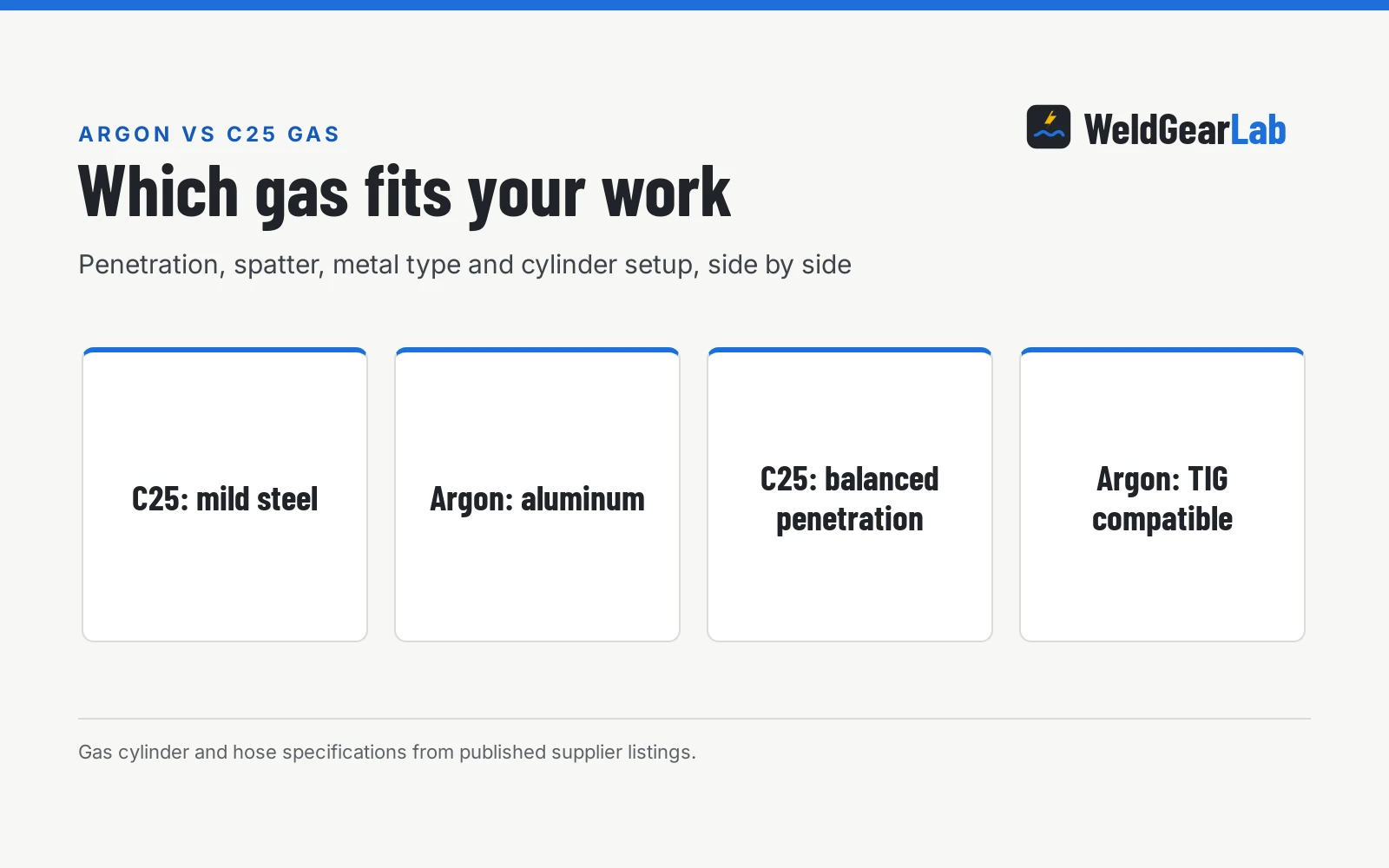
Aluminum wants pure argon. Carbon dioxide is a reactive gas that oxidizes an aluminum puddle and spoils the bead, so aluminum MIG runs on straight argon with a spool gun or push-pull setup. Stainless steel MIG usually runs on an argon based blend made for stainless wire, and the wire label names it. Cylinders of straight argon are common shop stock: the COLIBROX listing is an 80 cu/ft cylinder of 100% argon with a CGA 580 valve. The BESTMIG 145A welder in our listings runs solid steel and stainless wire, and flux-cored wire from .030 to .040 inch, and machines like it still need the right gas in the bottle.
Cylinders, regulators and hoses
The gas comes in a steel cylinder you buy or lease from a welding supplier, and the machine needs a regulator, a flowmeter and a hose to feed it to the gun. The COLIBROX argon cylinder (on Amazon) and the Weldfabulous blend cylinder in the listings here use a CGA 580 valve. Cylinders carry a stamped date, and the listings state a 10 year interval on that stamp, with cylinders shipped within 2 years of it. Size trades swap frequency against haul weight: the 80 cu/ft argon cylinder above is listed at 50.0 pounds, and the 125 Cu. Ft. blend cylinder is listed at 81.0 pounds. Chain every cylinder upright to a wall, cart or post so it cannot tip, and keep the cap on when you move it. Our types of gas cylinder guide covers sizes and valves.
When you can skip the gas
Self shielded flux core wire makes its own shielding as it burns, so a gasless setup needs no cylinder, regulator or hose at all. That suits outdoor repairs and rusty steel. The tradeoffs are more smoke, slag to chip and a rougher looking bead. Many home machines run both: solid wire with gas for clean indoor work, flux core for the field. Our best shielding gas for MIG welding roundup covers the bottled options, and the welding consumables hub gathers the wires and gases in one place.
Gas and fumes. The gas keeps air off the puddle, but the arc still makes fumes from the wire, the metal and whatever is on it, so weld with ventilation and keep your head out of the plume. Keep cylinders chained upright, away from heat, and close the valve when you finish. Never weld on a closed container that held fuel or chemicals. Galvanized steel and painted or oily metal make worse fumes and worse beads, so clean the joint first.
FAQ for welders
What gas do I need for MIG welding mild steel?
The common choice is a blend of 75% argon and 25% CO2, sold ready mixed in cylinders such as the 125 Cu. Ft. size above. Straight CO2 also welds mild steel, with more spatter. Follow the gas named on your wire label and in the machine manual.
Can I MIG weld without gas?
Yes, with self shielded flux core wire, which makes its own shielding as it burns and needs no cylinder. Solid wire without gas leaves a porous, weak bead, so solid wire always runs with gas. Check that your machine lists flux core before you load it.
What size gas cylinder should a home shop buy?
Size is about swaps and weight. The listings here run from an 80 cu/ft argon cylinder at 50.0 pounds to a 125 Cu. Ft. blend cylinder at 81.0 pounds. Bigger bottles mean fewer trips to the supplier and more weight to chain down and haul.
Does MIG welding gas expire?
The gas in the bottle does not spoil, but the cylinder itself carries a stamped date. The listings here state a 10 year interval on that stamp and ship cylinders within 2 years of it. Your supplier checks the stamp when you swap or refill.
Can I use pure argon for steel MIG?
Pure argon is the aluminum choice, and steel MIG usually runs on an argon and CO2 blend or straight CO2. The argon in the mix steadies the arc on steel, and the CO2 helps the bead wet out. Match the gas to the wire label instead of swapping bottles between metals.
Related: how to choose a MIG welder, argon vs CO2 shielding gas, types of gas cylinder, and the welding consumables hub. Also see our best MIG welder for hobbyist roundup.