Argon vs CO2 Shielding Gas: Which One Should You Buy?
Argon and CO2 shielding gas compared through the hoses, fittings and regulators that carry them, with pressure figures and coupler fit from the listings.

On this page
Top picks at a glance
As an Amazon Associate I earn from qualifying purchases.
- 1
 SPARC Argon Regulator & Flow Meter9.8/10View on Amazon
- 2
 YESWELDER Welding Gas Flowmeter9.6/10View on Amazon
- 3
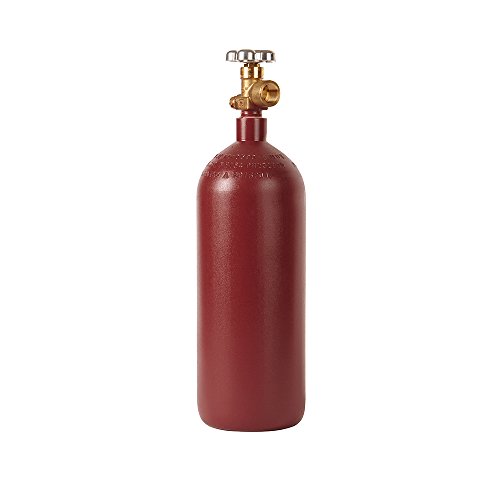 20 cu ft Steel Argon CylinderView on Amazon
- 4
 Furick Dual Argon RegulatorView on Amazon
- 5
 BETOOLL Argon/CO2 Mig Tig Flow Meter Gas Regulator GaugeView on Amazon
- 6
 80 cu/ft 75% Argon 25% CO2 Welding Gas Cylinder Tank CGA 580View on Amazon
- 7
 ARCCAPTAIN Argon/CO2/Helium RegulatorView on Amazon
- 8
 125 cu/ft 75% Argon 25% CO2 Welding Gas Cylinder Tank CGA 580View on Amazon
Argon vs CO2 shielding gas is a choice made at the cylinder and regulator, not at the torch: both gases travel through the same kind of hose, and the hose ends in these listings share 5/8-18 threads. The listings here show what carries each gas. Argon is an inert gas, and CO2 is a welding gas that one hose here lists as compatible, so the question is which gas the setup is built for and what the hose and regulator are rated to carry.
Other welders and gear to compare
 20 cu ft Steel Argon CylinderCheck price on Amazon
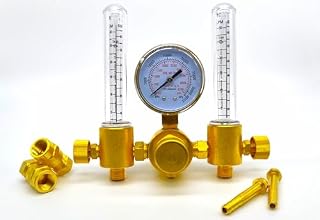 Furick Dual Argon RegulatorCheck price on Amazon
 BETOOLL Argon/CO2 Mig Tig Flow Meter Gas Regulator GaugeCheck price on Amazon
 80 cu/ft 75% Argon 25% CO2 Welding Gas Cylinder Tank CGA 580Check price on Amazon
 ARCCAPTAIN Argon/CO2/Helium RegulatorCheck price on Amazon
 125 cu/ft 75% Argon 25% CO2 Welding Gas Cylinder Tank CGA 580Check price on Amazon
This guide links to our product roundups, where WeldGearLab gets a commission on purchases made through links on this page, and your price stays the same. Read our affiliate disclosure.
The difference in one paragraph: argon vs co2 shielding gas
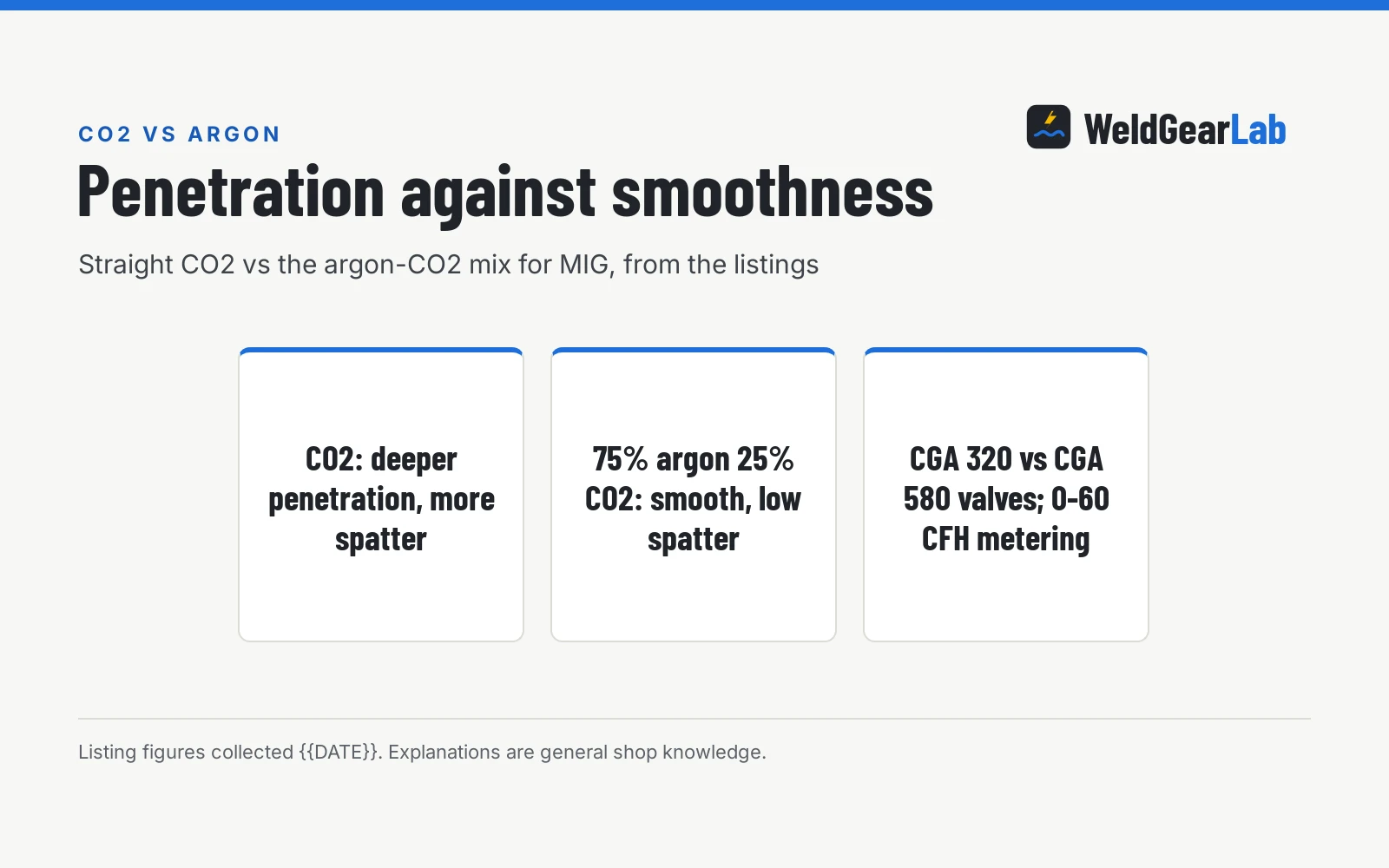
Argon is an inert gas, and the hoses here carry it from the regulator to the torch. CO2 is a welding gas that the same kind of hose carries: one hose here lists argon, CO2, helium and any other welding gas as compatible. Both gases shield the weld from air while the bead forms, and both reach the torch through a hose with a regulator at the cylinder end. The listings here name no arc behavior, spatter or penetration for either gas, so the listings leave weld quality unclear; the rest of this guide compares the hardware that carries each gas.
Side by side
| Argon | CO2 | Mixture gas | |
|---|---|---|---|
| Gas type | Inert gas | Welding gas | Mixture gas |
| Hose listed here | RX WELD 30 ft argon hose | STARTECHWELD 25 ft argon/CO2 hose | STARTECHWELD 25 ft hose, any welding gas |
| Fittings | 5/8-18 UNF female brass nuts | 5/8-18 male brass fittings | 5/8-18 RH male fittings |
| Max working pressure (hose) | 300 PSI on the RX WELD hose | 200 PSI on the STARTECHWELD hose | 200 PSI on the STARTECHWELD hose |
| Coupler | SÜA 5/8-18 RH female coupler | SÜA coupler, listing disagrees on CO2 | SÜA 5/8-18 RH female coupler |
| Regulator | Argon regulator | Argon/CO2 flowmeter regulator | Not stated |
Fittings match in thread size across the listings: every hose and coupler here uses 5/8-18 threads. But thread size is not the whole story: the RX WELD hose has female nuts on both ends and the SÜA coupler is female on both ends, so the two cannot thread together. The coupler joins hoses with male fittings, like the STARTECHWELD hose. Hose pressure figures belong to the hose, not the gas: check the hose rating before connecting it.
When argon is the better choice
- An argon-only setup. The RX WELD hose is an argon hose, best suited to RX WELD argon regulators, with 5/8-18 UNF female brass nuts on both ends.
- A longer reach. The RX WELD hose runs 30 ft, the longest hose here, with a max working pressure of 300 PSI and a bursting pressure of 900 PSI.
- A coupler in the line. The SÜA coupler joins two hoses with 5/8-18 RH male fittings, and its listing says it is for argon and mixture gas hoses.
- Oil and wear resistance. The RX WELD hose is industrial-grade rubber, oil-resistant and wear-resistant, and non-toxic.
When CO2 is the better choice
- A hose that lists CO2. The STARTECHWELD hose is compatible with argon, CO2, helium and any other welding gas, and it works with an argon/CO2 flowmeter regulator.
- One hose for either gas. With the same hose listed for argon and CO2, the gas changes at the regulator and cylinder, not in the hose.
- Easy storage. The STARTECHWELD hose rolls up for storage after use and wipes clean with a soft cloth.
- Flame resistance. The STARTECHWELD hose is flame and oil-resistant and self-extinguishing.
Our best shielding gas for MIG welding guide covers gas picks for MIG work.
How to tell what a setup supports
Check the listing before ordering, and check the hardware in hand before connecting gas:
- Gas names in the listing. A hose that names argon only, like the RX WELD hose, is listed for argon; a hose that names argon and CO2, like the STARTECHWELD hose, lists both.
- Fittings. All 3 listings here use 5/8-18 threads: female brass nuts on the RX WELD hose, male brass fittings on the STARTECHWELD hose, and a female-to-female coupler from SÜA.
- Pressure. The RX WELD hose lists a max working pressure of 300 PSI and a bursting pressure of 900 PSI; the STARTECHWELD hose lists a max working pressure of 200 PSI. Match the hose to the regulator output.
- Regulator type. The RX WELD hose suits an argon regulator; the STARTECHWELD hose works with an argon/CO2 flowmeter regulator.
- Thread direction on couplers. The SÜA coupler is right-threaded and will not fit left-threaded TIG water hoses.
Which gas for MIG on steel
The listings here name argon, CO2, helium and mixture gases as gases the hoses carry, and the STARTECHWELD hose is listed for use with an argon/CO2 flowmeter regulator. No listing here names a gas mix or a recommended gas for a given metal, so the listings leave that choice unclear; follow the wire and machine manual for the gas it calls for. For more on gas picks, see our CO2 vs argon for MIG welding guide.
Can one setup run both?
Yes: the STARTECHWELD hose is compatible with argon, CO2, helium and any other welding gas, and the listing says it threads into most TIG/MIG welders. Change the gas at the regulator and cylinder; the hose and the 5/8-18 fittings stay the same. The SÜA coupler joins two hoses with 5/8-18 RH male fittings when a longer run is needed. The RX WELD hose adds 30 ft of reach on an argon setup, with its female nuts threading onto male fittings.
Gas hose safety. Weld with good ventilation or outdoors with your head out of the plume, and clear dry grass and anything flammable from the area. Chain gas cylinders upright, and check hose connections for leaks before the first bead. Never run a gas hose past its stated max working pressure.
The gear
The 3 listings here are the hardware in the gas path. The RX WELD hose leads at 300 PSI, the STARTECHWELD hose follows at 200 PSI with both gases listed, and the SÜA coupler joins hoses with no pressure stated.
RX WELD 30 ft argon hose. A 30 ft rubber hose with 5/8-18 UNF female brass nuts on both ends, an inner diameter of 1/4 in, a max working pressure of 300 PSI and a bursting pressure of 900 PSI. It weighs 1.1 lb, is oil-resistant and wear-resistant, and is best suited to RX WELD argon regulators.
STARTECHWELD 25 ft argon hose. A 25 ft rubber hose with 5/8 x 18 brass male fittings on both ends, crimped 1/4 in, listed as 100% leak-free and compatible with argon, CO2, helium and any other welding gas. Max working pressure is 200 PSI. It weighs 3.0 lb, is flame and oil-resistant and self-extinguishing, and it rolls up for storage after use.
SÜA hose coupler. A 5/8-18 RH female to 5/8-18 RH female coupler that joins two TIG/MIG gas hoses, with machined threads for a leak-free connection. It weighs 2.0 ounces and fits hoses with 5/8-18 RH male fittings, and it also connects TIG Dinse plug connectors with a gas line to the flowmeter hose. One snag: the listing says it fits argon, CO2 and mixture gas hoses, then says it is for argon and mixture gas hoses only, so the listing disagrees with itself on CO2; confirm before ordering. It will not fit left-threaded TIG water hoses.
FAQ for welders
Can one hose carry both argon and CO2?
Yes, if the listing says so. The STARTECHWELD hose lists argon, CO2, helium and any other welding gas as compatible, and it works with an argon/CO2 flowmeter regulator.
What fittings do these gas hoses use?
All 3 listings here use 5/8-18 threads. The RX WELD hose has 5/8-18 UNF female brass nuts, the STARTECHWELD hose has 5/8 x 18 male brass fittings, and the SÜA coupler is 5/8-18 RH female on both ends.
What pressure are these hoses rated for?
The RX WELD hose lists a max working pressure of 300 PSI and a bursting pressure of 900 PSI. The STARTECHWELD hose lists a max working pressure of 200 PSI. The SÜA coupler states no pressure figure.
How long are the hoses here?
The RX WELD hose is 30 ft and the STARTECHWELD hose is 25 ft. The SÜA coupler is not a hose: it joins two hoses together.
Does the SÜA coupler fit CO2 hoses?
The listing says it fits argon, CO2 and mixture gas hoses with 5/8-18 RH male fittings, but it also says it is for argon and mixture gas hoses only. The listing disagrees with itself, so confirm fit before ordering.
Related: best welding gas hose, best argon gas flow meter, argon flow meter vs regulator, best shielding gas for MIG welding, and flux core vs MIG. Also see our best gas regulator for MIG welding.