What Is a File Card and How to Use One
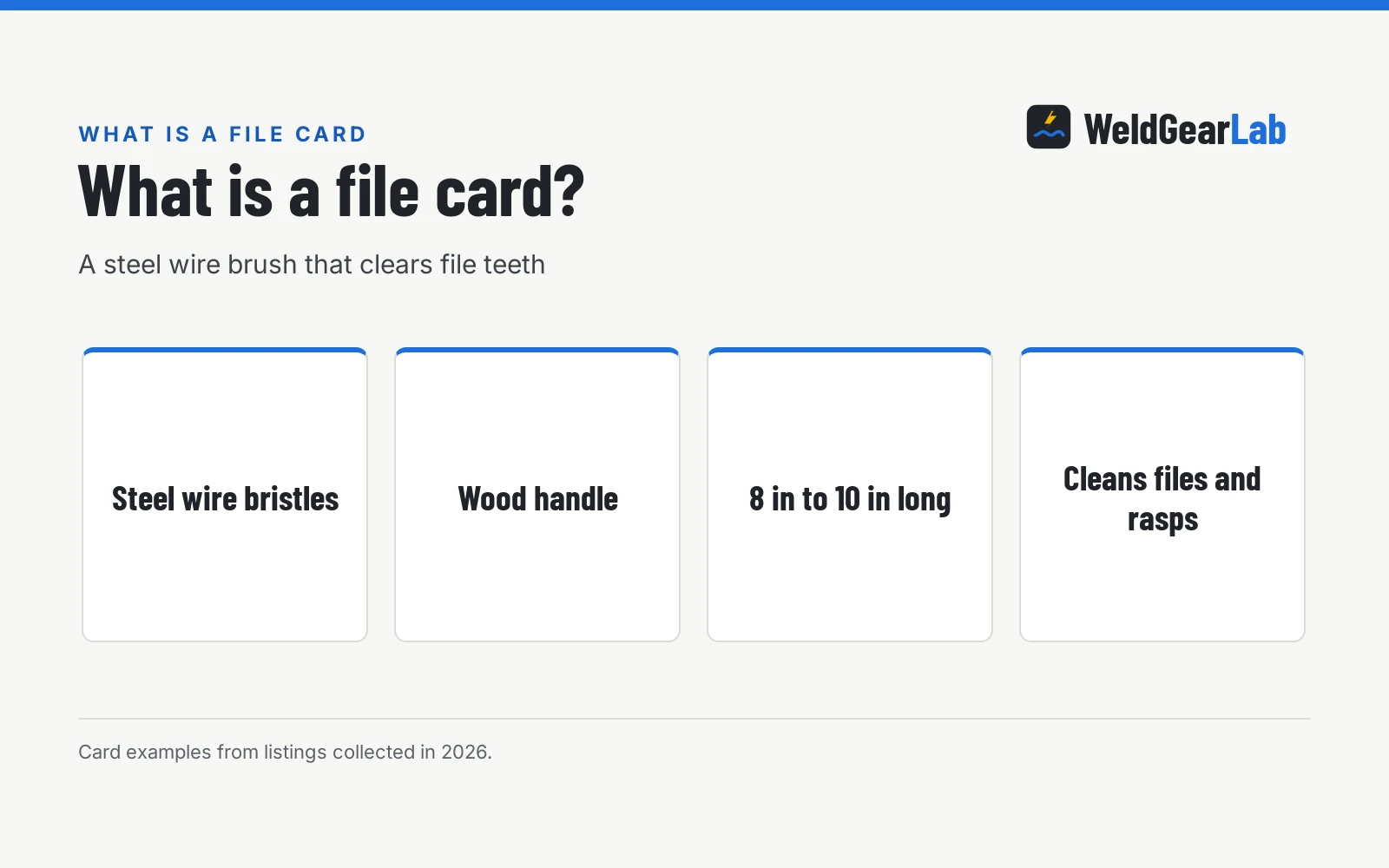
A file card is a stiff steel wire brush on a wood handle that clears packed chips from file and rasp teeth so the file cuts again.

On this page
Top picks at a glance
As an Amazon Associate I earn from qualifying purchases.
- 1
 LIBRATON 31PCS Metal File Set9.7/10View on Amazon
- 2
 SHALL 17Pcs Metal File Set9.7/10View on Amazon
- 3
 Nicholson Crescent 5 Piece 69.7/10View on Amazon
A file that skates across the work instead of cutting is usually loaded with chips, and the fix sits in a drawer, not on the shelf. What is a file card? A file card is a stiff steel wire brush on a wood handle that clears packed chips and debris from file and rasp teeth. Brush it along the teeth, and the file cuts again.
This guide links to our product roundups, where WeldGearLab gets a commission on purchases made through links on this page, and your price stays the same. Read our affiliate disclosure.
What is a file card
A file card is a brush with stiff steel wire bristles set in a wood handle, made to clean the teeth of a hand file or rasp. When a file loads up with chips, the teeth stop cutting and the file skates. A few strokes with the card lift the packed chips out of the grooves, and the file bites again. Cards come in 8 in, 9-1/8 in and 10 in lengths, with wood handles and steel wire fill. Steel wire is the fill on the cards here; our brass vs steel wire brush comparison covers steel and brass wire.
The wire is steel, and the fill resists rust and corrosion. The handle is wood, comfortable to hold, and the brush head is attached for long-lasting use. Some cards add a fine brush on the back of the card for dust, and some sets add a pin brush for fine grooves.
Side by side
| Steel wire card | Double-sided card and brush | Wire and pin brush set | Notes | |
|---|---|---|---|---|
| What it is | Steel wire bristles on a wood handle | Metal bristles on one side, carding brush on the other | A wire brush and a steel pin brush | All clean file and rasp teeth |
| Lengths | 8 in, 9-1/8 in and 10 in | 10 in | Not stated | Lengths vary |
| Best for | Loaded files and rasps | Packed debris and fine grooves | Coarse rasp grooves and fine file grooves | Match the brush to the teeth |
| Handle | Wood handle | Wooden handle | Wooden handle | Every type lists a wood handle |
| Pack | 1, 2 or 4 cards | 1 card | 2 brushes and 4 ropes | Packs vary |
| Example | QWORK 8 in card, Nicholson 10 in card, PFERD 9-1/8 in card | XVUCRT 10 in card, VKQ 10 in card | SIMPOR wire and pin brush set | Shop examples |
Card length is the full length of the card as stated, and pack sizes vary.
How to use a file card
Hold the file by the handle and lay it flat on the bench, teeth up. Push the card along the teeth, from the handle end toward the tip, and lift it at the end of each stroke. Work down the file in passes until the teeth look clean, then brush the loose chips off the bench. On a double-sided card, use the card side for packed chips and the brush side for fine dust. Keep your hands clear of the sharp file teeth while you brush.
Card, brush, or brush set
- Steel wire card. The plain card: stiff steel wire bristles on a wood handle. QWORK lists an 8 in card in packs of 2 and 4, Nicholson lists a 10 in card, and PFERD lists a 9-1/8 in card with fine steel wire.
- Double-sided card and brush. Stiff metal bristles on one side and a fine carding brush on the other. XVUCRT lists a 10 in double-sided card, and VKQ lists a 10 in 2-in-1 card and brush.
- Wire and pin brush set. A wire brush for coarse rasp grooves and a steel pin brush for fine metal file grooves, with hanging ropes. SIMPOR lists a set with 2 brushes and 4 hanging ropes.
Our how to clean metal files guide covers the card, brush and shop routine.
What a file card does not do
A file card clears chips from the teeth; it does not sharpen a dull file or straighten bent teeth. A file that stays dull after carding is worn out, not dirty. The card also does not replace a brush for the bench: keep the card for the teeth and a shop brush for the bench.
Keep the card working
Steel wire resists rust and corrosion, per QWORK, so the card lasts a long time with basic care. Knock the loose chips out of the bristles after use, and hang the card by its handle or store it flat in a drawer. A card with bent or broken bristles cleans less well, so replace it when the wire wears down.
FAQ for welders
What is a file card used for?
A file card clears packed chips and debris from the teeth of hand files and rasps, so the file cuts again. QWORK lists its cards for cleaning debris and material build-up from metal files and rasp teeth.
How do I use a file card?
Hold the file flat, teeth up, and push the card along the teeth from the handle end toward the tip, lifting it at the end of each stroke. Work down the file in passes until the teeth look clean.
What size file card should I buy?
Cards run 8 in, 9-1/8 in and 10 in long. The 10 in XVUCRT card (on Amazon) lists a wide surface for cleaning large files quickly. Pick the length that fits the files you clean most.
Can a file card clean a rasp?
Yes. File cards are made for files and rasps, and the QWORK cards are made for use with all file and rasp styles. Use the wire brush for coarse rasp grooves and the pin brush for fine metal file grooves.
Does a file card sharpen a file?
No. A file card clears chips from the teeth; it does not sharpen a dull file. A file that stays dull after carding is worn out.
Related: how to clean metal files, metal file types, deburring tool vs metal file, and the metal fab tools hub.