Welding Magnets vs Welding Clamps: Which One Should You Buy?
Welding magnets vs welding clamps: magnets hold parts at 45, 90 and 135 degrees hands-free while clamps squeeze with force. A guide with listing figures for home shops.

On this page
Top picks at a glance
As an Amazon Associate I earn from qualifying purchases.
- 1
 Magnetpro Multipurpose Switch Magnet 220 LB Pull-Off Force9.6/10View on Amazon
- 2
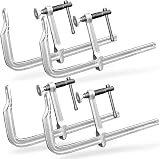 Heavy-Duty 12-Inch F-Clamps9.7/10View on Amazon
- 3
 YESWELDER 25 lb and 50 lb Welding Magnet-4 Pc of WeldingView on Amazon
- 4
 TOOLIOM Arrow Welding Magnet SetView on Amazon
- 5
 TOOLIOM Arrow Welding MagnetsView on Amazon
- 6
 YESWELDER 75 lb Welding Magnet 2 Pc of Welding Magnet 75 lbView on Amazon
- 7
 YESWELDER Switchable Arrow Welding Magnet 2 Pc 33-44LBsView on Amazon
- 8
 Welding Magnetic Grounding ClampView on Amazon
Welding magnets hold parts at set angles hands-free, while welding clamps squeeze parts together with force. That is the whole welding magnets vs welding clamps question: magnets are faster for tacking up at 45, 90 and 135 degrees, and clamps are stronger when the joint needs real pressure. This guide explains both, using the magnet listings we reviewed for concrete figures.
Other welders and gear to compare
 YESWELDER 25 lb and 50 lb Welding Magnet-4 Pc of WeldingCheck price on Amazon
 TOOLIOM Arrow Welding Magnet SetCheck price on Amazon
 TOOLIOM Arrow Welding MagnetsCheck price on Amazon
 YESWELDER 75 lb Welding Magnet 2 Pc of Welding Magnet 75 lbCheck price on Amazon
 YESWELDER Switchable Arrow Welding Magnet 2 Pc 33-44LBsCheck price on Amazon
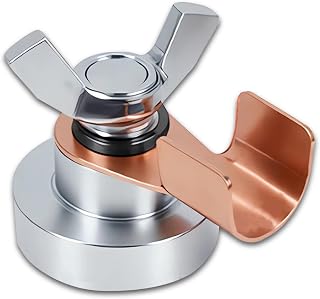 Welding Magnetic Grounding ClampCheck price on Amazon
This guide links to our product roundups, where WeldGearLab gets a commission on purchases made through links on this page, and your price stays the same. Read our affiliate disclosure.
welding magnets vs welding clamps: the difference in one paragraph
A welding magnet is a shaped magnet, usually an arrow, that sticks to ferrous metal and holds the workpiece at a fixed angle: 45, 90 or 135 degrees on the listings we reviewed. A welding clamp is a mechanical squeeze: C-clamps, F-clamps and locking pliers that press two parts together. Magnets set up in seconds and hold light parts for tacking; clamps take longer to place and press the parts together.
Side by side
| Welding magnets | Welding clamps | Listed by | |
|---|---|---|---|
| Job | Hold parts at set angles hands-free | Squeeze parts together with force | General |
| Holding force | 12 to 120 lb per the listings | Not stated | The listings |
| Angles | 45, 90 and 135 degrees | Not stated | The listings |
| On/off | Switchable: 33-44 lb (YESWELDER) | N/A | The listings |
| Metal | Ferrous only | Any metal | General |
These numbers are the manufacturer’s ratings exactly as each listing gives them, recorded on 19 October 2026. The clamp side is described without force figures, as none are stated.
When welding magnets are the better choice
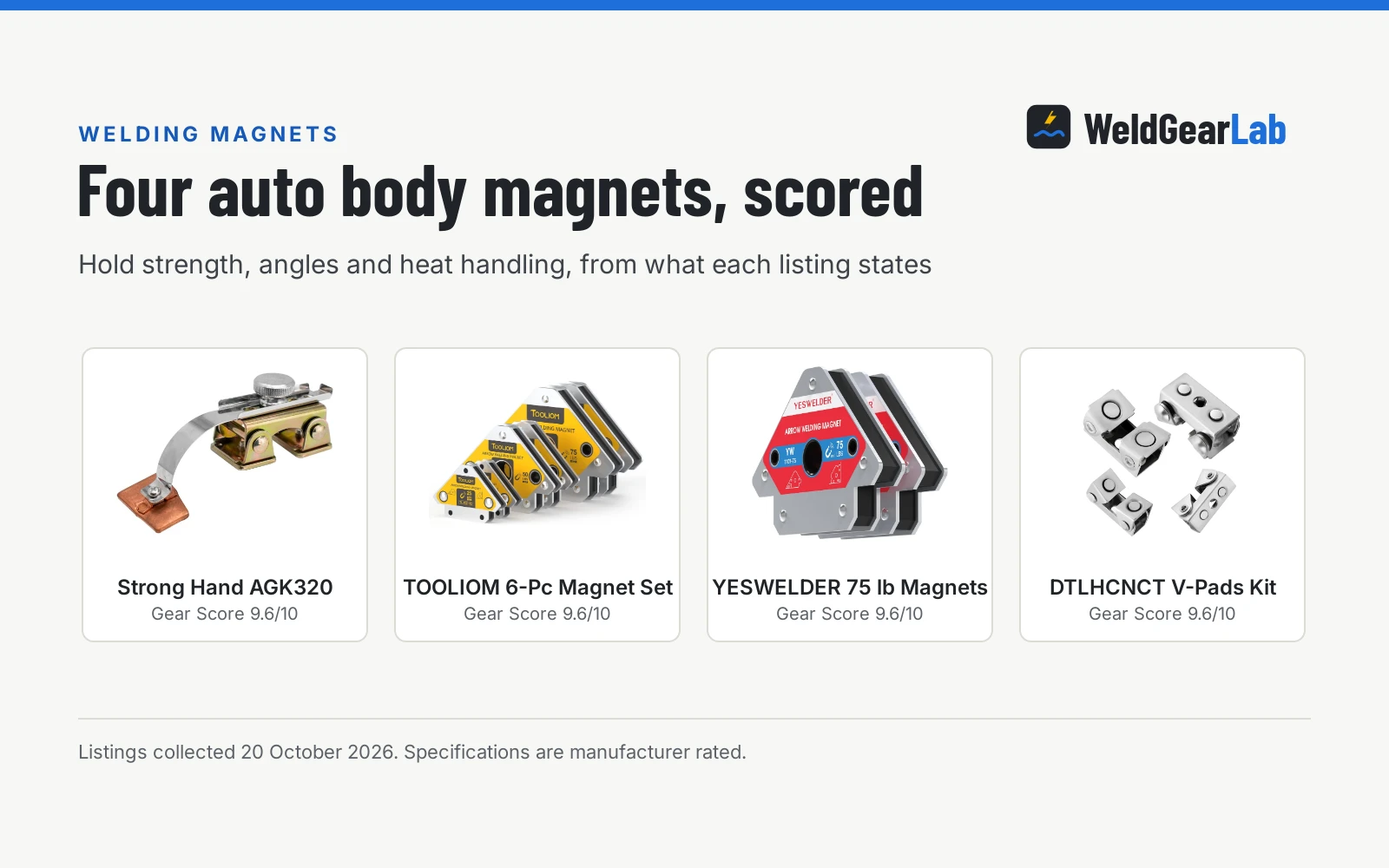
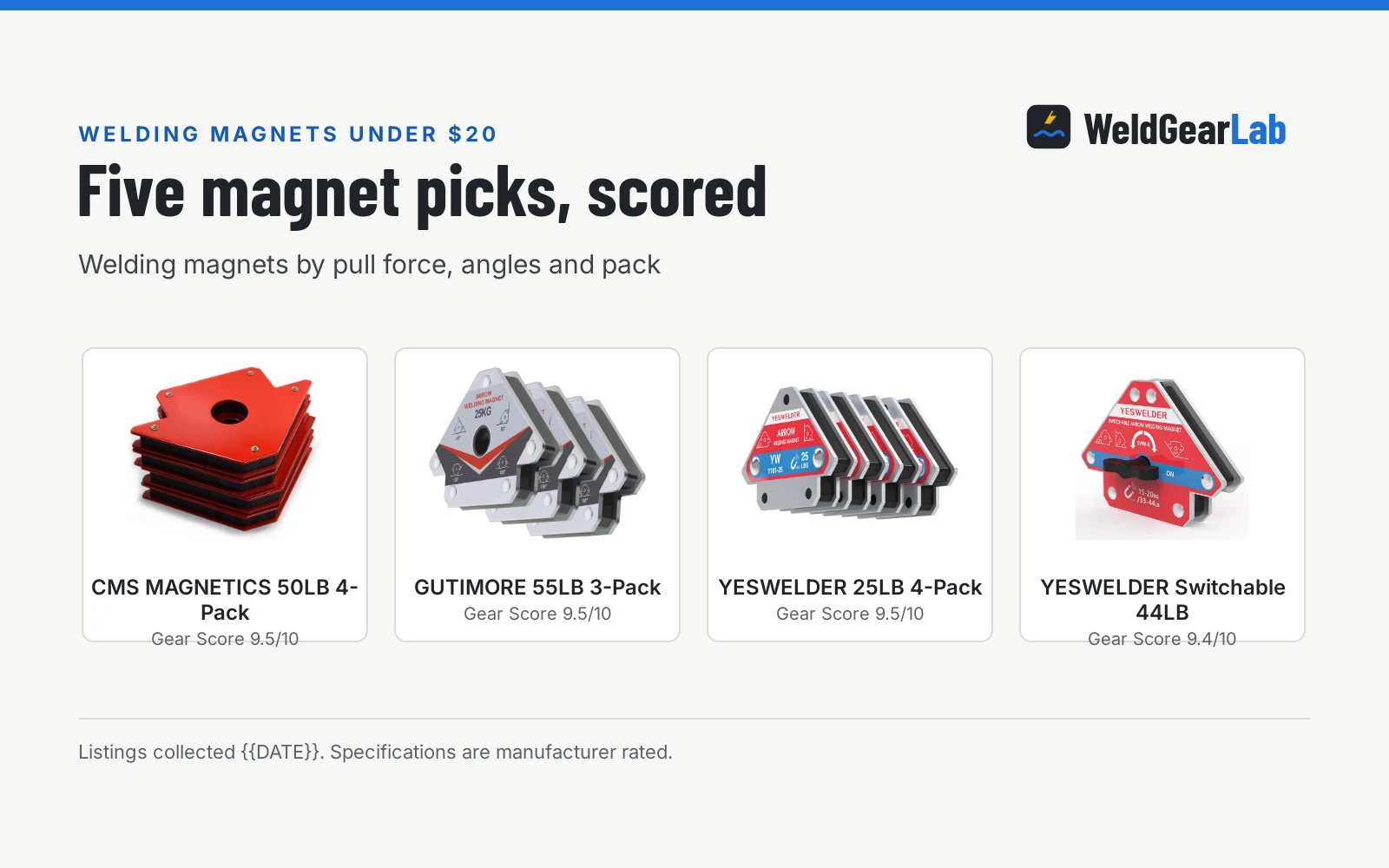
Magnets win on speed and angles. Setting up a 90-degree corner with two arrow magnets takes seconds: stick them on, drop the parts against the 45, 90 and 135 degree faces, and tack. The listings we reviewed cover holding forces from 12 lb on the small V-pads (2 in pads at 12 lb, 2.2 in at 18 lb) up to 120 lb on the switchable square, with arrow sets at 25, 50 and 75 lb. Switchable magnets, like the YESWELDER at 33-44 lb on/off, let you position with the magnet off and lock it on when the part is right. Magnets are the choice for tacking up frames, boxes and brackets where the parts are light and the angles are standard.
When welding clamps are the better choice
Clamps win on force and on non-magnetic metal. A magnet only works on ferrous metal. When the joint needs pressure, when the parts are heavy, or when you weld stainless steel or aluminum that a magnet cannot grip, clamps are the answer. Clamps also hold through the weld: a magnet can shift if the part gets bumped, while a tightened clamp stays put. For fit-up that has to stay exact while you run the bead, clamp it.
How to tell what a magnet holds
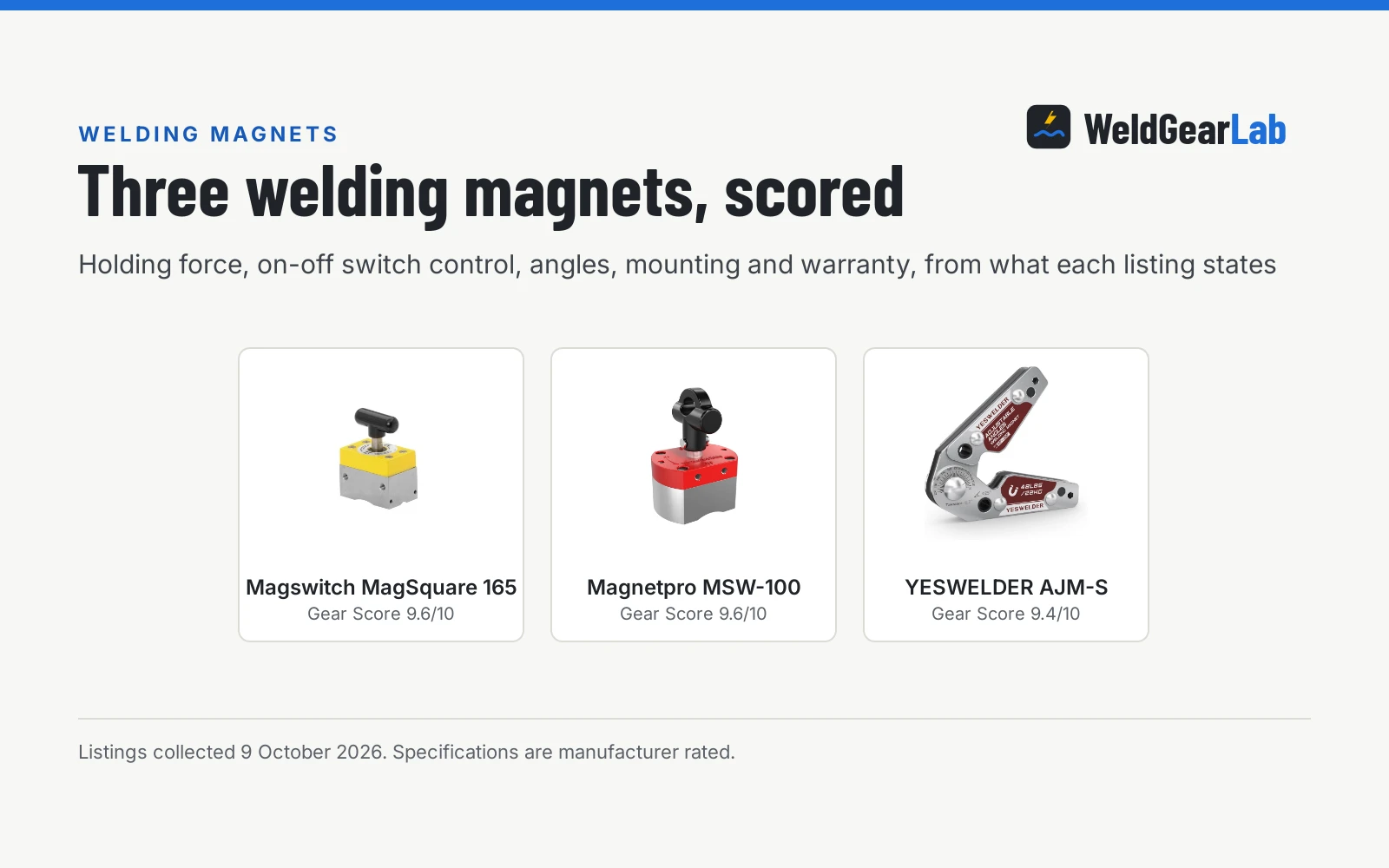
The listings state holding force in pounds: 25, 50 and 75 lb on the arrow sets, 33-44 lb on the switchable YESWELDER, 12 to 18 lb on the DTLHCNCT V-pads, 40 lb on the fixed square and 120 lb on the switchable square. Treat those as the magnet’s grip on flat, clean steel; an angle joint or a rusty surface holds less. The arrow shape matters as much as the pounds: the 45, 90 and 135 degree faces are what make a magnet a layout tool rather than just a paperweight. Size up the magnet to the part: small V-pads for sheet metal tabs, 50 lb arrows for tube frames, 75 lb arrows or the 120 lb square for the heavy brackets.
Can you use both?
Yes, and most fab work does. Magnets tack the parts at the right angles, then clamps lock the joint for the full weld. The magnet is the third hand that holds the angle; the clamp is the vise that holds the pressure. Buy magnets first if you tack a lot of angle joints; buy clamps first if you weld heavy or non-magnetic parts.
Sizing the magnet to the part
The listings give you a clear sizing ladder. The small V-pads state 12 lb on the 2 in pads and 18 lb on the 2.2 in pads: enough for sheet metal tabs and light brackets. The arrow sets run 25, 50 and 75 lb, which covers tube frames at 50 lb and heavy brackets at 75 lb, and the switchable square states 120 lb for heavier work. The YESWELDER switchable sits in the middle at 33-44 lb on/off, with the switch as its selling point: position the part with the magnet off, then switch it on to lock. Size up when the part is heavy or the joint is at an angle, because an angle joint holds less than flat steel. Treat the stated pounds as the grip on flat, clean steel; rust, paint and curved surfaces all reduce it. When the part is heavier than the magnet’s rating, or the metal is stainless or aluminum the magnet cannot grip, reach for a clamp instead.
Arc blow and when to pull the magnets
Magnets can cause arc blow, where the magnetic field pushes the arc off the joint. It shows up most with DC welding near strong magnets, and it is the main reason to pull the magnets before running long beads. The working pattern is simple: tack the parts at the right angles with the magnets holding them, then pull the magnets and clamp the joint for the full weld. Switchable magnets make this easier: the YESWELDER at 33-44 lb lets you slide parts into position with the magnet off and lock them on for tacking, then switch off and lift away without disturbing the tack. Fixed magnets fight you during setup and removal, so budget for that when you choose. For long beads on thick material, clamps hold the joint through the whole weld without any magnetic interference.
FAQ for welders
Do welding magnets affect the arc?
Magnets can cause arc blow, where the magnetic field pushes the arc off the joint. It shows up most with DC welding near strong magnets. Tack with the magnets, then pull them before running long beads if the arc wanders.
Will welding magnets work on stainless steel?
Only on magnetic grades. Most austenitic stainless is non-magnetic, so the magnets in these listings will not grip it. Use clamps for stainless and aluminum.
What angle magnets do I need?
The arrow magnets in the listings cover 45, 90 and 135 degrees, which handles most frame and bracket work. Fixed 90-degree squares suit production corners. See our best welding magnets under 20 for options.
Are switchable magnets worth it?
For layout work, yes. The YESWELDER switchable at 33-44 lb lets you slide the part into position with the magnet off, then switch it on to lock. Fixed magnets fight you during setup.
Can clamps replace magnets entirely?
They can, but slowly. A clamp does everything a magnet does except the instant angle setup. If you only buy one, clamps are the more versatile tool; if you tack angles often, magnets pay for themselves in saved time. Compare clamp types in our F-clamp vs C-clamp for welding guide.
Related: our best welding clamps under 25 and the locking C-clamp vs screw clamp for welding.