F-clamp vs C-clamp for Welding: Which One Should You Buy?
F-clamp vs C-clamp for welding: when the bar clamp's reach wins, when the C-clamp's compact grip wins, and what the listing figures say about size and force.

On this page
Top picks at a glance
As an Amazon Associate I earn from qualifying purchases.
- 1
 BESSEY KREK2440 K Body REVO Clamp Kit9.8/10View on Amazon
- 2
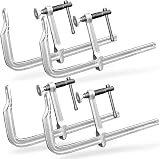 Heavy-Duty 12-Inch F-Clamps9.7/10View on Amazon
- 3
 JMIATRY 4PCS Welding F Clamps 6 Inches Heavy Duty Steel Bar9.7/10View on Amazon
- 4
 MAXPOWER 24-inch F ClampView on Amazon
- 5
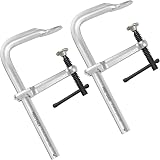 MAXPOWER 8-inch F ClampView on Amazon
- 6
 SHALL 4-Pack Bar Clamps SetView on Amazon
- 7
 4-Pack Heavy Duty 12"View on Amazon
- 8
 SOUJOY 4 Pack Bar Clamp for WeldingView on Amazon
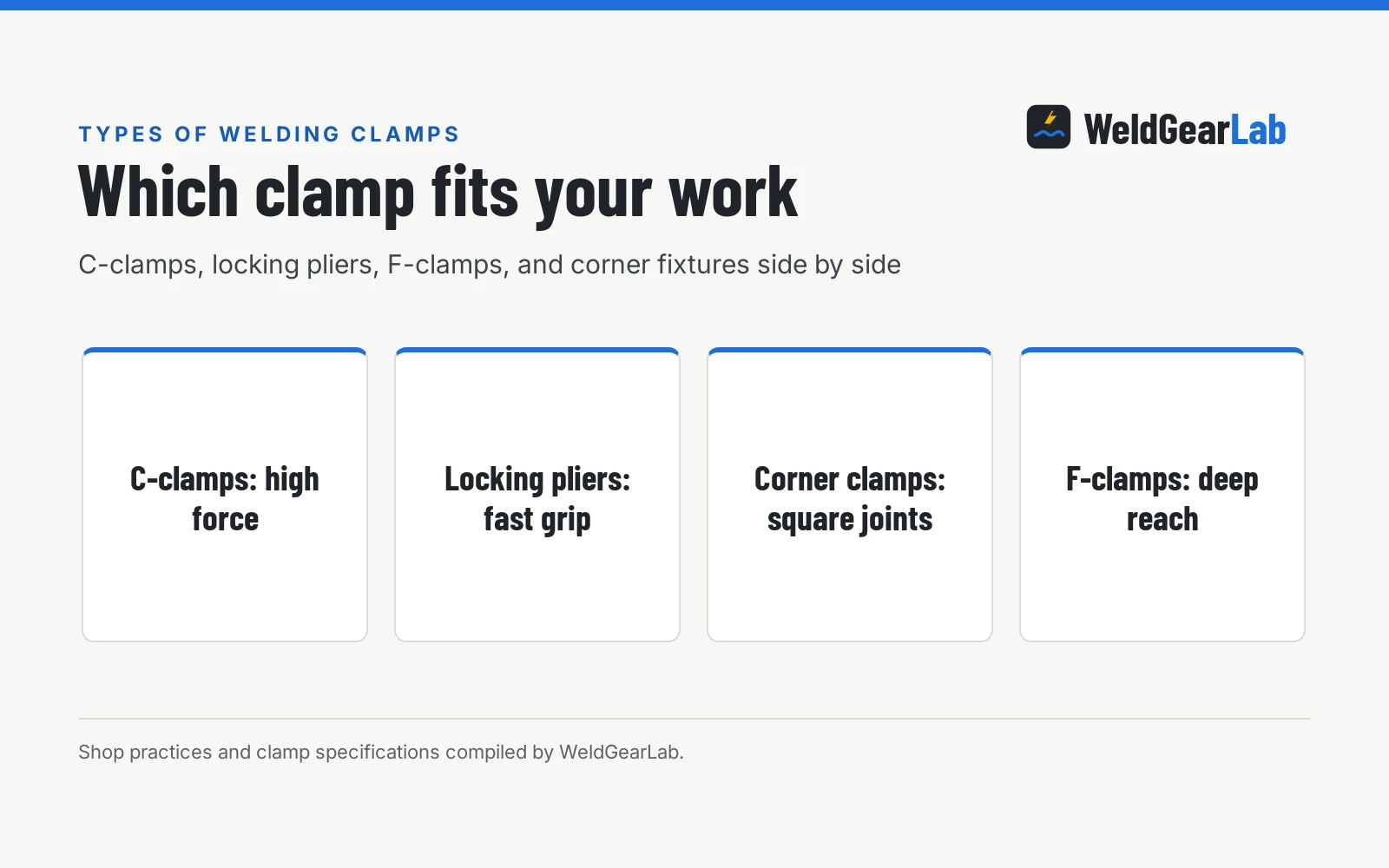
Two pieces of angle need to stay put for tacking, and the f-clamp vs c-clamp for welding question is about reach against grip. An F-clamp is a bar clamp with a sliding jaw: it opens wide, reaches deep with throats up to 5-1/2 in, and adjusts fast along the bar. A C-clamp is a fixed C-shaped frame: compact and rigid, it grips in tight spots where a bar clamp will not fit. For table fit-up and long reaches, take the F-clamp; for small parts and tight corners, take the C-clamp.
Other welders and gear to compare
 MAXPOWER 24-inch F ClampCheck price on Amazon
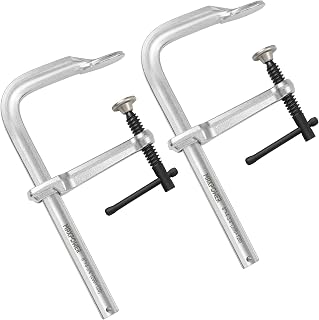 MAXPOWER 8-inch F ClampCheck price on Amazon
 SHALL 4-Pack Bar Clamps SetCheck price on Amazon
 JMIATRY 4PCS Welding F Clamps 6 Inches Heavy Duty Steel BarCheck price on Amazon
 4-Pack Heavy Duty 12"Check price on Amazon
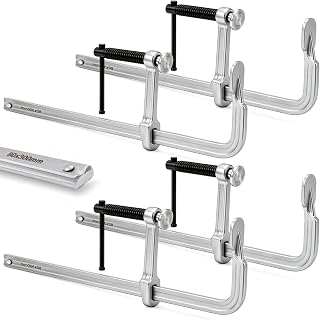 SOUJOY 4 Pack Bar Clamp for WeldingCheck price on Amazon
This guide links to our product roundups, where WeldGearLab gets a commission on purchases made through links on this page, and your price stays the same. Read our affiliate disclosure.
F-clamp vs C-clamp for welding: the difference in one paragraph
The F-clamp wins on opening and reach. The listings run from 6 in to 24 in of jaw opening, with throat depths from 3 in to 5-1/2 in and clamping forces from 450 lbs to 2,660 lbs, and the sliding jaw repositions in seconds for repetitive fit-up. The C-clamp wins on compactness: the YESWELDER 11 in set is a 3-pack of chrome-plated alloy steel with heat-treated jaws, built to bite and hold where space is short. No clamping force is stated for the C-clamp listing, so that side is described without force figures.
Side by side
| Factor | F-clamp | C-clamp | Listing notes |
|---|---|---|---|
| Shape | Bar with sliding jaw | Fixed C frame | Both types in the listings |
| Opening | 6 to 24 in | 11 in (one listing) | MAXPOWER 24 in; YESWELDER 11 in |
| Throat | 3 to 5-1/2 in | Not stated | Wilton 5-1/2 in deepest |
| Force | 450 to 2,660 lbs stated | Not stated | Wilton 2,660 lbs highest |
| Best for | Table fit-up, long reach | Tight spots, small parts | General fit-up guidance |
Figures are from the listings reviewed, collected 19 October 2026; a figure from one listing describes that listing only. No clamping force is stated on the C-clamp listing.
When the F-clamp is the better choice
Pick the F-clamp when the work is bigger than your hand. The 24 in MAXPOWER opens wide enough for large fabrications with a 4-3/4 in throat and 1200 lbs of clamping pressure on a full steel bar, and the Wilton GSM20 pairs an 8 in opening with a 5-1/2 in throat and 2,660 lbs of clamping force, the highest figure in these listings, with a lifetime warranty. The sliding jaw is the real advantage: set it once near the work size, then spin the handle for the final squeeze, which beats threading a C-clamp open and closed all day. For production fit-up on the welding table, that speed matters.
When the C-clamp is the better choice
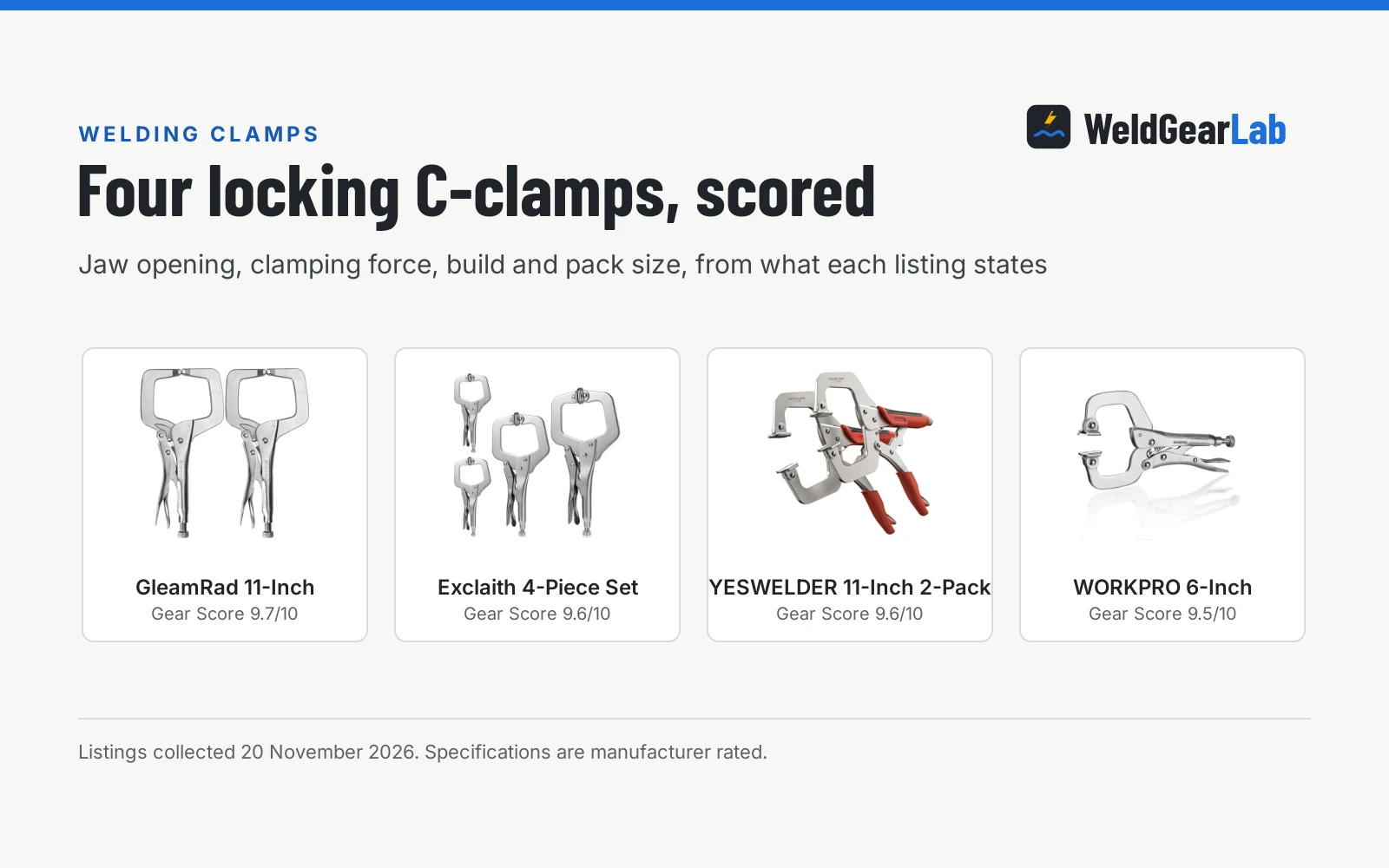
Pick the C-clamp when space is tight and the part is small. The fixed C frame has no bar sticking out past the work, so it fits inside tubing clusters, between flanges and on small brackets where a bar clamp fouls. The YESWELDER set brings three 11 in clamps with heat-treated jaws in chrome-plated alloy steel, a hardworking combination for clamp jaws. For tacking small parts and holding short pieces to the table, the C-clamp’s compact frame is the right tool.
What the clamp listings tell you
The F-clamp listings cover the full range. Light duty looks like the SHALL and SOUJOY 4-packs: 12 in opening, 3 in throat, 450 lbs maximum, drop forged steel for general holding. The middle runs through the JMIATRY 6 in 4-pack at 1320 lbs with a 3 in throat, the GleamRad 12 in 2-pack at 1320 lbs with a 4-3/4 in throat, swivel pad and black-oxide spindle, and the KARRYTON 12 in 4-pack at 1400 lbs with a 4-3/4 in throat on a 1 in x 15/32 in bar. Heavy duty is the Wilton GSM20 at 2,660 lbs and the MAXPOWER pair at 1200 lbs in 8 in and 24 in openings. The Wilton 11116 kit bundles 4 in and 8 in mini F-clamps, also with a lifetime warranty. On the C-clamp side, the YESWELDER 11 in 3-pack states heat-treated jaws and chrome plating but no force or throat figures, so buy it for the shape and the jaw treatment, not a number.
Sizing: opening, throat and force
Match the opening to the work: the listings span 6 in to 24 in, and a clamp opened near its limit is weaker and more awkward than the next size up. Match the throat to the reach: 3 in throats suit edge work, while 4-3/4 in and 5-1/2 in throats reach deep into panels and frames. Match the force to the job: 450 lbs holds parts for tacking, while 1320 to 2660 lbs suits heavy fit-up that must not move under the arc. When in doubt, buy the deeper throat; you will use the reach more than you expect.
FAQ for welders
Which is stronger, an F-clamp or a C-clamp?
On stated figures, the F-clamp side wins: the Wilton GSM20 lists 2,660 lbs of clamping force, the highest here. The YESWELDER C-clamp listing states no force figure, so its strength cannot be compared on paper; Without a stated figure, judge it on the compact frame and the jaw treatment rather than on force.
Can I use F-clamps for welding?
Yes. The MAXPOWER listings are pitched at metalworking and welding, with forged steel bars and a 4-3/4 in throat. The GleamRad listing is pitched at welding, metalworking and fabrication, with forged alloy steel and a 4-3/4 in throat. The KARRYTON listing is pitched at pipe welding, woodworking and metal fabrication, with drop forged steel and a 4-3/4 in throat. Keep the spindle threads clear of spatter and the clamp will last.
What throat depth do I need?
Enough to reach the joint with the bar clear of the work. The listings offer 3 in, 4-3/4 in and 5-1/2 in throats. For table fit-up on wide panels, the deeper throats win; for edge tacking, 3 in is plenty.
Do I need a swivel pad?
It helps on uneven stock. The GleamRad listing calls out a swivel pad, which lets the pad sit flat on irregular surfaces instead of rocking on one edge. For flat bar and tube, a fixed pad is fine.
Which clamp for tack welding small parts?
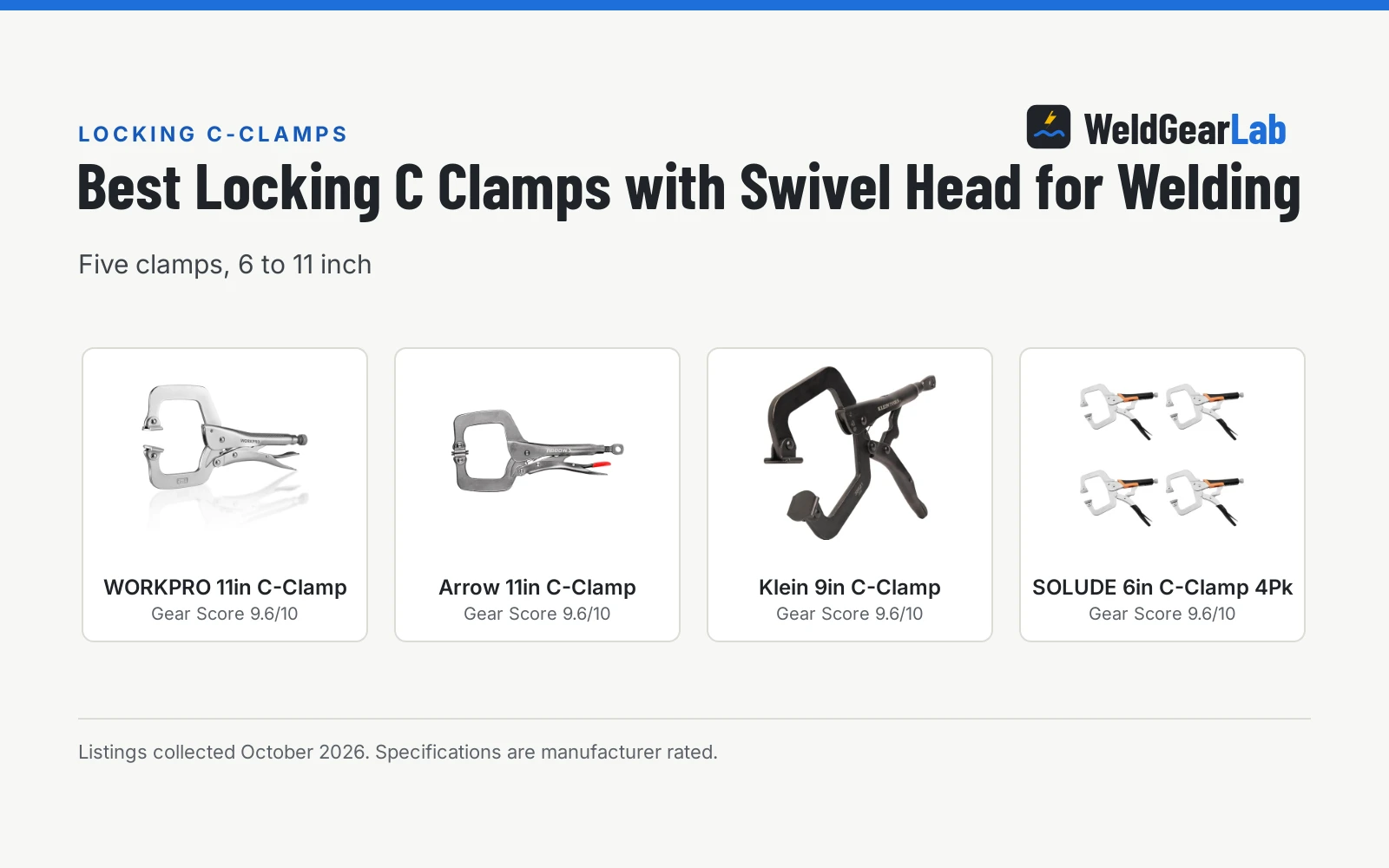
The C-clamp. Its compact frame fits where a bar clamp will not, and the YESWELDER 11 in 3-pack gives you three clamps with heat-treated jaws for small brackets and short pieces. See the locking C-clamp vs screw clamp for welding guide for the locking variant.
Related: the best welding clamps for fabrication picks, the best heavy duty welding clamps picks, the locking C-clamp vs screw clamp for welding guide.