Locking C-Clamp vs Screw Clamp for Welding (2026)
Locking C-clamp vs screw clamp for welding: when the one-squeeze lock wins, when gradual screw pressure wins, and what sizes the listings show.

On this page
Top picks at a glance
As an Amazon Associate I earn from qualifying purchases.
- 1
 MAXPOWER Locking Chain Clamp9.7/10View on Amazon
- 2
 4 Pack 5.5" 90 Degree Corner Clamps for Woodworking with Box9.6/10View on Amazon
- 3
 IRWIN Vise Grip 11R 11" C Clamp Locking Regular Tip EasyView on Amazon
- 4
 11-Inch Locking C-Clamp PliersView on Amazon
- 5
 IRWIN VISE-GRIP Locking PliersView on Amazon
- 6
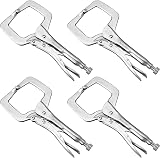 MAXPOWER 11-inch Locking C ClampView on Amazon
- 7
 IRWIN VISE-GRIP Welding PliersView on Amazon
- 8
 Amazon Basics Adjustable Metal Face Clamps for WoodworkingView on Amazon
Locking c-clamp vs screw clamp for welding comes down to how you want the pressure applied. A locking C-clamp squeezes on with one hand and locks, holding the work without you keeping pressure on it, which is ideal for tacking and holding parts at awkward angles. A screw clamp tightens gradually with a screw handle, giving you fine control over pressure and alignment, which suits delicate fit-up and precise positioning. Most welding benches end up with both.
Other welders and gear to compare
 IRWIN Vise Grip 11R 11" C Clamp Locking Regular Tip EasyCheck price on Amazon
 11-Inch Locking C-Clamp PliersCheck price on Amazon
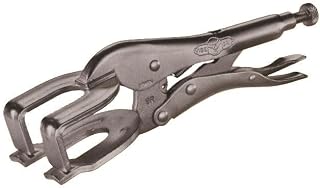 IRWIN VISE-GRIP Locking PliersCheck price on Amazon
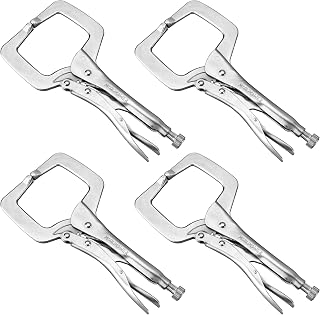 MAXPOWER 11-inch Locking C ClampCheck price on Amazon
 IRWIN VISE-GRIP Welding PliersCheck price on Amazon
 Amazon Basics Adjustable Metal Face Clamps for WoodworkingCheck price on Amazon
This guide links to our product roundups, where WeldGearLab gets a commission on purchases made through links on this page, and your price stays the same. Read our affiliate disclosure.
Locking C-clamp vs screw clamp for welding: the difference in one paragraph
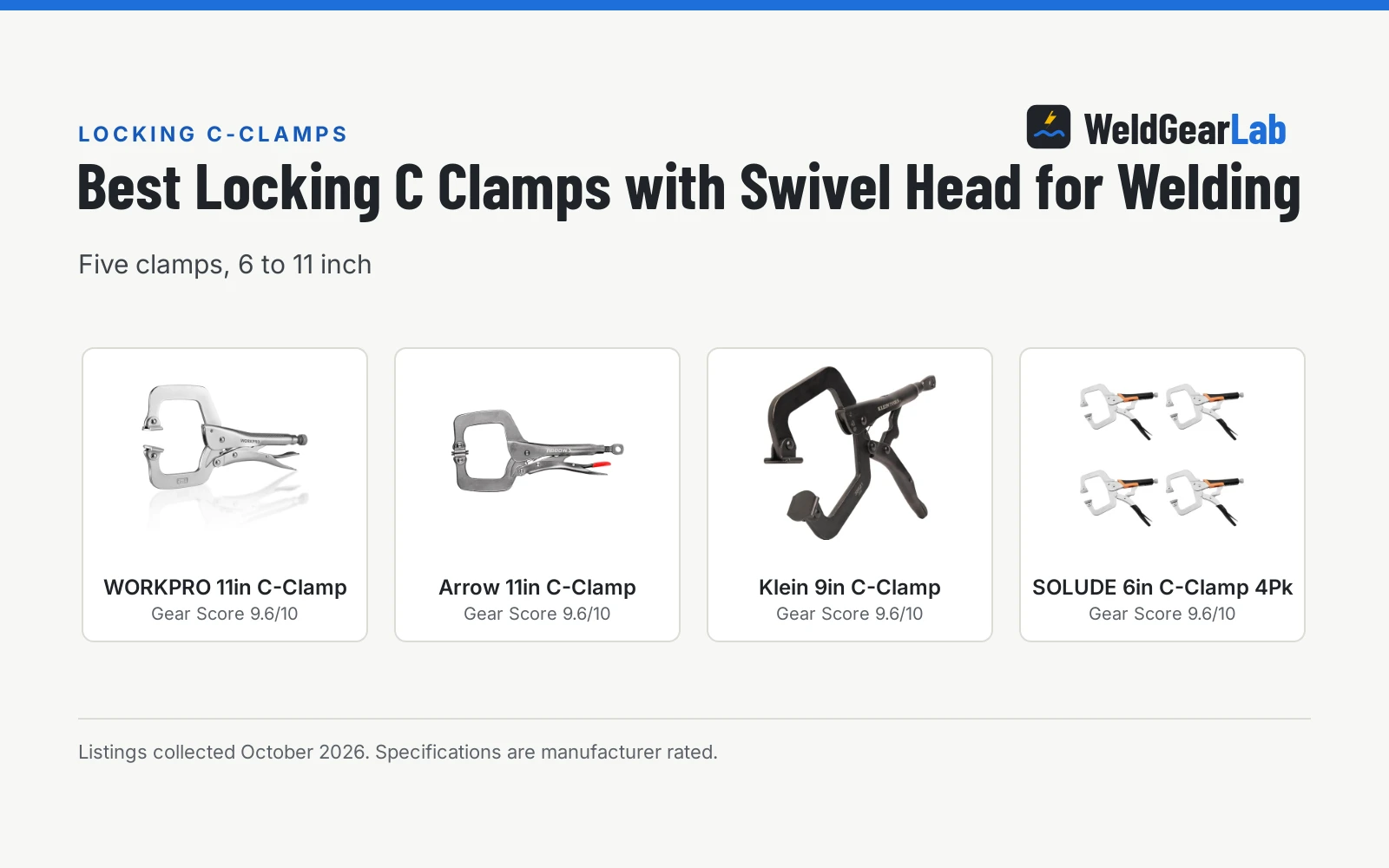
A locking C-clamp is a plier-style tool: squeeze the handles, the jaws lock onto the work, and a turn screw sets the jaw opening and pressure in advance. Once locked it stays put, freeing both hands for the torch. A screw clamp is a frame with a threaded screw: you turn the handle to advance the pad, building pressure gradually and exactly where you want it. The locking clamp is faster and holds itself; the screw clamp is slower and more precise. The listings reviewed are locking C-clamps, mostly 11-inch, with stated jaw openings from 3-3/8 in to 4 in; many list swivel pads for uneven surfaces, while some list regular tips or fixed pads.
Side by side
| Locking C-clamp | Screw clamp | Why it matters | |
|---|---|---|---|
| How it clamps | Squeeze handles, jaws lock | Turn screw advances the pad | Speed against precision |
| One-handed use | Yes, locks and stays | No, needs winding | Frees a hand for the torch |
| Pressure control | Set in advance with turn screw | Gradual, exact, repeatable | Control against speed |
| Best welding use | Tacking, holding at angles | Precise fit-up, thin sheet | Match the clamp to the task |
| Drawbacks | All-at-once bite can shift alignment | Slow, needs two hands | Every clamp trades something |
| Typical sizes listed | 11 in most common; 18 in; 6, 9, 11, 14 in sets | Not in these listings | Size the clamp to the work |
Locking-clamp figures are from the listings we reviewed, collected 18 October 2026. Screw-clamp behavior is general workshop knowledge.
When a locking C-clamp is the better choice
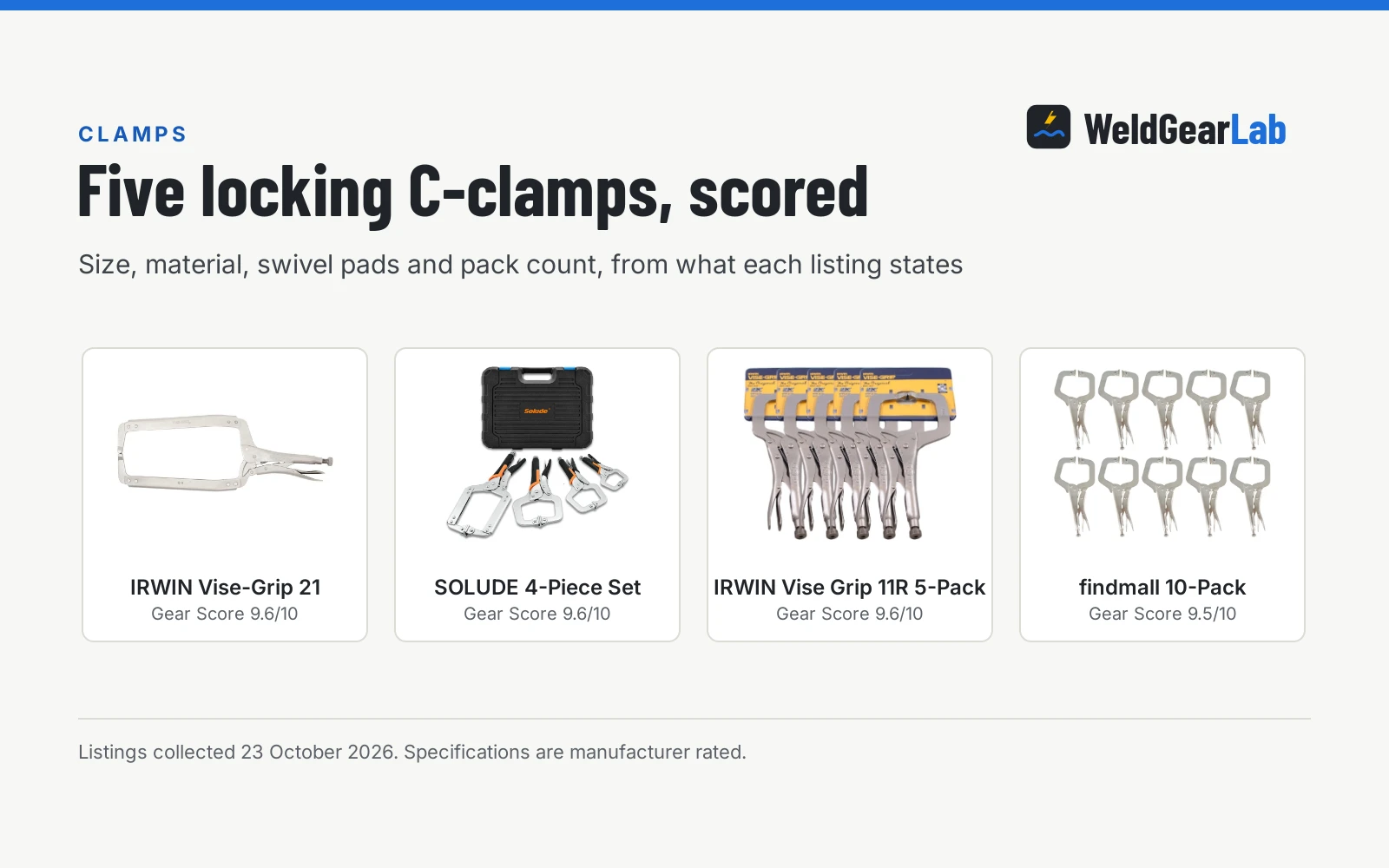
Choose the locking C-clamp when speed and holding power matter more than finesse. Tacking a frame together, holding a bracket at an angle while you spot-weld, clamping sheet to a table for a quick repair: one squeeze and the part stays. The listings show why welders buy them in quantity: 10-packs and 5-packs of 11-inch clamps for multi-point clamping, and a 4-piece set spanning 6, 9, 11 and 14 inches for different jobs. The trigger release matters here too: it unlocks fast for repositioning, which is what you want when you are moving down a row of tacks. Swivel pads, standard on most of the listings, conform to tapered and irregular work without marking it.
When a screw clamp is the better choice
Choose the screw clamp when the fit-up has to be exact. Aligning two plates edge to edge, closing a small gap without distorting thin sheet, or holding a part where a sudden full-force bite would shift it: the screw lets you creep up on the pressure. Locking C-clamps apply their force all at once when they lock, which can nudge delicate alignment out of place. Screw clamps also give you a visible, repeatable setting: count the turns and you know the pressure. For tacking and rough holding, that precision is overkill; for final fit-up before a critical weld, it is the point.
Sizes and what the listings show
The 11-inch locking C-clamp is the standard size in the listings, sold singly and in packs of 4, 5 and 10. The HFS 11-inch lists a 4-inch jaw opening, which covers most welding fit-up. The 18-inch locking C-clamps in the listings suit larger openings and deeper reaches. A mixed set, 6, 9, 11 and 14 inches in the Minatee listing, covers small brackets to big frames in one buy. Size the clamp to the work: the jaw opening must swallow the thickest stack you clamp, and the throat must reach the weld line.
Pads, tips and release
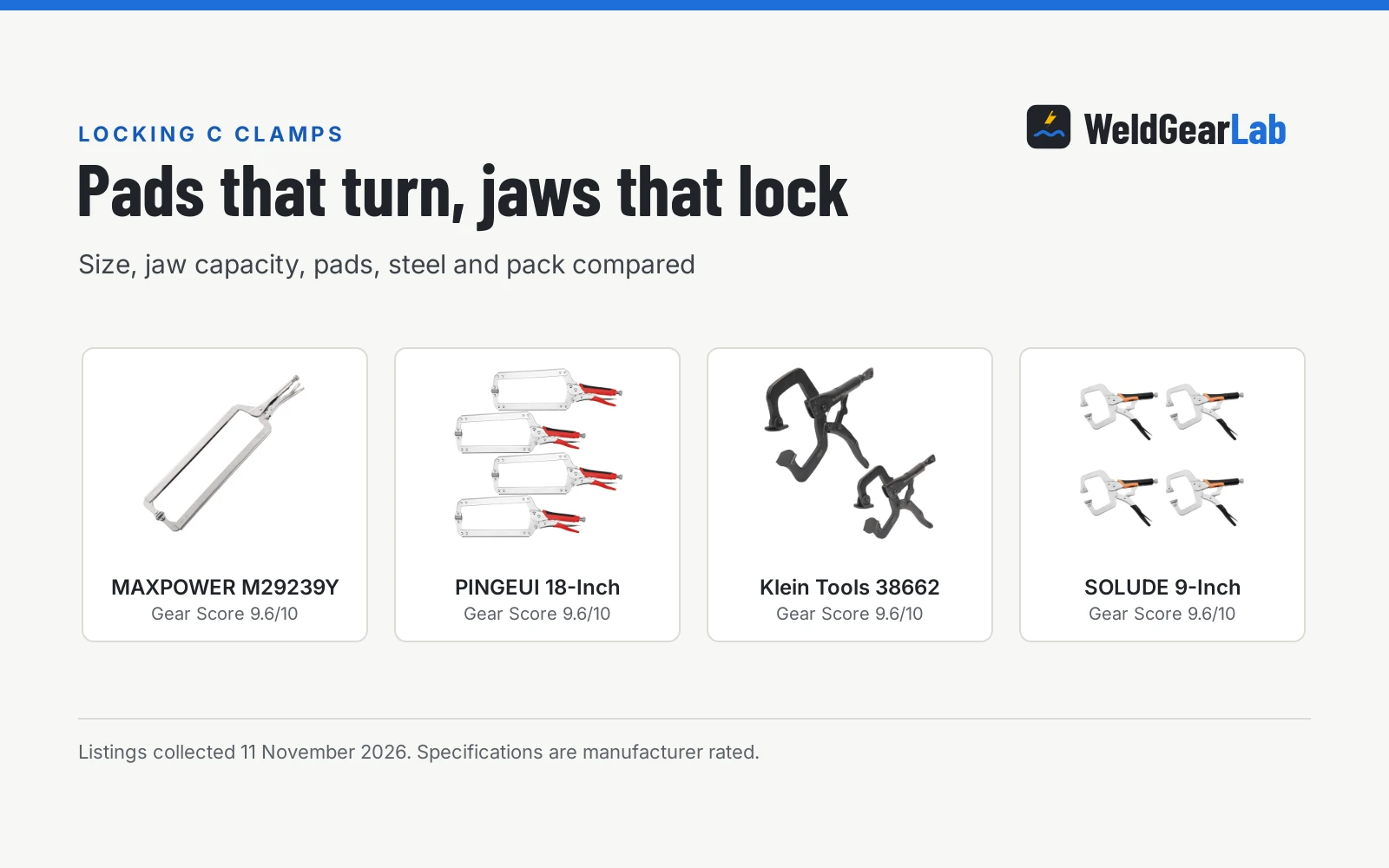
Two details separate good clamps from frustrating ones. Swivel pads pivot to meet angled and curved surfaces, which the listings call out for tapered, awkward and delicate work; fixed pads are fine for flat parallel stock. And the release matters as much as the lock: the classic trigger release on the IRWIN listings unlocks with one motion and is designed to prevent accidental release under load. The turn screw at the handle end sets jaw opening and pressure before the squeeze, and it stays adjusted for repetitive work, so a row of identical tacks needs no readjustment between clamps.
How many clamps you actually need
One clamp holds one point, and welding rarely has one point. The listings reflect how welders buy: 10-packs and 5-packs of 11-inch locking C-clamps for multi-point clamping during assembly, and a 4-piece set of 6, 9, 11 and 14 inch clamps for different jobs. Buy for the number of points you clamp at once: the listings sell 11-inch locking C-clamps singly and in packs of 5 and 10, and a 4-piece set spanning 6, 9, 11 and 14 inches covers small brackets to big frames in one buy. Heat-treated alloy steel is the standard construction across the listings, with nickel plating on some for corrosion resistance, and the classic trigger release shows up on every serious listing because quick repositioning is half the job.
FAQ for welders
Can a locking C-clamp hold parts for tack welding?
Yes, that is its best use. Squeeze it on, it locks, and both hands are free for the torch. Use several along the joint for long seams.
Which holds tighter, a locking C-clamp or a screw clamp?
A locking C-clamp applies high force the instant it locks, which suits holding. A screw clamp applies whatever force you wind in, which suits controlled fit-up. For raw holding on rough work, the locking clamp wins; for precise pressure, the screw clamp does.
Do I need swivel pads?
For flat parallel stock, fixed pads are fine. For tapered, curved or irregular work, swivel pads conform to the surface and reduce marking, which is why most of the welding listings include them.
What size C-clamp do I need for welding?
The 11-inch locking C-clamp with around a 4-inch jaw opening is the common choice in the listings. Step up to 18-inch clamps for larger openings, or buy a 6, 9, 11 and 14 inch set to cover everything.
Can locking C-clamps replace screw clamps entirely?
Not for precise fit-up. The locking clamp’s all-at-once bite can shift delicate alignment. Keep screw clamps for final positioning and locking clamps for tacking and holding.
More welding guides
See the types of welding clamps overview, the best welding clamps for fabrication roundup, the best heavy-duty welding clamps picks, and quick clamps for welding for one-handed options.