Welding Blanket vs Welding Curtain: Which One Should You Buy?
Welding blankets protect floors and equipment from direct spatter and high heat, while welding curtains screen bystanders from arc flash and contain stray grinding sparks.

On this page
Top picks at a glance
As an Amazon Associate I earn from qualifying purchases.
- 1
 FLASLD 2Pack Heavy-Duty Fiberglass Fire Retardant Blanket9.7/10View on Amazon
- 2
 VEVOR Welding Screen with Frame9.6/10View on Amazon
- 3
 Heavy Duty Fiberglass Welding BlanketView on Amazon
- 4
 Fiberglass Welding Blanket 4x6 ftView on Amazon
- 5
 Welding Blanket 40x40 InchView on Amazon
- 6
 Steiner 321-3X4 Side Split Cowhide Leather Welding BlanketView on Amazon
- 7
 kaidun 20x24 Inch Welding Blanket Fireproof MatView on Amazon
- 8
 Welding BlanketView on Amazon
When you strike an arc to repair a tractor bucket or fabricate a steel frame on the shop bench, flying spatter and blinding arc glare put your shop and everyone inside it at risk. Deciding between a welding blanket vs welding curtain comes down to whether you need to stop burning slag from damaging surfaces or block ultraviolet radiation from flashing coworkers. A welding blanket covers machinery, floors, and workpieces to absorb liquid spatter and contact heat. A welding curtain hangs vertically around the work area to contain sparks and filter hazardous optical radiation while letting coworkers see into the bay.
Other welders and gear to compare
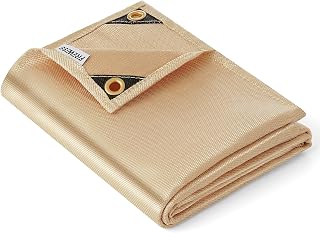 Heavy Duty Fiberglass Welding BlanketCheck price on Amazon
 Fiberglass Welding Blanket 4x6 ftCheck price on Amazon
 Welding Blanket 40x40 InchCheck price on Amazon
 Steiner 321-3X4 Side Split Cowhide Leather Welding BlanketCheck price on Amazon
 kaidun 20x24 Inch Welding Blanket Fireproof MatCheck price on Amazon
 Welding BlanketCheck price on Amazon
This guide links to our product roundups, where WeldGearLab gets a commission on purchases made through links on this page, and your price stays the same. Read our affiliate disclosure.
The difference in one paragraph
The core difference between these barriers is direct thermal resistance versus optical radiation filtering. Welding blankets are dense, opaque covers woven from materials like fiberglass or carbon felt, designed to lie flat over machinery or hang behind a weld joint where burning slag, molten metal droplets, and torch flames hit the fabric directly. Welding curtains are flexible, semi-transparent vinyl or PVC screens hung vertically around a welding booth to enclose sparks and filter ultraviolet and infrared rays from the welding arc, while letting ambient shop light pass through.
Side by side
| Fiberglass blanket | Carbon felt blanket | Welding curtain | |
|---|---|---|---|
| Primary hazard | Direct spatter and burning slag | Extreme heat and molten slag | Arc flash and stray sparks |
| Mounting orientation | Horizontal draped or vertical hung | Horizontal draped or wrapped | Vertical hung on frames or tracks |
| Optical visibility | Opaque, blocks all light | Opaque, blocks all light | Semi-transparent tinted screen |
| Direct slag contact | Resists molten metal drops | Resists molten metal drops | Melts or punctures on direct slag |
| Base material | Woven fiberglass fabric | Non-woven carbon fiber felt | Flame-retardant vinyl or PVC film |
| Heat tolerance | Continuous general shop heat | High-temperature and torch work | Ambient barrier (no direct hot contact) |
| Material handling | Can shed glass fibers | Soft texture, no glass shedding | Smooth plastic sheet |
| Shop illumination | Darkens enclosed workspaces | Darkens enclosed workspaces | Allows ambient shop light through |
| Draping over machinery | Yes, covers benches and tools | Yes, molds around pipes and parts | No, vertical hanging screen only |
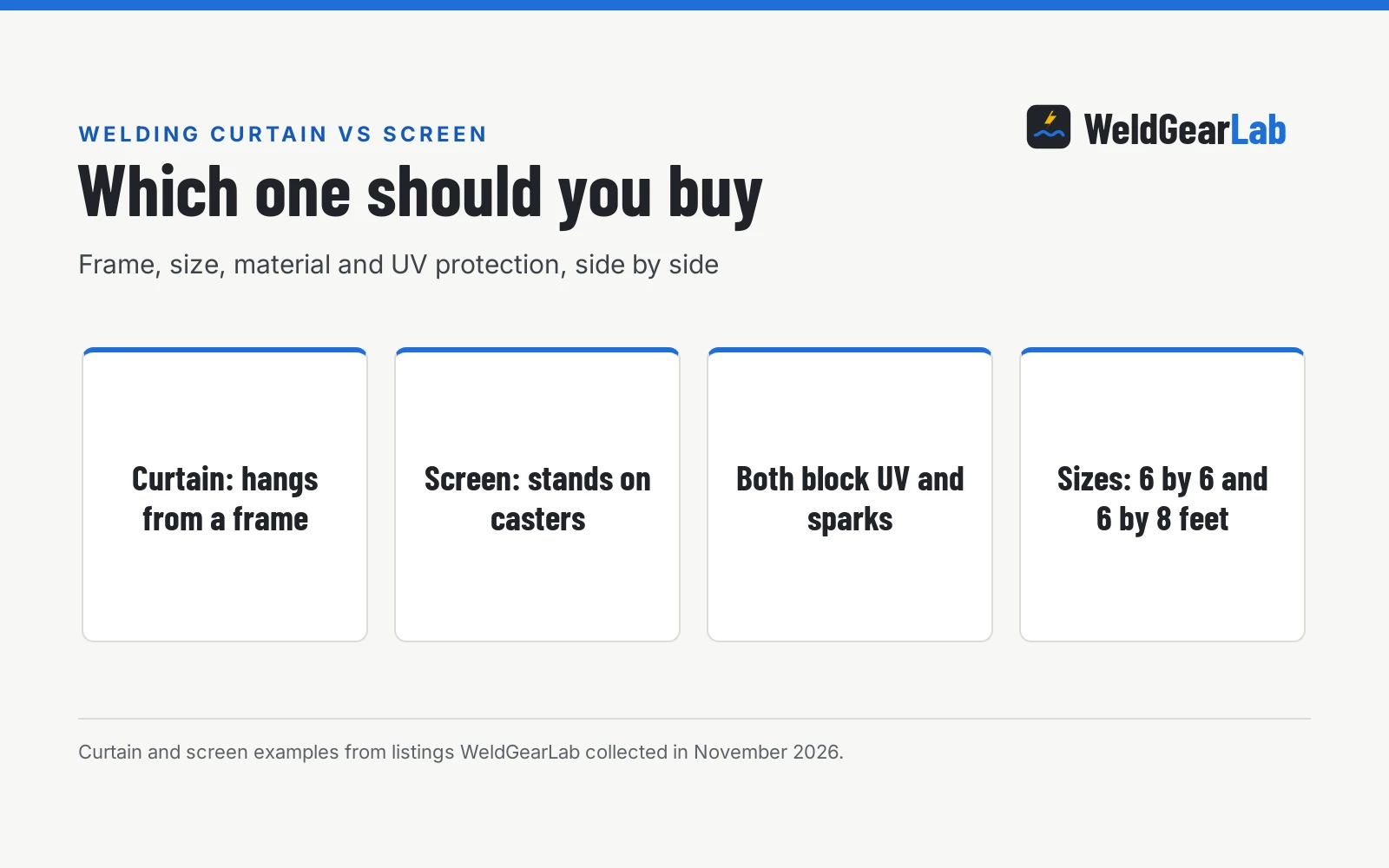
A welding blanket takes direct thermal abuse and protects machinery or concrete floors from gouging slag, but its solid weave blocks all visibility and makes enclosed booths dark. A welding curtain lets shop light pass through and allows coworkers to monitor the welder safely, but concentrated slag or continuous torch flame will burn or melt through the vinyl screen.
When a welding blanket is the better choice
- Protecting machinery and finished surfaces. Draped over a lathe, mill table, painted automotive body panel, or wooden benchtop to catch heavy spatter and grinding debris.
- Under-arc slag containment. Placed directly beneath stick welding, flux core welding, or torch cutting jobs where molten slag pools and would otherwise pit concrete or start fires.
- Close-quarters heat shielding. Wrapped around plumbing lines, electrical conduit, or vehicle framing to shield sensitive parts from torch flame and radiant heat.
- Mobile field repairs. Folded into a service truck to throw across equipment, wiring harnesses, or dry ground before striking an arc outdoors.
If you need a protective cover for your workspace, our best welding blanket for home garage guide compares top fireproof options, and our guide on welding blanket sizes explains how to select the right dimensions for your shop.
When a welding curtain is the better choice
- Protecting bystanders from arc flash. Enclosing a bay in a shared shop so coworkers, helpers, or customers can walk past without risking eye damage from ultraviolet glare.
- Grinding and spark containment. Surrounding a fabrication area to stop flying grinding sparks from reaching paint, wood shavings, or solvent storage areas.
- Shop visibility and safety oversight. Allowing supervisors or teammates to verify that a welder inside the bay is safe without having to open the enclosure or wear a welding hood.
- Preserving natural and overhead light. Maintaining shop illumination inside the welding bay, unlike opaque barriers that create dark working shadows.
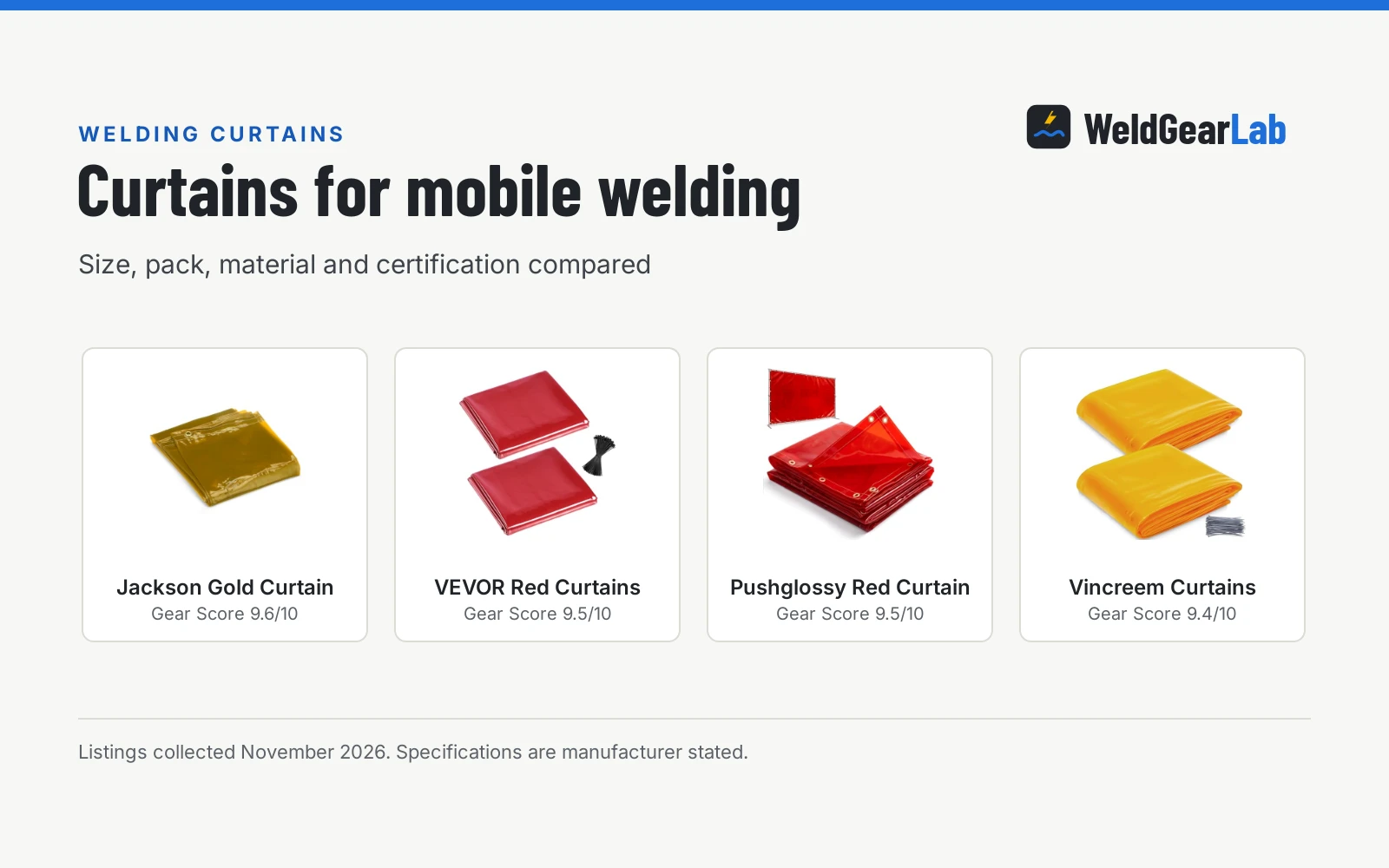
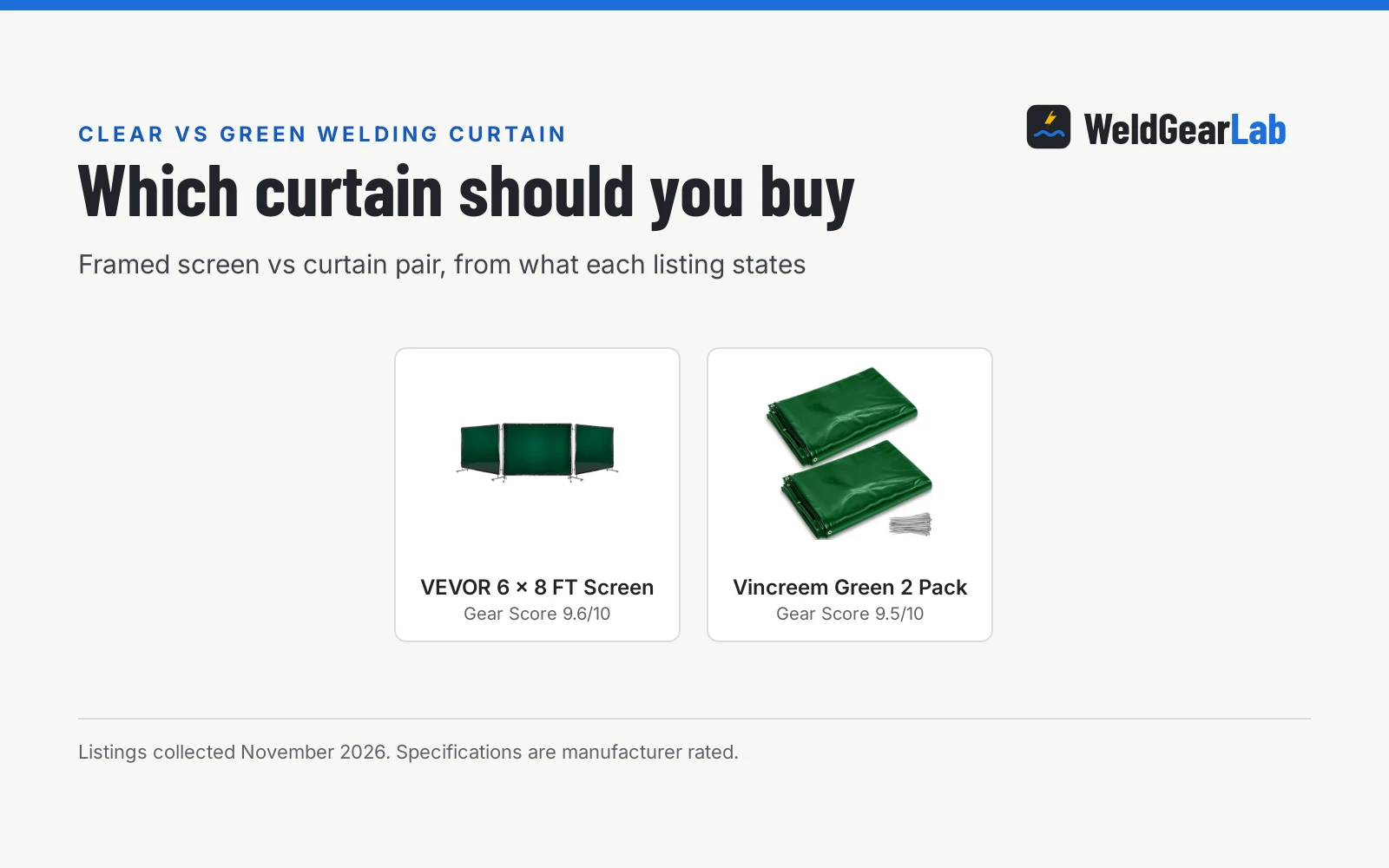
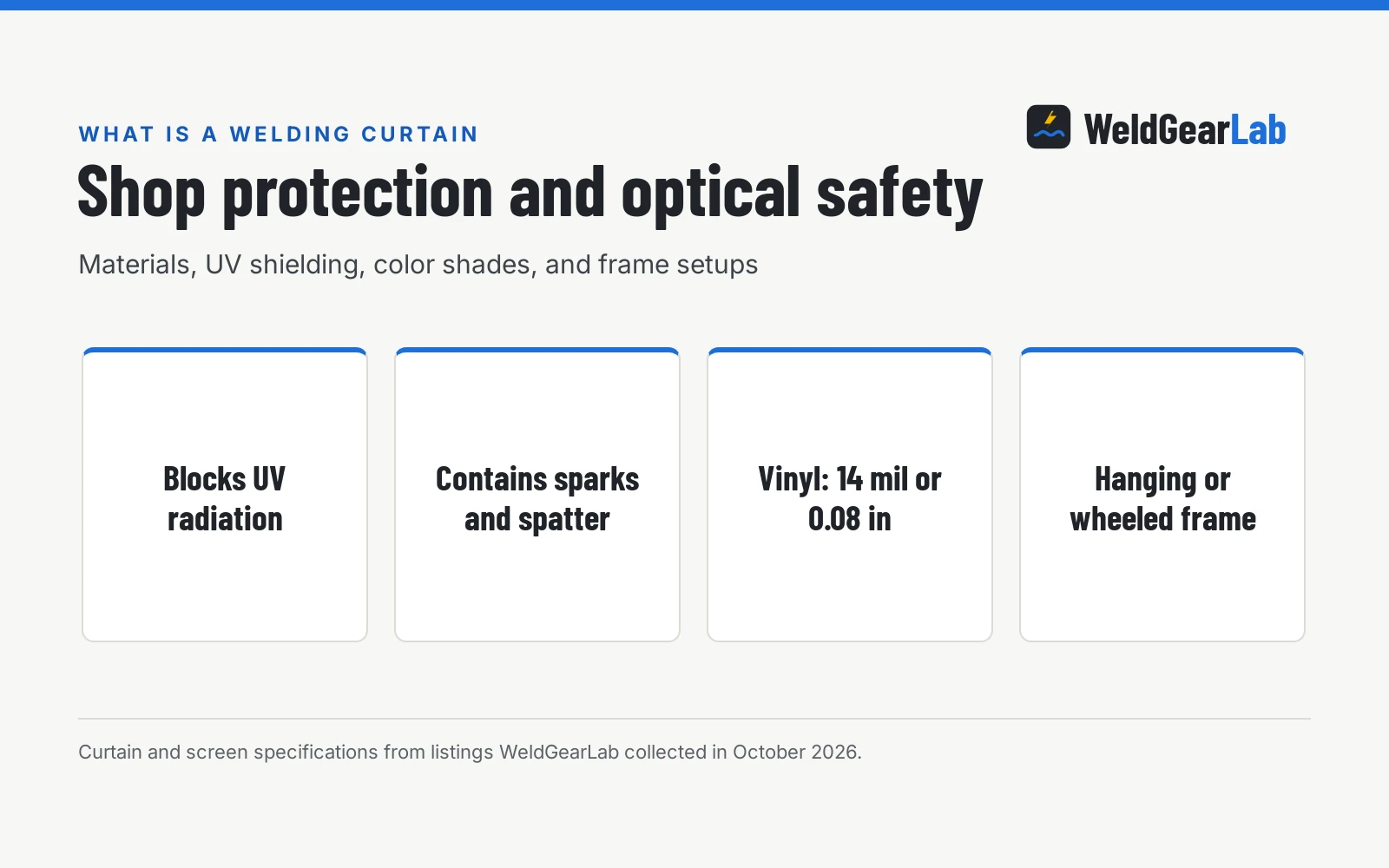
To understand screen ratings, colors, and booth layout, see our guide on what is a welding curtain and our breakdown of best welding curtain color options.
Welding blanket vs welding curtain: key differences
Understanding how these two barriers function helps you place them where they actually protect your shop rather than expecting one material to handle hazards it was never built for.
- Horizontal draping versus vertical hanging. Blankets are flexible fabrics engineered to lie horizontally across flat surfaces, draped over contours, or clamped across equipment right under the arc. Curtains must hang vertically from overhead tracks, hooks, or portable steel frames so that sparks glance off rather than sitting on the vinyl.
- Thermal contact versus optical filtering. Blankets absorb extreme heat from liquid droplets and torch wash, but they are completely opaque. Curtains feature translucent pigments formulated to block hazardous ultraviolet and blue light while letting ambient shop light pass through so bystanders can see that work is underway.
- Slag impact resistance. Blankets are positioned where slag and spatter land: listings describe fiberglass blankets as protection from sparks, spatter and slag, and carbon felt blankets as containing welding splatter and torch sparks. Curtains hang vertically around a booth to enclose sparks, so they serve as a surrounding screen rather than a surface laid under the work.
- Airflow and ventilation. Curtains suspended from frames allow open space near the floor and ceiling, maintaining natural airflow so shop exhaust hoods and fans can clear welding fumes. Tightly draped blankets trap heat and air around the workpiece, which can be useful when preheating steel or slowing cooling rates on cast iron.
Materials and temperature ratings compared
Fabric specifications from published listings show how thermal performance divides blankets into distinct material classes, while curtains follow a separate design standard entirely.
Fiberglass blankets. Heavy woven fiberglass fabric is the standard material for spark containment and general shop draping. VEVOR lists 19.8 oz/yd² fiberglass blankets with working temperatures up to 1,022-degrees Fahrenheit (550°C), available in dimensions such as 6 x 10 Ft and 10 x 10 Ft. The maker notes that its 10 x 10 Ft blanket cannot be used flat on the ground and must be hung up for use. KANHIRO publishes a 4×6 ft fiberglass blanket made from 24.7 oz/yd² fabric with a thickness of 0.31 inches (8mm) and a working temperature rating of 1,022℉ (550℃), featuring brass grommets with a 0.59-inch inside diameter and an item weight of 1.82 kg. FLASLD lists an 850GSM fiberglass blanket with a thickness of 1mm that offers protection up to 1,472°F in a 40 x 40 inches size. For wider coverage, FIREWESS lists a 6×8 ft fiberglass blanket with brass grommets weighing 8.32 pounds.
Carbon felt blankets. When working around higher heat or sensitive automotive surfaces where fiberglass shedding is a concern, carbon felt provides superior thermal resistance. XOHUYD lists carbon felt blankets certified to ASTM D6413 and UL94-V0 that withstand temperatures over 3000°F, noting that standard fiberglass blankets carry a 1000°F limit. XOHUYD specifies 5mm (1/5 inch) thick carbon felt cloth in sizes including 11×14 Inch, 20 x 20 Inches, and 40×40 Inches. Matska lists a 40×40 Inch carbon felt blanket with a 5mm thickness certified under ASTM D6413 and an item weight of 1.15 pounds. VEVOR also offers a 4 pack of 37″ x 36″ blankets crafted from 3mm thick carbon material with heat resistance up to 1800°F.
Welding curtains. Curtains are fabricated from flame-retardant polyvinyl chloride (PVC) or vinyl film. Makers do not state direct contact temperature ratings because curtains are not designed to touch hot workpieces or catch pooling slag. Instead, curtain materials are formulated to be flame-retardant so they self-extinguish when hit by stray flying sparks, while their tinted formulations filter out harmful ultraviolet radiation.
Can you use both barriers together?
In most professional fab shops and busy home garages, welding blankets and welding curtains are not competing products; they are complementary safety tools used together.
The standard setup uses curtains to create the outer boundary of the workspace, hanging from ceiling tracks or portable rolling frames to keep arc flash and stray grinding sparks away from walkways and adjacent bays. Inside that perimeter, welding blankets are deployed right at the source of heat: draped over machine ways, wrapped around preheated pipe joints, or laid across the floor to catch hot slag from stick or flux core passes. Heavy fiberglass blankets equipped with grommets can also be hung vertically on the back wall of a welding booth where high-amperage spatter would quickly destroy a vinyl curtain. Check our guide on the best welding blanket for vertical hanging and read about best welding blanket material options.
Arc flash and fire prevention. Welding arcs produce severe ultraviolet radiation that causes painful cornea damage known as arc eye, even from brief exposure at a distance. Never substitute an unrated sheet of plastic for a certified welding curtain. Hot slag from welding or cutting can smolder inside floor cracks or combustible materials for hours before igniting. Keep a dedicated fire extinguisher in your work area, inspect curtains regularly for spatter holes, and never drape a vinyl curtain directly over hot steel. Review our welding safety gear checklist for beginners and see our walkthrough on how to set up a welding area in a home garage.
FAQ for welders
Can a welding curtain catch fire from spatter?
Quality welding curtains are manufactured from flame-retardant vinyl formulated to self-extinguish rather than support open combustion. While the curtain will not burst into flames, heavy molten slag can melt holes directly through the material. Those holes allow harmful ultraviolet light and sparks to escape, requiring prompt patch repair or screen replacement.
Can you use a welding blanket as a curtain?
Yes, blankets equipped with brass grommets along their hems can be hung vertically from hooks or frame piping. An opaque blanket provides complete protection against both radiant heat and blinding light. However, because it blocks all visible light, it leaves the welding bay dark and prevents coworkers from monitoring the operator inside.
Do welding curtains block ultraviolet radiation?
Yes, certified welding curtains contain specialized chemical absorbents that filter out dangerous ultraviolet and blue light emissions generated by the arc. Coworkers outside the curtain can observe the glowing work area without risking painful arc flash, provided they view the operation through the tinted screen.
What is the difference between fiberglass and carbon felt blankets?
Fiberglass blankets are woven from glass filaments, offering reliable thermal protection for general fabrication, but they can shed irritating fibers when handled. Carbon felt blankets are soft, flexible non-woven fabrics that do not shed glass, conform easily around complex shapes, and withstand substantially higher temperatures.
How far should a welding curtain be from the arc?
Curtains should be positioned far enough from the arc that hot spatter cools before contacting the vinyl surface. If space constraints require welding close to a partition, position a heavy fiberglass blanket or sheet metal deflector between the weld joint and the curtain to prevent heat damage.
Related: what is a welding curtain, best welding curtain color, welding blanket sizes, best welding blanket material, and our welding safety gear hub. Also see our guide on best welding blanket for home garage.