Best Welding Curtain Color (2026)
How to choose the best welding curtain color for your shop based on arc brightness, glare reduction, optical clarity, and bystander safety standards.

On this page
Top picks at a glance
As an Amazon Associate I earn from qualifying purchases.
- 1
 VEVOR Welding Screen with Frame9.6/10View on Amazon
- 2
 Jackson Safety Transparent Welding Curtain for Sparks &9.6/10View on Amazon
- 3
 Vincreem 2 Pack Green 6 x 8 ft Welding Curtain Screen with9.5/10View on Amazon
When you are running a hot bead on plate or tacking up a frame repair, someone walking past your booth is going to catch arc flash if your bay is open. The best welding curtain color for general work is semi-transparent orange or red, while dark green is the best welding curtain color for high-amperage arc processes. Orange and red balance ultraviolet filtering with outside visibility, letting coworkers monitor the work area without risking flash burn. When running heavy MIG or plasma cutting with blinding glare, dark green absorbs the harsh visible light so nearby personnel can keep working without eye strain.
This guide links to our product roundups, where WeldGearLab gets a commission on purchases made through links on this page, and your price stays the same. Read our affiliate disclosure.
The core differences in one paragraph
A welding curtain protects shop personnel by blocking hazardous ultraviolet radiation and blue light while containing hot sparks and spatter. The base material is transparent or semi-transparent polyvinyl chloride formulated with specialized chemical absorbers. The tint or color of the vinyl controls how much visible light passes through the screen. Dark tints reduce the intense visible glare of the arc, whereas lighter tints allow ambient shop light to illuminate the booth interior so bystanders can see the welder working.
Side by side
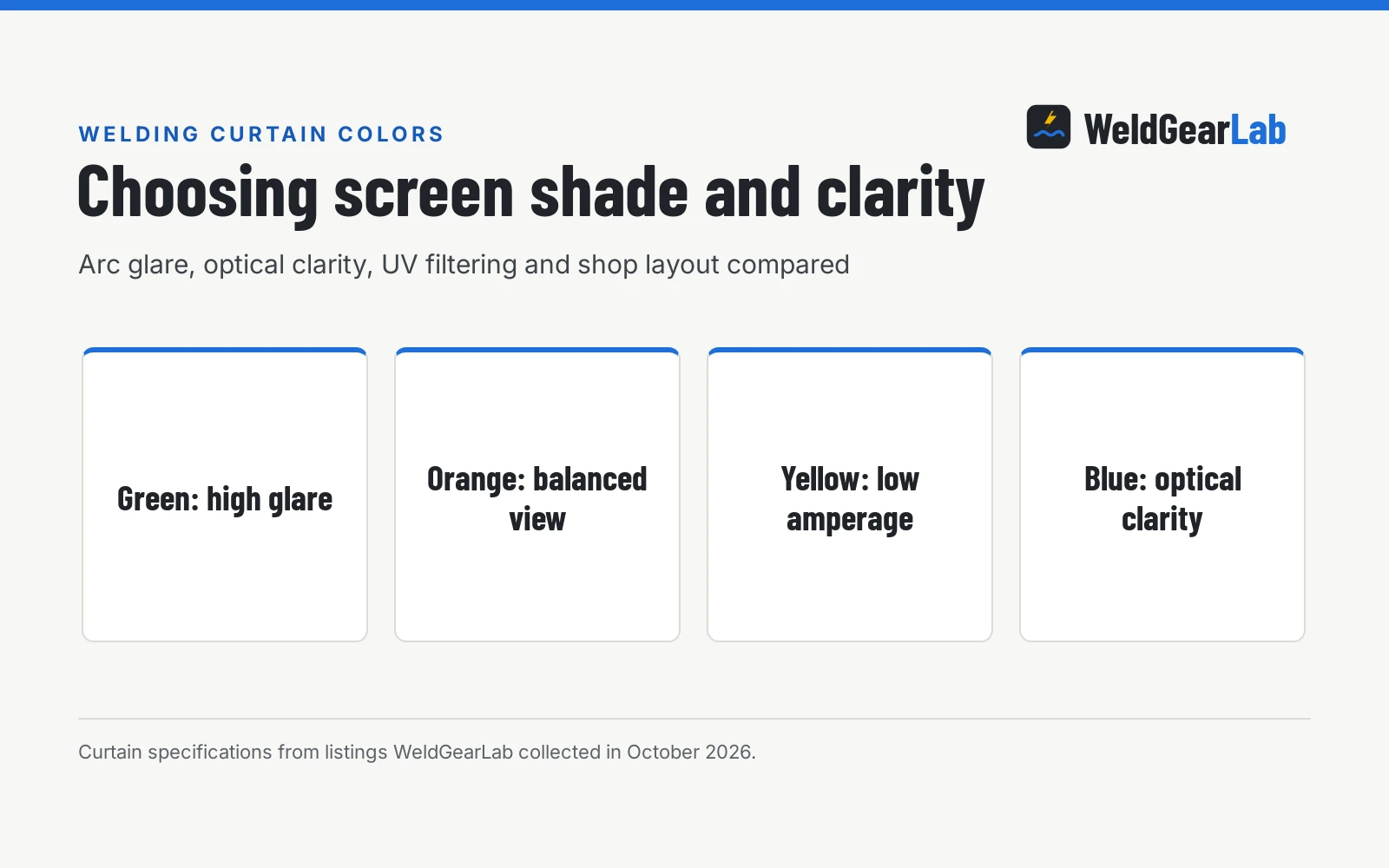
| Curtain Color | Arc Glare Reduction | Shop Visibility | Best Suited Processes | Key Advantage |
|---|---|---|---|---|
| Dark Green / Green | Maximum arc glare reduction | Low visibility into booth | Heavy MIG, stick, plasma cutting | Protects bystanders from high-amperage flash |
| Orange / Aztec Red | Moderate to high glare reduction | Balanced visibility into booth | General MIG, TIG, plasma operations | Filters UV while keeping work cell visible |
| Yellow | Low glare reduction | High ambient light transmission | Low-amperage TIG, assembly work | Brightest interior lighting in dark shops |
| Blue | Moderate glare reduction | Clear view of puddle and arc | General fabrication, MIG, TIG | Sharp optical clarity with UV filtering |
Screen selection comes down to balancing visible light reduction against booth monitoring. Darker tints absorb bright arc flare during heavy welding, while lighter shades maintain clear visibility into the work bay so supervisors can spot safety issues immediately.
When green is the best welding curtain color
Green and dark green vinyl screens provide the highest level of visible arc glare reduction. During heavy MIG welding, stick welding, or plasma cutting, the electrical arc produces blinding brightness that causes severe eye fatigue and temporary flash blindness for anyone looking toward the booth. Dark green filters absorb that harsh visible glare while filtering ultraviolet radiation. The trade-off is reduced visibility into the workspace: people standing outside the booth cannot easily see the operator or puddle detail.
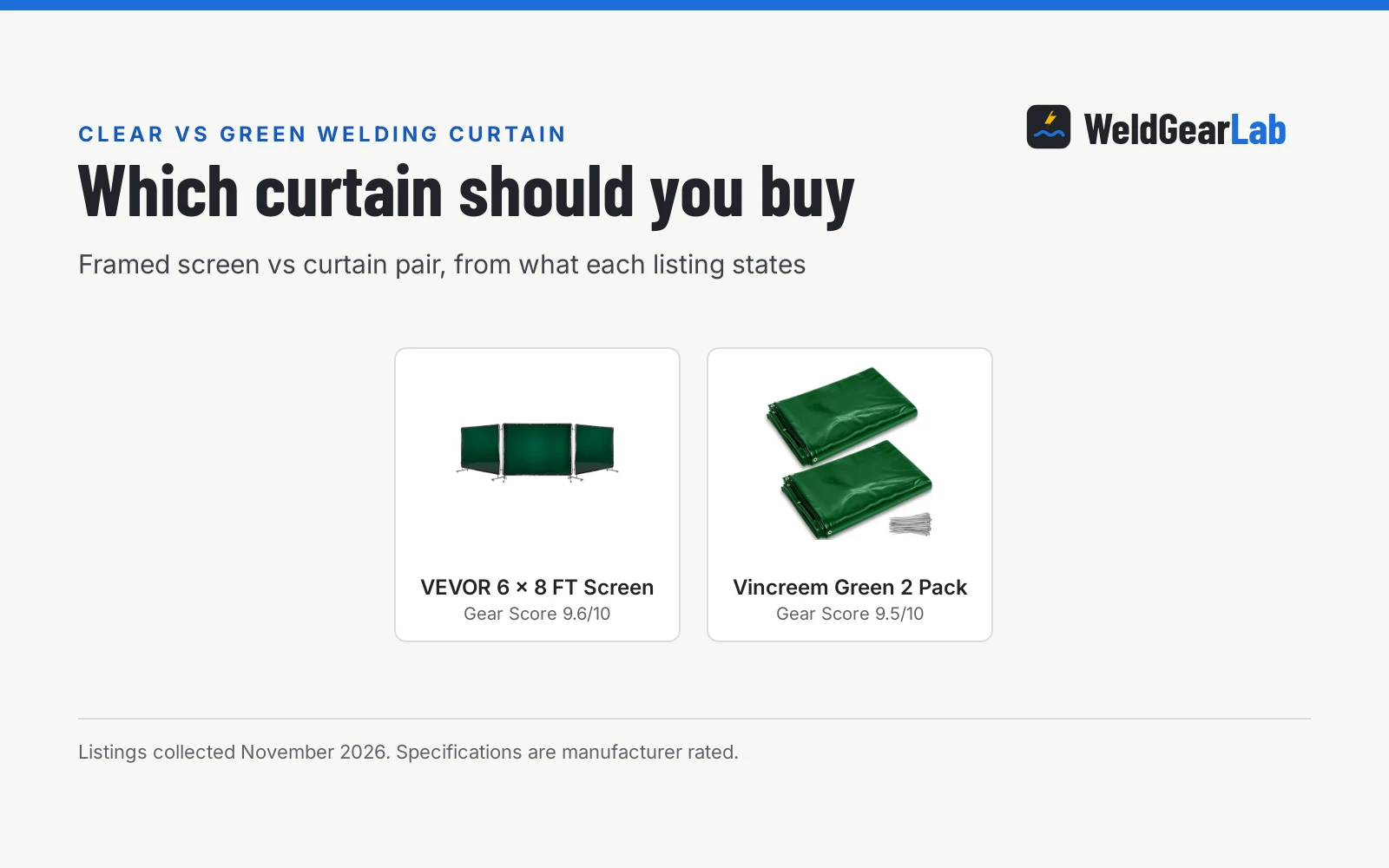
In a commercial fabrication shop where multiple bays run heavy amperage simultaneously, green screens prevent distraction across busy aisles. For example, Jackson Safety lists transparent green curtains made from heavy-duty 14 mil PVC vinyl in a 6′ x 6′ size (72″L x 72″W), weighing 2.3 pounds, with grommets spaced 8 inches apart on one width side and 16 inches apart on both height sides. For wider perimeter coverage, VEVOR lists a dark green 3-panel screen measuring 6 x 8 FT per panel, mounted on 12 swivel casters with 6 lockable brakes, providing 6-level UV protection at a total weight of 50.7 pounds.
When orange or red is the right choice
Orange and Aztec red are options for general work in fabrication shops, trade schools, and home garages. Red and orange pigments absorb hazardous blue light and ultraviolet rays while permitting moderate visible light transmission. This optical balance creates a safer shop floor because coworkers can clearly see if a welder is active, upright, or in distress inside the booth, without suffering arc flash injuries.
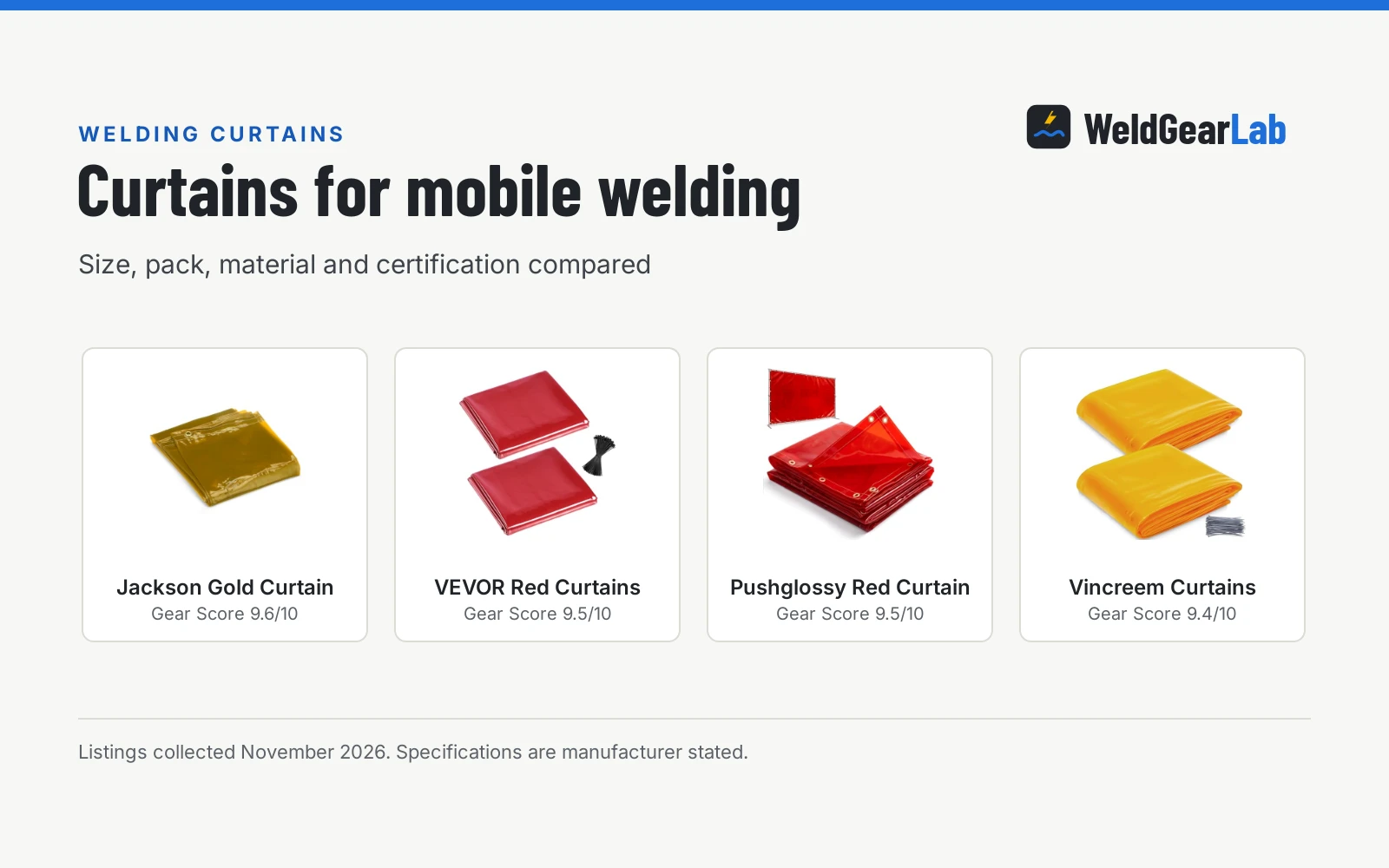
Orange screens work exceptionally well for general MIG, TIG, and plasma cutting operations where arc glare is moderate and interior illumination helps fit-up work. Jackson Safety offers transparent orange curtains in 14 mil PVC vinyl measuring 6′ x 6′ (72″L x 72″W) with a weight of 16 ounces. For mobile setups, VEVOR lists red welding screens with frames in a single 6′ x 8′ panel on 4 swivel wheels (2 lockable) weighing 17.5 pounds, as well as multi-panel configurations. Their 3-panel red screens include a 6′ x 6′ version weighing 46.5 pounds and a larger 6′ x 8′ version weighing 52.2 pounds, both rolling on 12 swivel wheels with 6 lockable brakes and featuring 6-level UV protection.
When yellow or blue curtains fit the job
Yellow welding curtains offer the highest visible light transmission of any safety vinyl. They let ambient shop light flood into the booth, eliminating the closed-in, cave-like feeling of dark screens. This makes yellow ideal for low-amperage TIG welding, intricate sheet metal work, and robotic assembly cells where operators need maximum visibility to align joint fit-up before striking an arc. However, because yellow screens filter less visible glare, they should not be placed directly opposite high-traffic shop walkways during high-amperage welding. Suppliers offer yellow screen material in standard heights such as 1800mm, while VEVOR lists yellow framed screens in single 6′ x 8′ panels weighing 17.5 pounds on 4 swivel wheels (2 lockable) and 3-panel 6′ x 8′ assemblies weighing 52.2 pounds on 12 swivel wheels with 6-level UV protection.
Blue welding curtains provide a distinct optical advantage by filtering out harsh yellow flare and blue light while maintaining high visual clarity around the arc zone. The blue tint makes it easier for bystanders or inspectors to view the weld bead and puddle without excessive glare. VEVOR lists a blue vinyl screen with frame measuring 6 x 6 FT, weighing 14.7 pounds, featuring reinforced corners, plastic grommets, 24 zip ties, and 4 rolling casters with 2 lockable brakes alongside 6-level UV protection.
Curtain frames, rolling screens and mounting styles
Selecting the right color is only half the battle; mounting the barrier properly ensures sparks and arc rays stay contained. Welders typically choose between stationary hanging systems and portable rolling frames:
- Stationary hanging curtains. Curtains equipped with brass or plastic grommets hang from overhead pipes, tension cables, or ceiling track hardware. A welding curtain with track allows you to pull the partition open to slide large weldments or machinery into the bay, then pull it shut before welding. Jackson Safety curtains feature grommets spaced 8 inches apart along the top edge, making them straightforward to hang with standard hooks, though framing is not included in the package. Jackson Safety also notes that finished curtain dimensions may vary up to 3 inches in width and height.
- Mobile welding curtains with frame. A welding curtain with frame offers complete flexibility for busy fab shops where projects change daily. Rolling units built with tubular steel or metal piping stand independently and roll across concrete on caster assemblies. A welding curtain frame with wheels lets you roll protective walls directly around a farm implement, trailer frame, or assembly table, isolating sparks right where you strike the arc. Single-panel screens on 4 wheels move easily through narrow shop aisles, while linked 3-panel screens on 12 wheels create self-supporting three-sided booths.
When arranging your shop layout, consult our guide on how to set up a welding area in a home garage and protect adjacent finished floors with a best welding blanket for home garage pick.
Welding curtain safety standards and flame ratings
Welding curtains are personal protection boundaries, not decorative dividers. Genuine safety screens comply with rigorous fire and safety codes to ensure they resist ignition from stray molten spatter. For instance, Jackson Safety curtains meet NFPA 701 requirements for flame resistance, California Fire Marshall standards, and ANSI/FM 4960 specifications. In addition, VEVOR certifies its vinyl screens with 6-level UV protection to minimize harmful optical radiation.
Remember that a safety screen protects passersby outside the booth, but it never replaces personal protective equipment for the operator. Jackson Safety explicitly states on its listings that transparent welding curtains are not intended for use in lieu of visors, goggles, eyewear, or welding helmets. The operator inside the booth must always wear a proper hood; see our scored roundups for the best auto darkening welding helmet and browse essential gear in the welding safety gear section.
FAQ for welders
When is a welding curtain required?
A welding curtain is required whenever welding, cutting, or brazing occurs in an open shop where coworkers or bystanders could be exposed to direct arc flash, stray sparks, or UV radiation. In busy garages and shared fab spaces, curtains isolate the work bay so passersby do not suffer flash burn while allowing shop operations to continue nearby safely.
Are welding curtains fireproof?
Welding curtains are flame-resistant and fire-retardant rather than completely fireproof. They are designed to self-extinguish when hot spatter hits the surface, meeting standards like NFPA 701, but direct contact with a cutting torch flame will melt or burn the vinyl material. For heavy gouging or catching falling slag piles, use a heavy fiberglass welding blanket on the floor instead.
What is a welding curtain made of?
Most transparent and semi-transparent welding curtains are made of specially formulated polyvinyl chloride (PVC) vinyl treated with flame retardants and UV-absorbing dyes. Jackson Safety, for example, lists heavy-duty 14 mil PVC vinyl curtains that resist tearing, water, and mildew while filtering ultraviolet radiation. Heavy opaque screens may also use treated canvas or fiberglass fabric.
Are welding curtains required by OSHA?
OSHA standards require that arc welding operations be shielded by noncombustible or flameproof screens whenever feasible to protect personnel working nearby from direct arc rays. If movable screens cannot be placed around the weld area, individuals nearby must wear appropriate protective goggles or filter lenses. Using vinyl curtains helps employers maintain a safe work zone and satisfy these shielding rules.
Why are welding curtains red?
Welding curtains are often tinted orange or Aztec red because those pigments filter out hazardous ultraviolet radiation and blue light while still allowing visible ambient light to pass through. This transparency lets shop foremen and workers see into the booth to confirm the welder is safe, without exposing their eyes to dangerous flash. The reddish tint also cuts down on harsh arc glare better than yellow screens during moderate welding.
Related: what is a welding curtain, best welding blanket for home garage, how to set up a welding area in a home garage, and the welding safety gear hub. Also see our best auto darkening welding helmet.