Tig vs Stick for Thin Metal: Which One Should You Buy?
TIG takes thin metal for its precise heat control; stick suits outdoor and dirty work. How the two processes compare, and four practice picks to learn on.

On this page
Top picks at a glance
As an Amazon Associate I earn from qualifying purchases.
- 1
 Forney 298 Easy Weld 100ST 90 Amp Welder9.5/10View on Amazon
- 2
 HONE Stick Welder 110v9.5/10View on Amazon
- 3
 TOOLIOM 195A 110/220V Stick Welder9.5/10View on Amazon
- 4
 Midwest Tungsten Service Blue 0.040" TIG Tungsten ElectrodesView on Amazon
- 5
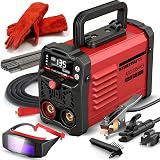 MMA-135PRO Stick Welder 110VView on Amazon
- 6
 Convivium ER308L Stainless Steel TIG Welding RodsView on Amazon
- 7
 ARCCAPTAIN DC 5 In 1 TIG Welder With PulseView on Amazon
- 8
 ER70S-6 TIG Welding Rod 1/16" x 16"View on Amazon
- 9
 Mild Steel TIG Welding RodsView on Amazon
The patch panel is cut, the new piece is clamped in place, and now the question is how to put heat into it without blowing holes. For tig vs stick for thin metal, the short answer is TIG: a TIG torch lets you ease heat in and out while you feed filler rod with your other hand, so the puddle stays small and distortion stays low. Stick will weld thin metal, but it puts more heat into the joint and the rod keeps burning at the set amperage whether you want more heat or not, which is why thin panels and stick are a hard pairing for most home shops.
Other welders and gear to compare
 Midwest Tungsten Service Blue 0.040" TIG Tungsten ElectrodesCheck price on Amazon
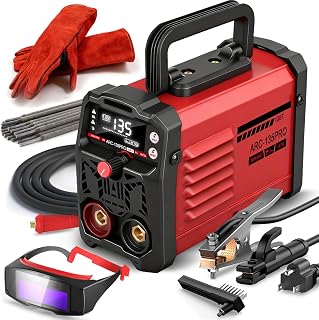 MMA-135PRO Stick Welder 110VCheck price on Amazon
 Convivium ER308L Stainless Steel TIG Welding RodsCheck price on Amazon
 ARCCAPTAIN DC 5 In 1 TIG Welder With PulseCheck price on Amazon
 ER70S-6 TIG Welding Rod 1/16" x 16"Check price on Amazon
 Mild Steel TIG Welding RodsCheck price on Amazon
This guide links to our product roundups, where WeldGearLab gets a commission on purchases made through links on this page, and your price stays the same.
Tig vs stick for thin metal: the one-paragraph answer
TIG wins on thin metal because heat input and filler metal are separate decisions. You start and stop the puddle independently, you add filler only when the puddle is ready, and the gas nozzle keeps the weld clean while you work. Stick puts filler, heat and shielding all in the rod, so the heat is always on at full strength once the arc is struck. On thick brackets outdoors that simplicity is a strength. On a 16 gauge patch it is a fight against burn through, and the slag on every bead adds cleanup the TIG side never needed.
Side by side
| TIG | Stick | Bottom line | |
|---|---|---|---|
| Heat input | Low and adjustable mid weld | Fixed once the arc starts | TIG |
| Filler metal | Separate rod, fed by hand | The electrode is the filler | TIG |
| Shielding | Gas from the torch nozzle | Flux coating on the rod | Stick |
| Thin sheet control | Puddle size follows the pedal | Arc keeps digging at full heat | TIG |
| Burn through risk | Low with practice | High on light stock | TIG |
| Outdoor use | Wind blows the gas shield away | Flux shields itself, tolerates wind | Stick |
| Dirty or rusty steel | Needs clean metal | More forgiving | Stick |
| Cleanup | No slag when set right | Slag to chip on every bead | TIG |
| Start and restart | Lift or button start, easy tacks | Strike like a match, restarts can stick | TIG |
| Learning curve | Steep: torch, filler and pedal at once | Short: one hand and rod angle | Stick |
| Gear beyond the welder | Torch, tungsten, gas, pedal | Stinger, rods, chipping hammer | Stick |
These are process traits, not machine specs. A practice plate listed for both TIG and stick, like the SONNLER deer head kit in the gear section, lets you run the same coupon each way and feel the difference yourself.
When TIG is the better choice
- Thin sheet and tubing. Small puddle, independent heat control, and a clean bead with no slag to chip.
- Visible work. Furniture, brackets and anything people will see: TIG beads need far less grinding.
- Stainless and small parts. Precise heat keeps distortion down on small stainless pieces.
- Repairs with good fit-up. Cracks and tight joints that a stick rod cannot reach cleanly.
New to TIG? Our TIG vs MIG for beginners guide covers the learning curve and what to practice first.
When stick is the better choice
- Outdoor and field work. Wind blows shielding gas away; the flux coating on a stick rod shields itself.
- Dirty or rusty metal. Stick tolerates mill scale and rust far better than a gas shielded process.
- No gas setup. Just the welder, a stinger and rods. Nothing to rent, refill or haul.
- Thicker home repairs. Brackets, frames and equipment where penetration matters more than looks.
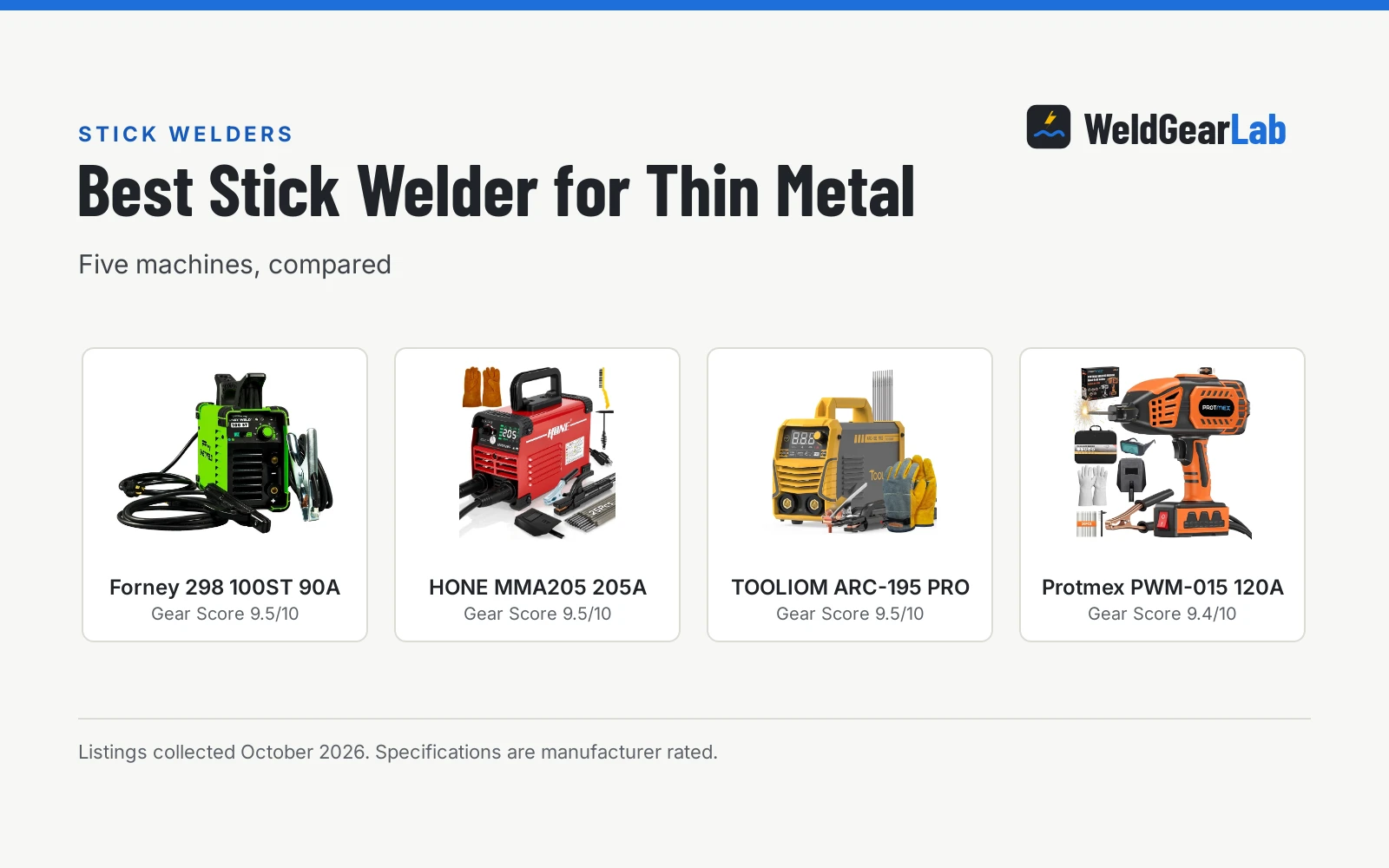
See our best stick welder for thin metal roundup for machines that still run well on lighter stock.
Gear that fits this job: four practice picks, ranked
None of these listings is a welder; they are the gear around the weld. They are ranked by my Gear Score for this exact question, best first.
First, the Therwen flower practice kit (16 gauge plates). The listing states 16 gauge thickness on a low carbon steel flower about 12.01 x 4.25 inches (305 x 108 mm), weighing 6.4 ounces, compatible with Mig, Tig, Gas, Arc and Stick welders. 16 gauge is exactly the thin metal this guide is about, and one kit suits both processes, so you can weld the same plate with TIG and with stick and see the difference in distortion yourself. It is also listed for beginners, which matches the job here.
Next, the Defiant Metal TIG gloves (goatskin, maximum dexterity). Premium black goatskin leather gloves, 3.2 ounces, about 13 x 7 x 0.2 inches, with Kevlar stitching and stated maximum dexterity. TIG on thin metal is fingertip work: you hold filler rod with one hand and run the torch with the other, so a thin flexible glove matters more here than on stick. The listing backs it with a 14 Day Warranty On Manufacturer Defects.
Then the SONNLER deer head practice kit (15 stainless coupons). Fifteen 201 stainless steel practice coupons, 16 ounces in total, with plate dimensions of 8.98 x 2.16 x 0.2 inches, suitable for TIG, MIG, Gas, Arc and Stick. A stainless deer head is the ambitious follow-up project after the flat flower plates, and the 0.2 inch plate stock bridges the gap between sheet and structural coupons. Model SN-06241.
Last, the SONNLER cube and dice practice kit (2.36 inch cubes). Two 2.36 inch cubes to weld up from flat coupons. One contradiction to note: the title says stainless steel while the spec table lists the material as aluminum, so no material is stated for it here. It still counts as practice metal, and the listing states a 1 year warranty.
FAQ for welders
Which process should a beginner start with for thin metal?
TIG, if the budget stretches to a torch setup. The independent heat control forgives more mistakes on thin stock than any stick rod. If TIG is not in the cards this year, start stick on thicker practice coupons and move down to sheet only after the puddle feels predictable.
Can stick really weld 16 gauge sheet?
It can, with small rods and a steady hand. The arc is hot from the first strike and never backs off, so the sheet distorts and holes open where the puddle lingers. That is why this guide points thin work at TIG.
Do I need special gloves for TIG on thin metal?
Thin goatskin TIG gloves are the right tool, like the Defiant Metal pair above with its stated maximum dexterity and Kevlar stitching. Stick gloves are thick for spatter; TIG gloves are thin for filler rod feel. Feeding small rod cleanly in a stiff glove is much harder.
What thickness are the practice plates in these kits?
The Therwen flower plates are 16 gauge, the SONNLER deer head coupons are 0.2 inch plate, and the cube kit builds 2.36 inch cubes from coupons whose thickness the listing does not state. That spread covers real sheet and medium plate plus a small-assembly project, so one or two of these kits give you a full progression.
Why practice on coupons before the real part?
Coupons are repeatable and cheap, so you can run the same joint again and again and change one variable at a time. A warped patch panel is scrap; a warped coupon is a lesson. Burn through on a coupon costs far less than a scrapped panel.
Can one practice kit serve both processes?
Yes. The Therwen flower kit and the SONNLER deer head kit both list compatibility with TIG, MIG, Gas, Arc and Stick. Run the same plate with TIG, then with stick, and the heat difference shows in the distortion.
Safety. An arc flash burns eyes in seconds, so the helmet stays down on every strike, even a quick tack. Thin sheet throws fumes off coatings and mill scale, so weld with ventilation and keep your head out of the plume. Hot metal looks like cold metal, and grinding sparks find every dry rag in the shop, so clear the area first.
Related: our TIG vs MIG for aluminum, the best stick welder for thin metal roundup, and TIG vs MIG for beginners.