Rotary Draw vs Mandrel Tube Bender: Which One Should You Buy?
Rotary draw and mandrel benders shape metal tubing differently, with rotary draw handling standard roll cage walls and mandrel setups preventing collapse on thin tubing.


On this page
Top picks at a glance
As an Amazon Associate I earn from qualifying purchases.
- 1
 100 Pcs Steel Rotary Tool Small Wire Brush Wheel Set9.7/10View on Amazon
- 2
 Imperial Tool 470FH Triple Head 180 Degree Tube Bender with9.7/10View on Amazon
- 3
 maXpeedingrods Round Tube Bender Die For Wfb2 Tubing BenderView on Amazon
- 4
 OEMTOOLS 25440 Tube Bender Pliers & Brake Line Bender forView on Amazon
- 5
 Tnisesm Spring Tube Bender Set 1/4''View on Amazon
- 6
 K&S Precision Metals Tube Bender Set 321View on Amazon
- 7
 3-in-1 Tubing BenderView on Amazon
You have round tubing notched on the welding table and a roll cage or bumper project mapped out on the shop floor. When deciding between a rotary draw vs mandrel tube bender, the short answer is that a standard rotary draw bender is almost always the right tool to buy for roll cages, chassis frames, and structural fabrication. Rotary draw benders handle structural tubing cleanly with accessible shop tooling, while a mandrel tube bender adds an internal support plug inside the tube to prevent collapse on thin-wall tubing or tight exhaust bends. This guide compares both methods for home, farm, and shop fabricators, explaining wall thickness limits, tooling requirements, and how to select the right setup for your projects.
Other welders and gear to compare
 maXpeedingrods Round Tube Bender Die For Wfb2 Tubing BenderCheck price on Amazon
 OEMTOOLS 25440 Tube Bender Pliers & Brake Line Bender forCheck price on Amazon
 Tnisesm Spring Tube Bender Set 1/4''Check price on Amazon
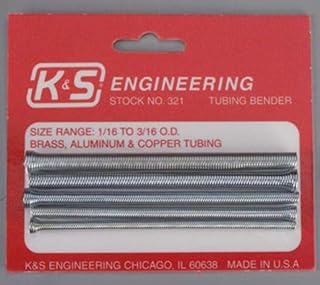 K&S Precision Metals Tube Bender Set 321Check price on Amazon
 3-in-1 Tubing BenderCheck price on Amazon
This guide links to our product roundups, where WeldGearLab gets a commission on purchases made through links on this page, and your price stays the same. Read our affiliate disclosure.
The difference in one paragraph
Bending hollow metal tubing creates tension along the outside of the bend and compression along the inside. In standard rotary draw bending, the tube is clamped against a circular bend die and drawn around the radius while a pressure die supports the outside wall as it enters the bend. The inside of the tube remains completely hollow during the process. Mandrel bending uses that same rotary draw motion, but the tube is loaded over an internal mandrel rod positioned right at the tangent point of the bend, often paired with an external wiper die. The internal mandrel prevents the outer wall from collapsing inward, while the wiper die prevents the compressed inner wall from gathering into wrinkles.
Rotary draw vs mandrel tube bender: side by side
| Manual rotary draw | Hydraulic rotary draw | Mandrel tube bender | |
|---|---|---|---|
| Internal tube support | None (hollow tube) | None (hollow tube) | Internal mandrel inside tube |
| Tooling components | Bend die, clamp die, pressure die | Bend die, clamp die, pressure die | Bend die, clamp die, pressure die, mandrel, wiper die |
| Power source | Hand leverage or ratcheting handle | Hydraulic ram or electric pump | Heavy hydraulic or electric draw cylinder |
| Wall thickness capability | Medium and heavy wall tubing | Medium and heavy wall tubing | Thin wall tubing prone to collapse |
| Roll cage fabrication | Suitable for hobby and low-volume builds | Shop standard for cages and bumpers | Rarely needed for typical cage tubing |
| Risk of tube flattening | Moderate ovality on thin tubing | Moderate ovality on thin tubing | Prevents flattening and wrinkling |
| Tooling complexity | Simple external die sets | Simple external die sets | Complex internal mandrel and lubrication |
| Portability and footprint | Compact bench or floor pedestal | Mobile cart or floor stand | Stationary long bed machine |
| Typical shop application | Frames, roll cages, brackets, furniture | Chassis, roll cages, bumpers, production | Exhaust headers, intake runners, aerospace |
Both methods rely on rotary draw mechanics, but the internal mandrel completely changes the physical demands on the machine. Operating an internal mandrel requires a rigid rear frame to anchor the mandrel rod, accurate extraction timing as the bend finishes, and dedicated die lubrication to prevent galling inside the tube. Standard rotary draw setups dispense with internal tooling entirely, making them compact, portable, and straightforward to run in a small shop.
When rotary draw is the better choice
- Roll cages and chassis fabrication. Structural cage tubing features sufficient wall thickness to resist flattening on standard bend radii without needing internal support.
- Lower tooling investment. You purchase only a round bend die, clamp die, and pressure die for your specific tubing diameter, avoiding complex mandrel plugs and extractor mechanisms.
- Shop portability and space. Manual and hydraulic rotary draw benders mount to a compact floor pedestal or roll on casters, fitting easily into garage bays and small fab shops.
- Straightforward setup. Slip the tube into the clamping block, align your bend mark, and cycle the ram without coating the inside of the tube in heavy drawing compound.
For roll cage and chassis builders, rotary draw benders handle the common tubing gauges used in vehicle fabrication. For example, Speedway Motors lists an 8-ton hydraulic bender for roll cage tubing that handles mild steel up to .110-inch wall or chromoly up to .096-inch wall on a 7 In radius die for 1.75 In tubing. Similarly, ECOTRIC lists a manual bender capable of bending up to .125-inch wall thickness tubing with dies up to 2 inches round, while VEVOR lists an electric hydraulic machine with 3 bending dies for 1-inch, 1-1/2-inch, and 1-3/4-inch diameters supporting up to 5mm wall thickness. If you are outfitting a shop for chassis, bumper, or off-road projects, our best tube bender for hobby fabrication guide covers floor-mounted and hydraulic benders built for structural work.
When a mandrel bender is the better choice
- Thin-wall tubing. When wall thickness is very light relative to outside diameter, the unsupported outer wall collapses into an oval shape without internal backing.
- Tight bend radii. Sharp turns place extreme tensile stress on the outer skin and heavy compression on the inside radius, creating ripples unless supported by a mandrel and wiper die.
- Exhaust headers and merge collectors. Performance exhaust systems require smooth, uniform cross-sectional area to keep gas velocity high without restrictive necking.
- Aesthetic and aerospace work. Architectural railings, aircraft structures, and high-visibility stainless assemblies where surface deformation or cross-sectional flattening is unacceptable.
Mandrel bending controls deformation in thin metal. When tubing walls are substantial relative to diameter, standard rotary bending forms smooth shapes without internal tooling; for instance, RIDGID lists its 403 instrument bender for 3/16-inch tubing with a maximum wall thickness rating of 0.06 inches. But when working with thin stainless exhaust sections or intake runners where wall thickness is light, a mandrel setup prevents kinks and cross-sectional flattening. Thin stainless tubing is especially prone to galling and wrinkling on tight turns without internal backing; see our guide to selecting a tube bender for stainless steel.
How to tell what tooling a bender supports
Not every tool labeled as a tube bender handles structural tubing, and entry-level machines cannot accept mandrel tooling. When reviewing machine specifications, look for these key details:
- Specific die sizes and bend radii. Quality benders state the exact outside diameter and center-line radius of each included die. For instance, VEVOR lists a manual bench bender with 7 bending dies from 3/8-inch to 1-inch supporting radii of 50 mm, 60 mm, 70 mm, 80 mm, 90 mm, 110 mm, and 113 mm, while Imperial lists a dedicated lever bender for 1/4-inch OD tubing with a 9/16-inch bend radius.
- Stated wall thickness limits. Reliable listings declare maximum wall capacities; for example, ECOTRIC lists up to .125-inch wall on its manual frame bender, while VEVOR lists up to 2 mm wall on its manual bench model. Machines without a stated wall thickness rating often struggle on structural chromoly or thick mild steel.
- Bed length and mandrel support. A bender capable of mandrel operation features a long machine bed behind the rotary spindle to support the mandrel rod and hydraulic cylinder. Compact floor benders designed for roll cages lack this rear carriage entirely.
Before bending and notching structural tubes for chassis assemblies, accurate fit-up is critical for strong weld joints. Check our guide to the best tubing notcher to ensure your coped joints seat tightly before welding.
Can one bender do both?
In industrial production facilities, large CNC rotary draw benders can operate with or without a mandrel rod depending on whether the job calls for heavy structural tubing or thin-wall exhaust pipe. However, for small fab shops and home garages, a single machine cannot practically cover both roles. A roll cage bender is engineered around a compact floor footprint, using manual ratchets or hydraulic power (such as the 8-ton hydraulic jack listed by Speedway Motors) to sweep a die through an arc. It lacks the rigid rear frame, mandrel cylinder, and wiper die brackets required for mandrel work.
Trying to adapt an internal mandrel to a compact manual bender is impractical because the friction of pulling tube over an internal plug demands immense hydraulic power and rigid machine alignment. For the overwhelming majority of fab shops, owning a solid rotary draw bender for chassis work and outsourcing rare thin-wall mandrel jobs to a specialized exhaust manufacturer is the most practical approach.
Shop safety and bending forces. Tube bending generates severe mechanical force through hydraulic cylinders, pivot pins, and forming dies. Always bolt manual floor benders to a solid concrete floor before applying force to a handle, and clear all trip hazards from your swinging radius. On hydraulic machines, inspect lines and fittings before applying pressure, and keep fingers well clear of the pinch zone between the tube, bend die, and counter die. Wear heavy leather gloves and safety glasses to guard against sharp cut edges and unexpected mechanical release. See our how to use a tube bender guide for setup steps and shop safety practices.
FAQ for welders
Do I need a mandrel bender to build a roll cage?
No. Automotive roll cages are built from structural tubing with wall thicknesses such as .096 inches, .110 inches, or .125 inches. At those wall thicknesses on standard roll bar diameters like 1.75 inches, a rotary draw bender creates strong, uniform bends with minimal flattening and without requiring internal mandrel tooling.
Why does tubing crush or flatten in a standard rotary draw bender?
Tubing flattens when the wall thickness is too thin for the chosen bend radius. Without internal support, tensile forces along the outside of the curve pull the outer wall inward. To minimize flattening on a rotary draw machine, use a larger bend radius die, select heavier wall tubing, and ensure the die groove matches the tube diameter precisely.
What is the difference between a pipe bender and a tube bender?
Pipes and tubes use different sizing standards. Tubing is measured by actual outside diameter, whereas nominal pipe size refers to approximate inside diameter. Online listings often confuse the terms and label round tubing dies as pipe dies. However, using a true pipe die on tubing will pinch or crush the wall because the groove dimensions do not match.
Can I use sand packing instead of a mandrel?
Packing dry sand tightly inside a capped tube is an old method to support thin walls during bending. While it can reduce collapse on one-off bends, it is slow, messy, and hard to compact evenly. For structural fabricators, using proper rotary draw dies on appropriate wall thickness tubing is far faster and more consistent.
What size tube bender do I need for automotive fabrication?
For roll cages, bumpers, and suspension arms, select a bender that accommodates dies from 1-inch through 1-3/4-inch and 2-inch round tubing. Compact mini benders designed for 1/8-inch, 3/16-inch, or 1/4-inch lines are suited for brake and fuel lines, not chassis fabrication.
Related: how to use a tube bender, best tube bender for hobby fabrication, tube bender for stainless steel, and the metal fab tools hub. Also see our guide to the best tubing notcher.