Light Weight Welding Jacket Buying Guide
A light weight welding jacket trades bulk for comfort, and this guide shows how weight, material, fit and coverage trade off before you buy.

On this page
Top picks at a glance
As an Amazon Associate I earn from qualifying purchases.
- 1
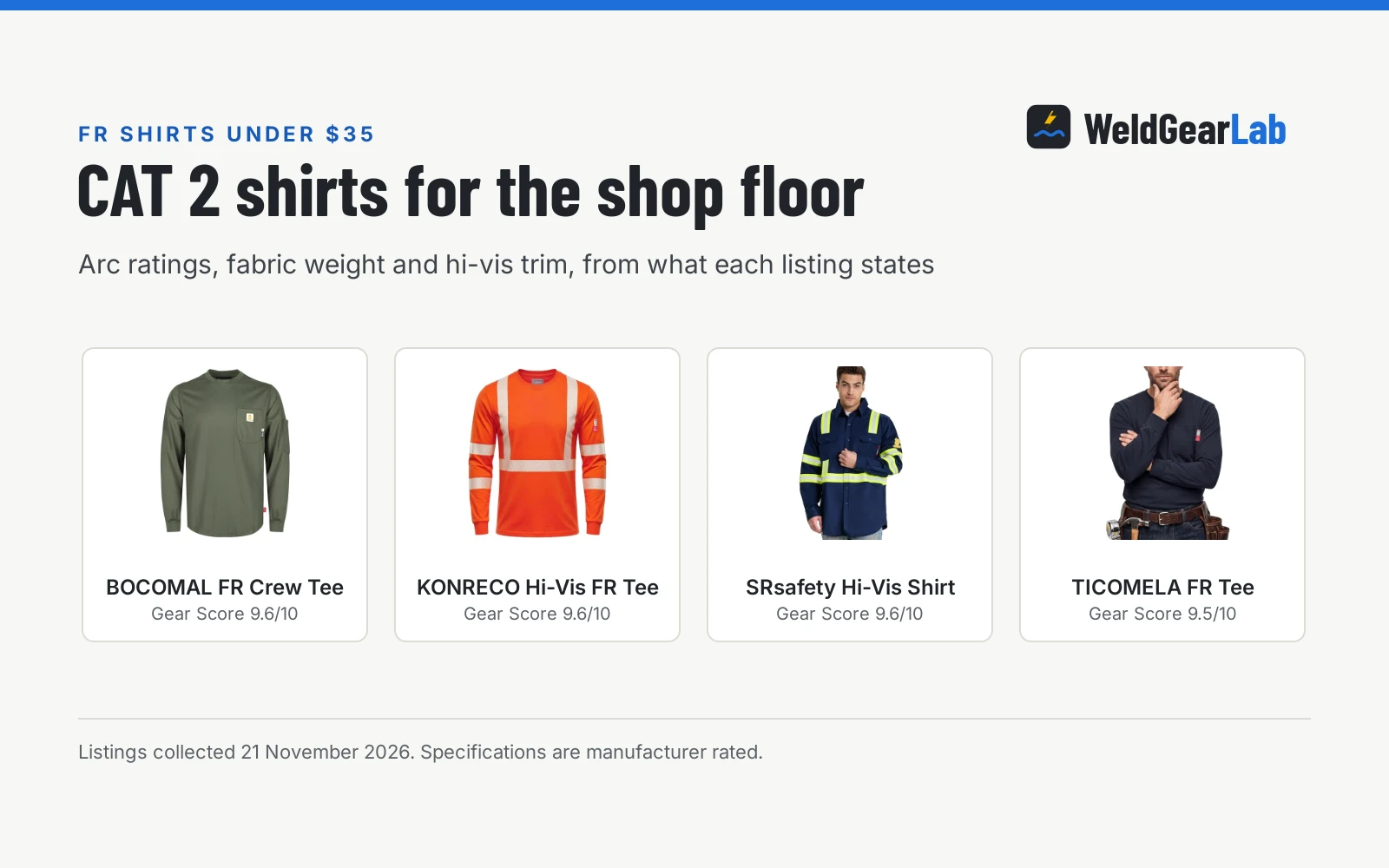
 YESWELDER Welding Jacket 11oz Flame Resistant FR Cotton9.6/10View on Amazon
- 2YESWELDER Welding Jacket 11oz Flame Resistant FR Cotton9.6/10View on Amazon
- 3
 Miller Classic Cloth Welding Jacket9.5/10View on Amazon
- 4
 Welding JacketView on Amazon
- 5QeeLink Welding JacketView on Amazon
- 6
 Leather Welding JacketView on Amazon
- 7QeeLink Leather Welding JacketView on Amazon
A bead runs long across a plate, the shop warms up, and the jacket on your shoulders starts to feel like part of the job instead of protection from it. That is the moment weight matters, and a light weight welding jacket earns its keep by staying out of the way while the arc stays on. This guide explains what makes a jacket light, where the weight comes off, and how to pick the right jacket for the work on your bench.
Other welders and gear to compare
 Welding JacketCheck price on Amazon
- QeeLink Welding JacketCheck price on Amazon
 YESWELDER Welding Jacket 11oz Flame Resistant FR CottonCheck price on Amazon
 Miller Classic Cloth Welding JacketCheck price on Amazon
 Leather Welding JacketCheck price on Amazon
- QeeLink Leather Welding JacketCheck price on Amazon
This guide links to our product roundups, where WeldGearLab gets a commission on purchases made through links on this page, and your price stays the same. Read our affiliate disclosure.
What a light weight welding jacket is
A light weight welding jacket is a flame-resistant jacket built to weigh less on the shoulders than a standard jacket while covering the same ground: torso, arms and collar, with cuffs that close against spatter. The weight comes off through thinner fabric, lighter leather panels, or a cut that drops bulk where it is not needed. The aim is the same coverage with less bulk, and that aim is the line that separates a light jacket from a thin shirt.
Weight matters because a jacket is worn for the whole shift, not just the bead. A jacket that fits badly pulls at the neck and rides up when you reach overhead, and a heavy jacket tempts a welder to shrug it off between passes. A light jacket stays on through fit-up, grinding and welding, which is when protection counts most.
Light weight vs standard, side by side
| Light weight welding jacket | Standard welding jacket | What it means on the job | |
|---|---|---|---|
| Weight on the shoulders | Lighter feel over a long shift | Heavier feel, more bulk to carry | Comfort shows up late in the day |
| Material | Thin FR cotton, blends or light leather panels | Heavy split leather or thick FR cotton | Material sets the weight, not the tag |
| Coverage | Same ground covered when the cut holds | Full coverage with heavier layers | Check the hem and cuffs, not the weight |
| Spatter protection | Stops spatter where the material is rated for it | Stops spatter where the material is rated for it | Check the rating, not the weight |
| Fit and movement | Often a closer cut, easier reach overhead | Often a roomier cut, more fabric to move | Fit decides whether the jacket gets worn |
| Heat and air flow | FR cotton breathes easier in warm shops | Holds more heat on long beads | Material sets air flow, not weight |
| Care | Care follows the listing, not the weight | Heavier fabric can take longer to dry | Follow the maker’s care notes |
The trade is plain: a light jacket wins on comfort and movement, a standard jacket carries more material, and protection depends on the material rating rather than the weight. Read the listing for the material and the rating, not the name on the tag.
When a light weight welding jacket is the better choice
- Long days at the bench. Overhead work and long beads reward a jacket that moves with the arms.
- Warm shops. A light FR cotton jacket breathes easier when the shop runs hot, and a cool welder keeps the bead steady.
- Thin work and short runs. Tack welding, fit-up and repair jobs call for a jacket that goes on and off easy.
- Travel between jobs. A light jacket carries easy for farm calls and site work.
See the best welding jacket roundup and the lightweight vs standard welding jacket comparison for jackets that fit this kind of work.
When a standard jacket is the better choice
- Heavy spatter work. Stick welding and flux core throw more spatter, and thick leather or heavy FR cotton takes the beating.
- Overhead welding all day. When sparks rain down, extra material between skin and spatter earns its weight.
- Grinding and cutting nearby. A thick leather jacket stands up to hot scale and rough handling in a busy fab shop.
- Rough handling. Jackets dragged across benches and hung on nails wear fast, so thick leather or heavy FR cotton suits rough handling.
For heavier options, the best split cowhide leather welding jacket roundup and the best welding jacket for stick welding guide cover jackets built for hard use.
How to read a welding jacket listing
Listings tell you what a jacket is made of, how it closes, and what it covers. Start with the material, FR cotton, leather, or a blend, and whether the listing states a rating for the fabric. Then check the cuffs, collar and closure, since spatter finds every gap a jacket leaves open. A listing that leaves the material unstated leaves the protection unstated too.
What to check before you buy
Measure the jacket against the work, not the wardrobe. Try it on over the clothes worn under the hood, reach overhead, and bend to the bench. If the cuffs pull back or the collar gaps, the jacket leaves skin open at the worst moment.
Match the jacket to the process as well. Stick and flux core throw heavy spatter, so those jobs want a fabric rated for heavy spatter. MIG and TIG run cleaner, so a light jacket often suits them well.
Can a light jacket still protect?
Yes, when the material is rated for the work. A light jacket made of FR cotton or light leather stops spatter where its rating covers it, because protection comes from the fabric and the coverage, not the weight. What a light jacket cannot do is make up for gaps: open cuffs, a low collar or a short hem leave skin open whatever the jacket weighs.
Spatter, heat and fumes. Spatter burns through thin fabric that is not rated for it, so check the rating before the arc starts. Welding fumes call for ventilation or work outdoors with your head out of the plume, and hot metal stays hot long after the bead cools. Wear safety glasses under the helmet when chipping slag, keep dry grass and anything flammable clear of the work, and see the welding safety gear hub for the rest of the kit.
FAQ for welders
Does a light weight welding jacket still stop spatter?
It does when the fabric is rated for the work. Protection comes from the material and the coverage, not the weight, so a light FR cotton or light leather jacket stops spatter where its rating covers it. Check the listing for the material and the rating.
What material keeps a welding jacket light?
Thin FR cotton, cotton blends and light leather panels keep the weight down. Check the hem, cuffs and collar, since a light jacket still needs full coverage. Heavy split leather and thick FR cotton weigh more and suit heavy spatter work. The listing should state the material plainly.
How should a light weight welding jacket fit?
It should close at the cuffs and collar, cover the torso with room to reach overhead, and stay put when you bend to the bench. A jacket that binds across the shoulders or rides up at the hem will not stay on through a long bead.
Can a light weight welding jacket handle overhead welding?
It can, when the material is rated for the work and the cuffs and collar close tight. Overhead welding rains spatter down, so coverage matters more than weight, and a jacket that fits well stays in place, while a jacket that pulls or gaps at the shoulders leaves skin open whatever it weighs.
How do I keep a welding jacket in good shape?
Follow the care notes on the listing: brush off spatter and scale, wash as the maker directs, and hang the jacket where air moves around it. Retire a jacket when the fabric thins or the cuffs give out, since worn fabric stops less spatter than sound fabric.
Related: how to choose a MIG welder, best welding jacket, lightweight vs standard welding jacket, and the welding safety gear hub. Also see the best welding jacket for beginners guide.