Laser Welder vs Cold Welder: Which Process Fits Your Joint?
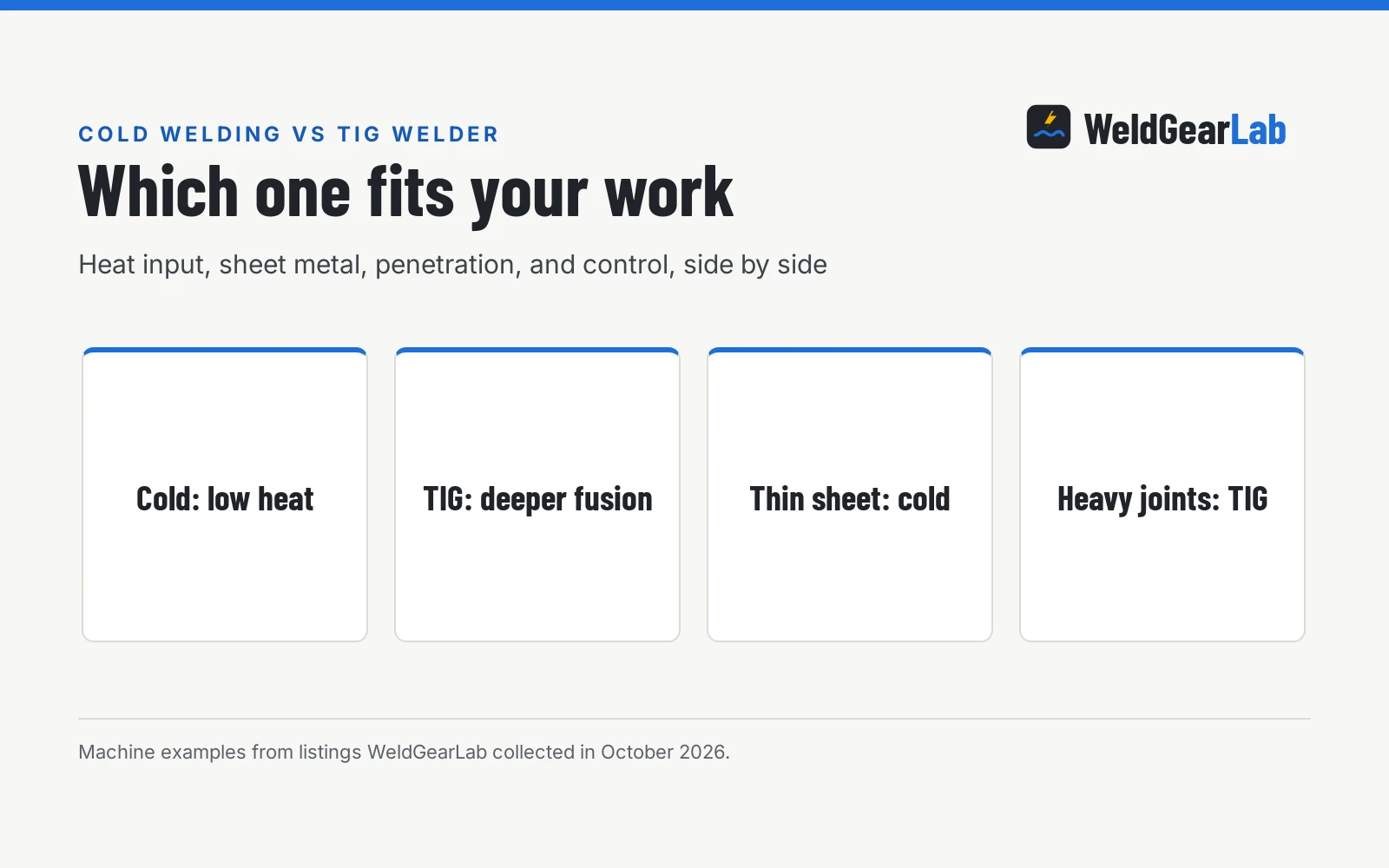
Laser welder vs cold welder: a 700W laser melts thin metals fast with a small heat-affected zone; cold welding bonds with pressure and no heat.

On this page
Top picks at a glance
As an Amazon Associate I earn from qualifying purchases.
- 1
 FumeClear FC-2002 Laser Fume Extractor with H13 Filtration9.5/10View on Amazon
- 2
 ARCCAPTAIN TIG 205 Pro WelderView on Amazon
- 3
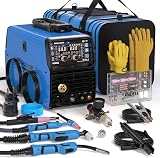 ANDELI Multiprocess MIG WelderView on Amazon
- 4
 ANDELI TIG Welder Multifunctional Cold Welding Machine withView on Amazon
- 5
 ANDELI 10-in-1 Aluminum TIG Welder with Foot PedalView on Amazon
- 6
 AWT LED Display 180A Cold TIG Welder with DC PulseView on Amazon
- 7
 AZZUNO Cold TIG Welder With Pulse 180AView on Amazon
Laser welder vs cold welder comes down to heat. A laser welder melts metal with a focused beam, like the XLASERLAB X1 Pro below, a 700W machine that welds materials from 0.5mm to 3mm thick with a minimal heat-affected zone. A cold welder joins metal without melting it, using pressure to bond clean surfaces at room temperature. Pick a laser welder for fast, precise welds on thin metals; pick a cold welder for joining dissimilar metals or wire where heat would damage the part.
Other welders and gear to compare
 ARCCAPTAIN TIG 205 Pro WelderCheck price on Amazon
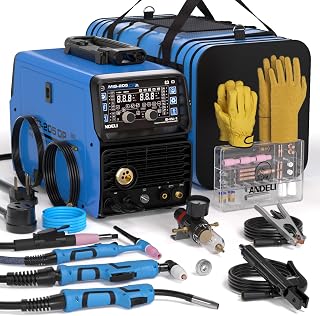 ANDELI Multiprocess MIG WelderCheck price on Amazon
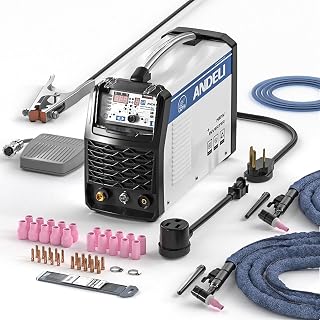 ANDELI TIG Welder Multifunctional Cold Welding Machine withCheck price on Amazon
 ANDELI 10-in-1 Aluminum TIG Welder with Foot PedalCheck price on Amazon
 AWT LED Display 180A Cold TIG Welder with DC PulseCheck price on Amazon
 AZZUNO Cold TIG Welder With Pulse 180ACheck price on Amazon
WeldGearLab gets a commission on purchases made through links on this page, and your price stays the same. Read our affiliate disclosure.
Laser welder vs cold welder: side by side
| Laser welder | Cold welder | Note | |
|---|---|---|---|
| How it joins | Focused beam melts the metal | Pressure bonds clean surfaces, no melting | Melting vs pressure |
| Heat input | Low but real; minimal heat-affected zone stated | None, room-temperature process | Heat vs no heat |
| Listed example | XLASERLAB X1 Pro: 700W, 0.5mm to 3mm, 41.89 lb, 100-240V | Pressure bonding, described below | Laser example vs process description |
| Best for | Fast, precise welds on thin metals | Dissimilar metals, wire, heat-sensitive parts | Thin metals vs heat-sensitive joints |
| Stated warranty | 1-year laser source warranty on the X1 Pro | No figure available | Warranty differs by machine |
Figures are manufacturer rated, from the XLASERLAB listing, collected 19 October 2026.
What a laser welder does
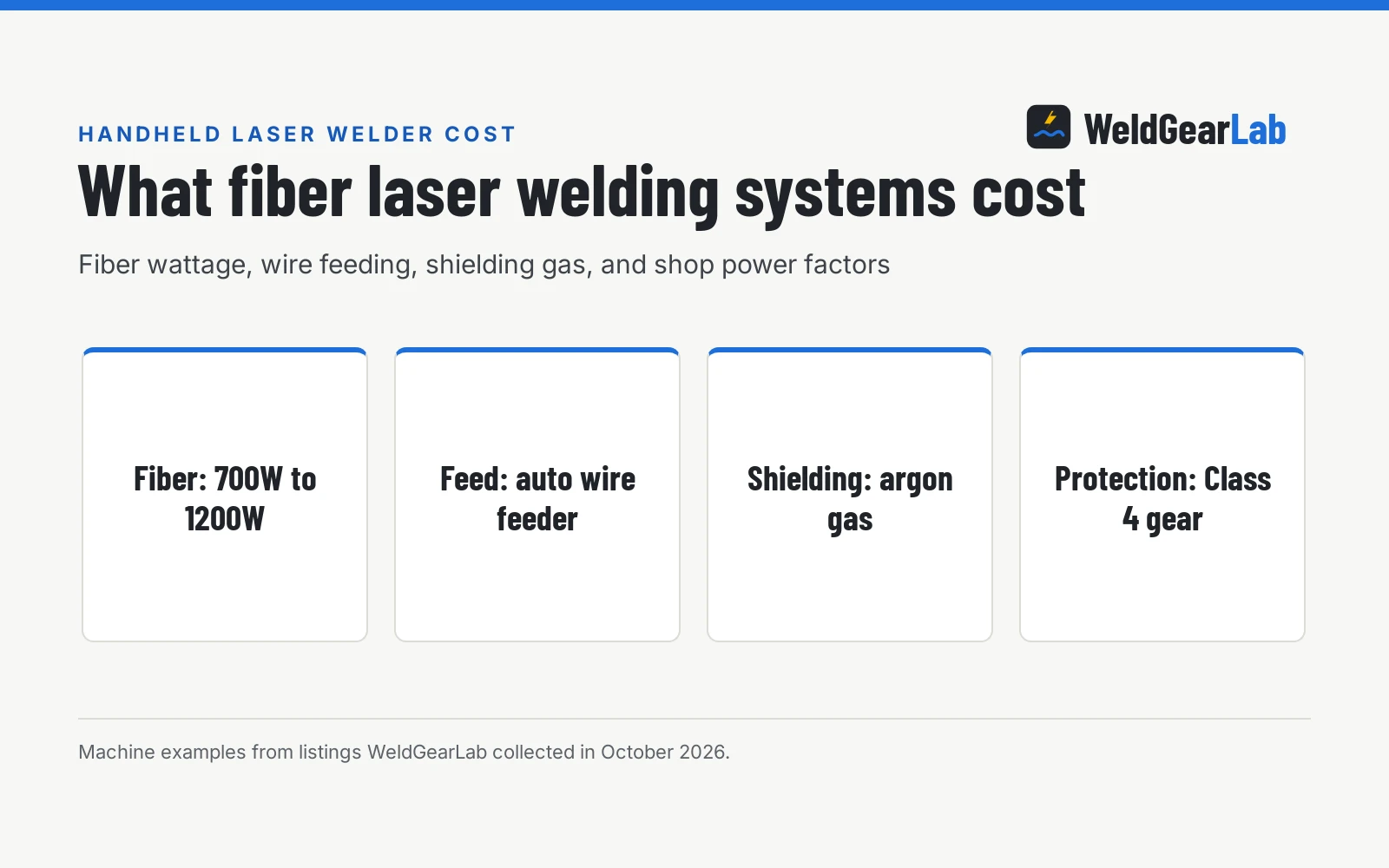
A laser welder focuses a beam onto the joint and melts a narrow zone. The XLASERLAB X1 Pro listing states 700W of power, materials from 0.5mm to 3mm thick, and a minimal heat-affected zone that prevents warping on thin metals. The listing also states 4 to 8 times faster results than professional TIG/MIG systems, SGS certification, and a 7-inch smart touchscreen with preset packages for aluminum, stainless steel, carbon steel, copper, chrome and nickel. At 41.89 lb per the bullets (the spec table states 61.2 pounds, which contradicts) with 100-240V compatibility, it is portable for a laser machine. The listing states a 1-year laser source warranty.
What the X1 Pro listing tells you about laser ownership
The XLASERLAB listing is unusually detailed about living with the machine. It states an operating range of -4°F to 104°F, a waterproof design that allows the welding head to be submerged for underwater welding, and an intelligent thermal management system the listing says extends laser source life by 45% for over 10,000 hours of operation. The work environment claims are minimal fumes, zero arc flash and low noise. The machine is 19 kg (41.89 lb per the bullets) at 18.5 by 8.07 by 13.19 inches per the spec table, with a 7-inch touchscreen, an external wire feeder and storage for three custom material presets. The bullets state 100-240V AC compatibility against the spec table’s 110 volts, so confirm your supply with the seller. The box includes a power cable, wire feeder signal cable, wire feed tube, external emergency stop, gas hose and the laser gun.
What a cold welder does
Cold welding is the alternative process in this comparison. This guide lists a laser machine only, so no cold machine is recommended here; compare any cold machine’s own stated specifications against the laser figures above before choosing.
Where they do not compete
These two rarely bid for the same job. A laser welder handles sheet metal, thin tubing and visible seams where speed and a small heat-affected zone matter. The cold side of the comparison covers joints where melting is not wanted; no cold machine is listed here.
Cost and complexity
A laser welder is the more complex machine: optics, cooling, shielding gas and laser safety eyewear, plus the 1-year laser source warranty the X1 Pro listing states as the part that matters. A cold welder is mechanically simpler, a press with clean dies, but it demands clean metal and the right pressure for each joint. Match the machine to the joint, not to the novelty.
Choosing between them: practical questions
How thick is your work? The X1 Pro listing states 0.5mm to 3mm, which is sheet and thin tubing territory. For work outside that range, compare the machine’s stated range against the job before choosing.
Can the joint take heat? If the part warps, tempers or melts at welding temperatures, cold welding’s room-temperature bond is the answer. If the joint needs a fused, sealed seam, only the laser’s molten pool gives it.
What does your shop support? The laser needs power in the 100-240V range, a gas hose connection and laser safety discipline: no looking at the beam, controlled access, fume extraction even with the listing’s minimal-fumes claim. The cold welder needs a press, clean dies and surgically clean metal, plus the right pressure for each joint.
How many joints? The listing’s 4 to 8 times faster claim is for the laser against TIG/MIG on suitable work, which matters at volume. Cold welding is a per-joint press operation. For production speed on thin metals, the laser wins; for occasional dissimilar-metal splices, the cold welder’s simplicity wins.
FAQ for welders
Is a laser welder better than a cold welder?
Neither is better in general. Laser welders melt thin metals fast with a small heat-affected zone; cold welders bond without heat for dissimilar metals and wire. They suit different joints.
How thick can the X1 Pro weld?
The listing states materials from 0.5mm to 3mm thick.
Does cold welding need shielding gas?
No. It is a pressure process at room temperature, with no arc and no molten pool to shield.
What warranty does the X1 Pro state?
The listing states a 1-year laser source warranty.
Can a laser welder join dissimilar metals?
The X1 Pro listing names aluminum, stainless steel, carbon steel, copper, chrome and nickel among its preset packages. For dissimilar pairs that crack when melted, cold welding is the safer process.
More welding guides
See our single-phase MIG welders guide.