How to Change a Bench Grinder Wheel Safely
A worn wheel turns every sharpening job into a chore, so this guide walks through the swap step by step and compares four 6 inch wheels for the home shop.

On this page
Top picks at a glance
As an Amazon Associate I earn from qualifying purchases.
- 1
 POWERTEC Bench Grinder Wheel9.6/10View on Amazon
- 2
 6” Bench Grinder Wheel 60 Grit9.6/10View on Amazon
- 3
 6" Bench Grinder Wheel 120 Grit & Wire Wheel Brush9.6/10View on Amazon
- 4
 POWERTEC Bench Grinder Wheel9.6/10View on Amazon
A dull chisel, a drill bit that skates across steel, a mower blade with a rounded edge. When the wheel on the bench grinder is worn down, glazed or the wrong grit for the job, every sharpening task turns into a chore. This guide shows how to change a bench grinder wheel safely, from unplugging the grinder to dressing the new wheel, and it ends with the wheels worth keeping on the shelf.
This guide links to our product roundups, where WeldGearLab gets a commission on purchases made through links on this page, and your price stays the same. Read our affiliate disclosure.
| # | Product | Gear Score | Buy |
|---|---|---|---|
| 1 | POWERTEC Bench Grinder Wheel | 9.6/10 | Buy on Amazon |
| 2 | 6” Bench Grinder Wheel 60 Grit | 9.6/10 | Buy on Amazon |
| 3 | 6" Bench Grinder Wheel 120 Grit & Wire Wheel Brush | 9.6/10 | Buy on Amazon |
| 4 | POWERTEC Bench Grinder Wheel | 9.6/10 | Buy on Amazon |
POWERTEC Bench Grinder Wheel
A 6 inch, 100 grit aluminum oxide wheel, 3/4 inch thick, 1/2 inch arbor, rated to 4140 RPM.
Pros
- 100 grit suits sharpening blades, drill bits and chisels
- Aluminum oxide handles carbon and tool steel
- 3/4 inch thick, 1/2 inch arbor fits most 6 inch grinders
- 4140 max RPM stated for the wheel
Cons
- Not for tungsten carbide, cemented carbide or ceramic tools
- Fine grit removes stock slower than a coarse wheel
- One wheel in the box, no spare
- No warranty term is stated
6” Bench Grinder Wheel 60 Grit
A 6 inch, 60 grit green silicon carbide wheel, 3/4 inch thick, 1/2 inch arbor, rated to 3340 RPM.
Pros
- Green silicon carbide is harder than aluminum oxide, per the maker
- 60 grit sits in the medium range the maker gives
- 3/4 inch thick, 1/2 inch arbor fits most 6 inch grinders
- Lists stainless steel and cemented carbide
Cons
- 60 grit is too coarse for fine edge finishing
- One wheel in the box, no spare
- No warranty term is stated
- Needs regular dressing to keep an even cutting surface
6" Bench Grinder Wheel 120 Grit & Wire Wheel Brush
A 6 inch, 120 grit green silicon carbide wheel plus a 6 inch wire brush, both with a 1/2 inch arbor.
Pros
- Two tools in the box: a 120 grit wheel and a wire brush
- Green silicon carbide suits aluminum, copper, titanium, carbide and stainless steel
- 1/2 inch arbor fits most 6 inch bench grinders
- Wire brush handles light burrs and paint removal
Cons
- 120 grit removes stock slowly when a coarse wheel is needed
- Wire brush is for light burrs and paint, not heavy work
- One grit only, so coarse grinding needs another wheel
- Swapping wheel and brush means another wheel change
POWERTEC Bench Grinder Wheel
A 6 inch, 36 grit aluminum oxide wheel, 3/4 inch thick, 1/2 inch arbor, rated to 4140 RPM.
Pros
- 36 grit is the coarse choice here for fast stock removal
- Aluminum oxide handles carbon and tool steel
- 3/4 inch thick, 1/2 inch arbor fits most 6 inch grinders
- 4140 max RPM stated for the wheel
Cons
- Coarse grit leaves a rough finish, so fine work needs a second wheel
- Not for tungsten carbide, cemented carbide or ceramic tools
- One wheel in the box, no spare
- 36 grit is too coarse for sharpening a fine edge
How to Change a Bench Grinder Wheel
Unplug the grinder before you touch anything. A bench grinder that can start while your hands are near the wheel is the first risk in this job, so pull the plug and keep the cord where you can see it.
Take off the tool rest and the wheel guard, then hold the wheel still and loosen the arbor nut. One side uses a left hand thread, so check the manual before you force the nut. Lift off the outer flange and the old wheel, and note which way the blotter washers sit.
Check the new wheel before it goes on. Look for cracks or chips, then tap the wheel lightly and listen for a clear ring. A dull thud means a cracked wheel, and a cracked wheel belongs in the bin, not on the grinder.
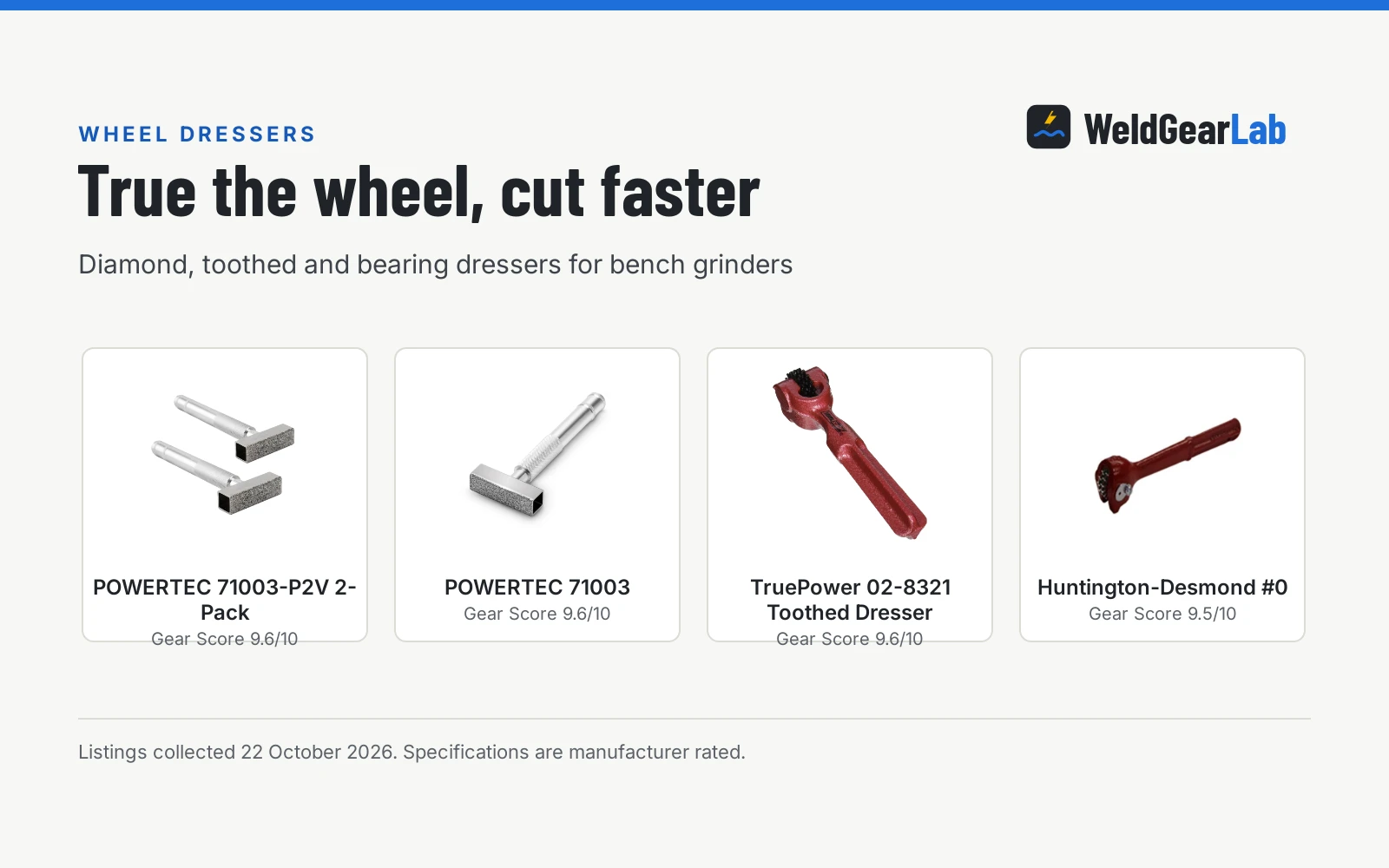
Slide the new wheel onto the arbor with a blotter on each side, then fit the outer flange and the nut. Tighten the nut snug, not hard, since over tightening can crack the wheel. Put the guard and the tool rest back, then dress the new wheel. See the best bench grinder wheel dresser guide.
Wear eye and face protection, and keep gloves away from rotating parts. Plug the grinder back in and let the wheel spin up with the guard in place and no one standing in line with it. Stand to one side while it comes up to speed, and check that it runs without wobble before you grind.
Match the Wheel to the Job
Grit decides what the wheel does. A coarse wheel takes metal off fast and suits shaping and rust removal, while a fine wheel leaves a cleaner edge and suits sharpening. The maker of the SANJIAN wheel (on Amazon) gives a simple scale: medium grit runs 60 to 80, fine grit runs 100 to 150.
Aluminum oxide suits carbon and tool steel, and it is the abrasive on both POWERTEC wheels here. Silicon carbide is harder than aluminum oxide, per the maker, and suits non-ferrous metal, cast iron, stainless steel and carbide. See the aluminum oxide vs silicon carbide grinding wheel guide.
Check the max RPM on the wheel against the grinder. The POWERTEC wheels state 4140 RPM, and the SANJIAN wheel states 3340 RPM.
The Wheels Side by Side
| Grit | Abrasive | Max RPM | Gear Score | |
|---|---|---|---|---|
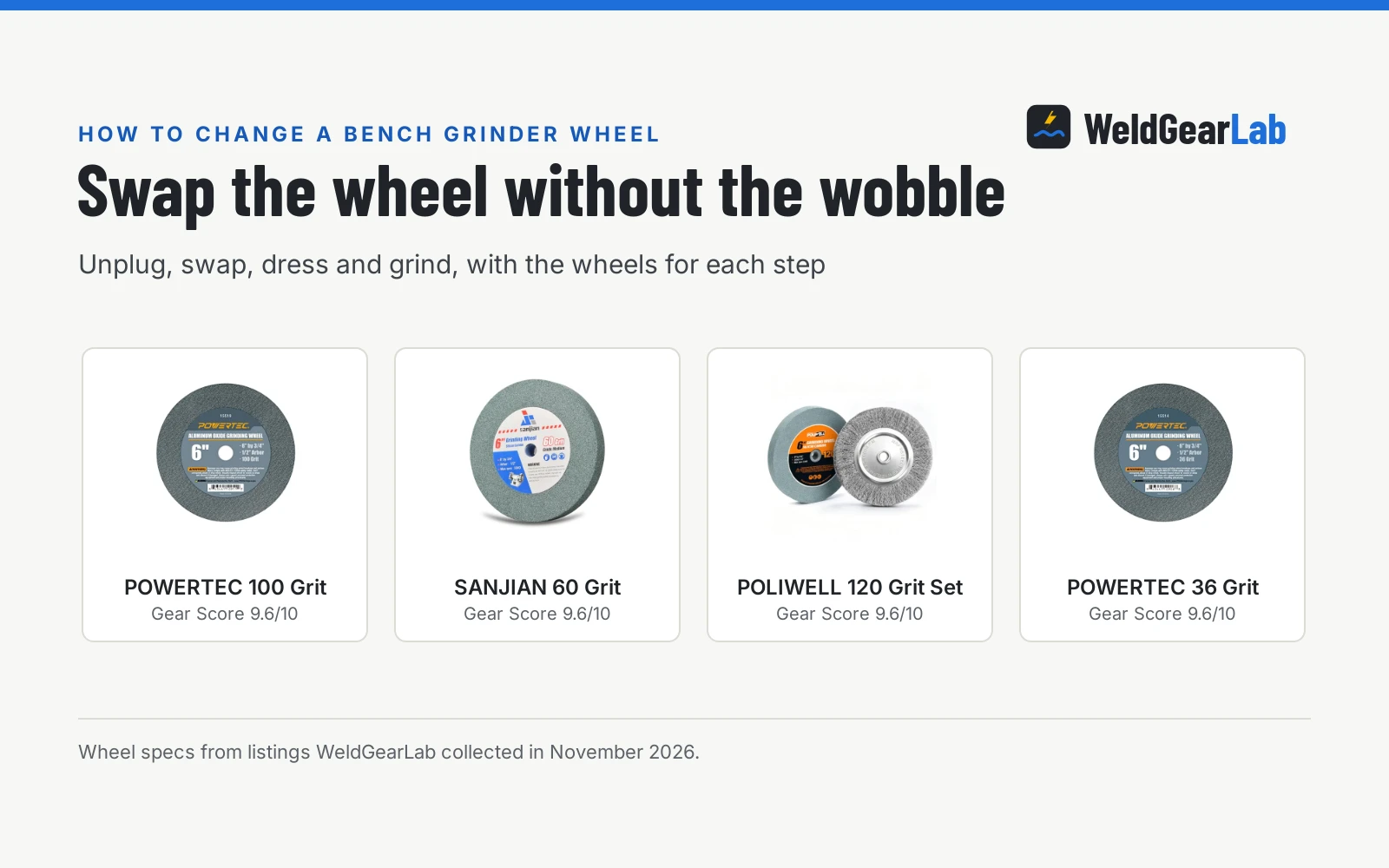
| POWERTEC 100 Grit | 100 | Aluminum oxide | 4140 | 9.6/10 |
| SANJIAN 60 Grit | 60 | Silicon carbide | 3340 | 9.6/10 |
| POLIWELL 120 Grit Set | 120 | Silicon carbide | Not stated | 9.6/10 |
| POWERTEC 36 Grit | 36 | Aluminum oxide | 4140 | 9.6/10 |
The Wheels in This Guide
Each wheel below fits the swap above, and the grit decides which step it handles, from shaping to fine sharpening.
For more options, see our metal fab tools guides.
FAQ for welders
Can I put a 6 inch wheel on any bench grinder?
Only if the grinder takes a 6 inch wheel with a 1/2 inch arbor and the wheel’s max RPM is at least the grinder’s spindle speed. Check the diameter, the arbor and the max RPM against the grinder plate before you buy.
How do I know if a grinding wheel is cracked?
Look for chips and cracks first, then tap the wheel and listen. A sound wheel rings clear, while a cracked wheel gives a dull thud. Any wheel that thuds, or shows a crack, belongs in the bin, not on the grinder.
What grit should I use for sharpening drill bits?
A fine wheel suits sharpening, and the wheels here run from 36 grit for shaping to 120 grit for polishing. The maker of the SANJIAN wheel calls 100 to 150 grit fine, so the 100 grit POWERTEC and the 120 grit POLIWELL suit a keen edge. Check the angle in the bench grinder angle guide.
Do I need to dress a new grinding wheel?
Yes. Dressing trues the wheel and exposes fresh abrasive, so it cuts cooler and leaves a cleaner edge. Dress a new wheel before the first grind, and dress it again whenever it starts to glaze or cut slowly.
Related: best bench grinder, bench grinder angle guide, grinding wheel uses, and best bench grinder wheel dresser.