Flux Core Wire Welding Tips for Better Beads
Flux core wire welding tips that help a hobby welder lay steadier beads with less spatter and easier cleanup.

On this page
Top picks at a glance
As an Amazon Associate I earn from qualifying purchases.
- 1
 Blue Demon E71T-11 X .030 X 2LB Spool gasless flux core9.6/10View on Amazon
- 2
 YixangDD 2 Pack 030 Flux Core Welding Wire9.6/10View on Amazon
A gate hinge has cracked off its post, the steel is rusty, and the wind is moving across the yard. You need a weld that holds, and you need it done with the machine and wire already in the shop. These flux core wire welding tips walk through the choices that shape the bead: wire size, polarity, stickout, travel, and cleanup, so a farm repair or a shop project comes out sound.
This guide links to our product roundups, where WeldGearLab gets a commission on purchases made through links on this page, and your price stays the same. Read our affiliate disclosure.
Flux Core Wire Welding Tips: Pick the Wire First
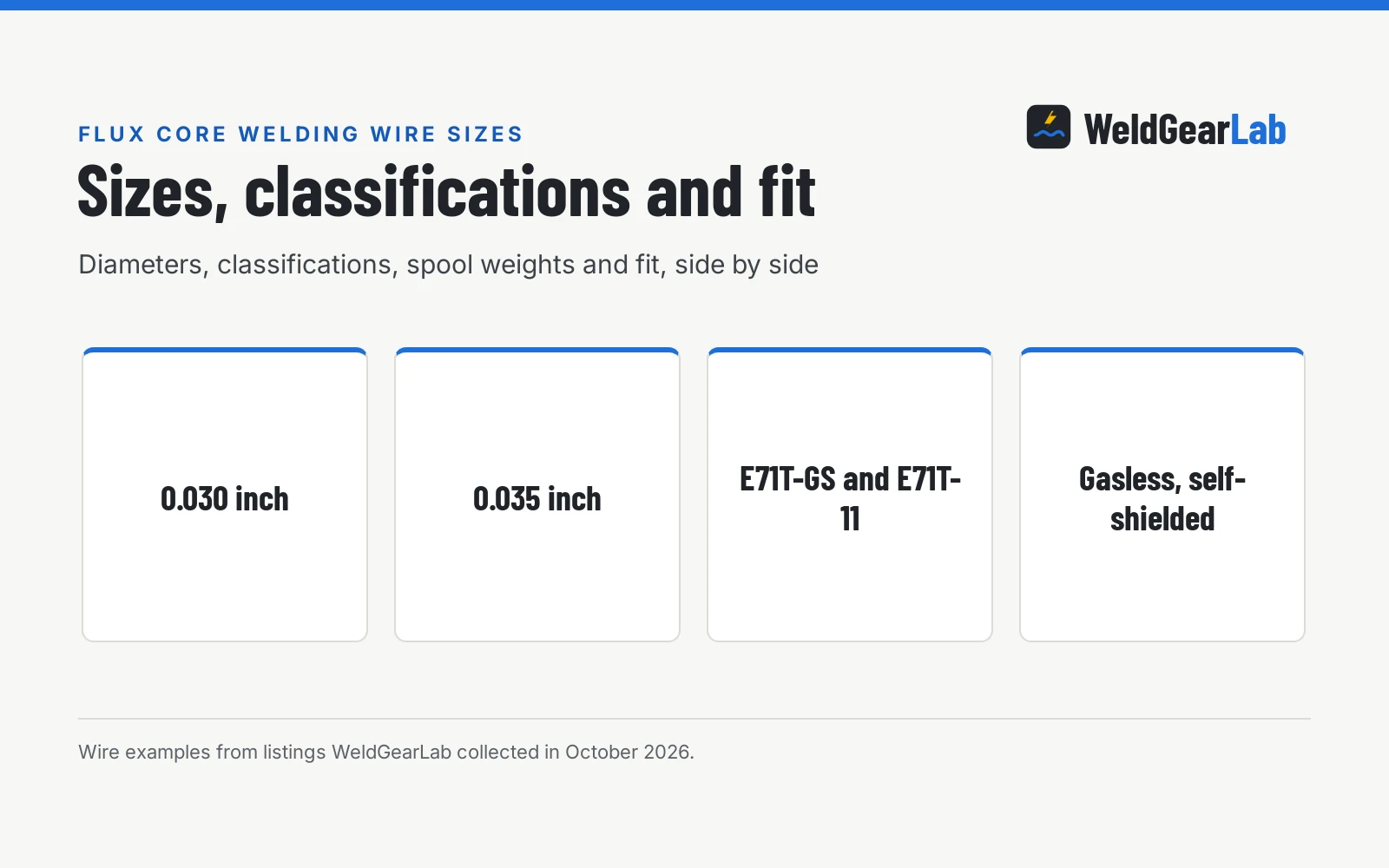
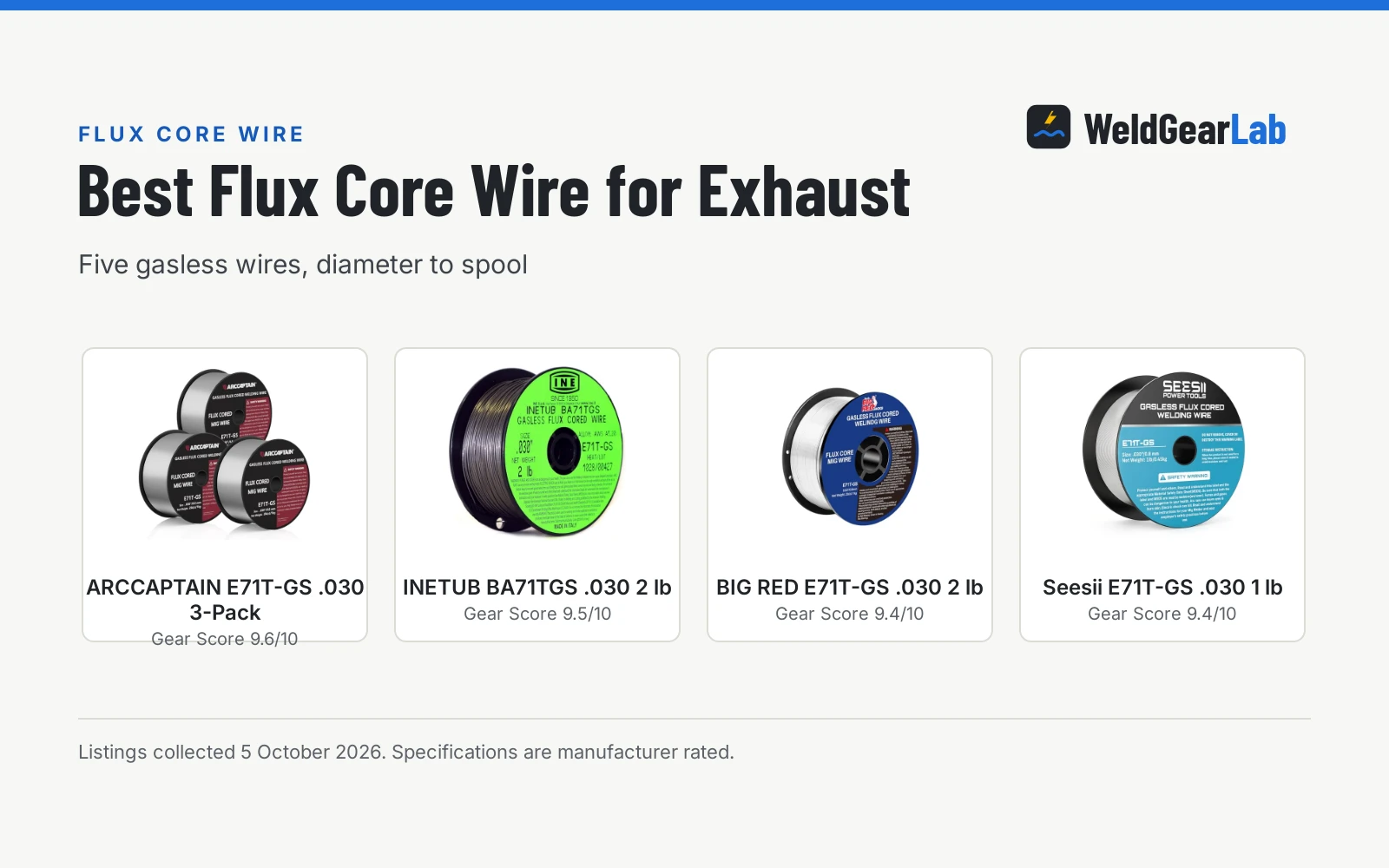
Wire size is the first choice, and the listings in this guide center on two diameters. The .030 inch wire suits lighter work and tighter joints, while the .035 inch wire suits heavier steel and longer runs. Our .030 vs .035 flux core wire comparison lays out the same split.
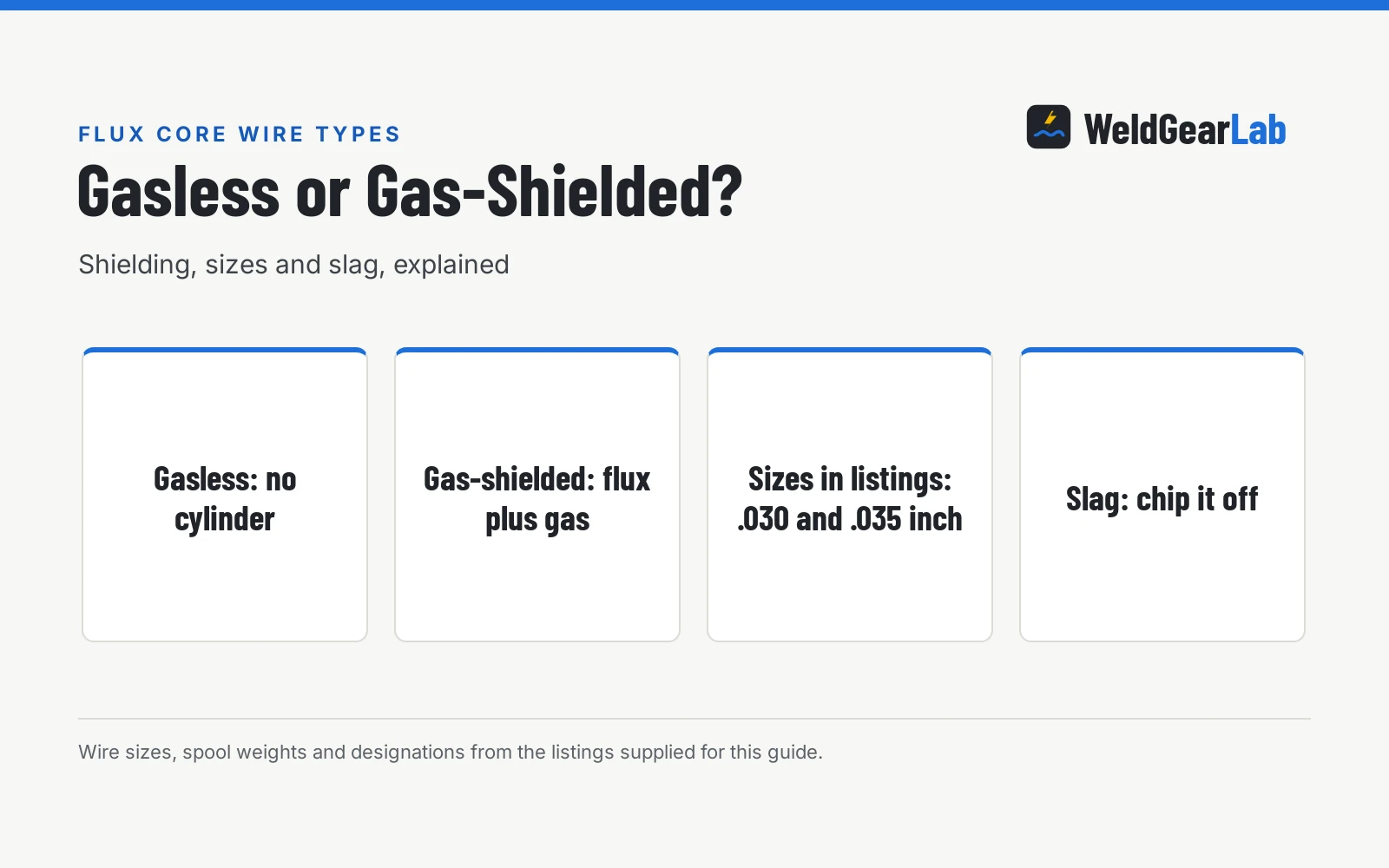
Two AWS classes show up in the listings. E71T-GS is the common gasless wire for mild steel, sold here in .030 inch and .035 inch diameters. E71T-11 is the other gasless class in the listings, sold here in .030 inch and built for multi-pass work. Both are self shielded, so neither needs a gas cylinder, a hose, or a regulator.
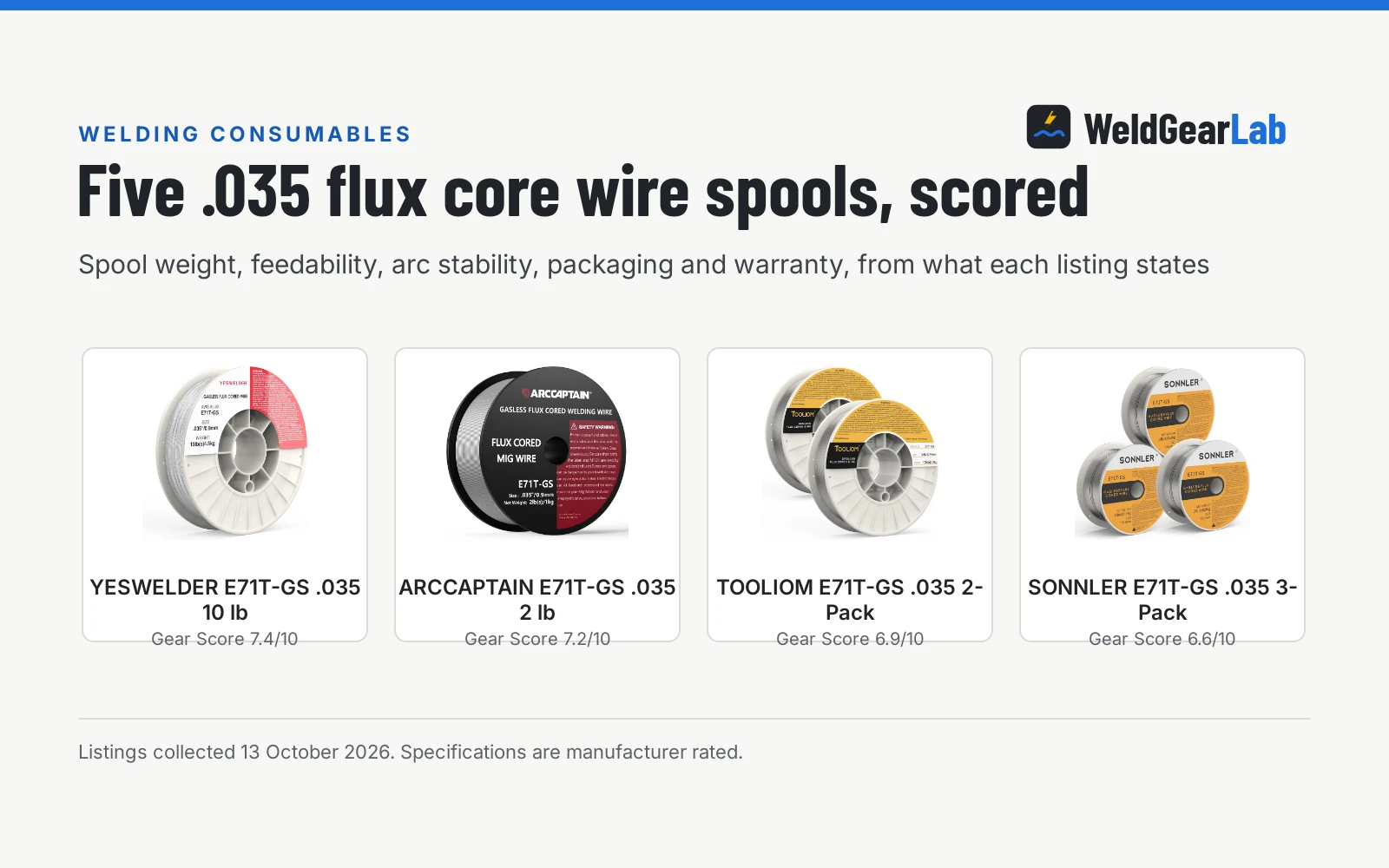
Spool size is a practical choice, not a quality choice. The listings show 2 lb spools for .030 inch wire and 2 lb and 10 lb spools for .035 inch wire. A 2 lb spool suits a short job, while a 10 lb spool suits a long run of fence or trailer work. The ARCCAPTAIN listing sells its .035 inch wire as a pack of 2 lb spools with a 6 lb net weight.
For a first spool, our best flux core wire for beginners guide and the best .035 flux core welding wire roundup name wires that match the sizes above.
Wire sizes side by side
| .030 inch E71T-GS wire | .035 inch E71T-GS wire | E71T-11 .030 inch wire | |
|---|---|---|---|
| AWS class | E71T-GS | E71T-GS | E71T-11 |
| Wire diameter | .030 inch | .035 inch | .030 inch |
| Shielding gas | None, self shielded | None, self shielded | None, self shielded |
| Positions | All positions | All positions | Flat, horizontal, vertical upwards, overhead |
| Passes | Single or multi pass | Single or multi pass | Multi pass |
| Spool sizes in the listings | 2 lb spools | 2 lb and 10 lb spools | 2 lb spool |
| Polarity the listing states | Not stated | Not stated | DCEN |
| Spatter and slag | Low spatter, slag easy to remove | Low spatter, easy slag removal | Low spatter, slag easily removable |
Polarity is the setting that trips up new flux core welders. The Blue Demon E71T-11 (on Amazon) listing states DCEN, direct current electrode negative, and lists flat, horizontal, vertical upwards, and overhead positions. The E71T-GS listings here do not state polarity, so check the wire label and the machine manual before you strike an arc.
Set the machine for flux core
Set the machine to the wire the spool calls for, then set polarity to match the label. A machine that has run solid wire with gas needs its polarity lead swapped for flux core, and the drive rolls need to suit flux core wire, so check both before you load the spool.
Stickout, angle and travel
Stickout is the length of wire past the contact tip, and it works differently with flux core than with solid wire. Flux core wire runs with more stickout than solid wire does, since the hollow wire needs the extra length to heat before it reaches the arc. Keep the stickout steady as you weld: a stickout that drifts longer or shorter makes the arc wander with it. Hold the gun with a slight drag angle, watch the puddle rather than the arc, and keep travel steady so the bead stays even.
Move too fast and the bead goes narrow and ropey, with poor fusion at the toes. Move too slow and the bead piles high. A steady pace fills the joint without dwelling in one spot.
Clean metal and fit up
Flux core wire is more forgiving of dirty steel than solid wire with gas. The Blue Demon listing notes its wire is less sensitive to rust and mill scale, and still makes sound welds in less than perfect conditions. Forgiving is not the same as careless: knock off loose rust, scale, and paint, and wipe off oil and grease before you weld.
Fit up matters as much as cleaning. Clamp the joint tight, tack the pieces in place before the full bead, and weld before the joint can shift as it heats.
Slag and spatter cleanup
Slag is part of flux core welding, not a sign of failure. The flux inside the wire burns to shield the puddle and leaves a crust on the bead. Let the bead cool, chip the slag with a chipping hammer, and brush the joint clean before the next pass or before paint.
Anti spatter spray on the nozzle and the work keeps spatter from sticking, which cuts cleanup time on visible work. Our best anti spatter spray for MIG welding guide covers sprays and gels for the same job.
Outdoor work and wind
Flux core earns its keep outdoors. A breeze that blows gas shielding away barely affects self shielded wire, which is why fence, gate, trailer, and equipment repair in the yard suits flux core so well. The YixangDD listing notes its wire suits outdoor and windy conditions.
Wind is no excuse to skip shelter entirely. A strong gust can still disturb the arc, and rain on the joint is worse than wind. See our best flux core wire for outdoor use guide for wires picked for yard work.
Flux core smoke and slag. Flux core makes more smoke and fumes than gas MIG, and hot slag can flick off when you chip it. Weld with good ventilation or outdoors with your head out of the plume, wear safety glasses under the helmet when chipping, and clear dry grass and anything flammable from the area. Galvanized steel gives off fumes when welded, so keep your head clear of the plume. See the OSHA welding overview.
For more options, see our guides guides.
FAQ for welders
What wire size should I start with for flux core?
Start with the size that suits the steel you weld most. The .030 inch wire in the listings suits lighter steel and tighter joints, while the .035 inch wire suits heavier steel and longer runs. Our .030 vs .035 flux core wire comparison covers the same choice in detail.
Do I need shielding gas with flux core wire?
No. Self shielded flux core wire carries flux inside the wire that burns to shield the puddle, so no cylinder, hose, or regulator is needed. That is the whole point of gasless wire, and it is why flux core suits outdoor work.
What polarity does flux core wire run on?
It depends on the wire. The Blue Demon E71T-11 listing states DCEN, direct current electrode negative. The E71T-GS listings in this guide do not state polarity, so always follow the polarity printed on the wire label and in the machine manual.
Why is my flux core weld covered in a crust?
That crust is slag from the flux, and it is normal. Chip it off with a chipping hammer and a wire brush before the next pass or before paint, and the bead underneath should look clean.
Can flux core wire weld galvanized steel?
Yes, the listings state it. The Blue Demon E71T-11 listing names carbon and galvanized steel among its uses, and the YixangDD E71T-GS (on Amazon) listing names galvanized, stainless, and mild steel. Weld galvanized steel with good ventilation and your head out of the plume, since it gives off fumes.
Related: how to choose a MIG welder, best flux core welder, and the MIG welders hub. Also see our why a MIG welder spatters.