Flux Core vs Multi Process Welder: Which One Should You Buy?
A dedicated flux core welder offers simple gasless portability for outdoor repairs, while a multi-process machine delivers MIG, stick, and TIG versatility for the home workshop.


On this page
Top picks at a glance
As an Amazon Associate I earn from qualifying purchases.
- 1
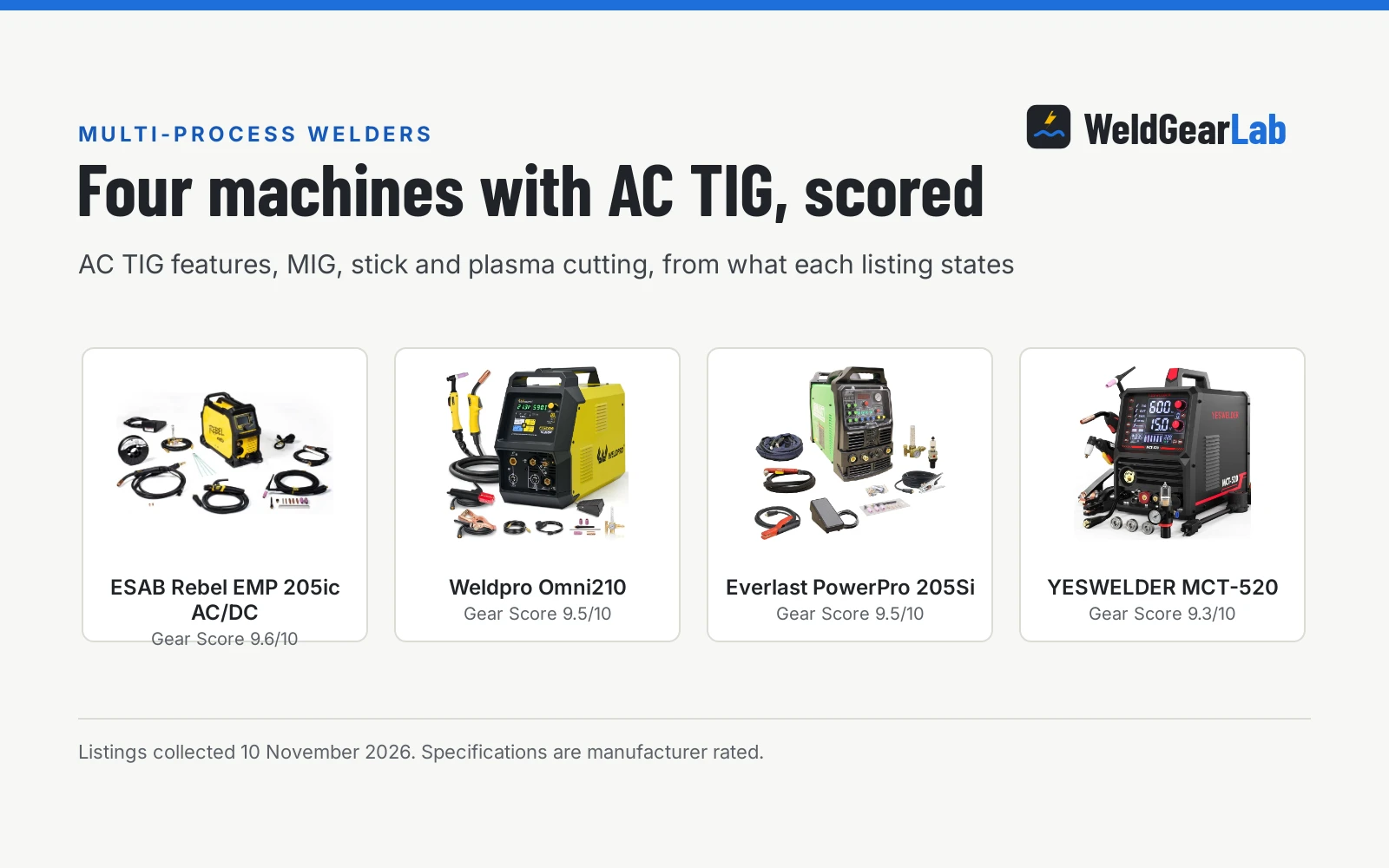
 ESAB Rebel EMP 205ic AC/DC Multi-Process MIG/STICK/TIG Welder9.6/10View on Amazon
- 2
 ARCCAPTAIN MIG145 Pro Flux Core MIG Welder 145A 120V 3-in-1View on Amazon
- 3
 YESWELDER FLUX-135PRO Flux Core MIG Welder with Lift TIGView on Amazon
- 4
 150A 3-in-1 Synergic MIG Flux Core Spot Welder 120V PortableView on Amazon
- 5
 YESWELDER 135A MIG WelderView on Amazon
- 6
 3 Packs 2-Pound 030 Flux Core Welding WireView on Amazon
- 7
 ARCCAPTAIN 130A Flux Core Welder MIG Welder 110V Gasless MIGView on Amazon
When you have broken equipment in the yard or thin metal on the bench, choosing a flux core vs multi process welder depends on whether you need field portability or shop versatility. Buy a dedicated flux core welder if you only weld carbon steel outdoors in the wind without gas cylinders. Buy a multi-process welder if you want clean solid wire MIG, stick rods for heavy iron, and lift TIG for stainless steel. Here is how they compare on metal thickness, power, and setup.
Other welders and gear to compare
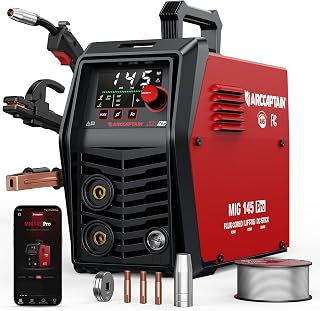 ARCCAPTAIN MIG145 Pro Flux Core MIG Welder 145A 120V 3-in-1Check price on Amazon
 YESWELDER FLUX-135PRO Flux Core MIG Welder with Lift TIGCheck price on Amazon
 150A 3-in-1 Synergic MIG Flux Core Spot Welder 120V PortableCheck price on Amazon
 YESWELDER 135A MIG WelderCheck price on Amazon
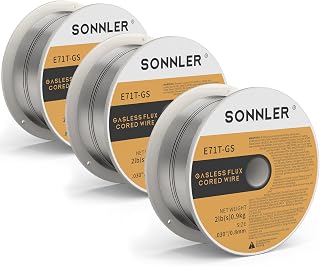 3 Packs 2-Pound 030 Flux Core Welding WireCheck price on Amazon
 ARCCAPTAIN 130A Flux Core Welder MIG Welder 110V Gasless MIGCheck price on Amazon
This guide links to our product roundups, where WeldGearLab gets a commission on purchases made through links on this page, and your price stays the same. Read our affiliate disclosure.
The difference in one paragraph
A dedicated flux core welder runs only self-shielded wire without gas cylinders or secondary modes. A multi-process welder houses circuitry to run multiple processes from one unit, combining flux core with stick and lift TIG, and on full-featured models adding gas-shielded MIG. While flux core units keep controls simple, multi-process machines add versatility for different metals and joint types.
Flux core vs multi process welder: side by side
| Feature | Dedicated Flux Core | Multi-Process Welder | Key Advantage |
|---|---|---|---|
| Processes supported | Self-shielded flux core only | Flux core, stick, TIG, and optional gas MIG | Multi-process provides process flexibility |
| Shielding method | Flux inside tubular wire | Shielding gas cylinder or flux coating | Flux core eliminates gas cylinders |
| Outdoor performance | Handles wind and breezy field conditions | Flux core and stick handle wind; gas MIG needs shelter | Flux core or stick for field repairs |
| Metal versatility | Carbon steel and mild steel | Steel, stainless steel, and aluminum with spool gun | Multi-process handles diverse metals |
| Thin sheet metal | Higher burn-through risk on thin gauge | Smooth low-amperage control on gas MIG models | Gas MIG prevents blow-through |
| Equipment needed | Welder, wire spool, and power outlet | Welder, cables, and optional gas cylinder and torches | Flux core keeps setup minimal |
| Machine mobility | Lightweight portable chassis with strap | Varies from compact inverters to heavy shop units | Flux core for quick truck fixes |
| Weld cleanup | Slag crust to chip and spatter to grind | Clean beads with gas MIG; slag with stick or flux | Gas MIG minimizes grinding |
| Typical polarity | DCEN (electrode negative) | Swappable DCEP, DCEN, and stick polarity | Check wire and electrode manual |
| Setup complexity | Straightforward wire speed and voltage dials | Multi-mode digital menu, wire feed, and gas flow | Flux core is simpler for single tasks |
Polarity is critical when switching processes. Self-shielded flux core runs on DCEN (electrode negative), while gas MIG and common stick rods use DCEP (electrode positive). Multi-process units provide front dinse sockets or an internal lead to swap polarity between processes. Dedicated flux core units are often wired internally for direct DCEN operation.
When a flux core welder is the better choice
- Outdoor repairs and wind. Shielding gas blows away in a breeze, causing porosity. Flux core generates its own shielding at the arc, letting you repair gates and trailers outdoors without windbreaks.
- Rusty or mill scale steel. Flux core chemistry tolerates light rust, mill scale, and minor surface contamination better than solid wire MIG.
- Maximum portability. Without gas bottles and extra torches, compact units move easily. The LOTOS OPTIMA listing reports an 8.2 lb chassis, and the ARCCAPTAIN MIG145 Pro listing states a 9.5 lb carry weight with a shoulder strap.
- Zero cylinder costs. You buy wire spools with no gas bottles to lease, refill, or haul.
- Simple setup. Adjust wire feed speed and voltage without balancing gas flow rates or digital menus.
Our best flux core welder guide covers gasless machines for farm maintenance and repairs.
When a multi-process welder is the better choice
- Thin sheet metal and auto body. On gas MIG models, solid wire with shielding gas provides lower heat input and cleaner beads, preventing burn-through on thin panels.
- Metal variety. Switch processes on one project: wire feed for framing, stick for thick rusted iron, and lift TIG on stainless tubing.
- Clean welds with zero slag. Solid wire gas MIG eliminates slag chipping and minimizes spatter grinding before painting.
- Higher output on dual voltage. Multi-process power supplies reach higher amperage ceilings. The BILT HARD listing claims up to 250A with a 60% duty cycle at 250A on 220V lines for steel up to 3/8 inch plate, while the VEVOR listing specifies a 200A output on 110V/220V power for metal up to 15mm thick.
- Skill development. Expanding from wire feed into stick and lift TIG requires no second machine.
Our best multi-process welder guide reviews versatile shop machines for MIG, stick, and TIG work.
How to tell what a machine actually supports
Product titles often mix terms like MIG and multi-process. Check these hardware points to see what a machine actually runs:
- Gas inlet and internal solenoid. Solid wire gas MIG requires a rear threaded gas nipple and an internal solenoid valve. Dual-process gas units also list solid wire sizes like .023, .030, and .040 inch. If the rear panel has only a power cord and specifies only .030 or .035 inch flux wire, wire feed is gasless only.
- Front dinse sockets. Dedicated flux core welders feature only wire feed controls. Multi-process machines have front dinse sockets to plug in an electrode holder for stick or a torch for lift TIG.
- Included package leads. The YESWELDER FLUX-135PRO listing includes a lift TIG torch, electrode holder, work clamp, and E71T-GS flux core wire.
- Drive rolls. Flux wire requires knurled drive rolls to prevent slipping; solid wire needs smooth V-groove rolls.
Read our breakdown on whether is a multi-process welder worth it.
Shielding gases and consumables you need
Your shop footprint depends on the shielding method required for each process:
- Flux core wire. Needs no gas bottle. Consumables include self-shielded wire, contact tips, and flux nozzles.
- Solid wire MIG. Requires an external gas cylinder, regulator, and hose. Mild steel uses an argon and carbon dioxide mix, while aluminum requires pure argon and smooth drive rolls.
- Stick welding (MMA). Uses an electrode holder and flux-coated rods without gas bottles. Common rods include E7018 for sound joints and E6011 for rusted metal, both listed on the YESWELDER FLUX-135PRO.
- Lift TIG. Requires a manual valve TIG torch, pure argon cylinder, regulator, and sharpened tungsten. Gas routes directly from cylinder to torch.
Learn more about gasless setups in our guide to gasless MIG welder pros and cons.
Can one machine do both?
Yes. A multi-process welder runs flux core wire natively. Install self-shielded wire, fit a knurled drive roll, set polarity to DCEN, and weld without opening a gas valve. For advice on lead setup, read our guide on how to switch polarity on a multi-process welder.
A dedicated flux core welder cannot be converted into a multi-process machine later. It lacks the internal switching circuitry and dinse sockets needed for stick stingers or TIG torches. If you anticipate wanting stick or TIG in the future, buy a multi-process unit first. Compare options in our multi-process welder vs dedicated MIG welder guide.
Fumes and electrical safety. Flux core makes more airborne smoke than solid wire MIG due to vaporizing flux. Weld in well-ventilated areas or outdoors with your helmet out of the plume. Wear safety glasses under the hood when chipping hot slag. High-amperage units draw substantial current on 110V or 220V lines; verify circuit ratings. Secure gas cylinders upright with a chain.
FAQ for welders
Can you run flux core wire in a multi-process welder?
Yes. A multi-process welder runs flux core natively. Install self-shielded wire, set polarity to DCEN, use knurled drive rolls, and leave shielding gas turned off.
Do all multi-process welders support gas MIG welding?
No. Some 3-in-1 multi-process units run only gasless flux core alongside stick and lift TIG. Only 4-in-1 and 6-in-1 models include gas valves and rear inlets for solid wire MIG.
Is flux core welding as strong as MIG or stick welding?
Yes. When deposited with proper voltage and technique, flux core welds match solid wire MIG and stick strength on mild steel. Joint preparation and operator skill matter more than the process.
Can a dedicated flux core welder be converted to multi-process later?
No. Dedicated flux core welders lack the internal circuitry, gas plumbing, and front dinse sockets needed for other processes. Adding those features aftermarket is impractical compared to buying a multi-process machine.
Which welder is easier for a beginner to set up and learn?
A dedicated flux core unit is simpler to set up initially with no gas cylinders or multiple leads. However, solid wire MIG on a multi-process machine makes puddle observation easier with less spatter.
Related: best flux core welder, best multi-process welder, best welder for beginners, and the multi-process welders hub. Also see our guide on what polarity for flux core welding.